
Eastern Washington · Washington
Is East Wenatchee Safe? Crime Rates, Safest Neighborhoods & Local Reality (2026)
East Wenatchee doesn't have a crime problem in the way that phrase usually lands. It has what most mid-sized Eastern Washington communities have — a commercial corridor that generates a disproportionate share of property incidents, a residential base that's genuinely quiet, and a gap between what crime-grade websites display and what daily life actually feels like. The violent crime rate here sits well below the national average, and the community's northside bench neighborhoods post some of the lowest incident counts in the region. What pulls the overall numbers up is a retail-heavy west side that, by its nature, concentrates larceny and opportunistic theft.
In practical terms, the numbers mean most residents go months — sometimes years — without any brush with crime beyond a neighbor's porch package going missing. The property crime rate of roughly 18 per 1,000 residents is the figure most often cited, and it's elevated enough to warrant awareness. But the same data that produces that figure shows the northeast part of the city logging approximately 20 property incidents per year across the entire area — a count that puts those neighborhoods on par with quieter suburban communities anywhere in the state.
This guide breaks down what the crime data actually measures, where the risk is concentrated versus where it's minimal, how East Wenatchee compares to the broader Wenatchee Valley, and what residents do practically to keep their homes and cars secure. If you're relocating from a city where violent crime is the concern, you'll find reassurance here. If property crime is your threshold question, the answer is more nuanced — and this post gives you the geographic context to make a real decision.
The first thing worth understanding is that crime data sources don't agree on East Wenatchee — and that disagreement is itself informative. CrimeGrade.org, using projected models, gives the city an overall grade of D, placing it in roughly the 21st percentile for safety nationally. NeighborhoodScout, drawing on FBI data, puts the combined crime rate at approximately 18 per 1,000 residents. AreaVibes, using the most current 2024 FBI reporting released in fall 2025, tells a different story: East Wenatchee's overall crime rate came in about 5% below the national average that year, with violent crime running 62% below the national figure. The discrepancy comes down to methodology and base years, not a conspiracy of optimism or pessimism. What the sources agree on is this: violent crime here is genuinely low, and property crime is the category that warrants attention.
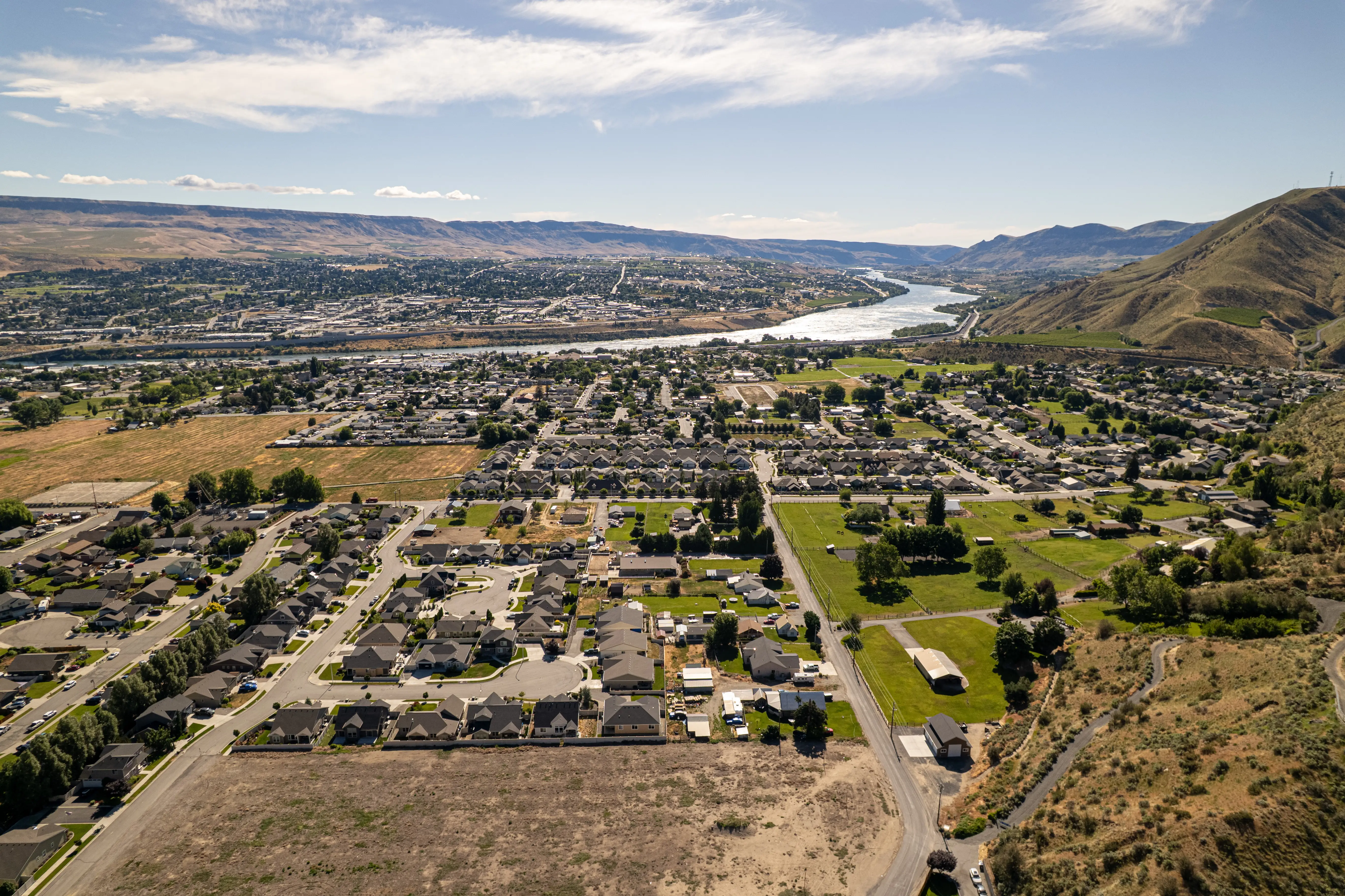
The structural reason property crime outpaces the national comparison is straightforward. Valley Mall Parkway and the broader commercial corridor on the west side generate retail-related theft at a volume that a city of 14,000 residents can't absorb without its per-capita rates climbing. Costco, big-box retail clusters, and high-traffic shopping areas draw more opportunistic incidents than a purely residential community would. When you adjust for that commercial density and look at the residential northeast and bench neighborhoods, the picture looks considerably safer — roughly one property crime incident for every 54 residents in the north, compared to one in every 31 in the southwest.
What this means for a buyer or renter evaluating a specific neighborhood is that a citywide crime rate functions as an average of very different experiences. The west-side commercial zone pulls the number up; the hillside bench communities pull it down. Understanding which part of the city you're in — or considering moving into — matters more than the headline grade.
Local police data suggests East Wenatchee's violent crime rate runs around 0.8 per 1,000 residents — well below what most Americans experience. The chance of becoming a violent crime victim here is commonly reported around 1 in 1,282, which places East Wenatchee comfortably in favorable territory on that specific measure. Practically speaking, residents across all parts of the city report that violent incidents feel rare and remote from daily life; the community's murder rate is negligible, and the city scores in the upper tier nationally on that specific measure. One note worth flagging: AreaVibes reported a 143% year-over-year increase in violent crime in their 2024 data — but that figure reflects a proportional jump off an extremely low base, not an absolute surge. Eight robbery cases reported in 2024 was the highest annual count since 2018, which illustrates the baseline: these are still small absolute numbers in a community of 14,000.
Larceny is the dominant category driving East Wenatchee's property crime totals, with roughly 243 larceny offenses reported in 2024 — about 22% more than the prior year, per Washington Association of Sheriffs and Police Chiefs data. Motor vehicle theft and retail-adjacent incidents cluster heavily in the west-side commercial zone, particularly near the Valley Mall Parkway corridor and surrounding shopping centers. The areas that inflate the city's property crime rate are the same areas that generate the most foot traffic and retail volume — a dynamic common to commercial-heavy corridors throughout Eastern Washington. Residential neighborhoods removed from that corridor, particularly on the north end and the elevated bench, see a fraction of that activity.
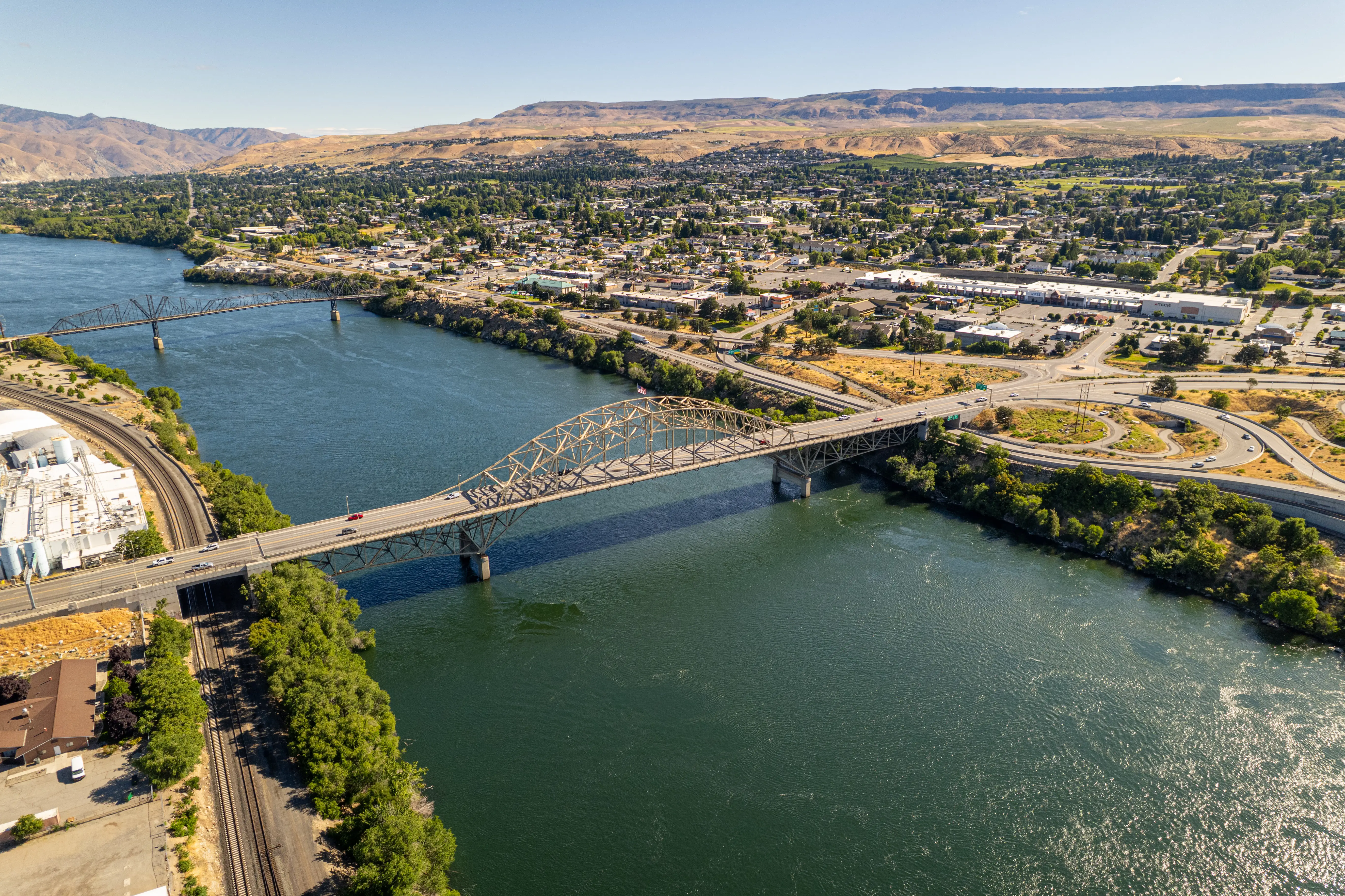
Briarwood sits in the northern and elevated portions of East Wenatchee, which aligns directly with the areas local data identifies as the safest in the city. The neighborhood's residential density and distance from the commercial corridor mean it sees a small fraction of the property incidents that cluster in the west-side retail zones. Families in Briarwood tend to describe the area as the kind of place where kids ride bikes in the street and garage doors stay open — a profile consistent with neighborhoods logging roughly 20 or fewer annual property incidents across the entire northeast section.
Best for: Families and buyers prioritizing quiet residential streets over convenience to retail.
Sage Brooke is a newer-construction neighborhood in the northern bench area, and its physical separation from the Valley Mall Pkwy commercial zone translates directly into lower incident exposure. Auto break-ins and porch theft — the most common property issues residents mention throughout East Wenatchee — are reported far less frequently here than in the city's southwestern quadrant. The neighborhood's HOA structure also contributes to a maintained, well-lit environment that functions as a passive deterrent.
Best for: Buyers who want newer construction with a low-incident residential profile.
Maryhill Estates occupies an elevated position that keeps it naturally insulated from the foot traffic patterns driving larceny numbers near the retail core. Residents here mention that the neighborhood feels removed from the city's commercial energy without sacrificing the five-minute drive to Wenatchee for work or errands. The cost to that distance from the corridor is almost entirely positive from a safety standpoint — this is one of the areas consistently described by locals as a place where safety concerns simply don't dominate the conversation.
Best for: Move-up buyers and established households looking for a quieter, elevated setting.
Cascadia is a well-established residential neighborhood that sits away from the west-side commercial activity zone and draws its resident profile heavily from Eastmont School District families. The neighborhood's street layout and lot sizes encourage the kind of neighbors-know-neighbors dynamic that tends to suppress opportunistic property crime. Where Briarwood is newer and Maryhill is more established, Cascadia occupies a middle ground that many local families consider the practical sweet spot between accessibility and residential calm.
Best for: Families with school-age children who want established neighborhood character.
Downtown East Wenatchee and the broader west-side commercial corridor are where the city's elevated property crime numbers actually live. The area around Valley Mall Parkway concentrates retail foot traffic, parking lots, and the kind of high-turnover commercial activity that generates larceny and auto-related incidents at a rate that skews the citywide statistics. This doesn't make the area dangerous in a personal-safety sense — violent crime is low throughout the city — but residents here do report more frequent encounters with vehicle break-ins and retail-adjacent theft than anywhere else in East Wenatchee.
Best for: Buyers who prioritize walkability and proximity to services and accept the trade-off of higher property crime exposure.
Highlander is one of East Wenatchee's upper-bench neighborhoods, and like Briarwood and Maryhill Estates, its elevation and distance from the commercial spine naturally limit its exposure to the property crime patterns concentrated in the west and southwest. Long-term residents describe it as one of the areas where the sense of neighborhood watch culture is strongest — partly informal, partly driven by the fact that households here have typically been in place long enough to know one another. That social density functions as a real deterrent that aggregate crime scores don't capture.
Best for: Established buyers and retirees who want a stable, long-tenured neighborhood community.
| City | Violent Crime / 1K | Property Crime / 1K | Overall Safety Profile |
|---|---|---|---|
| East Wenatchee | ~0.8 | ~18 | Below-avg violent crime; elevated property crime in commercial zones |
| Wenatchee | ~3.2 | ~38 | Higher across both categories; larger city, more urban crime patterns |
| Cashmere | ~0.4 | ~8 | Among the lowest in the valley; small rural community |
| Rock Island | ~0.3 | ~6 | Very low; tiny population limits total incidents |
| Quincy | ~2.1 | ~24 | Elevated; agricultural labor community with higher incident rates |
| Malaga | N/A | N/A | Unincorporated; minimal separate reporting |

When buyers start researching safety in East Wenatchee, they quickly realize that neighborhood choice directly shapes long-term value. Areas like Maryhill Estates and Sage Brooke have built strong reputations for stability, and that tends to attract consistent buyer demand over time. Briarwood draws similar interest, particularly among buyers who plan to stay for several years and want a neighborhood that holds its appeal. Well-maintained homes in these pockets — many priced under $750,000 — often receive serious attention within days of hitting the market, so hesitation can cost you the opportunity entirely.
That urgency is exactly why connecting with a lender before you start touring homes makes a real difference. Most buyers focus on the sale price, but your actual monthly obligation includes property taxes, homeowner's insurance, any HOA dues, and the loan structure itself — and those pieces together determine what's genuinely comfortable versus what's simply the maximum you qualify for. Knowing that number in advance means you can move confidently when the right home in the right neighborhood appears, rather than scrambling to figure out your finances after you're already emotionally invested.
The crime-mapping apps will show you red zones along the 9th Street NE corridor and the Valley Mall Parkway area and leave the impression that East Wenatchee is uniformly elevated in risk. What they don't show is that a significant portion of the incidents mapped to that corridor involve retail theft, parking lot break-ins, and larceny from commercial properties — not residential burglaries, not violent street crime, not the categories most home buyers are weighing when they ask "is it safe?" Residents who live off that corridor on the north end report that the city feels genuinely quiet in the way mid-size Eastern Washington communities are supposed to feel quiet.
What locals actually do — and what any newcomer would pick up within the first few months — is lock car doors, don't leave anything visible on seats, and bring packages inside promptly. These aren't extraordinary precautions; they're the baseline habits of anyone living near a commercial district in any mid-size city in the state. East Wenatchee Police Department operates out of 50 Simon Street SE and currently runs 20 officers with grant funding approved to restore staffing to 23. The department has been explicit about its community policing focus, and the staffing-to-population ratio, while below state average, is consistent with comparable Eastern Washington communities.
One thing worth knowing before you move: the year-over-year trend data from 2024 shows larceny and robbery counts ticking up, not down. That's a real pattern and not something to wave away. The absolute numbers remain manageable for a city of this size, and the grant-funded officer additions in 2026 are a meaningful response — but buyers who are purchasing specifically for long-term safety trajectory should watch the 2025 and 2026 annual reporting from EWPD when it becomes available, rather than assuming the current profile is static.
Local Expert Takeaway: If you're evaluating safety before buying in East Wenatchee, the most important move is to map the specific neighborhood against the north-south crime gradient — not just the citywide average. Briarwood, Highlander, and Maryhill Estates on the northern bench consistently reflect the city's low-incident data profile. If you're looking at anything near Valley Mall Pkwy or the 9th Street commercial zone, go in with eyes open on property crime exposure, but don't let it push you into a higher-priced Wenatchee zip code you don't actually need.
✅ Violent crime in East Wenatchee is well below the national average — commonly reported around 0.8 per 1,000 residents, one of the more reassuring figures in the Wenatchee Valley.
⚠️ Property crime is elevated, especially near the commercial corridor — the Valley Mall Pkwy and west-side retail zone drive the majority of larceny and auto break-in incidents citywide.
📍 The safest residential areas are consistently the northern and elevated bench neighborhoods — Briarwood, Maryhill Estates, Sage Brooke, and Highlander all align with the city's lowest-incident geographic zones.
Is East Wenatchee safe to live in?
For day-to-day violent crime risk, yes — East Wenatchee's rates are well below both the state and national averages, and the community's northside residential areas log genuinely low incident counts. Property crime is the more relevant concern, and it's concentrated in the commercial west side rather than distributed evenly across residential neighborhoods. Most residents on the northern bench describe the community as comfortable and quiet.
What is the most common crime in East Wenatchee?
Larceny is by far the dominant category, with roughly 243 reported offenses in 2024 alone. Auto break-ins and retail-adjacent theft cluster near Valley Mall Parkway and the commercial spine along 9th Street NE. Violent crime — assault, robbery, murder — is comparatively rare and well below national norms.
How does East Wenatchee compare to Wenatchee for safety?
East Wenatchee comes out ahead on both violent and property crime per capita. Wenatchee, as a larger urban center, carries roughly four times the violent crime rate and more than double the property crime rate. For buyers choosing between the two sides of the river, East Wenatchee's residential neighborhoods — particularly on the northern bench — offer a measurably quieter profile than comparable Wenatchee neighborhoods at similar price points.
Explore the full East Wenatchee series: The Ultimate East Wenatchee Relocation Guide · Is East Wenatchee Safe? · Cost of Living in East Wenatchee · Best Neighborhoods in East Wenatchee · East Wenatchee Schools & Family Life · East Wenatchee Youth Sports · East Wenatchee Parks & Recreation · Retiring in East Wenatchee · 1031 Tax-Deferred Exchange in East Wenatchee · East Wenatchee First-Time Homebuyers Guide · East Wenatchee Down Payment Assistance Guide · Moving to East Wenatchee from California