Eastern Washington · Washington
Living in East Wenatchee: The Ultimate Relocation Guide (2026)
Maybe your company is sending you to the Wenatchee Valley and you've been told East Wenatchee is the affordable side of the river. Maybe you've been watching home prices in Seattle, Bellevue, or even Spokane creep out of reach and someone pointed you east on US-2, where $490,000 still buys a real house with a yard. Or maybe you drove through on a summer weekend, saw the Apple Capital Loop Trail buzzing with cyclists along the Columbia, the mountains stacked up behind the orchards, and thought: why don't more people know about this place? The central tension here is simple but worth naming early — East Wenatchee is a city that functions as a suburb of Wenatchee while technically being its own municipality, the largest in Douglas County, and that dual identity shapes everything from where you'll grocery shop to how you'll answer when someone asks where you live.
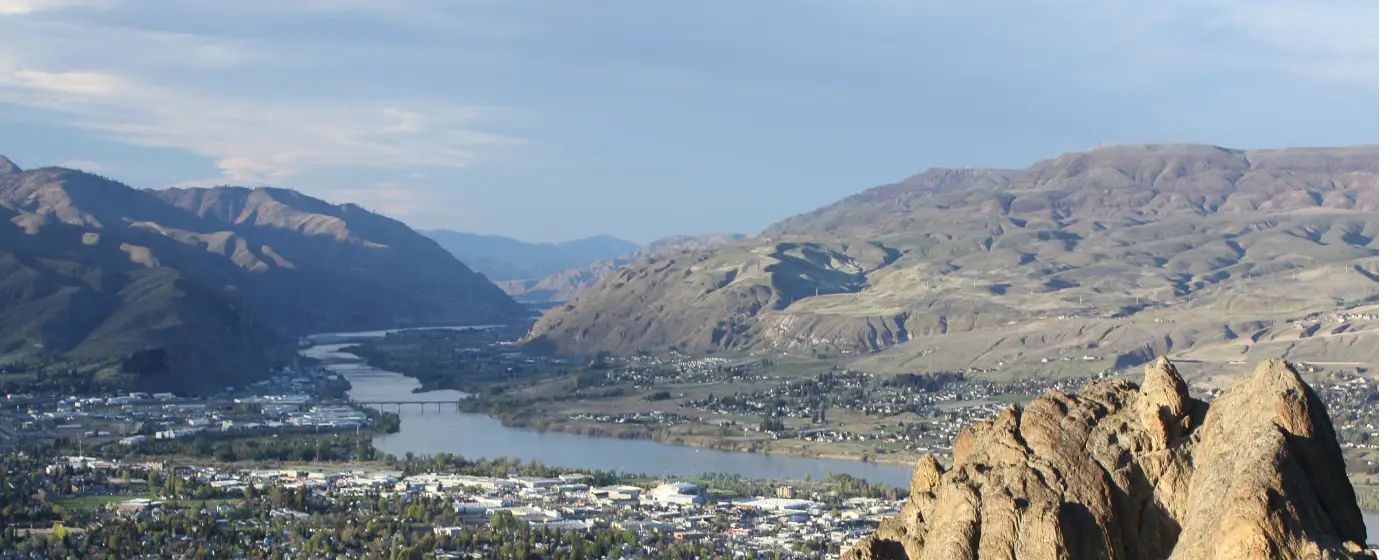
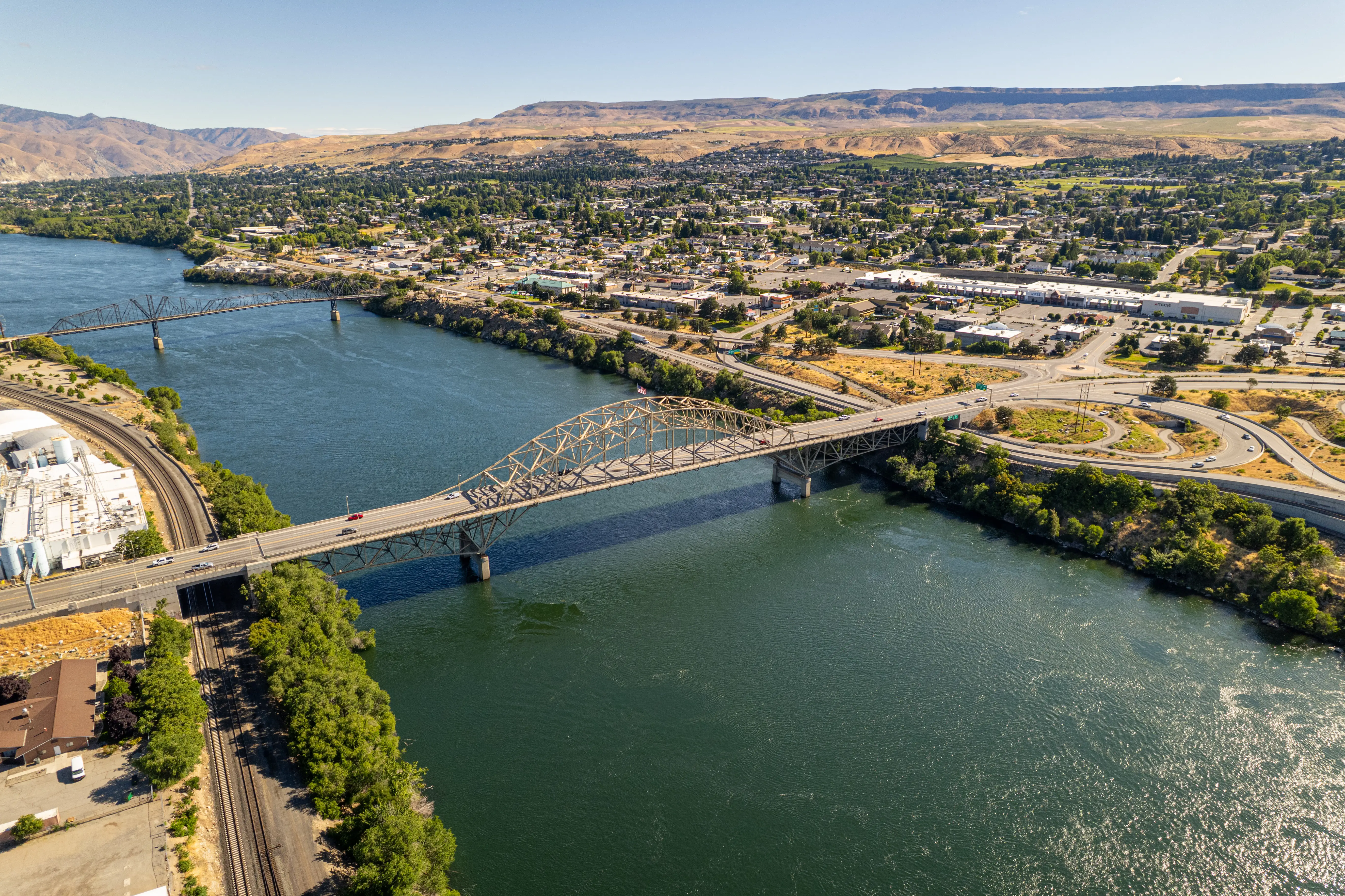
Geographically, the city sits on the east bank of the Columbia River at about 846 feet elevation, directly across from Wenatchee, connected by bridges that make the commute between the two cities genuinely trivial — most days, five minutes or less. That proximity is the defining practical reality of daily life here. You'll work in Wenatchee, eat out in Wenatchee, catch a show at the performing arts center in Wenatchee, then drive back across the river to your house in East Wenatchee. What you get on this side is more space for less money, quieter residential streets, and a community of roughly 14,400 people that tilts young — the median age is 35 — with a high share of family households.
This guide covers everything a serious relocating buyer needs to know: which neighborhoods match which lifestyles, what the market actually looks like in mid-2026, where the school district stands, the honest tradeoffs, and the local quirks nobody puts in the chamber of commerce brochure. By the end, you'll have a clear picture of whether East Wenatchee fits your life — or whether you'd be better served on the other side of the river.
Before diving into specifics, this table captures the intent-based cases for and against East Wenatchee at a glance.
| Best For | Why |
|---|---|
| Commuters to Wenatchee | A five-minute drive or bike ride across the Columbia makes commute stress nearly irrelevant |
| First-Time Buyers | Median sold prices in the $490K–$514K range are significantly more accessible than Western WA metros |
| Families with School-Age Children | Eastmont School District posts a 92% graduation rate, above the state average, with strong extracurricular offerings |
| Outdoor Lifestyle Seekers | The 22-mile Apple Capital Loop Trail, Lincoln Rock State Park, and Mission Ridge ski access place major recreation within minutes |
| Retirees Downsizing from the West Side | Four-season climate, low crime, affordability, and proximity to a regional hospital make the math compelling |
| Remote Workers | Lower cost of living, mountain views, and easy airport access to Seattle-Tacoma via Pangborn Memorial Airport |
The experience of living here is shaped almost entirely by one geographic fact: the Columbia River runs right alongside the city, and everything orients toward it. The Apple Capital Loop Trail, which traces the river's edge for 22 total miles when you count the spurs north to Lincoln Rock State Park and south toward Kirby Billingsley Hydro Park, is the community's front porch. On a Saturday morning in June, you'll find cyclists, walkers, rollerbladers, and families with strollers all sharing the wide paved path while bald eagles work the river upstream. It is genuinely one of the more beautiful pieces of urban infrastructure in Eastern Washington.
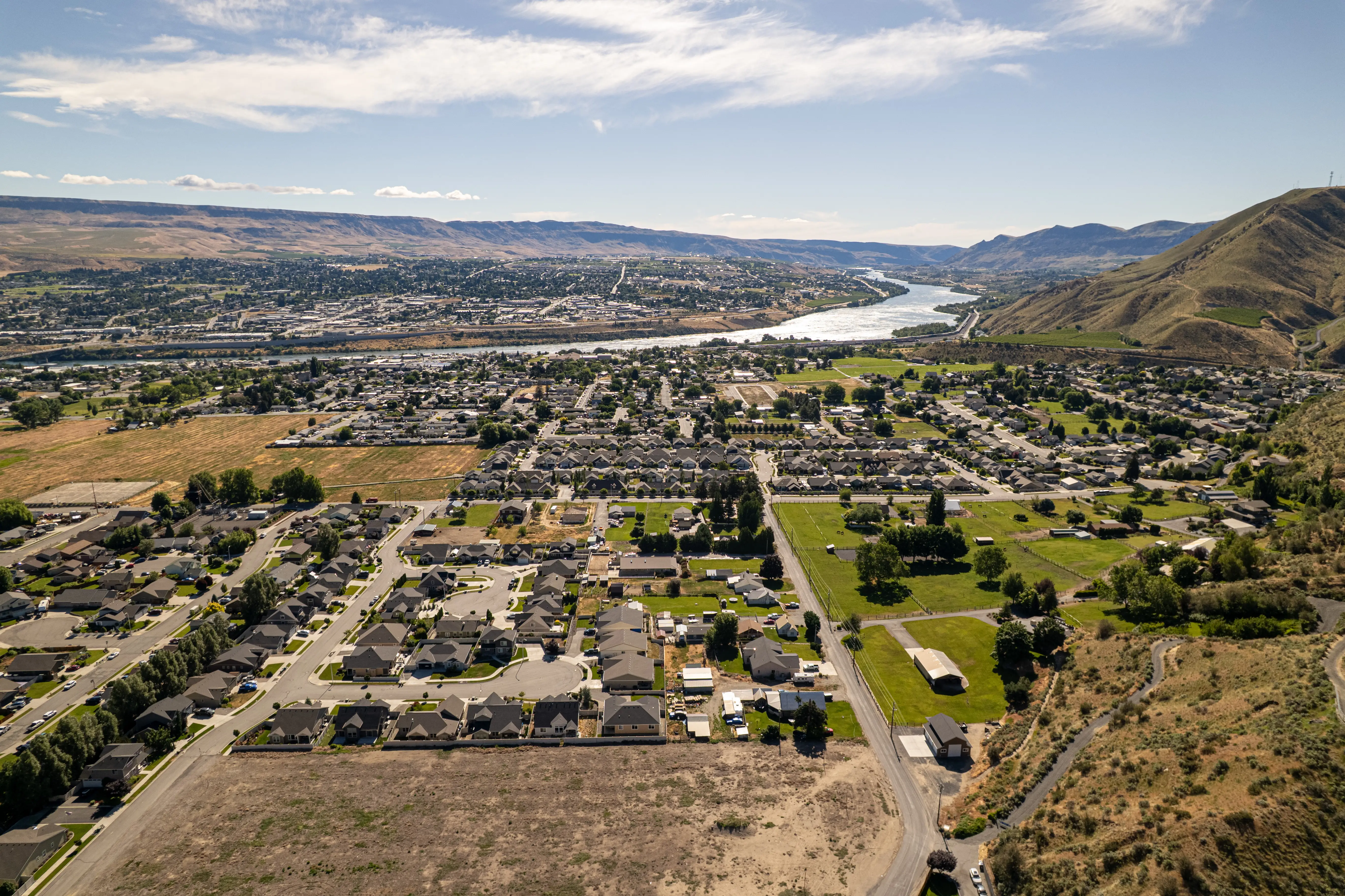
Away from the riverfront, East Wenatchee's residential neighborhoods climb the hillside to the east, and the further uphill you go, the more you feel the honest character of a mid-sized valley town. The commercial spine runs along Valley Mall Parkway and 9th Street NE, where you'll find big-box retail, fast food, and the practical anchors of daily life — including the Costco that draws shoppers from a wide surrounding area. There is no walkable downtown in the traditional sense; this is a car-dependent community, and buyers who need to run errands on foot will find the layout frustrating. The real gathering happens at the river.
The human friction moment most people don't expect is the seasonal tourist traffic. The Wenatchee Valley becomes a destination in apple harvest season and again during ski season at Mission Ridge, which Link Transit's electric shuttle buses connect to directly. If you live along US-2 or near Wenatchee Heights Road, late fall weekends can turn your typical five-minute commute into something longer. It's not gridlock, but it's real enough that locals build it into their mental model of the calendar.
The community skews toward working families — 74% of households are family households, and with a median age of 35, the neighborhoods fill with kids on bikes and soccer nets in driveways. There's a strong agricultural identity in the valley, driven by the apple and pear orchards that surround the city and by employers like Stemilt Growers, one of the largest tree fruit companies in the country. That identity isn't just economic — it shapes the rhythms of the year, from the scent of blossoms in April to the hum of harvest equipment in October.
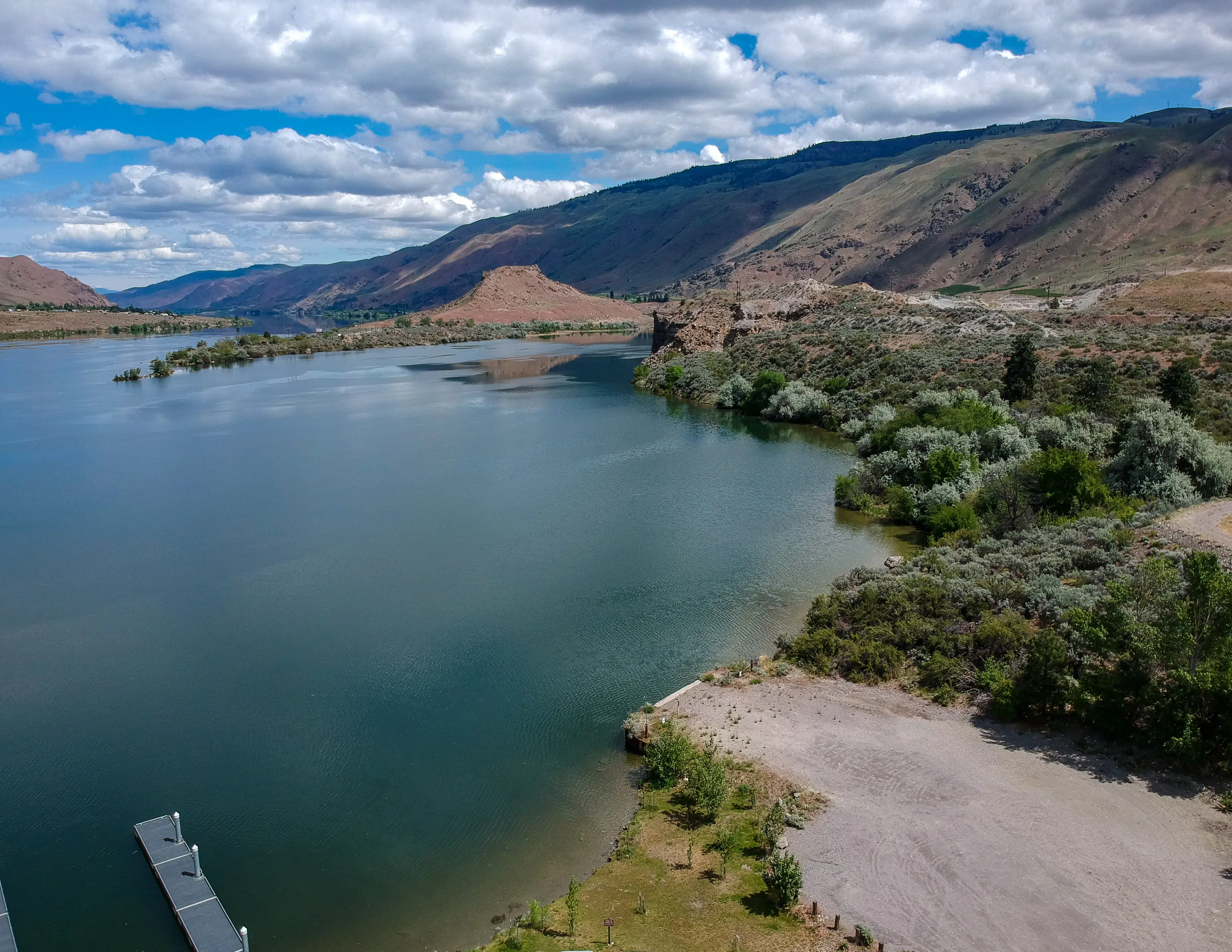
The outdoor access here is not a marketing line — it is the primary reason people who move here from Western Washington stop talking about moving back. Lincoln Rock State Park and Daroga State Park are both accessible within a short drive north along the river, offering camping, swimming beaches, and boat launches on the Columbia. Mission Ridge Ski & Board Resort, about 22 miles southwest via Wenatchee, gets serious snowfall and draws a deeply loyal local following. The combination of a 10-mile riverfront loop trail, state parks within 15 minutes, skiing in winter, and orchard-country hiking and biking in other seasons is a lifestyle package that genuinely costs more in most of the country.
The cost of housing is the second reason people stay. Buyers who arrived from Seattle or even Spokane and purchased at the median price range can afford a lifestyle here that their former ZIP code would never have allowed — a house with storage, a yard with fruit trees, space to have a dog, a garage workshop. The property tax rate at 0.87% is meaningfully lower than the national average, which matters on a home in this price range. Monthly ownership costs land considerably below comparable Western Washington addresses.
Employment stability in the valley is underappreciated. The major employers — Wenatchee Valley Hospital, Eastmont School District, Stemilt Growers, Amazon's distribution presence, and Costco — represent a diversified base that isn't dependent on any single industry. Healthcare and agriculture tend to weather economic cycles reasonably well, and the hospital in particular is a major regional employer for the medical, administrative, and clinical workforce throughout the valley.
The Apple Blossom Festival each spring, officially the Washington State Apple Blossom Festival held in Wenatchee, is a genuine community institution that's been running since 1920 and draws over 100,000 visitors. It includes carnival rides, a grand parade, music performances, and a royalty program that pulls from both the Eastmont and Wenatchee school districts. Locals complain good-naturedly about the crowds and then attend every year. For families new to the area, it's one of the fastest ways to feel connected to the valley's identity and to meet neighbors.
The car dependency is real and worth saying plainly. East Wenatchee is not a city where you'll sell the second car. Without a walkable commercial core, every errand requires a drive, and for buyers relocating from urban or inner-ring suburban environments, the adjustment takes time. Link Transit provides bus service, including the ski shuttle, but the route network reflects a small city — coverage is limited and schedules are infrequent by metro-area standards. If one member of a household works remotely and the other commutes, one car can work. But two-car households are the practical default.
The school district's academic performance data tells a more complicated story than the graduation rate suggests. While Eastmont Senior High School's 92% graduation rate is genuinely above the state average, math proficiency scores run around 21%, well below Washington's state average of 41%. Reading scores are stronger at approximately 69%. The student-teacher ratio at the high school runs around 22:1, higher than the state average. These are real considerations for families with academic-track goals, and they're worth discussing with parents already in the district before buying.
Why some people leave comes down to a short list of recurring frustrations. Entertainment options thin out quickly once you've catalogued the local restaurant scene — residents who want a live-music venue, a broader restaurant spectrum, or cultural programming beyond the valley's offerings find themselves driving to Spokane or planning trips to Seattle. The regional isolation that makes the valley feel peaceful in summer can feel genuinely limiting in February. And for remote workers dependent on reliable high-speed internet, coverage is improving but not yet uniform — some hillside neighborhoods have reported connectivity challenges.
Climate is a real adjustment for West-siders. East Wenatchee sits in the rain shadow of the Cascades, which means 300-plus days of sunshine annually and very little precipitation — a selling point for many buyers. But summer highs regularly reach the high 90s, and the combination of smoke season from regional wildfires and triple-digit heat days in July and August comes as a genuine shock to buyers who budgeted only for mild Pacific Northwest weather. Air conditioning is not optional here.
Briarwood is one of the more established residential neighborhoods in East Wenatchee, featuring single-family homes on relatively generous lots at prices generally in the $450,000–$530,000 range. The neighborhood draws families who want a quiet, settled feel without sacrificing proximity to Valley Mall Parkway's retail corridor. The tradeoff is that the housing stock trends older, which means buyers often face deferred maintenance or cosmetic updating on purchase.
Best for: Families and first-time buyers who want a move-in-ready detached home without going to the top of the market.
Sage Brooke features newer construction that appeals to buyers who want updated finishes, open floor plans, and minimal maintenance on the home itself. Homes here typically sit in the $510,000–$590,000 range, reflecting the newer build quality. The neighborhood has a planned-development feel — HOA-governed, landscaped common areas, uniform street design — which buyers either love for the maintenance predictability or find too homogeneous for their taste.
Best for: Remote workers and couples relocating from the Seattle market who want a turnkey home with no project list.
Maryhill Estates sits higher on the hillside east of the city center and delivers some of the most compelling views in the valley — sweeping westward sightlines over the Columbia River and into the Cascades. Homes run $550,000–$650,000 at the city-wide median level, with premium-view lots pushing higher. The elevation adds a few degrees of summer relief, and the addresses feel distinctly "up the hill" from the workaday commercial spine below.
Best for: Move-up buyers and retirees who want the best views in East Wenatchee and are willing to pay for the vantage point.
Cascadia is a mid-range neighborhood with a mix of newer and established homes, appealing to families who want good proximity to Eastmont School District schools without paying the ridge premium. Price points cluster in the $470,000–$550,000 range, making it one of the more accessible areas for buyers entering the East Wenatchee market. The neighborhood has a functional, family-oriented character rather than a destination feel.
Best for: Families with school-age children who want a practical, well-located neighborhood without the hillside price premium.
Cherry Meadows earns its name from the orchard history of the valley and offers a more pastoral feel than the neighborhoods closer to the commercial corridor. Homes are predominantly single-family detached in the $460,000–$530,000 range, with some larger lots that appeal to buyers who want space to garden or keep chickens — both common pursuits in this part of the valley. It skews slightly older in housing stock but offers value that newer developments can't match at the same lot size.
Best for: Buyers who want outdoor space, a quieter pace, and room to grow food or keep animals.
Highlander sits at a similar elevation to Maryhill Estates and competes for the same buyer profile — ridge-top views, premium construction, and prices to match. Homes in Highlander typically run $560,000–$680,000, with larger custom builds pushing beyond that range. The neighborhood's physical separation from the commercial valley below creates a sense of retreat that suits buyers who want distance from the day-to-day activity of the city.
Best for: Buyers prioritizing views, privacy, and newer construction quality who have flexibility in their budget.
Pine Shadow offers a more sheltered, wooded setting that stands out from the sun-baked ridge neighborhoods higher up. Homes sit in the $440,000–$510,000 range, making it one of the more accessible neighborhoods for first-time buyers in East Wenatchee. The tree cover helps with summer temperatures, and the neighborhood has a relaxed character that suits buyers who don't need a view premium.
Best for: First-time buyers and young families who want a shaded, quieter setting at the lower end of the East Wenatchee market.
East Wenatchee's downtown adjacent area near 9th Street NE offers the city's closest approximation to an urban environment — commercial services, transit access, and some higher-density residential options including smaller single-family homes and infill development. Prices in this corridor run lower than the hillside neighborhoods, often in the $390,000–$460,000 range, but the trade is less residential tranquility and more proximity to traffic and commercial activity. For buyers who don't need suburban quiet, the convenience is genuinely useful.
Best for: Buyers who prioritize walkability to services and don't need the views or space that hillside neighborhoods offer.

East Wenatchee has some genuinely strong pockets for long-term value, and location within the city makes a real difference. Neighborhoods like Maryhill Estates and Sage Brooke tend to attract steady buyer interest thanks to their views, lot sizes, and overall livability — and well-priced homes there move quickly, often within days of hitting the market. Cascadia and Cherry Meadows are worth watching too, particularly for buyers prioritizing newer construction and neighborhood cohesion. Most desirable single-family homes in these areas are priced under $650,000, though move-in-ready properties with views or updates can push higher.
Before you start touring homes, sit down with a lender first — and I mean really sit down, not just get a quick preapproval number. Your maximum approval and your comfortable budget are two different things, and the gap matters a lot once you factor in the full monthly picture: property taxes, homeowners insurance, any HOA dues, and how your loan is structured. East Wenatchee inventory moves fast enough that when the right home appears, you want to be ready to act with confidence, not scrambling to figure
| City | Best For | Median Home Price | Commute to Wenatchee | Vibe |
|---|---|---|---|---|
| East Wenatchee | Families, first-time buyers, outdoor access | ~$490,000–$514,000 | 5 min | Suburban valley with outdoor backbone |
| Wenatchee | Walkable amenities, dining, cultural access | ~$430,000–$510,000 | 0 | More urban, less residential |
| Cashmere | Small-town feel, agricultural charm | ~$370,000–$420,000 | 20 min | Quiet, orchard-country, very slow pace |
| Rock Island | Value buyers, rural feel | ~$310,000–$380,000 | 15 min | Rural, limited services |
| Quincy | Industrial employment, extreme affordability | ~$280,000–$340,000 | 45 min | Agricultural/industrial, fewer amenities |
| Sunnyslope | Semi-rural residential near valley services | ~$390,000–$460,000 | 10 min | Unincorporated feel, larger lots |
| Metric | Detail |
|---|---|
| Population | ~14,443 (2026 estimate) |
| Median Home Price (ZHVI) | $490,447 |
| Median Sold Price | ~$514,000 (late 2025 data) |
| Median Household Income | $77,558 |
| Property Tax Rate | ~0.87% |
| Commute to Wenatchee | ~5 minutes |
| Violent Crime per 1,000 residents | 0.8 |
| School District | Eastmont School District (B+) |
| High School Graduation Rate | 92% (above WA state average of 84%) |
| Nearest Airport | Pangborn Memorial Airport (EAT) — 5 miles |
The Apple Blossom Festival owns late April. The Washington State Apple Blossom Festival is the oldest and largest apple blossom festival in the United States, running since 1920. For about a week each spring, both East Wenatchee and Wenatchee operate in a different mode — the grand parade shuts down the main corridors, parking becomes an Olympic event, and every restaurant has a line. If you schedule your move-in for late April without knowing this, you will have a memorable but stressful first week. Plan around it.
The harvest season is agricultural and visceral. From August through October, the valley operates at harvest speed. Orchard operations run from pre-dawn into the evening, roadways near the agricultural areas see truck traffic, and the air carries the unmistakable sweet-ferment scent of processed fruit. Employers like Stemilt Growers bring in a significant seasonal workforce, which changes the texture of daily life in town. Most longtime residents find it part of the valley's identity. Buyers from urban backgrounds occasionally find it disorienting in their first fall.
Smoke season has changed the summer calculus. Regional wildfire smoke from the Cascades and the Okanogan Highlands is now a reliable summer feature rather than an exception. East Wenatchee sits in a bowl geography that can trap smoke when regional fires are active, and there are typically one to three multi-day stretches each summer where outdoor air quality runs into unhealthy ranges. Locals have air purifiers, they watch the AQI app, and they plan accordingly. It doesn't cancel summer — but it modifies it.
What I would not do if moving here: Don't buy a home on the lower commercial corridor near Valley Mall Parkway expecting a quiet residential experience. The proximity to retail traffic, the strip mall aesthetics, and the road noise make those addresses more compromised than the entry price suggests. Spend the extra $40,000–$60,000 to get above the commercial zone — on any of the hillside streets heading east — and the quality-of-life difference is immediate and lasting.
Local Expert Takeaway: If your budget is in the $490,000–$540,000 range, focus your search on Cascadia, Pine Shadow, or Briarwood for the best combination of school access and value — and move fast, because well-priced homes in those neighborhoods are consistently going pending within a week. If you have more flexibility, the ridge neighborhoods (Maryhill Estates, Highlander) offer views that punch well above what you'd pay for comparable vantage points anywhere in Western Washington. Don't overlook the valley's lifestyle infrastructure: the Apple Capital Loop Trail is a legitimate daily amenity, and the five-minute bridge crossing to Wenatchee means you're not giving up urban services — just urban prices.
✅ East Wenatchee delivers genuine affordability relative to Western Washington, with a median ZHVI near $490,000, a low 0.87% property tax rate, and a location that puts you five minutes from Wenatchee's full range of services.
⚠️ The market moves fast — homes are going pending in under ten days on average, which means pre-approval and a clear decision framework before touring are essential, not optional.
📍 The outdoor lifestyle is not marketing language — the 22-mile Apple Capital Loop Trail, Lincoln Rock State Park, Daroga State Park, and ski access to Mission Ridge create a year-round recreation ecosystem that genuinely defines daily life here for active residents.
Is East Wenatchee a good place for families?
Yes — families with children consistently rank East Wenatchee well for the combination of Eastmont School District's above-state-average graduation rate, relatively low violent crime, outdoor recreation access, and the affordability that lets a family-sized home with a real yard stay within reach of a median household income. The school district has room to grow on academic proficiency metrics, but the overall environment for raising kids in the valley is a genuine draw.
What is the crime rate in East Wenatchee?
The violent crime rate runs approximately 0.8 per 1,000 residents, which is low by any measure — well below state and national averages for cities of comparable size. Property crime is more relevant to day-to-day life at roughly 18 per 1,000, in line with typical mid-sized Washington cities. The overall safety profile is one of East Wenatchee's consistent strengths and a common reason relocating families cite for choosing this side of the river.
How does East Wenatchee compare to living directly in Wenatchee?
Wenatchee offers more walkable amenities, a more active restaurant and arts scene, and a slightly more urban daily experience. East Wenatchee offers more residential space at a comparable or slightly lower price, quieter streets, and the practical benefits of Douglas County's property tax structure. For most buyers, the five-minute bridge crossing makes the distinction largely academic — you get East Wenatchee's residential character and Wenatchee's services. The choice usually comes down to whether you want to be closer to the river trail on the east bank or want to walk to dinner a few nights a week.
Explore the full East Wenatchee series: The Ultimate East Wenatchee Relocation Guide · Is East Wenatchee Safe? · Cost of Living in East Wenatchee · Best Neighborhoods in East Wenatchee · East Wenatchee Schools & Family Life · East Wenatchee Youth Sports · East Wenatchee Parks & Recreation · Retiring in East Wenatchee · 1031 Tax-Deferred Exchange in East Wenatchee · East Wenatchee First-Time Homebuyers Guide · East Wenatchee Down Payment Assistance Guide · Moving to East Wenatchee from California