
Eastern Washington · Washington
Moving to East Wenatchee from California: The Honest Comparison (2026)
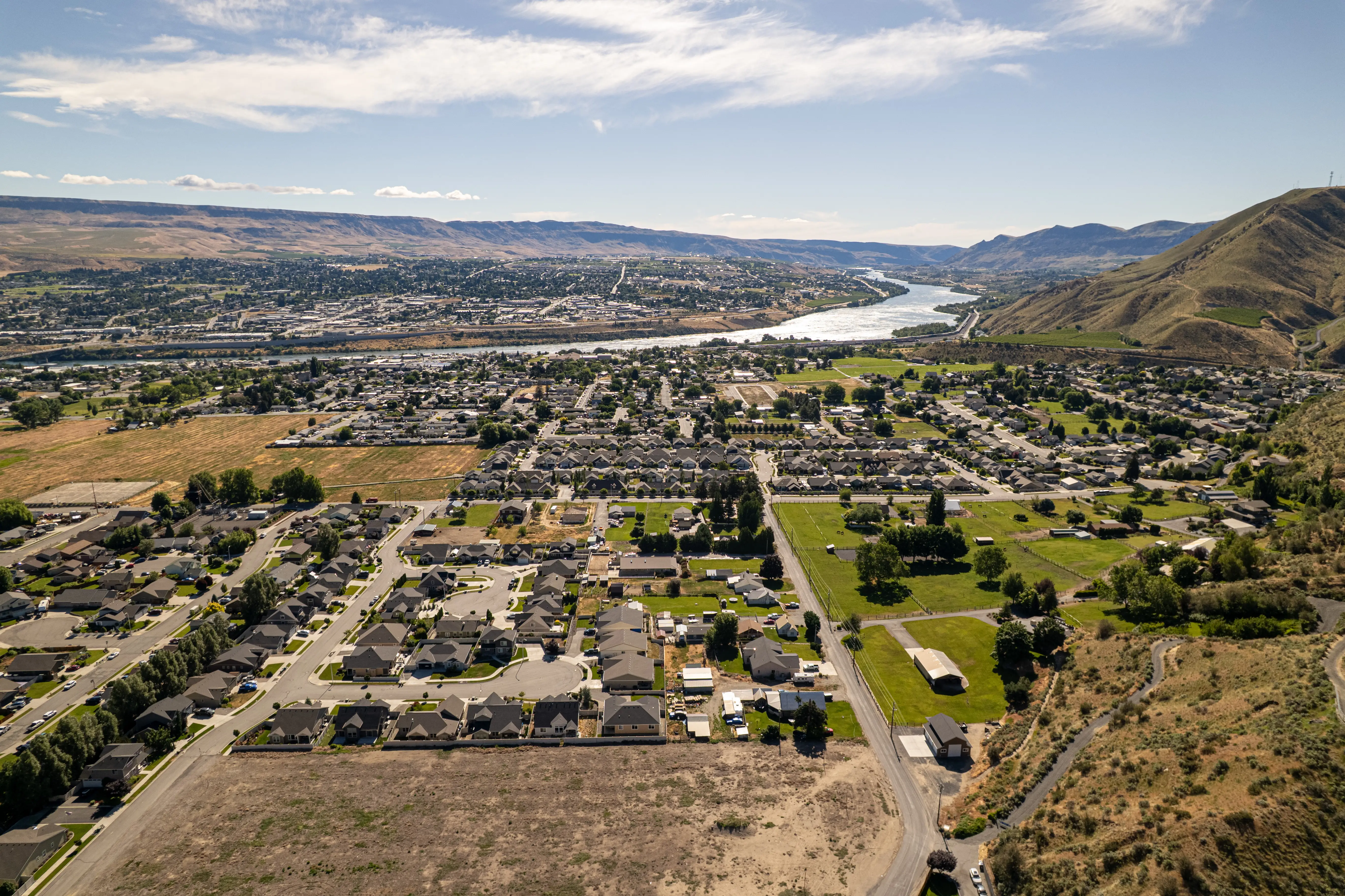
The California-to-Washington move stopped being a fringe lifestyle choice sometime around 2021, and it hasn't slowed down. The software engineer who left Walnut Creek with a $180K remote salary and bought a four-bedroom home with a yard for under $500K did the math that no amount of California sunshine could override. The San Diego family who moved and watched their summer utility bills drop by two-thirds — and stopped watching the August wildfire maps — found something the housing price comparison doesn't fully capture. East Wenatchee sits in that conversation more often than most people expect, a city of roughly 15,000 on the east side of the Cascades with 220 sunny days a year, nine inches of annual rain, and a median sold price that still sits well below $520K.
The hard part is worth naming upfront. East Wenatchee is not Pasadena with mountains. It's not Sacramento with cheaper houses. The winters are genuinely cold — December highs in the low 30s, nights in the low 20s, and about 15 inches of snow most years. The food and cultural scene that California buyers take for granted is thinner here. The nearest international airport with real nonstop options is 2.5 hours west in Seattle. These aren't dealbreakers for the right buyer, but they are surprises that catch people off guard when they've done their research on Zillow and not much else.
This guide covers the full picture: a side-by-side cost comparison broken down by California region, the tax advantage in real dollar terms, what your California equity actually buys at different price points, the weather and lifestyle reality from people who made this move, and an interactive tool to compare your specific California city directly to East Wenatchee.
| East Wenatchee, WA | Bay Area | Southern CA | Sacramento Metro | Central Valley | |
|---|---|---|---|---|---|
| Median Home Price (approx. 2026) | $490,447 | $1.4M–$1.5M | $900K–$1.0M | ~$500K | $378K–$505K |
| Property Tax Rate (effective) | ~0.87% | ~1.1–1.2% | ~1.1–1.2% | ~1.1–1.2% | ~1.0–1.2% |
| State Income Tax | None | Up to 13.3% | Up to 13.3% | Up to 13.3% | Up to 13.3% |
| State Sales Tax | ~8.6% (Douglas Co.) | 8.625–10.25% | 7.25–10.25% | 7.25–8.75% | 7.25–8.75% |
| Avg Utilities (monthly est.) | ~$175–$210 | ~$280–$350 | ~$320–$400 | ~$250–$320 | ~$230–$300 |
| Avg 1BR Rent | ~$1,187–$1,630 | ~$2,800–$3,500 | ~$2,200–$2,800 | ~$1,600–$1,900 | ~$1,100–$1,400 |
The income tax advantage is the number California transplants underestimate most. Washington has no state income tax — none — and for a household earning $150,000, that's roughly $10,000 to $14,000 in additional take-home pay annually compared to what California's top-bracket rates would have consumed. Washington's sales tax runs around 8.6% in Douglas County, which does offset some of that gain, but on a typical household budget the net advantage is strongly positive every single year.
Washington is one of only nine states with no state income tax, and for California transplants, this is the single most meaningful financial change they experience — often showing up in the first paycheck of the new year as a number that takes a moment to process.
| Tax Item | California | Washington | Net Impact for Transplant |
|---|---|---|---|
| State Income Tax ($120K income) | ~$8,800–$9,500 | $0 | +$8,800–$9,500/year |
| State Income Tax ($150K income) | ~$11,500–$13,000 | $0 | +$11,500–$13,000/year |
| State Income Tax ($200K income) | ~$16,000–$19,000 | $0 | +$16,000–$19,000/year |
| Capital Gains Tax | Up to 13.3% (included in income tax) | 7% on gains over ~$262K/year | Mostly neutral for wage earners |
| Property Tax on $490K home | ~$5,390–$5,880/year (at 1.1–1.2%) | ~$4,267/year (at 0.87%) | ~$1,100–$1,600/year savings |
| State Sales Tax | 7.25–10.25% | ~8.6% (Douglas Co.) | Roughly comparable |
Washington does levy a 7% capital gains tax on long-term gains exceeding approximately $262,000 per year, but this threshold means the vast majority of wage earners are unaffected. It's primarily relevant to sellers of highly appreciated investment properties or those with significant stock portfolios — not a daily reality for most transplants. Douglas County property taxes at 0.87% are meaningfully lower than the 1.1% to 1.2% effective rates Californians are used to, and the senior property tax exemption for Washington residents 61 and older (income-based) adds further relief for retiring buyers.
A buyer leaving Palo Alto or Cupertino with $1.6M in equity is walking into East Wenatchee with complete optionality. At the $490,447 median, a full-cash purchase is straightforward and leaves a meaningful amount in reserve. The question for this buyer isn't whether they can afford East Wenatchee — it's what the top of the East Wenatchee market actually looks like. View-lot homes along the hillside neighborhoods above the Columbia River, new construction in Maryhill Estates, or a larger property near the Sage Brooke area can run $650,000 to $800,000 and represent the upper tier of the local market. For Bay Area equity, this is a luxury purchase funded entirely by equity with hundreds of thousands remaining invested or liquid.
What this buyer should understand is that East Wenatchee's top-end inventory is thin. Listings above $700,000 move quickly when they're right, and the pool of comparable properties is smaller than a Bay Area buyer expects. Coming in with pre-verified cash capability shortens the process considerably and positions these buyers to move fast when the right property surfaces.
A seller leaving Burbank or Irvine with $850,000 in equity can purchase nearly anything on the East Wenatchee market outright, or structure a minimal-LTV conventional loan to preserve cash flexibility. The Cascadia neighborhood, Highlander, and Edgeview Estates all offer properties in the $480,000 to $650,000 range — solid construction, good lot sizes, and established streetscapes. The meaningful insight for this buyer is that even if they choose to finance, they're looking at a conventional 30-year loan on a sub-$500K purchase — no jumbo loan territory, no FHA complexity, and full access to competitive rate tiers.
The net financial picture for a Southern California seller is genuinely strong. They're eliminating $10,000 or more in annual California income tax, purchasing a home at half to two-thirds their former market price, and banking the equity difference. That math tends to produce a life that feels financially easier within the first six months, which is one reason Southern California transplants tend to be among the more satisfied in surveys of people who've made similar moves.
This buyer has the most nuanced calculus. Sacramento's median home price runs around $500,000 — strikingly close to East Wenatchee — so the headline savings on housing alone aren't dramatic. What changes the math is the income tax. A household earning $140,000 in Sacramento pays California income taxes; the same household in East Wenatchee pays nothing to the state. Over five years, that gap can exceed $60,000. Buyers in this equity range are typically putting 50% to 80% down in East Wenatchee and taking on a manageable mortgage, while simultaneously improving their monthly cash flow through the no-tax advantage.
Cherry Meadows and Briarwood represent well-established neighborhoods in the $440,000 to $520,000 range that fit this buyer's profile well — single-family homes with good lot sizes, suburban character, and proximity to the city's core amenities without the premium of newer construction.
This buyer's relative gain is the most modest, and the honest answer is that the move isn't primarily financial for them — it's about lifestyle and quality of life. A Fresno or Bakersfield buyer with $380,000 in equity is still competitive in East Wenatchee's market; they may put 60% to 70% down and finance the balance at conventional terms. Downtown East Wenatchee and Pine Shadow offer properties in the $380,000 to $460,000 range that work for this buyer's budget. The no-income-tax advantage is meaningful here too — perhaps $6,000 to $9,000 annually for a median-income household — but the housing-cost arbitrage is thinner than it is for coastal California sellers.
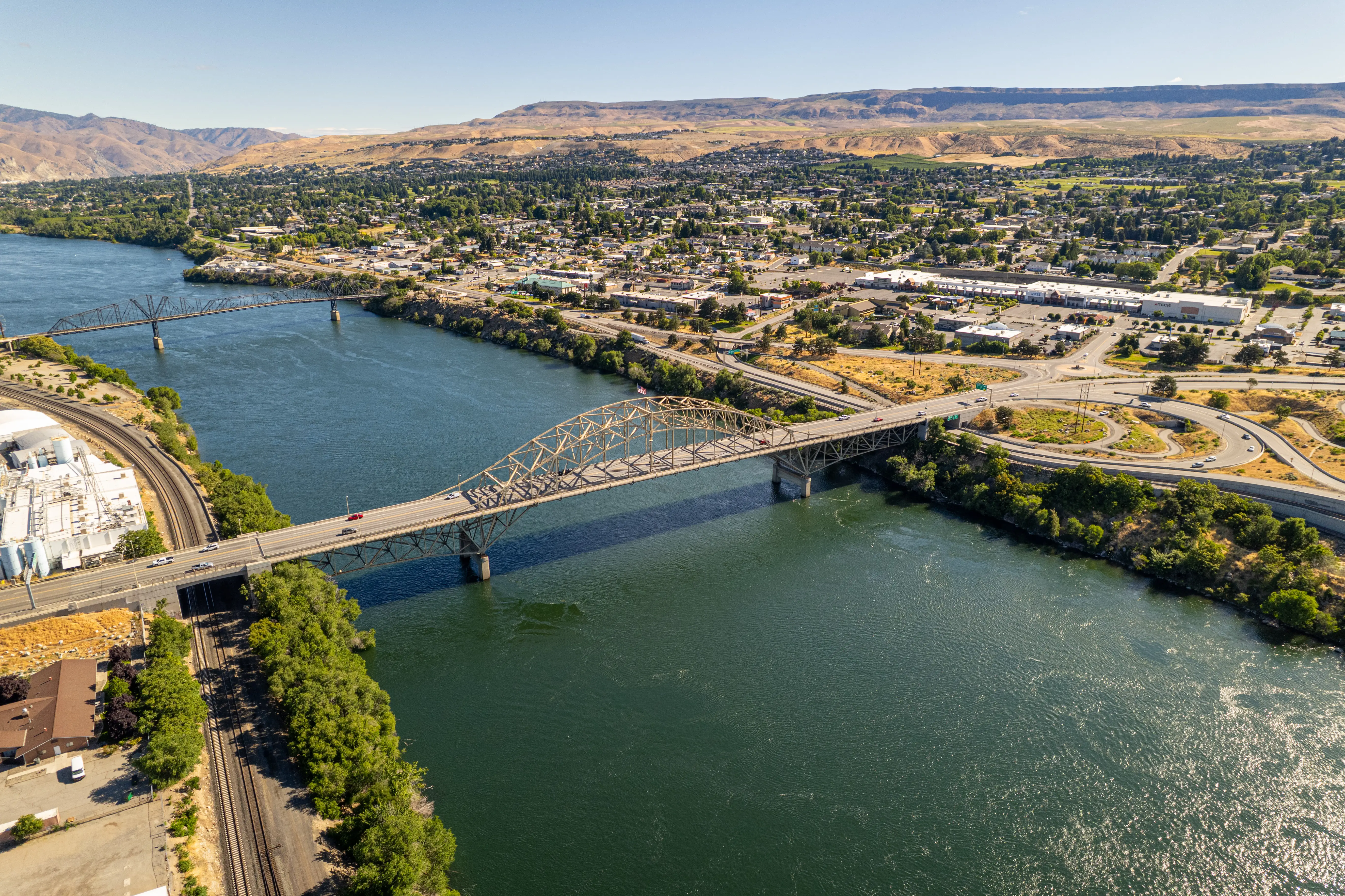
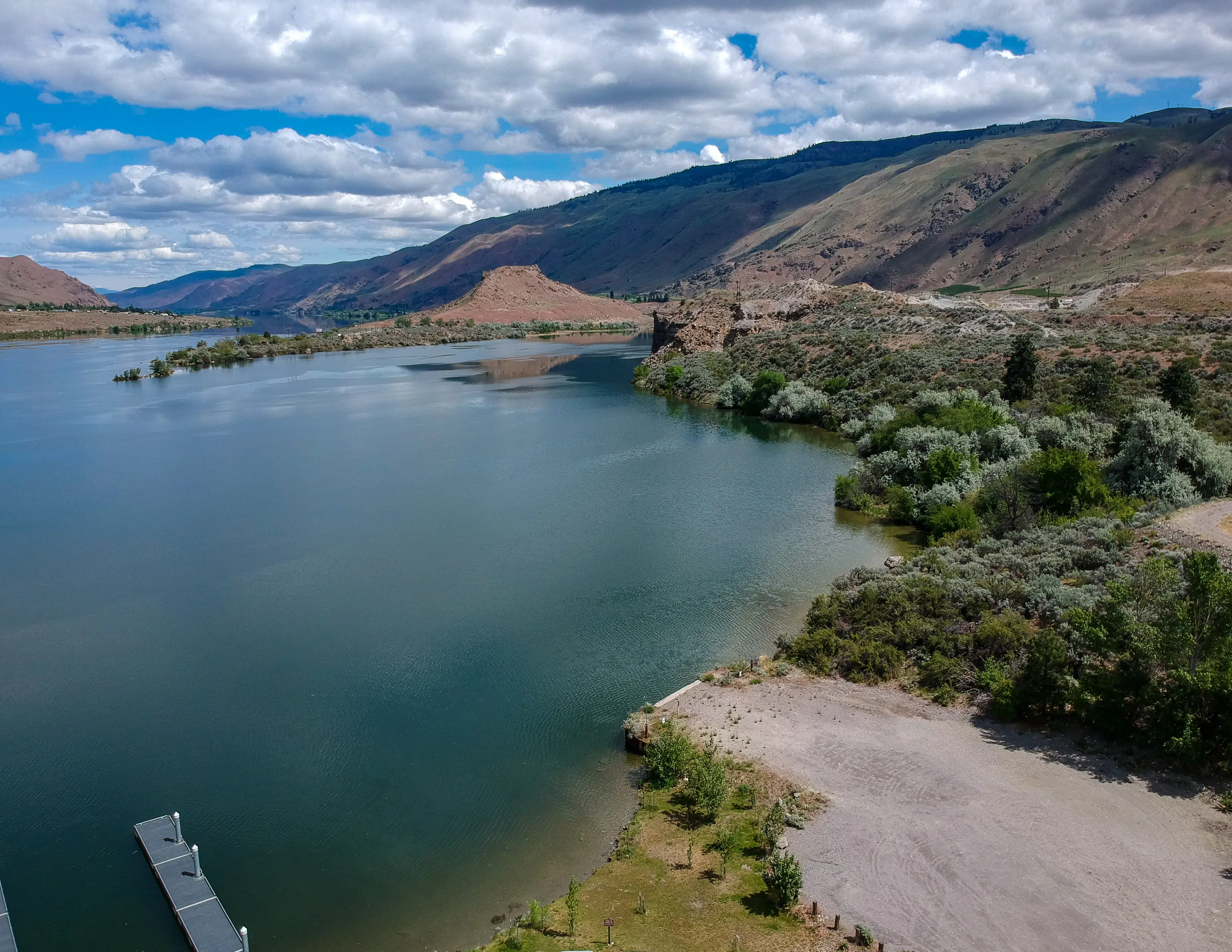
Here's what your friend who moved from San Diego three years ago would tell you over a beer: the summers in East Wenatchee are exceptional in a way that California summers used to be before the smoke. July and August average highs run into the low-to-mid 80s, the air is dry, the Columbia River is minutes away, and you can be at Lincoln Rock State Park or Daroga State Park in under 20 minutes. The Apple Capital Loop Trail runs along the river and gets heavy use from late spring through October. The outdoor lifestyle California buyers came for is genuinely there — just seasonally compressed.
What nobody fully prepares California buyers for is December through February. Average December highs land around 32°F with lows in the low 20s, and the roughly 25 snowfall days per year require a mindset adjustment for someone coming from coastal Southern California. East Wenatchee is not Western Washington — it doesn't get the endless gray drizzle of Seattle. With approximately 220 sunny days annually and only about 9 inches of rain, it is legitimately sunnier than most of California's coastal cities. But sunny and 22°F requires a different wardrobe, different tires, and a different relationship with the outdoors than sunny and 65°F.
What California transplants genuinely love after a full year here: the traffic. Or rather, the absence of it. The commute from East Wenatchee to downtown Wenatchee is five minutes. Nobody talks about traffic as a daily burden. Grocery parking lots aren't a psychological gauntlet. The pace of daily logistics — the errands, the school pickup, the weekend drive — is genuinely different in a way that's hard to quantify but easy to feel. What they miss is harder to generalize: the food diversity of any major California metro, the ability to be at a beach in under an hour, the social energy of a larger city, and for many, proximity to family still in California. The East Wenatchee dining and entertainment scene is decent for a city its size, but it is a city of 15,000, not 150,000.
If you want to see how East Wenatchee compares directly to the city you're leaving, use the tool below — it covers the 120 largest California cities with current housing and tax data.
Home prices: Redfin median sale data, Q1–Q2 2026. Select your city to compare.
Ready to talk through what your specific California equity could do in East Wenatchee? Todd can model your exact scenario in a single call.

Coming from California, your dollar stretches noticeably further in East Wenatchee, but where you land within the city does matter for long-term value. Neighborhoods like Maryhill Estates and Sage Brooke tend to hold their appeal well, offering that balance of established character and practical livability that resists softening markets. Cherry Meadows attracts families quickly, and well-priced homes there under $750,000 rarely sit long — sometimes just days before offers arrive. Understanding which areas align with your lifestyle before you start touring helps you move decisively when something worth buying actually appears.
That brings me to why talking with a lender first genuinely changes the experience. Your approval amount and your comfortable monthly payment are two different numbers, and the gap matters more than most buyers expect until they see the full picture — loan structure, property taxes, homeowner's insurance, and any HOA dues all fold into what you actually pay each month. Californians sometimes arrive pre-excited by the lower price points and underestimate how those carrying costs add up. Getting that honest conversation done early means you tour with clarity, not just enthusiasm, and you're positioned to act when the
Mistake 1: Assuming the market is slow because it's small. Buyers from Los Angeles or San Jose sometimes approach the East Wenatchee market with the assumption that a city of 15,000 in Eastern Washington will be patient with tire-kickers. In reality, well-priced homes have been going pending in under a week in recent months, with multiple offers on move-in-ready properties. Arriving without pre-approval, or worse — waiting to list your California home before making offers here — can cost you the specific house you want. California buyers with equity have significant advantages; using them early is the difference between finding the right property and settling.
Mistake 2: Not mapping out the two sides of the city before buying. East Wenatchee's terrain creates meaningful differences between neighborhoods that don't appear on a zip code map. The hillside neighborhoods — Maryhill Estates, Highlander, Edgeview Estates — sit at elevation above the valley floor with Columbia River views and a more secluded character. The lower-elevation and downtown-adjacent areas feel more connected to the commercial center along Valley Mall Parkway and Eastmont Avenue. Buying in the hillside without understanding what a snowy January morning looks like on those streets, or buying near the commercial corridors without knowing what summer traffic looks like on Grant Road, are both avoidable surprises.
Mistake 3: Running the tax comparison on housing price alone. Buyers who compare East Wenatchee to Sacramento at similar median prices and conclude the move doesn't pencil financially are running an incomplete calculation. The income tax advantage — $8,000 to $19,000 annually depending on income — doesn't show up in the home price comparison, but it shows up in every paycheck for the rest of their working lives. For a dual-income household earning $200,000 combined, the cumulative advantage over a ten-year horizon is often more than $150,000.
Mistake 4: Underestimating how different winters require logistical preparation. California buyers who've skied Tahoe think they know winter. They don't know living in winter. Studded tires or all-season tires rated for ice are not optional in East Wenatchee — they're a January necessity on the hillside streets. The city's schools do operate through most winter weather, but the morning routine looks different when Grant Road has an inch of packed snow at 7:30 AM. None of this is insurmountable, but buyers who show up in August during peak summer conditions and buy a hillside home sometimes hit February feeling like they were not adequately briefed.
Bay Area seller: A buyer selling in San Jose or the East Bay at $1.4M to $1.6M and purchasing below $514K in East Wenatchee is operating in all-cash or near-all-cash territory. At this equity level, the mortgage rate conversation is secondary to transaction speed, contingency structure, and whether a 1031 exchange is applicable. If the California property was an investment or rental, a 1031 exchange can defer capital gains taxes and should be discussed with a tax advisor before listing the California property — not after. The linked 1031 exchange guide for East Wenatchee covers the mechanics and timeline requirements.
Southern California seller: A buyer coming out of Irvine or Burbank with $800,000 to $1M in equity is well-positioned for conventional financing at low LTV, likely 20% to 40% down on a property that falls well below jumbo thresholds in Douglas County. This buyer has full access to competitive rate tiers without the documentation complexity of jumbo products, and their down payment alone places them in the top tier of purchase offers in East Wenatchee's market. Pre-approval with a lender who understands cross-state equity transactions — including how California sale proceeds are documented — is worth doing before the CA listing goes live.
Sacramento or Inland Empire buyer: A buyer in this equity range who lands in the $420,000 to $490,000 purchase price window may qualify for Washington State Housing Finance Commission's Home Advantage program or WSHFC down payment assistance, depending on household income and the final purchase price. These buyers are often in the strongest negotiating position to find programs that stretch their equity further — worth a single conversation with a Washington-licensed lender to confirm eligibility.
Local Expert Takeaway: The number California buyers most consistently underestimate isn't on any comparison chart — it's the cumulative effect of Washington's no-income-tax reality on monthly cash flow. A Walnut Creek household earning $160,000 and moving to East Wenatchee doesn't just save on housing; they pick up $12,000 to $14,000 annually in take-home pay from day one. Pair that with a $490,447 median home price and a 0.87% property tax rate, and the monthly financial picture five years in looks dramatically different from what the California spreadsheet projected. If you're running the numbers and the move still feels tight, run the numbers again with the income tax line zeroed out.
✅ Washington's no-income-tax advantage is worth $8,000 to $19,000 annually for most California households — the most underestimated line item in the relocation math.
⚠️ East Wenatchee winters require real preparation: studded or winter-rated tires, a different relationship with outdoor access, and December highs that average 32°F. The summers are exceptional, but the full calendar is not Southern California.
📍 With a median home price of $490,447 and a property tax rate of approximately 0.87%, California equity buyers — especially from the Bay Area and Southern California — can substantially reduce or eliminate their monthly mortgage obligation entirely.
Is moving from California to East Wenatchee worth it?
For most California households earning above $100,000, the financial case is strong and gets more compelling the higher the income. The combination of a $490,447 median home price, zero state income tax, and a 0.87% property tax rate typically produces significantly better monthly cash flow than any California market at comparable income levels. The lifestyle tradeoffs — smaller city, colder winters, thinner cultural scene — are real and worth taking seriously, but for buyers who've done the full comparison, the move tends to deliver on its financial promise.
How much cheaper is housing in East Wenatchee vs. California?
Compared to the Bay Area, East Wenatchee homes cost roughly 65% to 70% less at the median — a $490,447 East Wenatchee home versus $1.4M to $1.5M in San Jose or Oakland. Against Southern California, the gap is 45% to 55%. Sacramento, interestingly, runs close to East Wenatchee at around $500,000 at the median — meaning the Sacramento-to-East-Wenatchee move is more about tax savings than housing savings. Central Valley buyers from Fresno or Stockton are in a range that's actually somewhat comparable to East Wenatchee, making the case for that move primarily about quality of life and tax structure.
What do I need to know about moving from California to Washington?
A few practical items that catch people off guard: Washington requires vehicle registration within 30 days of establishing residency, and the emissions inspection process differs from California. You'll need a Washington driver's license within 30 days. If you're self-employed or receive K-1 income, Washington's business and occupation (B&O) tax structure is different from California's — worth a quick conversation with a CPA before the move. And if you're bringing a vehicle with California dealer plates or in the middle of a lease buyout, the timing of the state transfer affects your registration fee calculation.
Explore the full East Wenatchee series: The Ultimate East Wenatchee Relocation Guide · Is East Wenatchee Safe? · Cost of Living in East Wenatchee · Best Neighborhoods in East Wenatchee · East Wenatchee Schools & Family Life · East Wenatchee Youth Sports · East Wenatchee Parks & Recreation · Retiring in East Wenatchee · 1031 Tax-Deferred Exchange in East Wenatchee · East Wenatchee First-Time Homebuyers Guide · East Wenatchee Down Payment Assistance Guide · Moving to East Wenatchee from California