
Puget Sound · Washington
Moving to Federal Way from California: The Honest Comparison (2026)
The Bay Area software engineer who finally got a yard and kept their salary. The San Diego family who made it through an entire summer without dreading the utility bill or checking the air quality index. The Sacramento buyer who sold a two-bedroom townhome and bought a four-bedroom house with a garage — and still had equity left over. California-to-Washington migration has accelerated for years, and Federal Way sits in the middle of it: close enough to Seattle to access a major job market, affordable enough that California equity actually changes your life here, and large enough (nearly 100,000 people) to feel like a real city rather than a bedroom community.
But Federal Way is not California, and no amount of financial math changes that. November brings fewer than two hours of daily sunlight. The food scene does not approximate what you had in the Mission District or Hillcrest. The social rhythm is slower and more self-contained. Some California transplants land here and call it the best decision they ever made. Others hit March and quietly Google flights back to San Jose. The difference between those two outcomes usually comes down to whether they understood what they were trading before they signed the purchase agreement.
This guide breaks down the comparison honestly — cost by California region, what your California equity actually buys at Federal Way's $610,000 median, the tax picture, the weather reality, and the four mistakes California buyers consistently make in this market. If you want to run your specific California city against Federal Way's numbers, the interactive tool in Section 6 covers 120 California cities.
| Federal Way, WA | Bay Area | Southern CA | Sacramento Metro | Central Valley | |
|---|---|---|---|---|---|
| Median Home Price (approx. 2026) | $610,000 | $1.4M–$1.8M+ | $750K–$950K | $475K–$600K | $340K–$450K |
| Property Tax Rate (effective) | ~1.11% | ~1.1–1.25% | ~1.1–1.25% | ~1.1–1.25% | ~1.0–1.2% |
| State Income Tax | None | Up to 13.3% | Up to 13.3% | Up to 13.3% | Up to 13.3% |
| State Sales Tax | 10.2% (Federal Way) | 10.25% | 9.5–10.25% | 8.75–9.0% | 7.25–8.75% |
| Avg Utilities (monthly est.) | $180–$220 | $250–$320 | $220–$300 | $200–$270 | $180–$250 |
| Avg 1BR Rent | $1,600–$1,900 | $2,800–$3,500 | $2,200–$2,800 | $1,500–$1,900 | $1,100–$1,500 |
The Washington no-income-tax advantage deserves to be stated plainly, because California buyers frequently underestimate it until they see their first paycheck. A California resident earning $150,000 is paying roughly $12,000–$13,000 annually in state income tax, depending on deductions and filing status. That money disappears on the day they establish Washington residency. For a household earning $200,000, the annual swing approaches $18,000–$20,000 in take-home pay. Federal Way's sales tax runs about 10.2%, which is real — but on most income levels the net annual advantage of leaving California's income tax behind is strongly positive, typically in the range of $8,000 to $18,000 per year depending on household income.
Washington's no-income-tax structure is the most significant financial reason California buyers choose it over other migration destinations. It is not a minor perk. It is the reason a $150,000 salary in Federal Way generates meaningfully more monthly cash than the same salary in San Francisco — even accounting for Washington's higher sales tax.
| Tax Item | California | Washington | Net Impact for Transplant |
|---|---|---|---|
| State Income Tax | Up to 13.3% | None | $8K–$20K/yr saved (income-dependent) |
| State Sales Tax | 7.25–10.25% | 6.5% + local (~10.2% in Federal Way) | Roughly neutral |
| Capital Gains Tax | Taxed as ordinary income | 7% on gains over ~$262K/yr | Minimal impact for most W-2 earners |
| Property Tax (effective rate) | ~1.1–1.25% on purchase price | ~1.11% on assessed value | Roughly equivalent |
| Estate/Inheritance Tax | None | Yes (WA state) | Relevant for estates over $2.193M |
Washington's 7% capital gains tax applies exclusively to long-term capital gains exceeding approximately $262,000 per year — a threshold that does not affect the vast majority of W-2 earners or remote workers relocating from California. This tax was frequently misunderstood when it was first enacted, and some California buyers arrive in Washington with the mistaken belief that it functions like an income tax. It does not. The senior property tax exemption for Washington residents 61 and older is also worth noting — it's income-based, and eligible homeowners in Federal Way can reduce their assessed value significantly, making Federal Way a financially intelligent choice for retirees leaving California as well.
Property taxes in King County run approximately 1.11% of assessed value. On a $610,000 Federal Way home, that's roughly $6,771 per year, or about $564 per month. California's Proposition 13 caps assessed value growth for long-term owners, which means some California sellers have been paying property tax on a 1990s-era assessed value — and are genuinely surprised that Washington's property tax, while similar in rate, applies to current market value. For buyers purchasing a home in Federal Way, the rate is competitive with what they would pay on a California purchase at the same price.
A buyer leaving Palo Alto, San Mateo, or the Berkeley Hills carrying $1.5 million or more in net equity is in a position that almost no Federal Way seller can match: they can purchase the best home in the market with cash, close in a week, and still have meaningful liquidity remaining. The $610,000 median covers a solid four-bedroom home in an established neighborhood like Steel Lake, Twin Lakes, or West Campus. At $750,000–$850,000, Bay Area equity buys waterfront-adjacent properties near Dash Point or the larger lots along the Mirror Lake corridor. Bay Area sellers with equity above $1.2 million frequently buy at the top of the Federal Way market — homes that would have been unreachable in the South Bay — and pay cash for them.
For this equity range, the Twin Lakes area and the larger homes in West Campus represent the strongest relative value. Both neighborhoods offer the combination of lot size, finished square footage, and proximity to both I-5 and SR-99 that translates directly from what Bay Area buyers valued in their home markets. The question for these buyers is almost never "can I afford it" — it's "am I choosing the right neighborhood," and that answer depends heavily on whether they work downtown Seattle (where proximity to the 30-minute commute route matters) or work remotely (where lot size and neighborhood character dominate the decision).
A buyer leaving Irvine, Pasadena, or San Diego's North County with $800,000 in net equity arrives in Federal Way's market as one of its strongest participants. That equity buys a Federal Way home outright at the median — or funds a substantial down payment on a $750,000–$900,000 property with a modest mortgage at a very low loan-to-value ratio. At $700,000 in Federal Way, buyers typically find newer construction in neighborhoods like Madrona Meadows or the updated homes in Adelaide and Alderbrook — properties that would have listed for $1.4 million or more in comparable Irvine or Carlsbad neighborhoods.
Southern California buyers often describe the transaction as the first time in a decade they felt like they had leverage in a real estate negotiation. Federal Way's market sees homes sell in roughly 40 days on average, with the most competitive properties receiving two or three offers — a far cry from the 10-day bidding wars that defined coastal SoCal through the early 2020s. This equity range puts buyers firmly in the market's top quartile and gives them the flexibility to be selective about neighborhood and condition.
The Sacramento or Rancho Cucamonga seller doesn't arrive with Bay Area firepower, but the financial calculus still works clearly in their favor. A buyer carrying $500,000 in equity from a Sacramento purchase can put 50% or more down on a Federal Way home at the median, dramatically lowering their monthly payment relative to what a comparable Sacramento property would cost today — and eliminating California's state income tax on the income side simultaneously. The California Association of Realtors projects the statewide median to hit $905,000 for full-year 2026, meaning Sacramento buyers who delayed are watching their relative advantage narrow.
At the $400,000–$600,000 entry range in Federal Way, buyers from this equity tier typically target neighborhoods like Lakota, Campus Highlands, and the older sections of Alderbrook — solid, established areas with reasonable lot sizes and good access to SR-99 and I-5. The relative price gain is narrower than what a Bay Area seller experiences, but the income tax elimination frequently adds several thousand dollars per month in take-home pay that makes the comparison compelling even at similar home prices.
The Fresno or Bakersfield buyer carries the most modest relative equity advantage, and the comparison requires the most honest treatment. Federal Way's $610,000 median is not dramatically lower than what a well-located Central Valley property costs today, and buyers from this tier are typically looking at a down payment-plus-mortgage scenario rather than a cash purchase. What makes the move financially defensible is the income tax elimination — for a household earning $80,000 to $100,000, the annual take-home difference after leaving California can still represent $5,000–$7,000 per year, which materially affects monthly budget math even if the sticker price on the home feels similar.
At the $300,000–$400,000 range in Federal Way, buyers are typically looking at condos, townhomes, or older single-family homes in neighborhoods like Enchanted Village or the more affordable sections of the city near SR-99. The housing stock is functional and well-located relative to employment corridors, but buyers should approach this tier with specific expectations about what type of property they're buying rather than expecting a dramatic upgrade from Central Valley square footage.
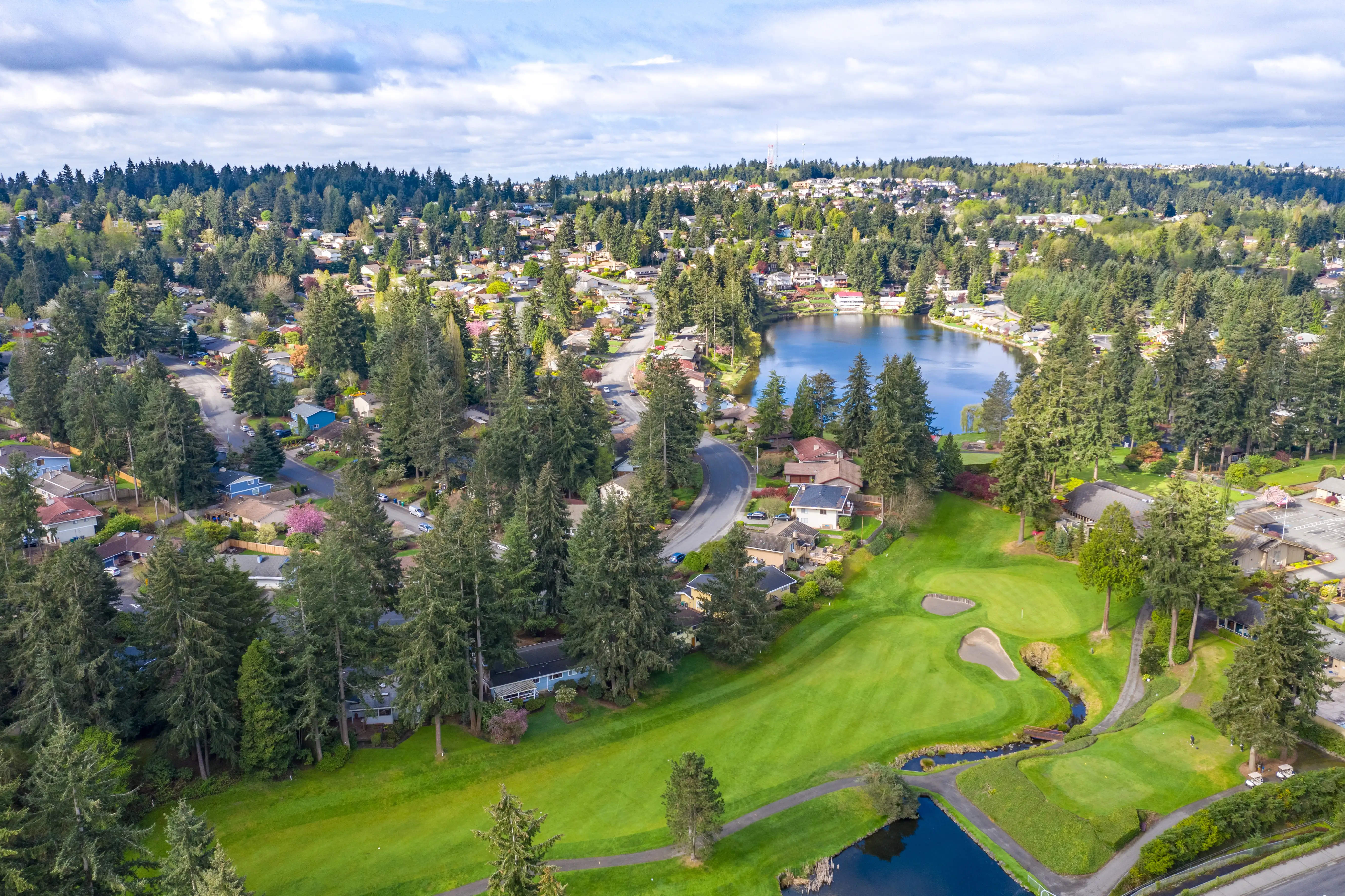
Federal Way averages 151 sunny days per year. Los Angeles averages around 284. San Jose clocks roughly 257. That gap is real, and it's felt most acutely not in the summer — Federal Way's May through September is genuinely beautiful, dry, and comfortable, with July averaging more than 10 hours of daily sunshine — but in November through February, when the city averages as few as two hours of sunlight per day on the darkest days. The rain is not dramatic; Federal Way gets about 41 inches annually, comparable to Atlanta. But it arrives as persistent gray drizzle across roughly 158 days per year, which is a fundamentally different experience than the 35-day rainy season in Los Angeles or the 62 rainy days in San Jose.
What California transplants consistently say they love after a full year in Federal Way: the summers, full stop. The Pacific Northwest July is one of the best-kept secrets in American real estate — warm, dry, green, and without the triple-digit heat waves that have redefined "summer" in Sacramento and the Inland Empire. They also describe the yard, frequently. The San Francisco buyer who spent eight years in a 900-square-foot condo now has a deck, a garden, and somewhere for the dog to exist without a leash. The absence of wildfire smoke as a seasonal condition gets mentioned repeatedly by buyers from the Sierra Nevada foothills and Northern California. And the traffic — Federal Way's 30-minute commute to Seattle on a normal day is a different psychological universe than the I-405 experience in Los Angeles.
What they miss honestly: year-round beach access. Federal Way has Dash Point State Park and salt water access, which is legitimately excellent in summer — but it is not Coronado or Santa Monica in January, and anyone who has spent February in San Diego will feel that absence. The food scene is functional and improving, but it does not replicate the depth and diversity of the Bay Area's restaurant culture or the taco infrastructure of Southern California. And the social rhythm is different in a way that is hard to describe but universally noted — Pacific Northwest reserve is real, and California transplants who built their social lives on the ease of spontaneous connection in dense urban neighborhoods sometimes find the first year here lonelier than they expected.
If you want to see how Federal Way compares directly to the city you're leaving, use the tool below — it covers the 120 largest California cities with current housing and tax data.
Home prices: Redfin median sale data, Q1–Q2 2026. Select your city to compare.
Ready to talk through what your specific California equity could do in Federal Way? Todd can model your exact scenario in a single call.

Coming from California, the price tags in Federal Way can feel refreshing — but location within the city still matters for long-term value. Neighborhoods like Twin Lakes and Steel Lake tend to hold their appeal well, offering established character and access to water that buyers consistently prioritize. Madrona Meadows attracts families looking for a quieter setting without sacrificing convenience. Well-priced homes in these areas, generally under $650,000, rarely sit long — sometimes just days — so having your financing dialed in before you fall in love with a listing isn't just smart, it's necessary.
That leads to the second thing I always tell California transplants: get pre-approved before you tour a single home, and make sure you understand the full monthly payment, not just the loan amount. Washington property taxes, homeowner's insurance, and any HOA dues stack on top of your principal and interest in ways that surprise people who were renting or in a different market. Your comfortable number and your maximum approval number are rarely the same figure, and knowing the difference early keeps the process honest and protects you from stretching into something that creates stress later.
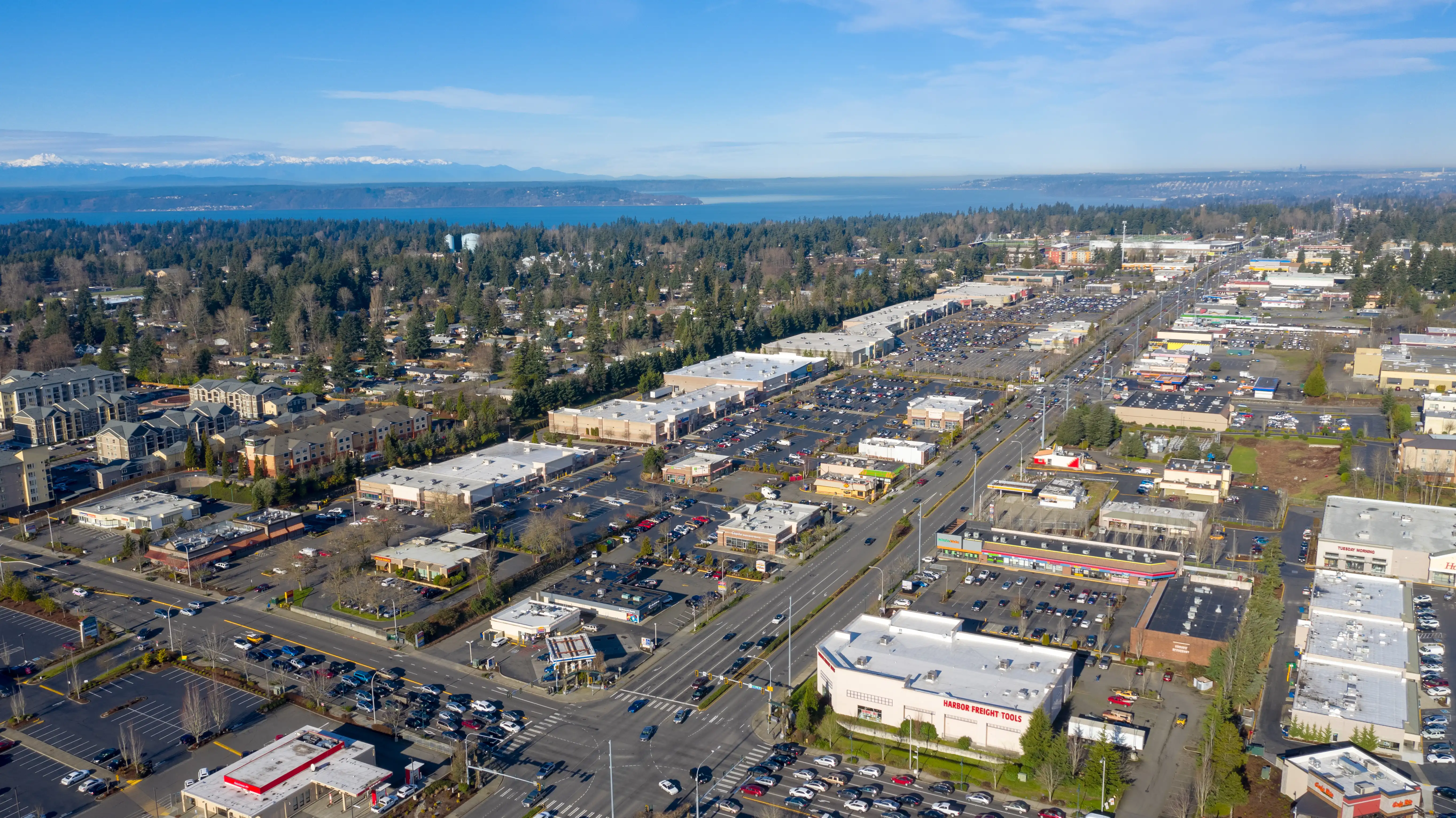
Assuming the city has a single character. Federal Way spans a significant amount of geographic and demographic variation that is invisible from the outside. The neighborhoods west of I-5 near Dash Point and the Redondo waterfront feel structurally different from the SR-99 corridor, which is a commercial strip that serves a different function than the residential neighborhoods behind it. Buyers who purchase near Pacific Highway South without understanding that the surrounding commercial context is denser and more transit-oriented than the quieter residential areas to the west or east sometimes feel they bought the wrong version of the city. Drive the neighborhoods in person before you make an offer — and specifically drive both the SR-99 corridor and the streets west of it.
Not accounting for the winter commute. A 30-minute Seattle commute on a dry September Tuesday can become a 75-minute commute on a January Wednesday after the region's first ice event. The Pacific Northwest doesn't get significant snowfall — Federal Way averages about 5 inches per year — but the region's freeze-thaw pattern produces black ice on overpasses and arterials that shuts down parts of the I-5 corridor in ways California drivers are genuinely unprepared for. This doesn't make Federal Way a bad commute city. It means the commute requires flexibility a few times per year, and buyers who have never driven in icy conditions should expect a learning curve.
Underestimating the income tax swing on monthly cash flow. California buyers often process the no-income-tax advantage intellectually but don't internalize it until the second or third paycheck. A household earning $150,000 that has been sending $12,000+ per year to Sacramento will feel that $1,000-per-month swing in their checking account before they've fully unpacked. This changes the affordability math significantly — buyers who feel they're stretching at Federal Way's $610,000 median often find their budget more comfortable than expected once California withholding disappears.
Treating the market as slower than it actually is. Federal Way is not the Bay Area, and it is not a market where sitting on a well-priced listing for 60 days is normal. The most desirable properties in Steel Lake, Twin Lakes, and West Campus — the neighborhoods that California buyers tend to gravitate toward — can go pending within 9 to 14 days when priced correctly. Bay Area buyers who are accustomed to waiving every contingency sometimes overcorrect and structure aggressive offers on properties that didn't warrant it, while others who are relieved to be out of the Bay Area frenzy assume they have unlimited time and lose homes they wanted. The market is competitive in specific segments; understanding which those are before you start touring is worth a conversation with a local broker.
Bay Area sellers carrying $1.2 million or more in equity face a different set of decisions than most buyers. The primary question isn't rate or monthly payment — it's whether to purchase outright with cash or carry a small mortgage for liquidity and tax purposes. All-cash offers win faster and eliminate financing contingencies in a competitive environment. For sellers who owned investment property in California, a 1031 exchange into a Federal Way income-producing property can defer capital gains tax on the sale proceeds; the Federal Way 1031 Exchange guide walks through the mechanics and timeline in detail.
Southern California sellers with $700,000–$1.1 million in equity will generally find that Federal Way's price range keeps them comfortably in conventional loan territory — no jumbo financing required at the $610,000 median. A 30–40% down payment produces a loan-to-value ratio that qualifies for the best conventional pricing available and requires no PMI. This tier of buyer can close quickly and cleanly, which gives them meaningful negotiating leverage against buyers who are financing at higher LTVs.
Sacramento and Inland Empire buyers with $400,000–$650,000 in equity who are purchasing in the $500,000–$650,000 range may qualify for Washington State Housing Finance Commission programs, including WSHFC Home Advantage, depending on income limits and the specific purchase price. These programs can layer down payment assistance on top of conventional financing and are worth exploring early in the process — eligibility requirements change, and pre-qualification takes time.
Local Expert Takeaway: The single most consistently underestimated factor for California buyers in Federal Way is the income tax elimination working in combination with the equity conversion. A buyer who sells a $950,000 Irvine home with $700,000 in equity, puts 50% down on a $610,000 Federal Way property, and earns $130,000 per year is not just buying a cheaper house — they're simultaneously eliminating roughly $10,000 in annual California income tax, cutting their mortgage payment by 60%, and positioning in a market where the entry-level competition is far less intense than what they just left. Run those numbers in a spreadsheet before deciding whether the move "makes sense." For most California households above $100K in income, it makes more sense than almost any other relocation destination in the country.
✅ Washington's no-income-tax advantage is worth $8,000–$20,000 per year for most California households — this alone frequently closes the cost-of-living argument.
⚠️ Federal Way's winters are gray, persistent, and nothing like California. November through February averages as few as two hours of daily sunlight. Know this before you commit.
📍 Neighborhood character varies significantly within Federal Way. The areas west of I-5 near Dash Point and Steel Lake feel structurally different from the SR-99 commercial corridor — drive both before making an offer.
Is moving from California to Federal Way worth it?
For most households earning above $90,000 annually and carrying meaningful California equity, the financial case is strong. The combination of lower home prices, no state income tax, and competitive property tax rates means most California transplants see a significant improvement in monthly cash flow within the first year. The lifestyle trade-off — specifically the weather shift — is real, and buyers who do the financial math without honestly accounting for the Pacific Northwest winter sometimes struggle with the adjustment. Do both calculations before deciding.
How much cheaper is housing in Federal Way vs. California?
Federal Way's median sits at $610,000 — roughly 33% below the projected 2026 California statewide median of $905,000, and 55–65% below the Bay Area median in most counties. Buyers leaving Pasadena, Walnut Creek, or San Jose are typically moving from a $1.2M–$1.8M market to one where the same budget buys the best property available. Sacramento and Inland Empire buyers see a narrower gap — Federal Way is sometimes comparable in price — but the income tax elimination and equity conversion still shift the calculation in Washington's favor for most buyers.
What do I need to know about moving from California to Washington?
Establish Washington residency cleanly and early — update your driver's license, voter registration, and vehicle registration promptly, as California has been known to pursue income tax on residents who delay residency changes. Washington has no state income tax but does have a 7% capital gains tax on long-term gains exceeding approximately $262,000 per year (this does not affect W-2 income). Washington also has an estate tax on estates over $2.193 million, which California does not. On the practical side: get a pre-approval from a Washington-licensed lender before you start touring, because Federal Way's most desirable properties do not wait for out-of-state buyers to get their paperwork in order.
Explore the full Federal Way series: The Ultimate Federal Way Relocation Guide · Is Federal Way Safe? · Cost of Living in Federal Way · Best Neighborhoods in Federal Way · Federal Way Schools & Family Life · Federal Way Youth Sports · Federal Way Parks & Recreation · Retiring in Federal Way · 1031 Tax-Deferred Exchange in Federal Way · Federal Way First-Time Homebuyers Guide · Federal Way Down Payment Assistance Guide · Moving to Federal Way from California