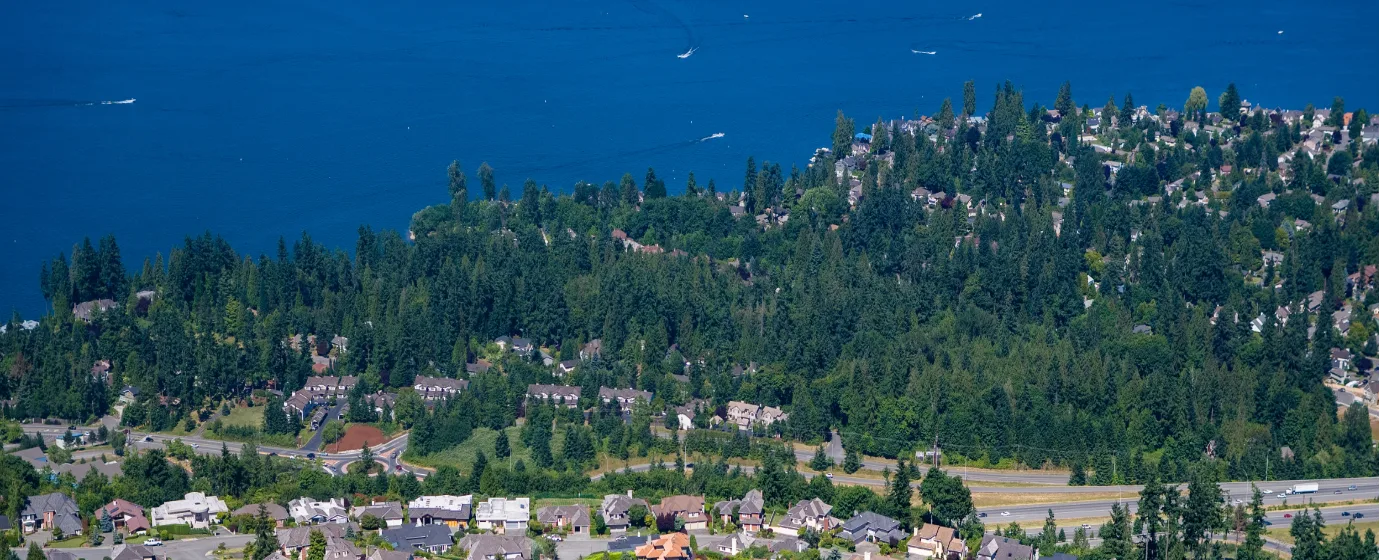
Puget Sound · Washington
Moving to Issaquah from California: The Honest Comparison (2026)
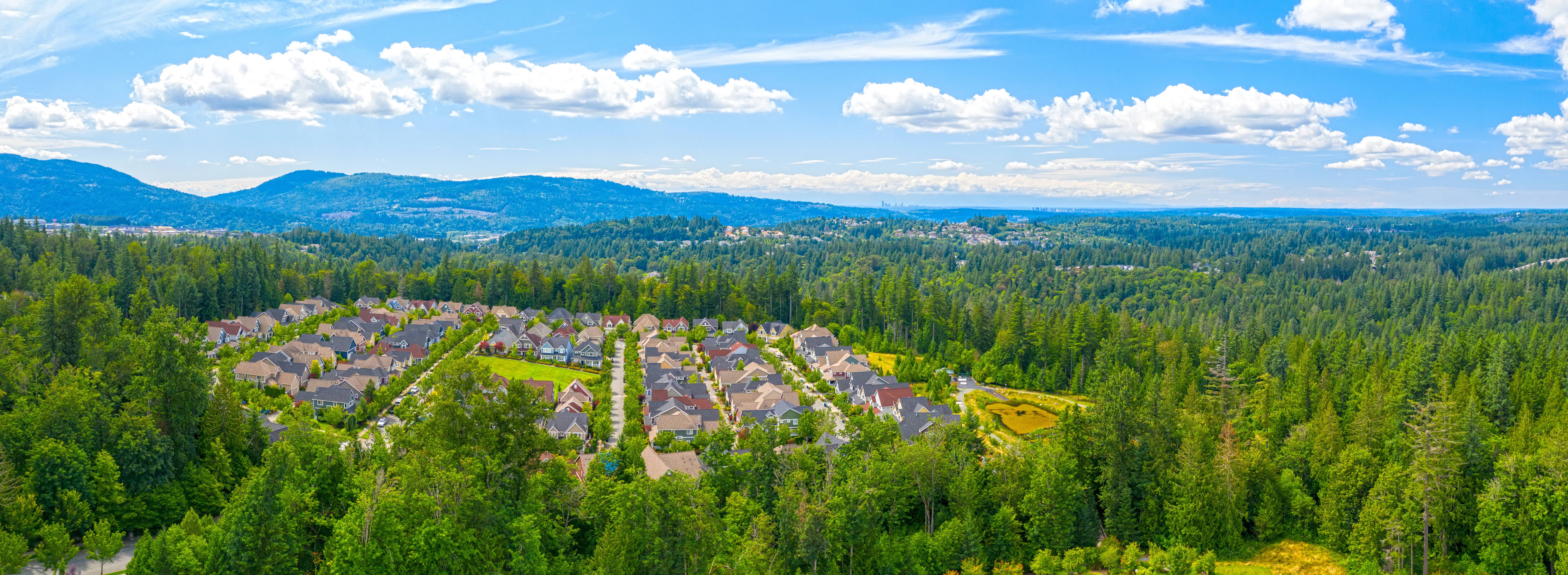
The Bay Area software engineer who finally stopped renting in Fremont, sold a townhome for $1.4 million, and bought a four-bedroom house on a wooded lot in Issaquah Highlands — keeping their remote salary intact — is no longer a rare story. It's become a recognizable pattern along the I-90 corridor east of Seattle. The Sacramento family who traded a modest ranch house for a larger home with mountain views and eliminated their state income tax bill entirely. The San Diego couple who bought in Klahanie and spent their first August marveling that the air was clear, the utilities were low, and the schools were ranked among Washington's best. Issaquah specifically draws California transplants because it threads a needle that most Seattle-area suburbs don't: genuine outdoor culture, high-performing schools, proximity to major tech employers, and a downtown that actually has character.
The honest part of this guide is the part most relocation content skips. Issaquah is not California. The winters are genuinely gray in a way that Los Angeles or Sacramento simply aren't, and no amount of Gore-Tex fixes the psychological adjustment in January when the sun rises at 8 a.m. and sets before 4 p.m. The food scene is strong but not Bay Area strong. The social fabric is tighter — sometimes that's what people want, and sometimes it's what they miss about a city with ten million more people nearby. These are real trade-offs worth understanding before you're already in escrow.
This guide covers the full picture: a cost-of-living comparison across California's major metro regions, what your specific equity level actually buys in Issaquah's market, the tax math done honestly, an interactive tool to compare your exact California city, and the four mistakes California buyers consistently make in this market. The goal isn't to sell you on the move — it's to make sure that if you make it, you make it with clear eyes.
| Issaquah, WA | Bay Area (SF/SJ) | Southern CA (LA/SD) | Sacramento Metro | Central Valley | |
|---|---|---|---|---|---|
| Median Home Price (approx. 2026) | $1,070,000 | $1,300,000–$1,630,000 | $895,000–$975,000 | $480,000–$530,000 | $320,000–$400,000 |
| Property Tax Rate (effective) | ~0.96% | ~1.1%–1.2% | ~1.1%–1.2% | ~1.0%–1.1% | ~0.9%–1.0% |
| State Income Tax | None | Up to 13.3% | Up to 13.3% | Up to 13.3% | Up to 13.3% |
| State Sales Tax | 6.5% + local (~10.2%) | 7.25% + local (~8.7%–10.75%) | 7.25% + local (~9.5%–10.5%) | 7.25% + local (~8.75%) | 7.25% + local (~8.0%–8.75%) |
| Avg Monthly Utilities (est.) | ~$220 | ~$180–$220 | ~$180–$230 | ~$170–$210 | ~$150–$200 |
| Avg 1BR Rent (est.) | ~$2,972 | ~$3,200–$4,500 | ~$2,400–$3,400 | ~$1,600–$2,000 | ~$1,100–$1,500 |
A Bay Area buyer selling a home for $1.4 million and purchasing in Issaquah at the current median is either entering the market all-cash or carrying a dramatically reduced mortgage compared to what they'd need to buy anything comparable in Santa Clara County. Even a buyer from Walnut Creek or Los Gatos who sells at $1.2 million is looking at either eliminating their mortgage entirely or carrying a low loan-to-value position that qualifies for the most competitive rates available. Washington's sales tax runs higher than California's base rate, and that does soften the income tax advantage modestly for high-consuming households — but on most income profiles, the net annual advantage of living in Washington remains strongly positive.
Washington's absence of a state income tax is one of only nine such arrangements in the United States, and for California transplants it represents the single largest structural financial improvement in the move. California's top marginal rate of 13.3% is the highest in the country — and it applies at income levels that many Eastside tech workers reach without being wealthy by Seattle-area standards.
| Tax Item | California | Washington | Net Impact for Transplant |
|---|---|---|---|
| State Income Tax | Up to 13.3% | 0% | Strongly positive — $5,900–$20,900+/yr saved |
| Property Tax (effective) | ~1.1%–1.2% on purchase price | ~0.96% on assessed value | Slightly favorable in WA |
| Capital Gains Tax | Up to 13.3% (as ordinary income) | 7% on long-term gains over $262K/year | CA far more expensive for investors |
| Retirement Income Tax | Taxed as ordinary income | Not taxed | Highly favorable in WA |
| Sales Tax | 7.25%–10.75% | 6.5% + local (~10.2% in King County) | Roughly equivalent |
| Estate/Inheritance Tax | None | Estate tax on estates over $2.09M | CA edge for large estates |
Washington's 7% capital gains tax applies only to long-term capital gains exceeding $262,000 in a single year — a threshold that doesn't affect most buyers' earned income or typical investment activity. Homeowners selling their primary residence in Issaquah are generally protected by the federal $250,000/$500,000 exclusion, so this rarely affects a California buyer's proceeds. The property tax rate of approximately 0.96% in King County is modestly lower than what California buyers pay on newly purchased homes there, where Proposition 13's reset-on-sale mechanism typically pushes effective rates on recent purchases to 1.1%–1.2% of purchase price.
A buyer leaving San Jose, Palo Alto, or Cupertino with $1.5 million in equity is, functionally, an all-cash buyer in Issaquah. The city's median sits at $1,070,000, which means a Bay Area seller at that equity level can eliminate their mortgage entirely and still have liquidity remaining. For buyers with equity north of $1.4 million, the question becomes less about financing and more about which neighborhood aligns with their lifestyle. Issaquah Highlands offers newer construction, planned amenity infrastructure, and proximity to the Grand Ridge shopping corridor — homes here range from the low $900,000s for townhomes to well above $1.5 million for larger single-family properties. A buyer from Los Gatos or Saratoga bringing $1.8 million in equity could purchase in Montreux, the gated enclave on the south side of the city, where homes routinely exceed $1.5 million and the setting — wooded, private, trail-adjacent — is as close to a Pacific Northwest analog to a California hillside community as Issaquah offers.
The deeper opportunity for Bay Area buyers isn't just the mortgage elimination — it's the combination of that with the annual income tax savings. A former San Francisco renter or a San Jose homeowner moving with $1.3 million in equity and earning $175,000 remotely is, in year one of Issaquah ownership, capturing both the freed-up debt service and approximately $14,000–$16,000 in former California tax liability. That combined effect can exceed $5,000 per month in improved financial position, which is a number most buyers don't calculate until after they've already moved.
A buyer leaving Pasadena, Irvine, or Carlsbad with $900,000 in equity lands solidly in Issaquah's market with meaningful down payment flexibility. At that equity level, a buyer can put 60–80% down on a median-priced home, carry a manageable mortgage, and still own in one of the top-performing school districts in Washington state. Klahanie, the large planned community near the Sammamish border, offers homes in the $850,000–$1.2 million range and is particularly well-suited to Southern California buyers who are accustomed to HOA-governed neighborhoods with maintained common spaces. The trade is familiar — organized, walkable within the neighborhood, close to retail — but the price-to-square-footage is substantially better than anything comparable in Orange County.
Buyers from San Diego leaving at the $750,000–$850,000 equity level still enter Issaquah's market with strong positioning. Neighborhoods like Gilman and areas near Downtown Issaquah become accessible, and the no-income-tax advantage on a tech or professional salary adds meaningful monthly cash flow to a household that may be carrying a conventional loan at a reasonable LTV. Southern California buyers at this equity tier tend to be surprised by how much house they're getting — not just square footage, but lot size, privacy, and access to genuine open space in a way that the LA basin or coastal San Diego doesn't replicate.
The Sacramento or Riverside County buyer has the most interesting financial profile in this comparison. Their home equity doesn't eliminate a mortgage in Issaquah — it creates a strong down payment on a market that is more expensive than what they're leaving. But the income tax math changes the calculus significantly. A Sacramento household earning $130,000 and paying California state income tax is losing roughly $8,000–$10,000 per year to the state. That same household in Issaquah keeps that money, which can offset $600–$800 per month of a higher mortgage payment. Over a five-year hold, the tax savings alone can cover a meaningful portion of the price differential.
At the $450,000–$550,000 equity level, buyers can target neighborhoods like Timberlake Park or areas of South Issaquah where entry-level single-family inventory occasionally surfaces in the $800,000–$950,000 range. These buyers are not purchasing at Issaquah's median, but they are purchasing in a top-tier King County school district, with immediate trail access, in a city that has historically appreciated well. The relative financial gain from the Sacramento baseline is more modest in terms of the housing delta, but the cumulative tax advantage over a decade of Washington residency is not small.
The Fresno, Stockton, or Bakersfield buyer arriving with $350,000 in equity faces the most challenging pure-housing math in this comparison. Issaquah's median is genuinely higher than what they're leaving, and $350,000 down on a $1.07 million home creates a substantial mortgage. The buyers for whom this move still makes strong financial sense are those with high incomes — the tech worker, the healthcare professional, the remote engineer — for whom the income tax elimination is worth $12,000–$18,000 per year and who are trading a Central Valley lifestyle for proximity to Eastside tech corridors, world-class schools, and outdoor access that the Central Valley simply doesn't offer.
At this equity level, buyers should look at Issaquah's newer attached housing, townhome communities, and the lower end of the Highlands inventory. Entry-level attached properties in Issaquah can be found starting in the $650,000–$750,000 range, which changes the down payment math meaningfully. For buyers who prioritize the school district and outdoor lifestyle over square footage, Issaquah at this equity level remains a viable and often life-improving move — but it requires honest mortgage planning and income verification upfront.
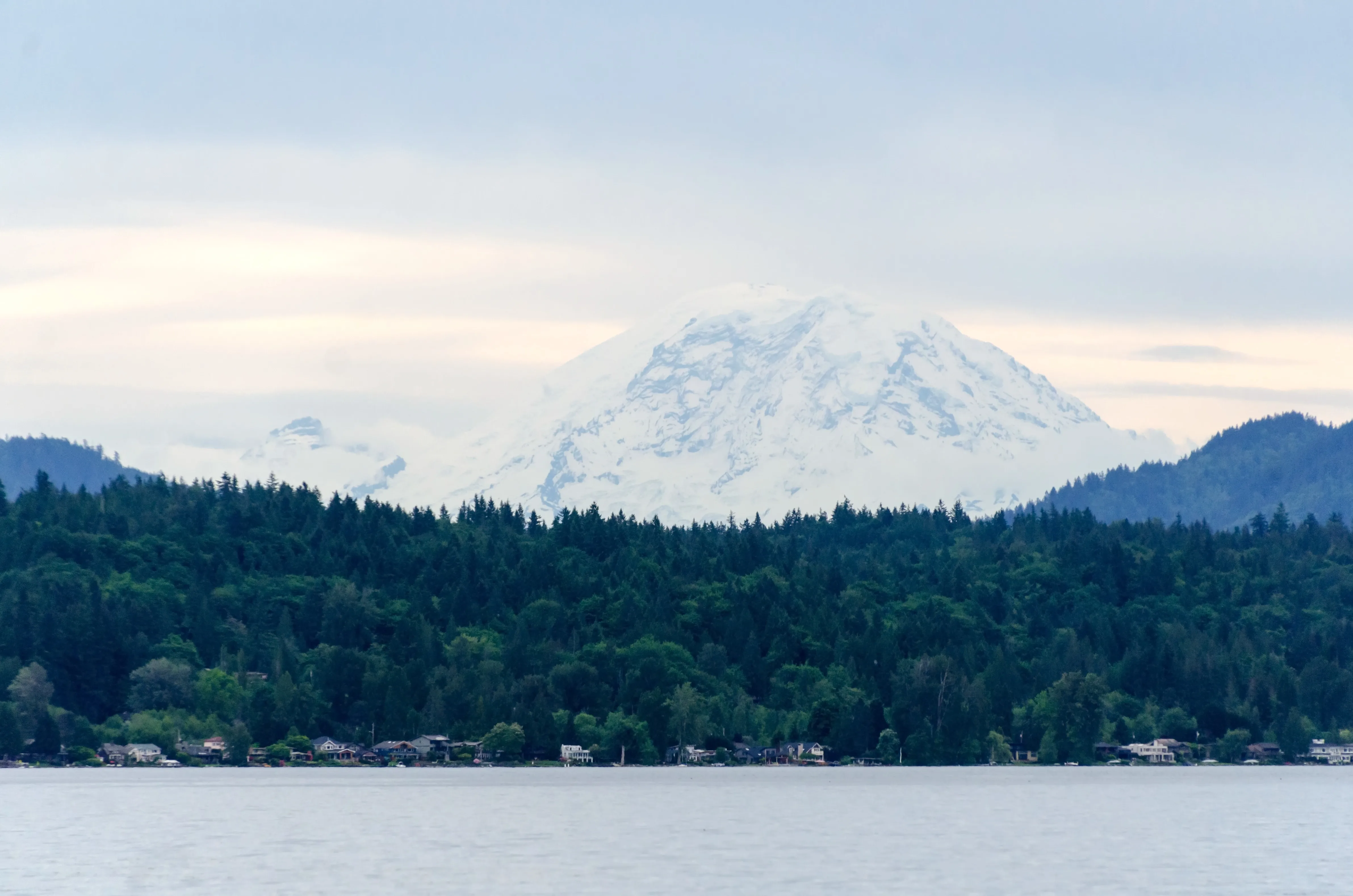
If a friend who moved from Santa Clara to Issaquah three years ago were being straight with you over coffee, they'd tell you the summers are genuinely spectacular in a way that rivals anything in California. July and August in Issaquah average 77°F with low humidity, around ten and a half hours of daily sunshine, and access within twenty minutes to Lake Sammamish, hiking on Cougar Mountain, and the trails of Tiger Mountain State Forest. The outdoor culture here is real, not aspirational — people actually use it, consistently, and the summer recreation window is dense and energizing. That same friend would also tell you that from November through February, Issaquah averages about 23 rainy days per month in the worst months, receives roughly 62 inches of annual precipitation, and logs fewer than 2,100 sunshine hours per year — compared to San Jose's 3,000 or Los Angeles's 3,250. The adjustment is real and it is physical. Not everyone stays.
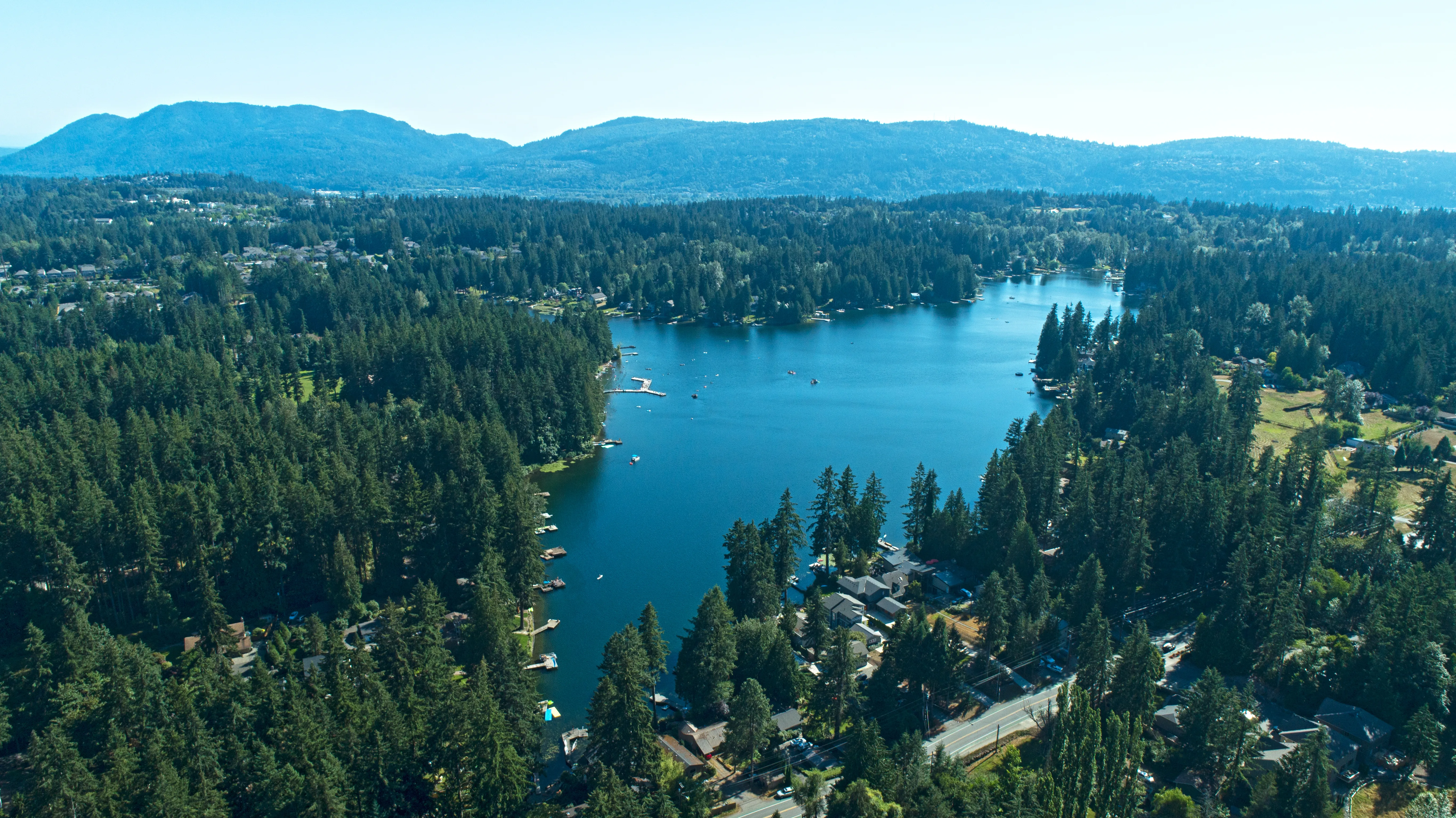
What California transplants consistently say they love after a year in Issaquah: the space, the greenery, the fact that a top-five Washington school district is just the default public school system, and the absence of the specific anxiety that comes with owning property in fire-prone California ZIP codes. Several Eastside cities have seen meaningful migration from Marin County and the Napa Valley specifically — people who spent summers watching the AQI and managing evacuation bags. The Pacific Northwest has its own wildfire exposure, but the Issaquah area's moisture profile and proximity to the Cascades means the pattern is different. The relief that first September without a smoke event is something that doesn't make relocation brochures but comes up in almost every conversation with former Northern Californians.
What they miss is harder to package politely. Year-round beach access — not Lake Sammamish in October, actual ocean swimming — doesn't exist within a realistic drive of Issaquah. The food scene in the broader Seattle metro is excellent but not Bay Area excellent, particularly for Vietnamese, Mexican, and South Asian cuisines that Southern California delivers at a density Issaquah can't match. The social pace is slower and quieter, which some people describe as a relief and others describe as isolation. Issaquah's population of roughly 39,000 means the city is genuinely small, and the kind of spontaneous social energy that comes with living in or near a major urban core takes deliberate effort to recreate here.
If you want to see how Issaquah compares directly to the city you're leaving, use the tool below — it covers the 120 largest California cities with current housing and tax data.
Home prices: Redfin median sale data, Q1–Q2 2026. Select your city to compare.
Ready to talk through what your specific California equity could do in Issaquah? Todd can model your exact scenario in a single call.

Issaquah holds its value well, and where you land within the city can shape your long-term equity story. Issaquah Highlands tends to attract strong buyer demand thanks to its master-planned feel and proximity to major employers, meaning well-priced homes there rarely sit long — sometimes just days. Klahanie and Talus offer a slightly different pace but still draw competitive interest, particularly from California buyers who appreciate the newer construction and outdoor access. If you find something under $750,000 in any of these neighborhoods, expect to move quickly or lose it.
Before you fall in love with a house on a tour, sit down with a lender first. California buyers sometimes carry assumptions about what their approval amount means day-to-day, but Washington carries its own property tax picture, HOA dues vary significantly across Issaquah's neighborhoods, and homeowners insurance adds another layer. Your comfortable monthly number and your maximum approval number are rarely the same figure, and knowing the difference before you tour protects you from chasing homes that look right on paper but strain your actual life.
Assuming Issaquah is one uniform market. The city contains micro-neighborhoods that behave entirely differently from each other. A home in Issaquah Highlands can command $150,000 more than a nearly identical home a few miles away in a non-HOA neighborhood — not because the house is better, but because of school assignment boundaries, proximity to the Grand Ridge retail corridor, and the perceived prestige of the Highlands address. Buyers from San Francisco who research "Issaquah median home price" and assume they can apply that number uniformly to every neighborhood are routinely surprised at open houses. The spread from Olde Town's older stock to Montreux's gated luxury to Klahanie's planned community pricing is wider than most California metros.
Not accounting for winter driving realities. California doesn't require understanding of how ice and snow on Issaquah's hillier terrain changes commuting. The neighborhoods around Squak Mountain and the roads feeding Cougar Mountain and upper Grand Ridge can become genuinely impassable in a meaningful snowstorm. Issaquah's topography is more varied than it looks on a map — the city climbs from valley floor to substantial elevation, and buyers who fall in love with a wooded hillside property without understanding what SE 56th Street or Highland Drive looks like in a January freeze sometimes regret not asking the question. All-wheel drive is not optional for much of Issaquah's inventory; it's the baseline.
Underestimating how the income tax math changes monthly cash flow immediately. California buyers who focus entirely on the mortgage payment often fail to model the income tax change in month one. A household earning $160,000 moving from Campbell or Pleasanton to Issaquah should run the calculation before they negotiate: the no-income-tax savings at that income level likely frees up $900–$1,100 per month. That's real money that directly offsets a higher mortgage payment and changes the affordability math in a way that makes Issaquah's price-to-California-price comparison much more favorable than the raw numbers suggest.
Buying in the wrong part of the city for their actual lifestyle. Buyers who do their research in summer, fall in love with Issaquah's outdoor access and community feel, and purchase quickly sometimes discover that their specific address doesn't deliver what they expected. Buyers who want walkable access to Gilman Village's coffee shops and restaurants should not be buying at the outer edges of Klahanie without a car-dependent tolerance. Buyers who want trail access from their backyard need to be in Cougar Mountain-adjacent neighborhoods or the upper Highlands — not in the commercial-adjacent flatlands near I-90. Every neighborhood in Issaquah has a distinct character, and the gap between a good fit and a regrettable purchase is often about not asking specific enough questions about daily life before closing.
Bay Area sellers: A buyer arriving from Palo Alto or Saratoga with $1.5 million or more in equity is primarily evaluating Issaquah as a cash or near-cash transaction. At this equity level, rate negotiation matters less than speed and terms — a cash offer in Issaquah's balanced market (currently running about 28 days on market) often wins on pace alone. If the California property being sold was an investment or rental, a 1031 exchange may allow deferring the capital gains tax on the sale proceeds into an Issaquah replacement property — the details of that structure are covered in the Issaquah 1031 Exchange guide, and buyers in this position should engage a 1031 intermediary before closing the California sale, not after.
Southern California sellers: A buyer arriving from Irvine, Torrance, or Oceanside with $800,000–$1 million in equity will typically look at conventional financing with a strong down payment, likely 50–70% of the purchase price. At Issaquah's median of $1,070,000, the loan amount on a 60% down transaction is around $428,000 — well within conforming loan limits and qualifying for conventional rather than jumbo pricing. These buyers often have strong income documentation from California employers and adjust pre-approval quickly; the main variable is ensuring their California sale closes on a timeline that coordinates with the Washington purchase, which requires an experienced local lender who understands bridge scenarios.
Sacramento and Inland Empire buyers: At $400,000–$600,000 in equity, these buyers may qualify for Washington State Housing Finance Commission (WSHFC) programs if the property falls within program purchase price limits. The WSHFC Home Advantage program offers below-market rates and down payment assistance for qualifying buyers — worth exploring before assuming a conventional structure is the only path. Additionally, ONE+ Mortgage, which allows a 1% down payment with Fannie Mae match, remains relevant for buyers whose income qualifies and whose target home falls within the program's price ceiling. At Issaquah's pricing, most buyers in this equity tier will be targeting attached or entry-level single-family properties where these programs are most applicable.
Local Expert Takeaway: The income tax savings are not theoretical — they hit your bank account starting with your first Washington paycheck. A California buyer earning $160,000 who models their Issaquah budget using California take-home pay is underestimating their monthly cash flow by roughly $900–$1,100 every single month. Run the Washington withholding calculator before you set your price ceiling. Buyers who do this consistently find they can comfortably afford a neighborhood they initially assumed was out of reach — and that changes the neighborhood conversation entirely.
Is moving from California to Issaquah worth it?
For households earning above $120,000, the combination of income tax elimination, strong schools without private tuition, and outdoor access that genuinely rivals California's makes Issaquah a financially and lifestyle-positive move for most California profiles. The caveat is the weather — the gray winters are real, and buyers who haven't spent a full November through February in the Pacific Northwest should do so before committing.
How much cheaper is housing in Issaquah vs. California?
Compared to the Bay Area, Issaquah is roughly 30–40% less expensive — a buyer leaving San Jose at $1.6 million enters Issaquah's market at $1.07 million with significant equity remaining. Compared to Los Angeles and San Diego, Issaquah is comparable or slightly higher in median price — but the income tax elimination and property tax difference change the true cost of ownership meaningfully. Compared to Sacramento or the Central Valley, Issaquah is more expensive on a raw purchase price basis, though the tax and lifestyle gap closes much of that delta over time.
What do I need to know about moving from California to Washington?
Register your vehicle in Washington within 30 days of establishing residency and obtain a Washington driver's license within 30 days as well — California enforcement on residency changes has tightened, and establishing a clean Washington domicile matters for tax purposes. Make sure your lender has experience with Washington's specific transfer tax and excise structures, which differ from California's. And if you're leaving a California rental property or investment property, talk to a 1031 intermediary before you close — the window to identify a replacement property after selling is 45 days, and that timeline is unforgiving.
Explore the full Issaquah series: The Ultimate Issaquah Relocation Guide · Is Issaquah Safe? · Cost of Living in Issaquah · Best Neighborhoods in Issaquah · Issaquah Schools & Family Life · Issaquah Youth Sports · Issaquah Parks & Recreation · Retiring in Issaquah · 1031 Tax-Deferred Exchange in Issaquah · Issaquah First-Time Homebuyers Guide · Issaquah Down Payment Assistance Guide · Moving to Issaquah from California