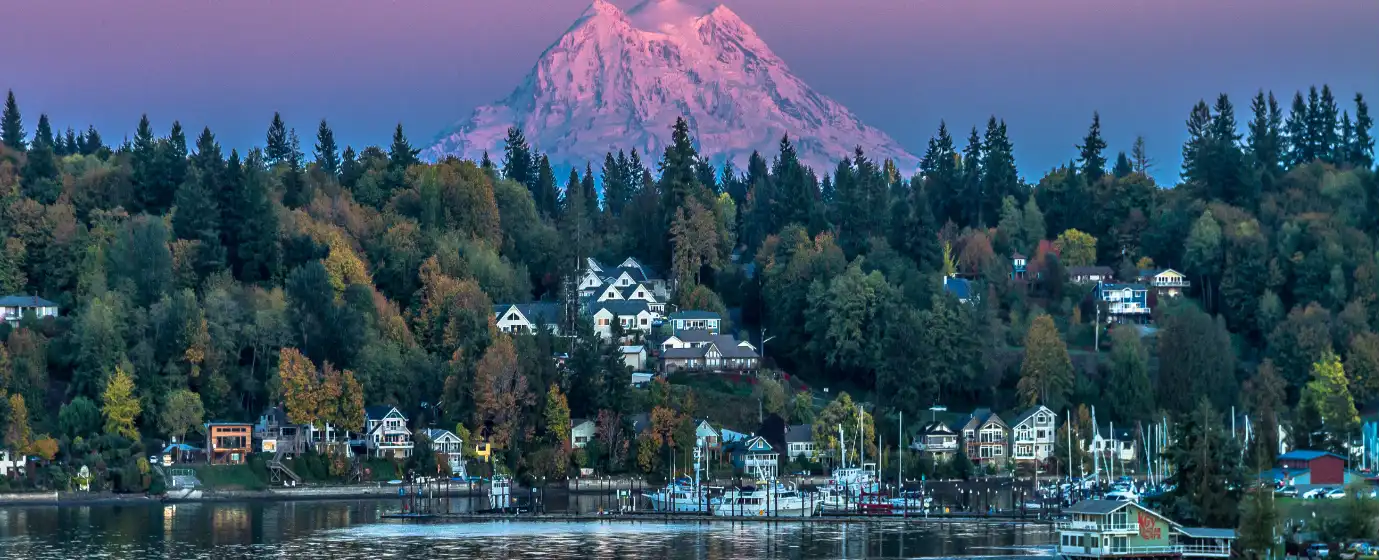
Puget Sound · Washington
Best Neighborhoods in Olympia: Where to Buy or Rent (2026)
Choosing the wrong neighborhood in Olympia isn't just an inconvenience — it can mean a 20-minute longer commute every day, a school boundary that doesn't serve your kids, or a home that appreciates at half the rate of a property three blocks away. With 27 recognized neighborhoods spread across a city of roughly 57,000 people, the differences between them are real and financially meaningful. A buyer who treats Olympia as a single, uniform market tends to make the kinds of decisions they regret by year two.
The most important geographic divide in Olympia runs roughly along the I-5 corridor. West of the freeway, neighborhoods skew toward larger lots, quieter streets, and a more suburban character, though proximity to Capital Mall and the waterfront keeps things from feeling remote. East of the freeway — and especially in the South Capitol and Downtown core — you get walkability, historic architecture, and the energy of a small capital city. Neither side is objectively better, but they serve very different buyers, and understanding that divide is the first thing to get right.
This guide breaks down the eight most significant neighborhoods in Olympia, where prices actually land in 2026, what the commute and daily life look like in each, and where common mistakes happen. Whether you're buying your first home, upgrading from a rental, or relocating from Seattle with a budget that won't get you anything there, here's what you actually need to know.
| Neighborhood | Best For | Price Range | Vibe |
|---|---|---|---|
| South Capitol | Historic home buyers, government workers | $550,000–$800,000 | Historic, walkable, competitive |
| Downtown | Urban renters, condo buyers | $430,000–$549,000 | Artsy, walkable, revitalizing |
| West Bay Drive | Waterfront/luxury buyers | $575,000–$700,000+ | Scenic, established, low inventory |
| Governor Stevens | Families, character home buyers | $510,000–$580,000 | Tree-lined, central, walkable |
| Eastside | First-time buyers, budget-conscious | $380,000–$470,000 | Eclectic, mid-century, accessible |
| Bigelow Highlands | Affordable families, space seekers | $390,000–$450,000 | Quiet, wooded, unpretentious |
| Northwest Olympia | Commuters, value seekers | $460,000–$540,000 | Suburban, convenient, growing |
| Cooper Point | Large lots, nature-adjacent | $480,000–$580,000 | Rural-adjacent, spacious, private |
| Buyer Type | Best Neighborhood | Why |
|---|---|---|
| First-time buyer | Eastside | Most accessible price points in the core city; mid-century stock with room to build equity |
| Luxury buyer | West Bay Drive | Waterfront-adjacent, established homes, limited competing inventory |
| Walkability seeker | South Capitol / Downtown | Capitol Campus walk, Farmers Market, Percival Landing all within reach |
| Families with kids | Governor Stevens | Strong school proximity, walkable streets, central location |
| Commuters to JBLM or Tacoma | Northwest Olympia / Westside | Quick I-5 on-ramp access, less congestion than the Downtown core |
| Large lot buyers | Cooper Point | Semi-rural parcels, privacy, larger footprints at mid-range prices |
| Renters | Downtown / Eastside | Most rental inventory concentrated here; fare-free transit access |
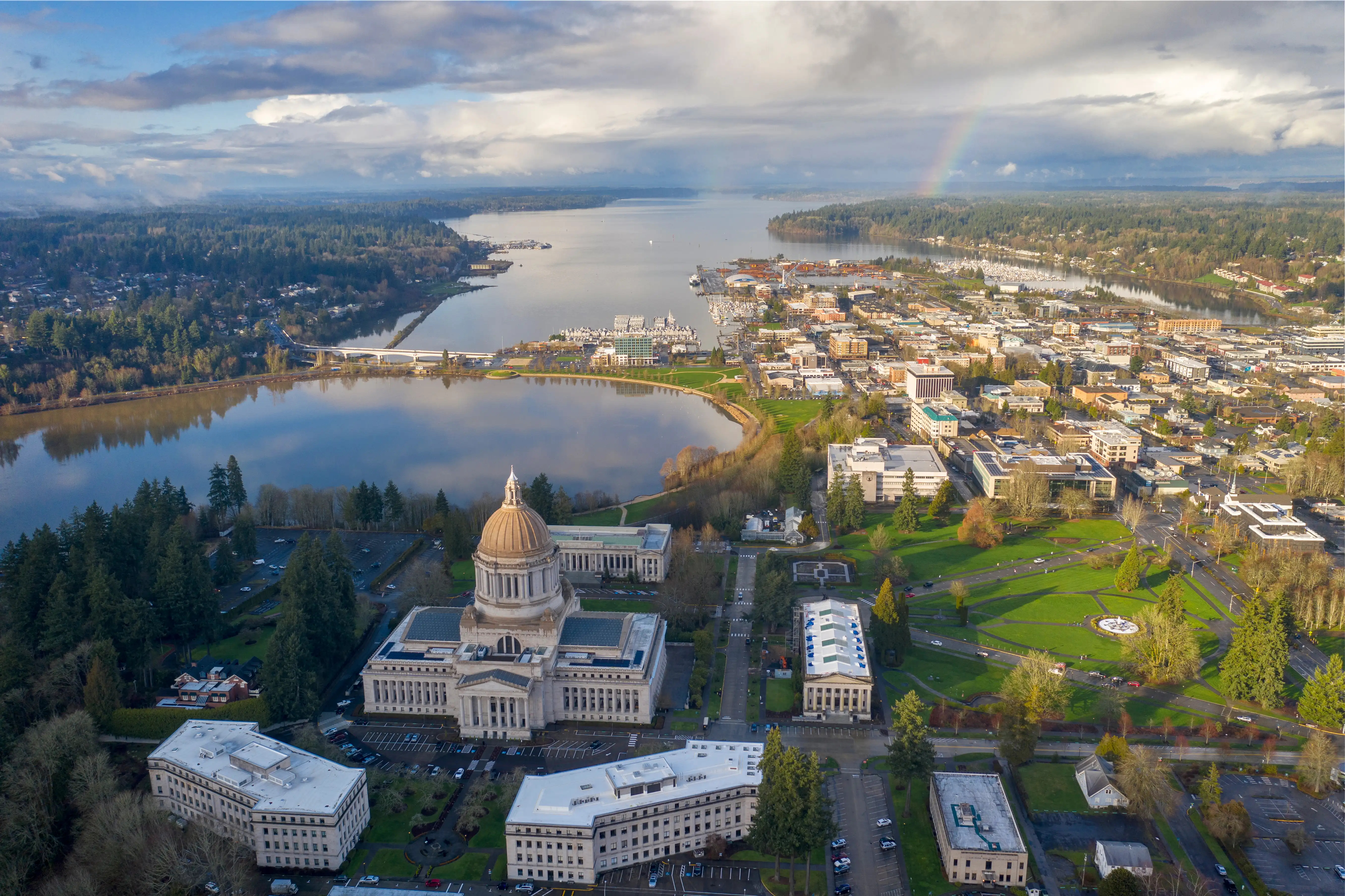
South Capitol is the neighborhood that surprises most people after they've lived in Olympia for six months — the proximity to everything is hard to grasp until you're actually here. The Capitol Campus is a short walk north, Capitol Lake's perimeter trail is arguably the most-used recreational loop in the city, and the Olympia Farmers Market runs within easy reach on weekends. The downside is real: homes move in about 11 days on average, prices run between $550,000 and $800,000 for the Craftsman bungalows and updated two-stories that define the neighborhood, and you will likely compete against multiple offers. Parking is constrained near the Capitol core, and the historic character that draws buyers also means older systems — buyers on a tight budget should build in room for deferred maintenance.
Best for: Government workers, historic home enthusiasts, and buyers who want walkability as a daily reality rather than just a listing description.
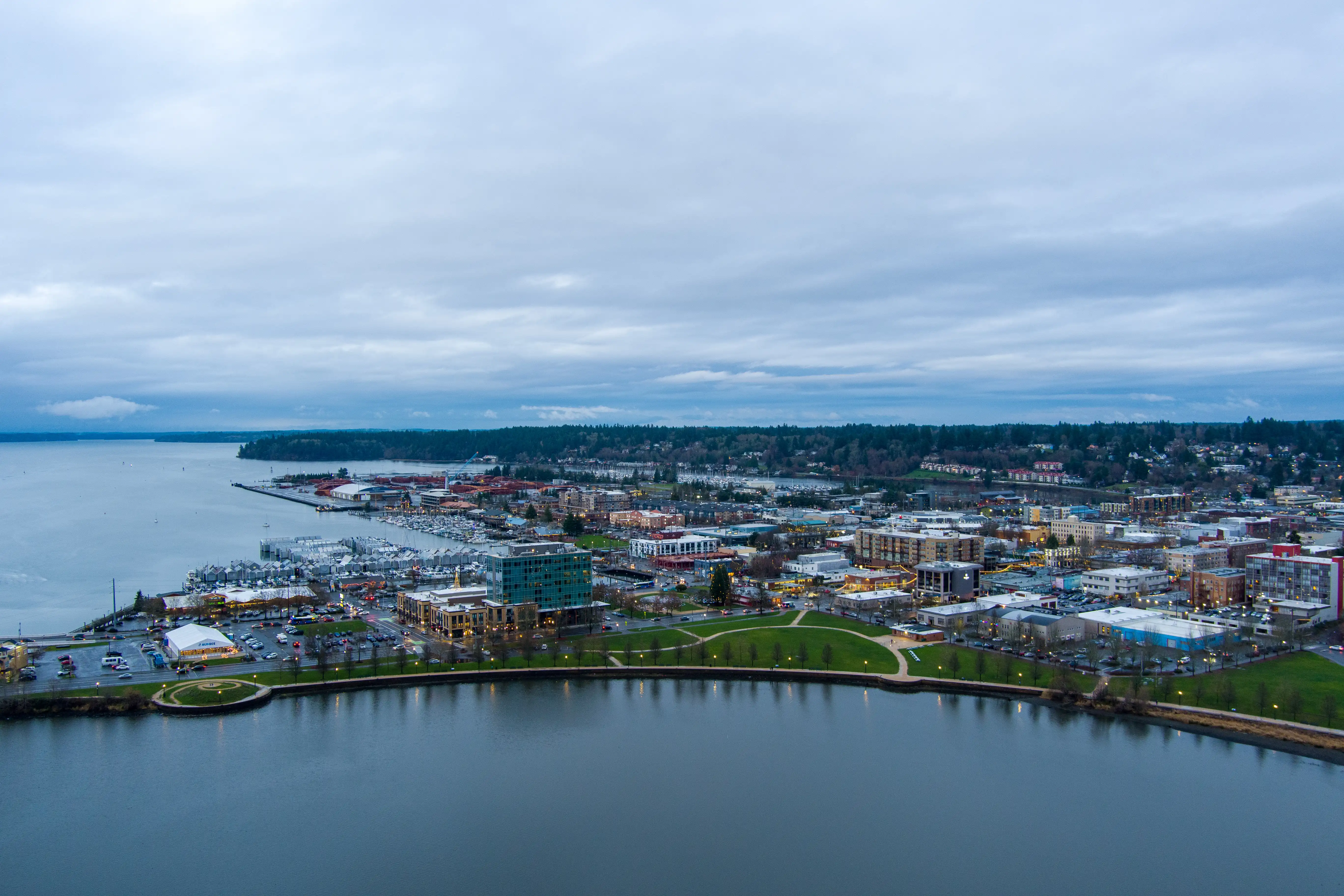
Downtown Olympia has been quietly rebuilding its identity over the past several years, and the 2026 version is more livable than most newcomers expect. The Percival Landing waterfront, the Saturday Farmers Market, and a genuinely diverse restaurant and arts scene give it an energy that no other Olympia neighborhood replicates. Median prices in the Downtown core run around $430,000–$549,000, though the sample size in any given month is small enough that percentages can swing wildly — don't read too much into year-over-year figures here. The honest trade-off is that Downtown Olympia still has pockets of active homelessness, and street-level conditions on some blocks vary noticeably from one to the next. For renters or condo buyers who want urban walkability with fare-free transit and quick I-5 access, this is the most practical choice in the city.
Best for: Renters, condo buyers, and urban-lifestyle seekers who want proximity to Olympia's cultural core.
Governor Stevens sits just southeast of the Capitol Campus and is among the most consistently desirable residential neighborhoods in Olympia for buyers who want character without the full South Capitol premium. Tree-lined streets, a mix of Craftsman and mid-century architecture, and walkable access to downtown make it a natural landing spot for families and professionals who care about where they'll end up on foot after dinner. Prices generally fall between $510,000 and $580,000, putting it in reach for buyers who've lost out on South Capitol multiple times. The catch: the neighborhood is popular enough that well-priced listings don't sit long, and the lot sizes are modest — buyers expecting suburban square footage will be disappointed.
Best for: Families with school-age children, buyers who want walkable character homes at a more competitive price point than South Capitol.
The Eastside is where Olympia buyers on a realistic first-home budget should start their search. Mid-century homes, eclectic streets, and prices typically in the $380,000–$470,000 range make it the most accessible option inside the city core — the kind of neighborhood where buyers build equity while the rest of the market catches up. Lions Park anchors the community feel, and local shops and restaurants give it more personality than most neighborhoods in this price tier. The honest limitation is condition: older housing stock means buyers encounter deferred maintenance more frequently than in newer build areas, and flood mitigation in some lower-elevation pockets near waterways is worth factoring into due diligence.
Best for: First-time buyers, value-oriented buyers who want to stay inside city limits without stretching into South Capitol territory.
Bigelow Highlands sits on the northeast side of Olympia and has a distinctly quieter, more wooded character than neighborhoods closer to the Capitol. Prices in this area typically run between $390,000 and $450,000, which makes it one of the more affordable options for buyers who need more space but can't stretch to Cooper Point. The neighborhood has a low-key, residential-first feel — you won't find walkable retail or a coffee shop around the corner, and that's largely by design. The downside for commuters is that surface streets through here can add meaningful time to a downtown commute during peak hours, and buyers who prioritize convenience tend to gravitate elsewhere.
Best for: Budget-conscious buyers, remote workers, and households looking for a quieter footprint without leaving city limits.
Northwest Olympia is the part of the city most often underestimated by relocating buyers doing their research from a distance. The corridor along Harrison Avenue NW and the neighborhoods feeding toward Capital Mall offer convenient I-5 access, proximity to Providence St. Peter Hospital, and a range of housing stock that skews toward 1980s–2000s construction — more space per dollar than the historic core, but less character. Prices typically range from $460,000 to $540,000, and the area benefits from the kind of suburban infrastructure — grocery stores, pharmacies, quick errand loops — that the Downtown core still lacks at scale. Buyers commuting to JBLM or north toward Tacoma consistently find this corridor shaves real time off their daily drive compared to buying in South Capitol or Downtown.
Best for: Commuters, buyers who prioritize suburban convenience over walkability, and those relocating for healthcare employment at Providence St. Peter.
Cooper Point stretches out along the peninsula northwest of the main city, where the lots get bigger, the trees get taller, and the feeling shifts noticeably from "small capital city" to "Pacific Northwest rural-adjacent." Homes here generally fall in the $480,000–$580,000 range and often sit on half-acre or larger parcels, which is genuinely difficult to find at that price point anywhere near Puget Sound. Evergreen State College occupies the northern tip of the peninsula, giving the area an intellectual, counter-cultural undercurrent that isn't for everyone but adds to its distinct identity. What buyers sacrifice is convenience: the road network off Cooper Point funnels traffic through a limited number of routes, and the drive to downtown Olympia during peak hours can stretch longer than the raw mileage suggests.
Best for: Large-lot buyers, buyers seeking a semi-rural lifestyle within city proximity, and Evergreen State faculty or staff.
West Bay Drive is Olympia's most scenic residential corridor and one of the most consistently expensive addresses in the city. Homes here run $575,000 to $700,000 and above, offering waterfront-adjacent living with views of Budd Inlet and the kind of established, mature landscaping that only comes with age. Inventory is limited — there simply aren't that many homes on this corridor — which means buyers often wait months for the right property to surface and compete sharply when it does. The practical limitation is that West Bay Drive is a narrow arterial with limited access options, and buyers who don't love trading a short drive for a specific lifestyle often find the premium hard to justify compared to Cooper Point or Governor Stevens.
Best for: Luxury buyers, empty nesters, and buyers who prioritize waterfront proximity and scenery above all other criteria.

Assuming the commute to Seattle is manageable every day. The 65-minute figure you'll see cited for Olympia-to-Seattle represents off-peak conditions on a good day. Buyers who take jobs in Seattle and anchor in South Capitol or Northwest Olympia quickly discover that the actual commute — during standard morning rush — can approach 90 minutes or more when I-5 through the Tacoma Narrows corridor backs up. If you're commuting to Seattle daily, that calculation needs to be honest before you sign a purchase agreement.
Buying in the 98513 ZIP code thinking you're in Olympia. The southeastern corner of the city and nearby unincorporated areas blend into Lacey in ways that aren't obvious on a map. Buyers focused on Olympia School District boundaries sometimes discover their target property falls outside them, or that the "Olympia address" home they're considering actually carries a different character — more tract development, fewer of the historic quirks that drew them to the city in the first place. Always verify school boundary assignment on the district's official map, not the listing description.
Underestimating the Capitol Way and Martin Way intersection at rush hour. The convergence of traffic flowing off the Capitol Campus, along Capitol Way, and through the Martin Way corridor creates a genuine afternoon bottleneck that doesn't show up in real estate marketing materials. Buyers who set up their routes around this intersection — particularly those in South Capitol who need to push east or south — find that what looks like a five-minute drive in Google Maps becomes fifteen on a Tuesday in October.
Overlooking deferred maintenance in Eastside and South Capitol homes. Both neighborhoods have genuine appeal and real equity upside, but a meaningful share of the housing stock predates 1960. Buyers excited about the character and price point sometimes skip detailed inspections or get charmed into waiving contingencies in competitive situations. The homes that sell fast in these neighborhoods are often the ones that have been updated — the others carry foundation issues, old electrical panels, and original plumbing that adds up quickly after closing.

From a lending standpoint, neighborhood choice in Olympia directly shapes long-term equity and resale potential. Areas like South Capitol and Downtown tend to attract consistent buyer demand, which means well-priced homes often go under contract within days — sometimes before buyers who aren't financially prepared even get a showing scheduled. Northwest Olympia has also seen steady interest from buyers looking for more space while staying close to amenities. Most move-in-ready homes in Olympia's desirable pockets are priced under $600,000, though that varies by condition and location, so understanding what fits your situation before you start browsing listings makes a real difference.
What surprises many buyers is the gap between what they're approved for and what actually feels comfortable month to month. Your full payment includes not just principal and interest but also property taxes, homeowner's insurance, any HOA dues, and sometimes mortgage insurance depending on your loan structure — and those pieces add up quickly. Getting pre-approved early means you understand your real numbers, not just a maximum loan amount. When the right home appears in a competitive neighborhood, being ready lets you move with confidence instead of scrambling.
| Area | Ideal For | Typical Rent Range | Trade-off |
|---|---|---|---|
| Downtown / Percival Landing | Young professionals, urban lifestyle | $1,400–$2,000/mo (1–2 BR) | Street-level variability; limited parking |
| South Capitol / Heritage Park | Government workers, Capitol commuters | $1,500–$2,100/mo | Competitive; low vacancy, limited stock |
| Eastside | Budget renters, students | $1,200–$1,600/mo (1 BR) | Older buildings; fewer amenities |
| Northwest Olympia (near Harrison) | Commuters, healthcare workers | $1,500–$1,900/mo | More suburban; less walkable |
| Westside / Capital Mall area | Families, car-dependent renters | $1,450–$1,950/mo | Suburban character; convenient but not walkable |
Local Expert Takeaway: If you're moving to Olympia and torn between the historic walkable core and the suburban convenience of the Westside or Northwest, the decision usually comes down to daily life rhythm. South Capitol and Governor Stevens reward buyers who work locally or hybrid and want to walk to the Farmers Market on a Saturday — but they're competitive and demand quick decisions. Northwest Olympia and Cooper Point reward buyers who commute, need space, or are coming from markets where a half-acre lot is the expectation. Don't let the citywide median of $513,000 anchor your expectations — South Capitol regularly clears $600,000, while Bigelow Highlands and the Eastside still offer entry points well below that figure.
Looking to buy in Olympia? Estimate your payment.
Enter your numbers to see an estimated monthly mortgage payment.
Estimate only. Excludes HOA fees and mortgage insurance.
What are the best neighborhoods in Olympia for families?
Governor Stevens and South Capitol are consistently strong choices for families with school-age children, offering walkable streets, proximity to the Capitol Campus recreational areas, and access to Olympia School District schools. Northwest Olympia is an increasingly popular alternative for families who need easier freeway access without leaving the district.
Is Olympia, Washington a good place to buy a home in 2026?
Olympia remains one of the more accessible capital-city real estate markets in the Pacific Northwest, with a median sold price around $513,000 — roughly half of Seattle's median. Homes are selling in about 46 days on average, with competitive properties moving significantly faster. Buyers relocating from higher-cost Puget Sound markets tend to find genuine value, particularly in the Eastside and Bigelow Highlands.
How do Olympia neighborhoods compare in price?
Prices vary meaningfully across the city. South Capitol and West Bay Drive represent the premium tier, with homes regularly selling between $550,000 and $800,000. The Eastside and Bigelow Highlands sit at the more accessible end, with typical prices in the $380,000–$470,000 range. Most of the mid-market neighborhoods — Governor Stevens, Northwest Olympia, Cooper Point — cluster in the $460,000–$580,000 range, broadly consistent with the citywide median.
Explore the full Olympia series: Living in Olympia · Is Olympia Safe? · Cost of Living · Best Neighborhoods · Schools & Family Life · Youth Sports · Parks & Rec · Retiring in Olympia