
Puget Sound · Washington
Cost of Living in Olympia: Housing, Taxes, Utilities & Lifestyle (2026)
Most people who start researching Olympia after being priced out of Seattle or Tacoma expect a significant discount — and they get one, just not as dramatic as they imagined. The median sold price in Olympia sits at $513,000, which is roughly half of Seattle's market and meaningfully below Bellevue or Kirkland. But the overall cost of living runs about 12% above the national average, driven largely by transportation costs and healthcare, not housing. Understanding that distinction is what separates buyers who feel like they got a deal from buyers who feel blindsided six months after closing.
What shapes the cost picture here is the state capital economy. Olympia's largest employers — the State of Washington, Thurston County, Providence St. Peter Hospital, and the Evergreen State College — create a stable, mid-range income base. The median household income hovers around $81,302, which is enough to carry a mortgage on the median home without overextending, particularly given Washington's lack of state income tax. Remote workers from higher-wage Seattle-area companies have increasingly landed here, changing the buyer pool and putting modest upward pressure on prices in faster-moving neighborhoods like Northwest Olympia.
This guide breaks down exactly what you'll spend — on a mortgage, rent, utilities, groceries, and taxes — and compares Olympia's numbers honestly against Lacey, Tumwater, and the other cities buyers typically consider alongside it.
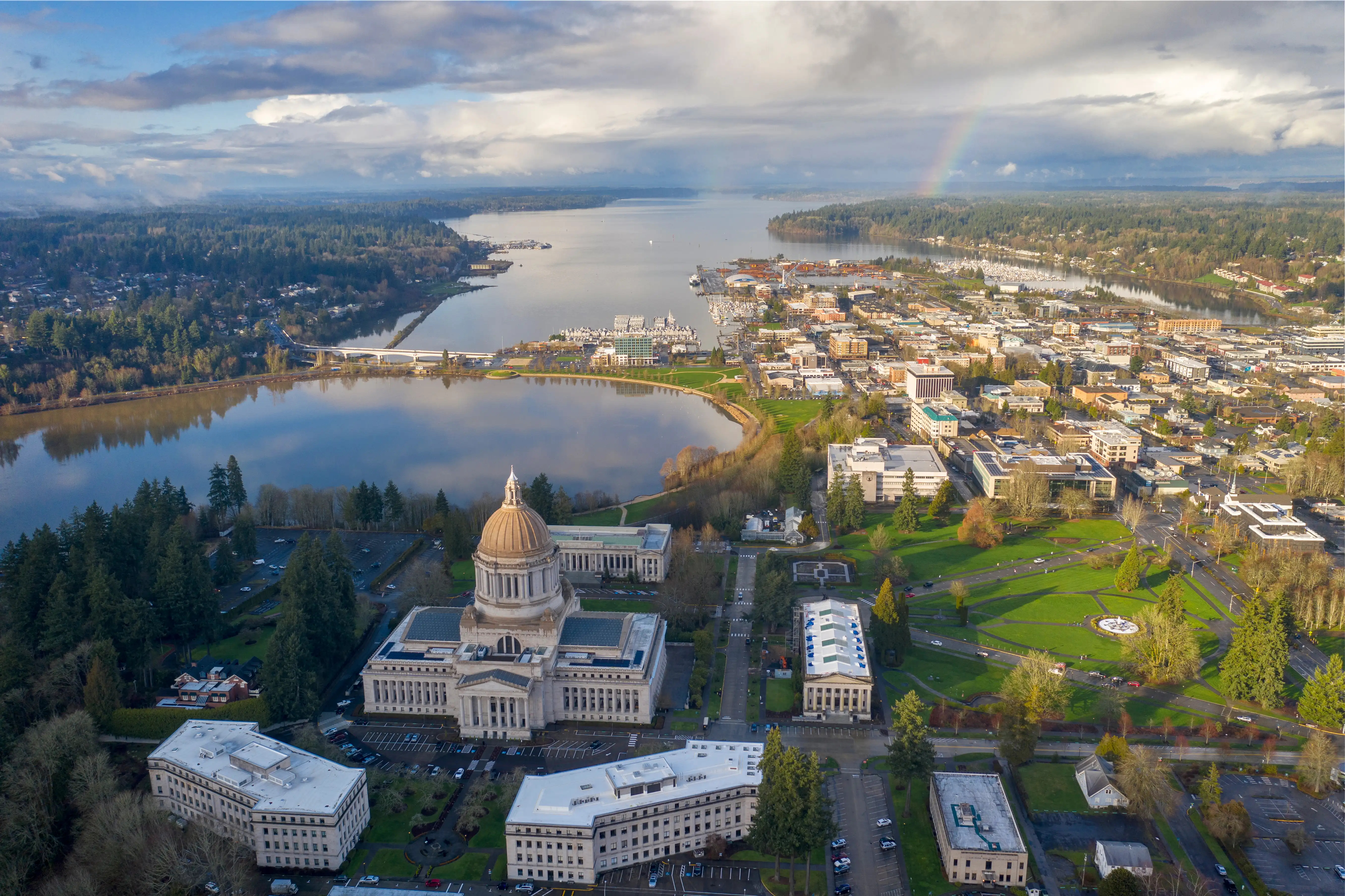
As of early 2026, the median sold price in Olympia is $513,000 — a figure confirmed by both Redfin's MLS data and Zillow's Home Value Index for the same period. That number lands 27% above the national median but sits nearly half the price of Seattle's market. What it buys depends heavily on where you land: in Eastside or Wildwood, $513,000 typically gets you a 3-bedroom cottage or ranch-style home on a modest lot, often with original mid-century details. In Northwest Olympia or along West Bay Drive, that same figure puts you in the competitive range for entry-level inventory — you may be competing with one or two other offers in neighborhoods where homes move in under two weeks.
The market across Olympia has cooled slightly from the frenzied pace of 2022–2023, but pockets of real demand remain. Downtown saw a median sold price around $549,000 in early 2026, with significant year-over-year volatility on low transaction volume. Northwest Olympia's median came in around $565,000 with homes averaging just 12 days on market — a signal that well-priced inventory there disappears fast. Southeast Olympia has pushed toward $615,000, where slower days on market (closer to 80) suggest buyers are applying more scrutiny at that price point.
Average sold prices, skewed by luxury outliers, run closer to $555,000 city-wide. Buyers quoting listing prices from aggregator sites will see figures in the $569,000–$613,000 range, reflecting asking prices rather than what deals actually close at. The $513,000 figure is the honest market benchmark for what buyers are paying.
| Budget Range | What You're Likely to Find |
|---|---|
| Under $400K | Condos, fixer-uppers, older manufactured homes on smaller lots |
| $400K–$513K | Entry-level 2–3BR homes in Eastside, Wildwood, or Carlyon-North |
| $513K–$600K | Updated 3BR homes in Bigelow Highlands, Cooper Point, Goldcrest |
| $600K+ | Water-view properties, larger lots in West Bay Drive or Southeast Olympia |
Thurston County's effective property tax rate runs approximately 0.96%, which translates to roughly $4,925 per year on the median $513,000 home — or about $410 per month added to your mortgage payment. Washington state's levy limit system caps annual property tax increases at 1% without voter approval, which provides a degree of long-term predictability unusual in states with uncapped assessment growth. Homeowners 61 and older may qualify for Thurston County's senior exemption program, which can freeze assessed value and reduce the annual levy — a meaningful benefit for retirees on fixed incomes who choose to age in place here.
The average apartment rent in Olympia runs approximately $1,779 per month as of spring 2026 — about 9% below the national average for comparable units, which surprises renters who've been warned that the Pacific Northwest is universally expensive. The majority of rental inventory falls in the $1,500–$2,000 range, with studios starting around $1,413 and three-bedroom units averaging closer to $2,167.
| Unit Type | Avg Monthly Rent | Approx Sq Ft |
|---|---|---|
| Studio | $1,413 | 464 sq ft |
| 1 Bedroom | $1,581 | 663 sq ft |
| 2 Bedroom | $1,901 | 964 sq ft |
| 3 Bedroom | $2,167 | 1,158 sq ft |
Olympia's utility costs run roughly 9.4% below the national average, which is one of the more pleasant surprises in the cost-of-living picture. Puget Sound Energy serves most of the city for electricity and natural gas, with average monthly utility bills (electricity, gas, water, trash) running in the $150–$220 range for a typical single-family home. The mild Pacific Northwest climate means air conditioning costs are minimal — most homes don't have central AC — though recent summer heat events have pushed more buyers to ask about cooling options during inspections.
Transportation is where costs bite. Olympia's transportation expenses run 28.7% above the national average — a direct consequence of the car-dependent layout outside the immediate downtown core. Intercity Transit operates local bus routes and the agency covers Thurston County reasonably well for a mid-sized city, but most households need at least one vehicle for practical daily life. Gas prices in western Washington consistently track above national averages. Buyers commuting to Tacoma add roughly 35–40 minutes each way; Seattle runs 65 minutes in reasonable traffic, though I-5 congestion through Tacoma can push that toward 90 minutes during peak hours.
Groceries in Olympia run about 4.5% above the national average — close enough to national norms that it won't change your lifestyle calculus. Fred Meyer, Safeway, Trader Joe's, and a WinCo Foods serve most of the city well. The Olympia Farmers Market, operating seasonally at Percival Landing, is a genuine local institution rather than a tourist amenity, with strong local produce and vendor loyalty from longtime residents. Dining out ranges from $15–$20 per person at casual spots to $40–$60 at the better downtown restaurants near 4th Avenue and Capitol Way.
Healthcare costs run 20.6% above the national average — the starkest premium in the Olympia cost-of-living picture. Providence St. Peter Hospital anchors the local healthcare system, but specialist access that requires Seattle-area facilities adds both time and travel cost for some residents. Buyers with ongoing medical needs should factor this in before comparing Olympia's housing costs against markets with more robust local healthcare infrastructure.

| City | Median Home Price | Property Tax Rate | Avg Rent (1BR) | State Income Tax | Key Trade-off |
|---|---|---|---|---|---|
| Olympia | $513,000 | ~0.96% | ~$1,581 | None | Capital city amenities, mid-market pricing |
| Lacey | ~$480,000 | ~1.01% | ~$1,550 | None | Lower entry price, suburban layout |
| Tumwater | ~$460,000 | ~1.01% | ~$1,500 | None | Most affordable Thurston County option |
| Tacoma | ~$430,000 | ~1.10% | ~$1,450 | None | Larger city, longer commute north |
| Centralia | ~$320,000 | ~0.95% | ~$1,100 | None | Significantly lower cost, limited job market |
| Shelton | ~$330,000 | ~1.00% | ~$1,050 | None | Rural feel, 30–40 min from Olympia |
| Seattle | ~$837,000 | ~0.93% | ~$2,200+ | None | Full urban amenities, dramatically higher housing |

From a lending standpoint, where you buy within Olympia genuinely shapes your long-term financial picture. Homes in South Capitol and Downtown tend to hold their value well given the walkability, historic character, and proximity to the capitol campus — and desirable listings in those areas often go pending within days. Northwest Olympia has also seen steady buyer interest, with well-maintained homes under $600,000 moving quickly when they hit the market. Understanding these neighborhood dynamics early helps you focus your search on areas that align with both your lifestyle and your investment goals.
That said, knowing your budget before you start touring is probably the most important step most buyers skip. Your true monthly cost includes property taxes, homeowner's insurance, any HOA dues, and your loan structure — and that full picture can look quite different from just the purchase price. I always encourage buyers to aim for a payment that feels comfortable, not simply the maximum a lender will approve. When the right home appears in a competitive market like Olympia, being already prepared means you can move with confidence.
The table below reflects a household purchasing the median $513,000 home with 10% down ($51,300), financing $461,700 at prevailing 2026 mortgage rates.
| Expense Category | Estimated Monthly Cost |
|---|---|
| Mortgage (principal + interest) | ~$2,950 |
| Property taxes (~0.96%) | ~$410 |
| Homeowner's insurance | ~$120 |
| HOA (if applicable) | $0–$300 |
| Utilities (electricity, gas, water, trash) | ~$175 |
| Internet + phone | ~$130 |
| Groceries (2-person household) | ~$650 |
| Transportation (1 vehicle, gas + maintenance) | ~$550 |
| Dining out + entertainment | ~$400 |
| Healthcare (premiums + out-of-pocket) | ~$500 |
| Total Estimated Monthly Spend | ~$5,885–$6,185 |
Washington's most discussed financial perk is the absence of a state income tax — and for buyers relocating from California, Oregon, or other high-income-tax states, the savings are real and immediate. A household earning $120,000 per year saves between $7,000 and $10,000 annually compared to Oregon, where the top marginal rate exceeds 9%. That delta offsets a meaningful portion of the cost premium in housing and transportation.
Washington does levy a state sales tax, and Thurston County's combined rate runs approximately 9.0% — applied to most retail purchases, restaurant meals, and services. Groceries are exempt from sales tax in Washington, which provides some relief on that front. There is no estate tax exemption as generous as federal levels — Washington's estate tax kicks in at $2.193 million, well below the federal threshold, which matters for higher-net-worth retirees doing estate planning here.
For older buyers, Washington also offers a property tax deferral program for homeowners 60 and older with household income below $45,000, allowing taxes to be deferred as a lien against the property rather than paid annually. The senior exemption program through Thurston County (available at 61+) can freeze the assessed value used for tax calculations — a meaningful tool for retirees on fixed incomes who own their homes outright or near outright.
Local Expert Takeaway: The buyers who consistently get the best value in Olympia are those who target the Eastside and Carlyon-North corridors rather than defaulting to Northwest Olympia or the Capitol Hill area. You're looking at the same school district, similar commute times, and meaningfully lower competition — often $30,000–$50,000 below comparable homes just two neighborhoods over. If you're coming from a Seattle-area salary and working remotely even two days a week, that gap gets absorbed in your first year of savings on state income tax alone.
Looking to buy in Olympia? Estimate your payment.
Enter your numbers to see an estimated monthly mortgage payment.
Estimate only. Excludes HOA fees and mortgage insurance.
Is Olympia affordable compared to the rest of Washington?
Olympia sits about 4% below the average cost of Washington state overall, and roughly half the price of the Seattle metro for housing. For buyers priced out of King or Pierce County who want to remain within the Puget Sound region, Olympia represents one of the more compelling value propositions — especially combined with Washington's lack of state income tax.
What are monthly housing costs on a median-priced Olympia home?
On a $513,000 home with 10% down, expect combined principal, interest, taxes, and insurance in the range of $3,480–$3,600 per month. Add utilities and typical household expenses and a single earner at the median income of $81,302 will feel the budget tighten — dual-income households have considerably more flexibility at this price point.
How do Olympia's property taxes compare to nearby cities?
At approximately 0.96%, Olympia's effective property tax rate is among the lower figures in the region — slightly below Lacey and Tumwater, which typically run around 1.01%. The Washington levy limit system, which caps annual increases at 1% without a voter-approved levy, makes long-term tax planning more predictable here than in many other states.
Explore the full Olympia series: Living in Olympia · Is Olympia Safe? · Cost of Living · Best Neighborhoods · Schools & Family Life · Youth Sports · Parks & Rec · Retiring in Olympia