
Puget Sound · Washington
1031 Exchange & Investment Real Estate in Poulsbo (2026)
Not every investor doing a 1031 exchange is a professional with a portfolio spreadsheet and a syndication lawyer on speed dial. Many of the buyers quietly circling Poulsbo right now are California homeowners who finally sold a property they'd held for 20 years, are staring down a six-figure capital gains bill, and need a replacement property fast. Poulsbo is landing on their radar for a reason: a median sold price near $667,000, a documented renter population, and a ferry-and-military demand base that doesn't evaporate when tech hiring slows.
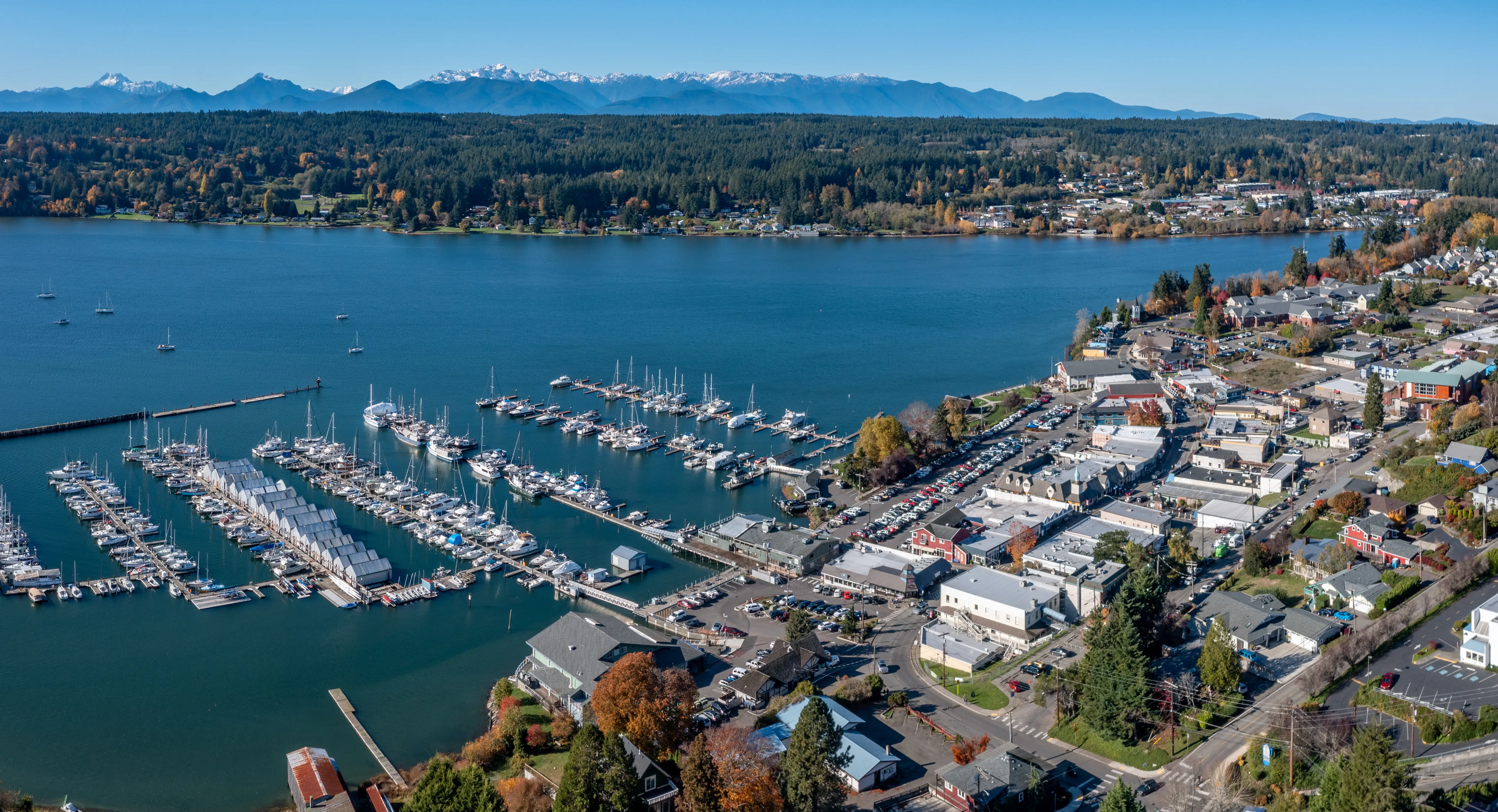
Poulsbo sits on Liberty Bay in Kitsap County, about 80 minutes from Seattle and 15 minutes from Naval Base Kitsap. The tenant pool here is unusually stable — military families rotating through Kitsap, ferry commuters who need Kitsap-side housing but work on the Seattle side, and families who chose North Kitsap School District and aren't leaving until graduation. That combination keeps vacancy in the Puget Sound region running around 5.3%, and Poulsbo specifically has never been a city where landlords advertise long. The investment property types that trade most often are single-family rentals, the occasional small duplex, and a scattering of older multifamily buildings closer to downtown.
This guide covers what a 1031 buyer needs to know before submitting that identification letter: exchange mechanics, what the Poulsbo rental market actually yields, the tax advantages Washington offers compared to California, the landlord-tenant law changes that took effect in 2025, and the due diligence items that out-of-state buyers consistently miss on a 45-day clock.
The exchange itself is straightforward in concept and brutal in execution if you miss a deadline. Once escrow closes on your relinquished property, you have 45 calendar days — not business days — to identify potential replacement properties in writing to your qualified intermediary. You can name up to three properties under the Three-Property Rule, or more properties if their combined value doesn't exceed 200% of the relinquished property's sale price. The clock runs regardless of weekends, holidays, or slow seller responses.
From the close of your relinquished property, you have 180 days to close on the replacement property. These two deadlines run concurrently, not sequentially. The qualified intermediary holds your proceeds throughout — you cannot touch the funds or the exchange is disqualified. Every legitimate 1031 exchange requires a QI set up before the first closing; you cannot add one retroactively.
The like-kind rule is broader than most people realize. Any real property held for investment or business purposes qualifies as like-kind to any other real property held for the same purpose. A San Jose rental condo can exchange into a Poulsbo duplex. A Sacramento commercial building can roll into a Kitsap County SFR. What triggers "boot" — the taxable portion — is receiving cash or net debt relief. If your relinquished property carried a $400,000 mortgage and your replacement carries only $200,000, the $200,000 in relieved debt is boot unless you compensate with additional cash into the purchase.
Poulsbo is an appreciation-first market, not a cash-flow-first market. The price-to-rent ratio sits around 26 — meaning the relationship between purchase price and achievable rent favors renters staying renters, which is actually good news for landlords. A city with a PTR above 20 sustains durable rental demand because ownership is financially out of reach for many residents. The median sold price near $667,000 combined with average two-bedroom rents of approximately $2,163 per month produces a gross yield around 3.9% before expenses — thin for a pure income investor, but paired with steady appreciation and a tax-advantaged state, the math looks different than it does in Sacramento or Phoenix.
Single-family rentals are the dominant investment vehicle here, and they move fast when priced correctly — median days on market for all Poulsbo residential properties runs under 10 days. Small multifamily (duplexes and triplexes) trades less frequently but commands stronger cap rates when it does appear. For a 1031 buyer on a 45-day identification window, the inventory constraint is the primary risk. Active listings have risen significantly — up roughly 54% compared to the prior year — which improves odds, but high-quality income-producing properties still attract competitive offers.
| Property Type | Typical Price Range | Est. Cap Rate | Avg Days to Close |
|---|---|---|---|
| Single-Family Rental (SFR) | $580,000 – $850,000 | 2.3% – 2.5% | 21 – 30 days |
| Duplex / Small Multifamily | $750,000 – $1,100,000 | 4.0% – 5.5% | 30 – 45 days |
| Small Apartment (4–8 units) | $1,200,000 – $2,200,000 | 5.0% – 6.5% | 45 – 60 days |
| Commercial / Mixed-Use | $900,000 – $2,500,000 | 5.5% – 7.0% | 45 – 75 days |

The math driving California capital northward is simple: asset values in California have outpaced income potential so severely that even traditional cap rate investors can no longer make California pencil. Poulsbo isn't the highest-yield market in Washington, but it offers something most high-yield markets don't — durable tenant demand, no state income tax, and appreciation backed by genuine supply constraints.
A Bay Area seller exiting a property at $1.4 million can likely acquire a Poulsbo duplex and a single-family rental simultaneously — both debt-free — and generate combined monthly rents in the range of $4,800 to $5,500. That same $1.4 million sitting in a San Jose condo might yield a cap rate south of 2% before California taxes. The debt-free structure also sidesteps the DSCR qualification challenge for investors who don't want to show rental income history.
Los Angeles and San Diego sellers often arrive with proceeds in the $900,000 to $1.3 million range after selling a long-held rental or primary residence they've converted to a rental. One well-chosen Poulsbo SFR leaves them with equity to spare and a property they can physically inspect via a 2.5-hour flight from LAX to SEA-TAC. The Naval Base Kitsap tenant base particularly resonates with Southern California investors familiar with the San Diego military housing market.
Sacramento and Inland Empire investors frequently encounter Poulsbo when searching for Pacific Northwest 1031 targets after being outpriced on Bainbridge Island or priced out of Bellevue. With median prices in those markets running $1.2 million or higher for comparable SFRs, Poulsbo at $667,000 offers a full replacement property with proceeds left over for a second identification. The drive-to-market dynamic also appeals — Sacramento investors can reach Poulsbo in a day by car if needed.
Washington's status as one of nine states with no personal income tax is the headline, and it deserves its headline status. Every dollar of net rental income a Poulsbo landlord collects stays intact — no state income tax withholding, no California-style 13.3% top bracket eating into cash flow. For a landlord netting $28,000 annually from a single rental, that difference is roughly $3,700 per year at California's mid-bracket rates, compounding across the hold period.
| Tax Item | California | Washington |
|---|---|---|
| State income tax on rental income | Up to 13.3% | None |
| Property tax rate (new purchase) | Varies; newly purchased properties assessed at purchase price; effective rates typically 1.1%–1.3% | Approximately 0.91% (Kitsap County) |
| Sales tax | None | 6.5% state + local; applies to materials and furnishings on rehab |
| Long-term capital gains (state) | Taxed as ordinary income | 7% on gains over $262,000/year (2026 threshold); most rental income unaffected |
| Depreciation basis on 1031 | Carries over | Carries over |
Washington's 7% capital gains tax on gains exceeding $262,000 annually is worth understanding. It applies to long-term capital gains — not to rental income, not to wages, and not to gains sheltered by a future 1031 exchange. Most individual landlords owning one or two properties will never approach that threshold in a single tax year. Depreciation basis carries over in a 1031 exchange rather than resetting, which is a planning consideration for investors with highly depreciated relinquished properties — consult your CPA before closing.
One item that catches rehab-focused investors off guard: Washington's 6.5% state sales tax (plus Kitsap's local add-on) applies to building materials and contractor work for a rental renovation. California has sales tax on materials as well, but investors familiar with Oregon properties sometimes forget Washington isn't sales-tax-free. Budget accordingly on any value-add acquisition.

When investors start exploring 1031 exchange opportunities in Poulsbo, location within the city makes a real difference in long-term appreciation and rental demand. Areas like Viking Heights and Miller Bay Estates tend to attract consistent buyer interest, and properties there — often priced under $750,000 — move quickly when they hit the market. Alasund Meadows is another pocket worth watching, particularly for investors thinking about hold periods and eventual resale value. Understanding where demand concentrates helps you identify replacement properties that actually make sense for your exchange timeline.
Before you start touring potential replacement properties, please talk to a lender first. A 1031 exchange has strict timing requirements, and the last thing you want is to identify the right property and then scramble on financing. Beyond just knowing your approval number, you need a clear picture of the full monthly payment — property taxes, insurance, any HOA dues, and how the loan structure affects your cash flow. Max approval and comfortable budget are rarely the same number, and that gap matters a lot when you're evaluating investment returns.
Washington passed HB 1217 in May 2025, introducing rent stabilization that significantly changed the landlord-tenant landscape statewide. Annual rent increases are now capped at 7% plus inflation or 10%, whichever is lower — with the 2026 allowable maximum set at approximately 9.683% by the Washington State Department of Commerce. Landlords cannot increase rent during the first 12 months of a new tenancy, and any increase after that requires 90 days' written notice using the standardized form from the Department of Commerce. Out-of-state investors who bought Washington property under the previous rules should verify their lease structures reflect the updated requirements.
For owners who won't be managing locally, property management typically runs 8% to 10% of gross monthly rent in Kitsap County markets. On a $2,200/month rental, that's $176 to $220 per month — a real line item in the pro forma, not a rounding error. Local management companies operating in Kitsap County include options through Windermere's property management division and several independent PM firms serving the Poulsbo-Silverdale corridor. The management fee buys significant peace of mind for an out-of-state 1031 buyer who isn't available for 10pm maintenance calls in a market they're managing remotely.
What out-of-state owners consistently underestimate is septic system exposure. A meaningful share of Poulsbo-adjacent properties — particularly those outside city limits or in older rural-residential areas — are on private septic rather than city sewer. Septic inspection and reserve planning should be non-negotiable in due diligence. The second underestimate is the ferry dynamic: tenants who commute to Seattle via Bainbridge Island are excellent tenants who renew, but they are acutely sensitive to commute reliability — and ferry disruptions are a real-world tenant concern that affects lease retention in ways California landlords never encounter.
| Item | What to Verify | Local Resource |
|---|---|---|
| Title search | Clean title, no undisclosed liens or easements | Kitsap County Title or Chicago Title Poulsbo |
| Sewer vs. septic status | City sewer hookup or private septic with recent inspection | City of Poulsbo Public Works; Kitsap County Environmental Health |
| Flood zone designation | FEMA flood map; ~3% of Poulsbo properties carry flood risk | FEMA Flood Map Service Center |
| Rental permit requirements | City of Poulsbo rental registration requirements | City of Poulsbo Planning & Community Development |
| HOA rental restrictions | CC&Rs on rental frequency, short-term vs. long-term, occupancy caps | HOA documents via seller disclosure |
| Short-term rental ordinance | Poulsbo and Kitsap County STR permit status; zoning compliance | City of Poulsbo Planning Department |
| ADU potential | Washington State ADU laws are among the most permissive nationally; check lot size and setbacks | Kitsap County Building Department |
| Zoning classification | Confirm residential investment use; duplex or ADU conversion feasibility | Kitsap County GIS / City of Poulsbo Zoning Map |
| School district confirmation | North Kitsap School District boundaries affect tenant pool quality | NKSD District Office |
| Current lease status | Month-to-month vs. fixed term; inherited tenant rent levels vs. market | Seller disclosure + lease documents |
| Deferred maintenance inspection | Roof age, HVAC condition, foundation, septic inspection if applicable | Licensed WA State inspector |
| Rent stabilization compliance | HB 1217 compliance for existing tenancies; any pending increase notices | WA Dept of Commerce landlord-tenant resources |
| Property management referral | Establish PM relationship before close; 45-day clock won't wait | Windermere Property Management Kitsap; local PM firms |
| Title company familiarity with 1031 | Ensure escrow team has coordinated with QI on exchange documentation | Fidelity National Title or Kitsap Title & Escrow |
Local Expert Takeaway: The single mistake California investors consistently make in Poulsbo is underwriting the property as a cash-flow play when it's fundamentally an appreciation-plus-income play. At a price-to-rent ratio near 26, the gross yield won't dazzle on a spreadsheet — but pair the Washington income tax advantage, the 0.91% property tax rate, and Poulsbo's Naval Base-anchored tenant demand, and the total-return picture is materially stronger than the cap rate alone suggests. If you're coming from the Bay Area with $1.2 million or more in proceeds, seriously look at whether two properties — one SFR, one duplex — serve your diversification goals better than a single premium asset.
✅ Washington's no-income-tax advantage is real and material — every dollar of rental income stays out of state income tax reach, which compounds significantly across a 10-year hold.
⚠️ HB 1217 changed the game for landlords — rent increases are now capped annually and require 90 days' notice. Model your acquisition cash flows using the current 9.683% annual maximum, not historical uncapped increases.
📍 The 45-day clock is Poulsbo's biggest challenge — inventory has improved but quality income-producing properties still move in under two weeks. Have financing structured and your QI in place before the relinquished property closes, not after.
Does a 1031 exchange work for out-of-state property?
Yes — a 1031 exchange has no state-boundary restrictions. You can sell a California investment property and roll the proceeds into a Poulsbo replacement property as long as both properties qualify as held for investment or business purposes. The qualified intermediary handles the interstate transfer and your capital gains deferral applies at the federal level regardless of which states are involved.
What is the cap rate on rental property in Poulsbo?
Single-family rentals in Poulsbo typically produce estimated cap rates in the 2.3% to 2.5% range based on current pricing and average rents. Small multifamily properties — duplexes and triplexes — can reach 4.0% to 5.5% depending on vintage and location. Poulsbo is an appreciation-driven market, so investors prioritizing current cash flow over long-term total return may find the numbers thin compared to Midwest or Southeast markets.
Do I need a local property manager for a 1031 investment in Washington?
You're not legally required to use a property manager, but out-of-state owners managing remotely in Washington need to account for the state's evolving landlord-tenant requirements, including the HB 1217 rent increase notice procedures and required Commerce Department forms. A licensed local PM firm running 8% to 10% of gross rent handles compliance, tenant screening, maintenance coordination, and the notice requirements that carry legal consequences if missed — the fee is genuine risk management, not overhead.
Explore the full Poulsbo series: The Ultimate Poulsbo Relocation Guide · Is Poulsbo Safe? · Cost of Living in Poulsbo · Best Neighborhoods in Poulsbo · Poulsbo Schools & Family Life · Poulsbo Youth Sports · Poulsbo Parks & Recreation · Retiring in Poulsbo · 1031 Tax-Deferred Exchange in Poulsbo · Poulsbo First-Time Homebuyers Guide · Poulsbo Down Payment Assistance Guide · Moving to Poulsbo from California