
Puget Sound · Washington
Cost of Living in Poulsbo: Housing, Taxes, Utilities & Lifestyle (2026)
Poulsbo has a reputation problem — and it works in the city's favor. Most buyers researching the Kitsap Peninsula expect a quiet Scandinavian-flavored small town with modest prices to match. What they find instead is a housing market running roughly 50% above the national median, a cost-of-living index well above the U.S. average, and a ferry-and-highway commute to Seattle that takes the better part of 90 minutes. None of that is a reason to rule Poulsbo out. But walking in with the wrong expectations is how buyers end up stretching their budget in ways they didn't plan for.
What shapes the cost picture here is geography as much as anything else. Poulsbo sits on the western shore of Liberty Bay, accessible from Seattle only by ferry or a long loop around Puget Sound. That insularity keeps land scarce, commutes long, and daily errands dependent on a car. It also keeps the community tightly knit and the waterfront intact — things that command a premium in any Pacific Northwest market. Washington's lack of a state income tax offsets some of the sticker shock, and property taxes run lower than most buyers expect given the home prices.
This guide breaks down exactly what it costs to live in Poulsbo in 2026 — from the median home price and what it actually buys, to utilities, rent, monthly budgets, and how Poulsbo stacks up against Silverdale, Bainbridge Island, and the other cities buyers typically weigh alongside it.
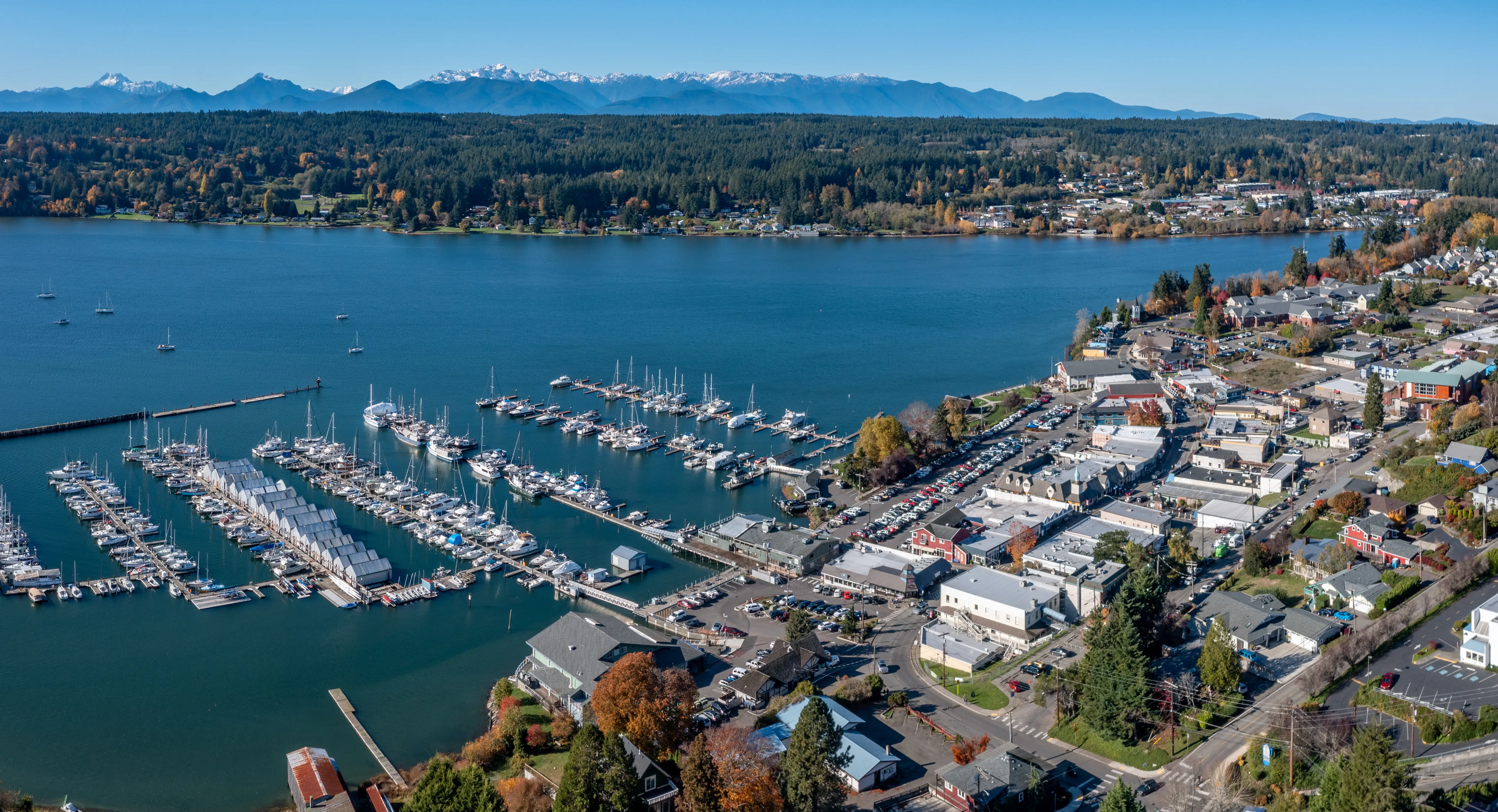
The median sold price in Poulsbo sits at approximately $667,000, with recent closed transactions running between $669,000 and $672,000 depending on the timeframe measured. That figure reflects the full market mix — condos, townhomes, and single-family homes. If you're shopping for a detached single-family house specifically, expect to anchor closer to $725,000, where new construction and move-in-ready homes skew the single-family-only median upward.
What does $667,000 actually buy? In most of Poulsbo's established neighborhoods, it lands you a three-bedroom, two-bath home in the 1,800–2,200 square foot range — likely built in the 1990s or early 2000s, with a two-car garage and a yard, but probably not a water view. Entry-level buyers should know that smaller and older homes start appearing around $515,000 to $540,000; anything below that in good condition tends to move fast. On the upper end, Liberty Bay waterfront properties and acreage estates with Hood Canal views push well past $1.2 million.
Market tempo is real but not frantic. Homes in Poulsbo typically go pending within 15 days on average, and the market carries a Redfin competition score of 57 out of 100 — "somewhat competitive," meaning multiple-offer situations happen but aren't guaranteed on every listing. Hot properties in desirable pockets can go pending in under two weeks. Inventory has expanded modestly, with roughly 2.7 months of supply, which still technically favors sellers but gives buyers more breathing room than the pandemic-era sprint.
| Budget Range | What You Can Expect |
|---|---|
| $515,000–$580,000 | Older 2–3 bed homes, dated finishes, smaller lots; some condos/townhomes |
| $580,000–$700,000 | Solid 3-bed single-family, 1990s–2000s builds, established neighborhoods |
| $700,000–$900,000 | Updated 3–4 bed homes, newer construction, larger lots, partial view potential |
| $900,000+ | Waterfront access, acreage, new construction, premium finishes, Liberty Bay views |
Kitsap County levies property taxes at approximately 0.91% of assessed value, which translates to roughly $6,070 per year on a home priced at the city median — or about $506 per month. Washington State caps annual property tax levy increases at 1% for local governments (outside of voter-approved levies), which gives homeowners meaningful protection against runaway assessments over time. Residents 61 and older may qualify for the state's senior property tax exemption program, which can significantly reduce the taxable value of a primary residence for qualifying income levels.
Poulsbo's rental market is smaller than most buyers expect for a city of 12,855, with around 55 apartments actively listed at any given time alongside another 40-plus single-family rentals, condos, and townhomes. The median rent across all unit types runs approximately $2,250 per month — about 15% above the national average — though the market has softened slightly, with rents down roughly 8% over the past year.
| Unit Type | Average Monthly Rent |
|---|---|
| Studio / 1-Bedroom | $1,942 |
| 2-Bedroom | $2,163 |
| 3-Bedroom | $2,712 |
| Single-Family Home (rental) | $2,871 |
Puget Sound Energy handles electricity and natural gas service throughout Poulsbo. A typical monthly utility bundle for a three-bedroom home — electricity, gas, water, sewer, and garbage — runs in the range of $220 to $310 per month depending on the season. Winter heating costs are a real variable here; Poulsbo sits in a rain-shadow pocket that gets less precipitation than Seattle, but temperatures dip enough from November through February that gas heating bills can spike.
Car ownership is not optional in Poulsbo. Transit service is limited, and the city's geography — with commercial corridors, schools, and neighborhoods spread across 4.7 square miles of hills and inlets — makes daily errands genuinely inconvenient without a vehicle. Internet service is available through Xfinity and CenturyLink (now Lumen), with most households paying $60 to $100 per month for broadband. Fuel costs matter here in a way they don't in denser cities: a commute to Seattle via the Kingston–Edmonds ferry route or the Bainbridge Island ferry adds ferry fare ($9–$14 each way for walk-ons, more for vehicles) on top of the driving time.
Groceries anchor around Central Market Poulsbo on NE Lindvig Way, which is a full-service independent grocery with above-average produce and a solid prepared foods section — and above-average prices to match. Fred Meyer in nearby Silverdale handles the bulk-buy and budget runs. Dining out in Poulsbo ranges from lunch spots in the historic downtown waterfront area (figure $15–$22 per person) to dinner at sit-down restaurants in the $30–$55 range for two without drinks. The cost of daily life here is comfortable but not cheap — it rewards buyers who cook at home, use the Silverdale retail corridor for big-box needs, and plan their ferry crossings strategically.

Understanding Poulsbo's cost position relative to nearby cities helps clarify what you're actually paying for — and what you'd be trading away by going elsewhere.
| City | Median Home Price | Property Tax Rate | State Income Tax | Ferry Required to Seattle | General Cost Level |
|---|---|---|---|---|---|
| Poulsbo | $667,000 | 0.91% | None | Yes (or long drive) | Above average |
| Bainbridge Island | $1,050,000+ | ~0.85% | None | Yes | High |
| Silverdale | $560,000 | ~0.91% | None | Yes (or long drive) | Moderate |
| Kingston | $530,000 | ~0.91% | None | Yes | Moderate |
| Bremerton | $420,000 | ~0.95% | None | Yes | Below average |
| Suquamish | $610,000 | ~0.91% | None | Yes | Moderate–high |
| Indianola | $680,000 | ~0.91% | None | Yes | Above average |

Poulsbo's cost of living picture looks different depending on where you plant roots. Established neighborhoods like Viking Heights and Indian Hills Estates tend to hold value well thanks to their proximity to amenities and Puget Sound views, while areas like Miller Bay Estates appeal to buyers looking for a quieter pace without sacrificing access to downtown Poulsbo. Well-priced homes under $750,000 in desirable pockets here don't sit long — I've seen motivated buyers lose out simply because they weren't ready to move when something good hit the market.
That's exactly why I encourage people to connect with a lender before they start touring homes. Your true monthly payment isn't just principal and interest — property taxes, homeowner's insurance, and any HOA dues all factor in, and together they can meaningfully shift what feels comfortable versus what you're technically approved for. Those are two very different numbers, and understanding that distinction upfront puts you in a much stronger position. When the right home in Poulsbo appears, you want to be ready, not scrambling.
This budget assumes a purchase at $667,000 with 10% down ($66,700), financing approximately $600,300 at prevailing rates, with ownership costs, utilities, and lifestyle expenses typical for a Poulsbo household.
| Cost Category | Monthly Amount |
|---|---|
| Mortgage principal & interest | $3,820 |
| Property taxes (0.91% / 12) | $506 |
| Homeowner's insurance | $130 |
| Utilities (electric, gas, water/sewer/garbage) | $265 |
| Internet | $80 |
| Groceries (household of 2) | $750 |
| Transportation (fuel, maintenance, registration) | $480 |
| Ferry commute (20 round trips/month) | $380 |
| Dining out & entertainment | $400 |
| Healthcare (premiums vary) | $500 |
| Miscellaneous / household | $300 |
| Total Estimated Monthly | $7,611 |
Washington's most buyer-friendly financial feature is its complete absence of a state income tax. There is no wage income tax, no capital gains tax on most asset types (a limited capital gains excise tax on certain investment gains above $262,000 applies, but wages and real estate sale proceeds are excluded), and no tax on retirement income including Social Security, pension distributions, or IRA withdrawals. For households relocating from California, Oregon, or any state with a significant income tax, this single factor can represent $8,000 to $20,000 or more in annual savings depending on income level.
The state funds government primarily through a sales tax, which runs 8.9% in Kitsap County — slightly above the Washington average but below what you'd find in King County. Property taxes are low relative to home values when compared to states like New Jersey or Illinois; Poulsbo's effective rate of 0.91% is substantially below the national average of roughly 1.1%. Washington also administers a property tax deferral program for seniors and people with disabilities, allowing qualifying homeowners to defer annual property taxes as a lien against the property, payable when the home is eventually sold — a meaningful cash-flow tool for retirees on fixed incomes.
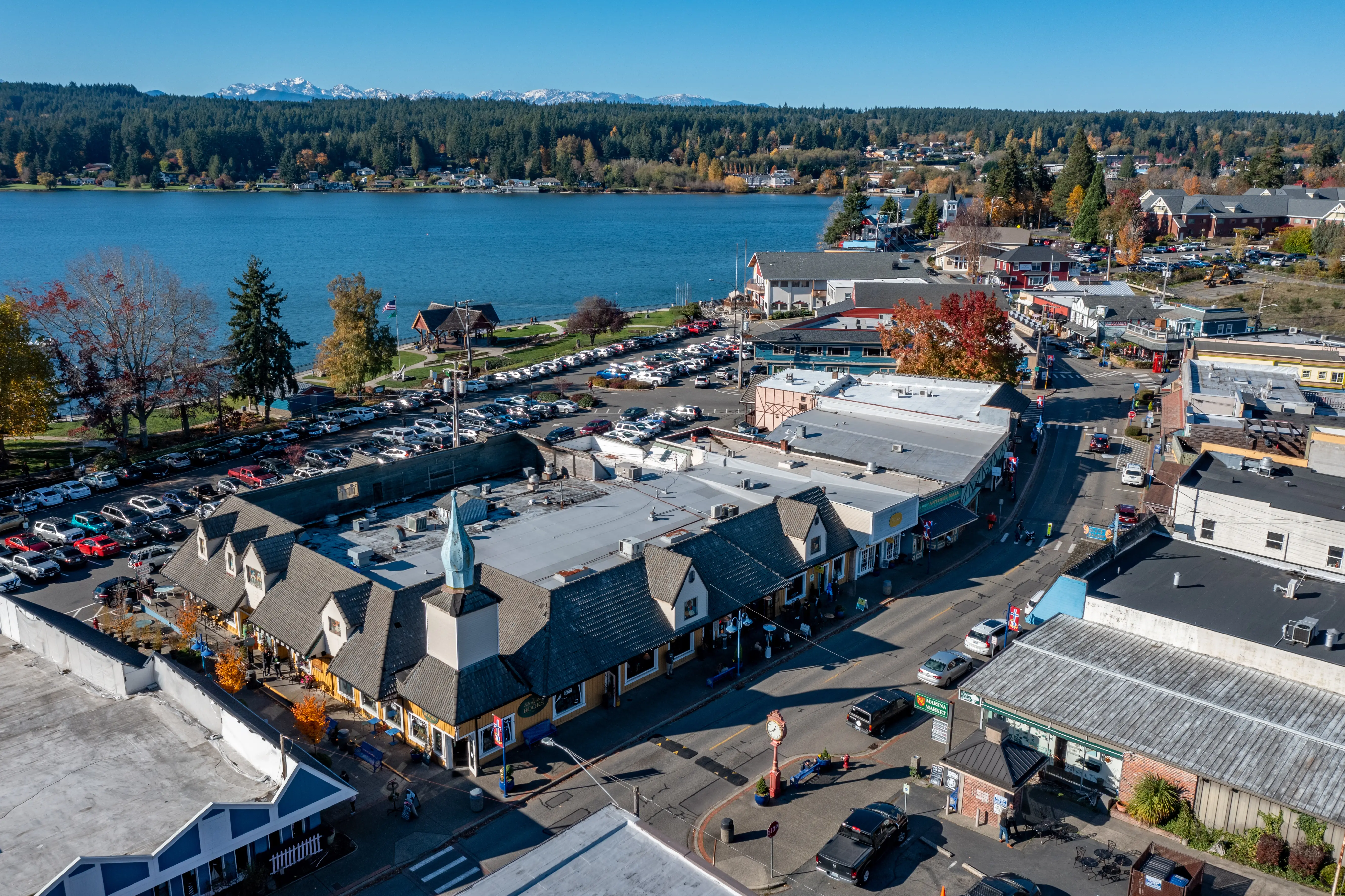
Local Expert Takeaway: Poulsbo's financial sweet spot is for households that can work remotely two or more days per week. The ferry commute math works beautifully at three days a week in Seattle — you get the water, the community, and the lower home prices relative to Bainbridge Island, while keeping monthly transportation costs manageable. If your employer requires five days in Seattle, run the full monthly cost picture carefully before committing, because the 80-minute commute and ferry costs change the affordability equation significantly. For buyers comparing Poulsbo to Silverdale, the $100,000+ price gap is real, but so is the lifestyle gap — most buyers who choose Poulsbo specifically wanted Poulsbo.
Looking to buy in Poulsbo? Estimate your payment.
Enter your numbers to see an estimated monthly mortgage payment.
Estimate only. Excludes HOA fees and mortgage insurance.
Is Poulsbo affordable compared to the rest of the Puget Sound region?
Relative to Seattle, Bainbridge Island, and the Eastside, Poulsbo is meaningfully more affordable — the median home price is a fraction of what comparable homes cost in Bellevue or Kirkland. Within the Kitsap Peninsula specifically, Poulsbo sits above Silverdale, Kingston, and Bremerton in price but below Bainbridge Island by a wide margin. The catch is that lower prices come with a longer commute, not a shorter one.
What is the property tax rate in Poulsbo?
Kitsap County assesses property taxes at approximately 0.91% of assessed value. On a home at the city's median price, that works out to roughly $6,070 annually, or about $506 per month. Washington State limits annual levy increases to 1%, providing long-term predictability for homeowners — a meaningful protection in a market where assessed values have risen steadily.
How does Washington's no-income-tax policy affect the real cost of living in Poulsbo?
For a household earning $116,250 — Poulsbo's median — the absence of a state income tax represents roughly $7,000 to $9,500 in annual savings compared to living in Oregon or California at equivalent income levels. That figure doesn't eliminate the higher housing costs, but it does shift the total financial picture enough that many buyers from high-tax states find their take-home pay stretches further in Poulsbo than it did back home, even after accounting for the higher mortgage payment.
Explore the full Poulsbo series: The Ultimate Poulsbo Relocation Guide · Is Poulsbo Safe? · Cost of Living in Poulsbo · Best Neighborhoods in Poulsbo · Poulsbo Schools & Family Life · Poulsbo Youth Sports · Poulsbo Parks & Recreation · Retiring in Poulsbo · 1031 Tax-Deferred Exchange in Poulsbo · Poulsbo First-Time Homebuyers Guide · Poulsbo Down Payment Assistance Guide · Moving to Poulsbo from California