Puget Sound · Washington
Is Redmond Safe? Crime Rates, Safest Neighborhoods & Local Reality (2026)
Redmond, Washington has a reputation that gets imported from its neighbors — Microsoft money, tech salaries, Eastside polish — and people assume the safety story writes itself. The reality is more layered. Violent crime here runs well below both state and national averages, which is genuinely reassuring. Property crime, particularly motor vehicle theft, is elevated enough that most locals have adapted their habits around it. Understanding which of those two numbers matters most to your daily life is the actual safety question worth answering before you sign a lease or make an offer.
What shapes the numbers more than anything is Redmond's double identity. On paper, it's a city of roughly 86,000 residents. In practice, its daytime population more than doubles as workers pour into Microsoft's campus, the Overlake tech corridor, and Redmond Town Center. High foot traffic, dense retail, and commercial density concentrate incidents in predictable zones — and statistical models that don't account for this can make Redmond look more dangerous than it feels to the people who actually live here.
This guide breaks down what the crime data actually says, which neighborhoods consistently rank safest, where property crime clusters, and what locals do to navigate daily life without a second thought. If you're comparing Redmond to Bellevue, Kirkland, or Sammamish, the comparison table here will give you an honest side-by-side.
FBI estimates for 2024 put Redmond's violent crime rate at approximately 1.3 per 1,000 residents — a figure that sits roughly 64% below the national rate and about 60% below Washington's statewide rate. By that single measure, Redmond is meaningfully safer than most American cities. Property crime, by contrast, runs around 28 per 1,000 — higher than both the national average and the Washington state average, and driven almost entirely by two categories: theft and motor vehicle theft.
The structural explanation matters here. Redmond's commercial footprint is unusually large for a city its size. Redmond Town Center draws regional retail traffic; the Overlake corridor hosts dense corporate campuses; and the city sits at the intersection of SR-520 and SR-202, making it accessible in ways that attract opportunistic property crime. Neighborhoods built around retail and employment — not residential quiet — naturally generate more incidents per capita. The northeast residential areas, by contrast, see a fraction of the citywide rate.
Property crime has been creeping upward over the longer trend line even as 2024 showed a roughly 9% decline from the prior year. Motor vehicle theft stands out as a particular concern — Redmond's rate for stolen cars ranks among the higher figures nationally when compared to communities of similar size. That's not a number to ignore, but it's also a number that responds directly to basic precautions most locals already practice.
Redmond logged approximately 108 violent crimes in the most recent reporting year, translating to a rate of about 1.3 per 1,000 residents. That puts the average resident's chance of being a victim of violent crime at roughly 1 in 766 annually — compared to about 1 in 307 statewide. For daily life, this means most Redmond residents go years without any proximity to violent incidents, and the city doesn't have the concentrated hotspots that tend to define violent crime geography in larger metros.
Property crime does most of the statistical work in Redmond, with approximately 2,267 incidents recorded in the last reporting period. Theft from vehicles and motor vehicle theft are the dominant categories — and both concentrate heavily around commercial zones, parking structures near Redmond Town Center, and the surface lots adjacent to corporate campuses. The residential east side and the master-planned communities like Redmond Ridge see significantly fewer incidents; the central and southwest portions of Downtown carry the bulk of the citywide total.
Downtown carries the heaviest crime concentration in the city, with a rate roughly two and a half times the citywide average. Most of this is property crime tied to retail foot traffic, parking lots, and the commercial density around Leary Way and Cleveland Street. The southwest portion of the neighborhood is generally quieter — it transitions into the residential blocks near the Sammamish River Trail, which locals use regularly without concern. Buyers sometimes avoid Downtown based on the raw numbers, but renters and condo owners in the quieter south blocks report a fundamentally different daily experience than the statistics suggest.
Overlake earns a solid safety rating despite being the heart of Redmond's tech employment corridor, anchored by Microsoft's campus and a dense cluster of corporate offices. The residential pockets within Overlake — particularly the streets closer to NE 24th Street — tend to be owner-occupied and quiet outside of business hours. Where property crime does appear, it clusters near the commercial and parking areas rather than the residential blocks. This is a neighborhood where understanding which street you're on matters more than the neighborhood-level average.
Education Hill is one of the most consistently cited safe neighborhoods in Redmond, home to roughly 19,800 residents in a predominantly owner-occupied, family-oriented setting. The hill's geography creates natural separation from the Downtown commercial corridor, and the streets here have the low-traffic, neighborhood-watch character that keeps property crime well below city norms. Families drawn to the Lake Washington School District's elementary schools in this area find that the safety reputation matches lived experience.
Grass Lawn sits between Education Hill and the Overlake corridor and benefits from both the residential density of its neighbor to the north and proximity to Marymoor Park's eastern edge. Most residents own their homes, and the neighborhood has an established, settled quality that newer communities sometimes lack. Property crime incidents here are noticeably lower than the citywide figure, and the area around Grass Lawn Park itself is a consistent gathering point that keeps the neighborhood activated in ways that naturally deter opportunistic crime.
North Redmond ranks among the safest areas in the entire city — one analysis puts it second only to Ames Lake among all Redmond neighborhoods. The further north you go from the Downtown core, the more the crime statistics drop, and North Redmond exemplifies that pattern. The housing stock skews toward newer single-family homes with higher owner-occupancy rates, and the neighborhood has minimal commercial intrusion. Buyers who prioritize residential quiet over walkability to Downtown often land here specifically because the numbers and the feel align.
Perched on the slope above Lake Sammamish near Idylwood Beach Park, this neighborhood combines a genuinely low crime profile with some of the best lake access in the Redmond area. The residential streets here are quiet and the community's geography keeps it naturally insulated from the commercial corridors that drive citywide property crime. It earns a high safety rating that reflects what residents actually experience — and the combination of waterfront access and safety draws buyers willing to pay a premium for the location.
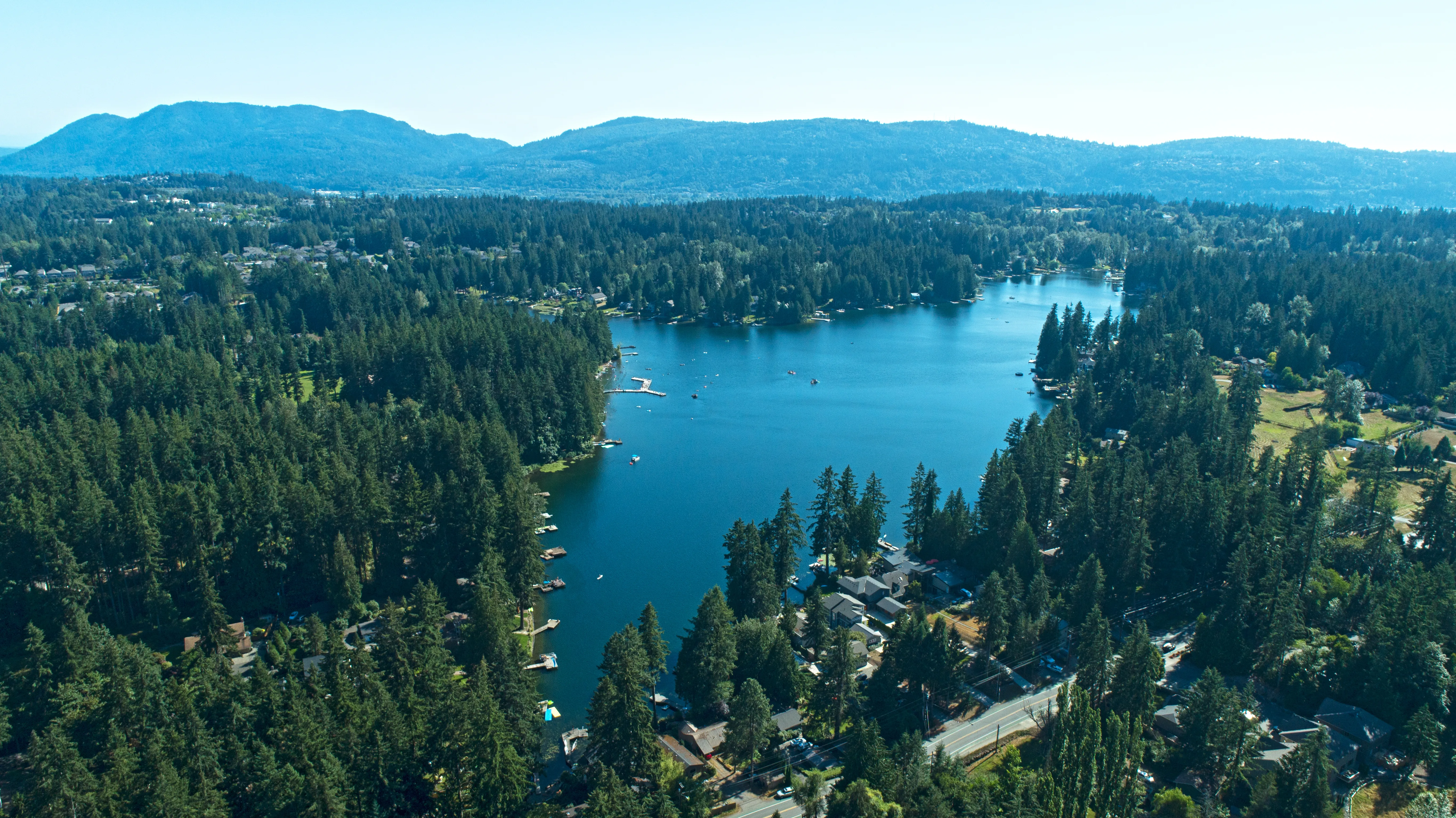
| City | Violent Crime / 1K | Property Crime / 1K | Overall Safety Profile |
|---|---|---|---|
| Redmond | ~1.3 | ~28 | Low violent crime; elevated property crime |
| Bellevue | ~1.1 | ~22 | Consistently low across categories |
| Kirkland | ~1.4 | ~25 | Comparable to Redmond; slight property crime edge |
| Sammamish | ~0.6 | ~12 | Among the lowest rates on the Eastside |
| Bothell | ~1.5 | ~26 | Similar property crime; slightly higher violent |
| Woodinville | ~1.0 | ~18 | Lower property crime; quieter commercial mix |
| Seattle | ~5.8 | ~55 | Significantly higher across all categories |

When buyers ask me about Redmond, the conversation almost always circles back to neighborhood selection and what it means for long-term value. Areas like Education Hill and Grass Lawn consistently draw families who prioritize safety and community stability, and that demand shows up clearly in how fast well-priced homes move — we're often talking multiple offers within days, not weeks. North Redmond has also seen steady appreciation as buyers look slightly outside the core for more breathing room. If you find something under $750,000 in these pockets, expect competition. Location within Redmond genuinely matters, and the safest, most established neighborhoods tend to hold value even when the broader market softens.
What surprises many buyers is the gap between their pre-approval amount and what actually fits their life comfortably. Your full monthly obligation includes property taxes, homeowner's insurance, any HOA dues, and your loan payment — and that total can look very different from the number you see advertised. I always encourage people to have that honest budget conversation before they start touring homes, because Redmond moves fast, and you want to be ready to act confidently when the right place appears.
The practical reality of living in Redmond is that you adapt to property crime the way you adapt to rain — not with alarm, but with routine. Most longtime residents don't leave anything visible in their cars, particularly near Redmond Town Center, the Overlake parking structures, or the surface lots along 148th Avenue NE. That habit eliminates the vast majority of smash-and-grab risk, which is the category that generates the most frustrating incidents. Locals also use the Redmond Police Department's community notification systems and the Neighbors app to stay current on what's happening street by street.
The daytime population effect is something crime mapping apps largely miss. A neighborhood that shows elevated incident counts because 10,000 workers commute through it every day is not experiencing the same safety reality as a neighborhood where 10,000 people live. Downtown's numbers look alarming on a per-resident basis, but for someone living on the quieter south blocks near the Sammamish River Trail, the actual experience is closer to the residential neighborhoods than to what the statistics imply. The north end of Downtown — near the retail concentration around Leary Way and the 166th Avenue corridor — is where incidents actually cluster.
What genuinely surprises people who move here from out of state is how neighborhood-specific the safety story is. The difference between a street on Education Hill and a surface lot near the Microsoft Visitor Center isn't subtle — it's the difference between one of the safest residential environments in Washington and the type of location where car prowls happen on a Tuesday afternoon. Buying in the right pocket matters, and understanding which pockets those are is worth more than any citywide statistic.

Local Expert Takeaway: Prioritize the northeast residential neighborhoods — North Redmond, Education Hill, and Grass Lawn — if personal safety and residential quiet are your top criteria. Avoid parking anything valuable in surface lots near Redmond Town Center or along the 148th Avenue NE corridor overnight. The Sammamish River Trail and Marymoor Park area are well-used and genuinely safe during daylight; after dark, the parking areas there benefit from the same awareness you'd apply anywhere with limited lighting.
✅ Violent crime in Redmond runs well below state and national averages — the residential neighborhoods, particularly in the northeast, are among the safest on the entire Eastside.
⚠️ Motor vehicle theft and car prowls are the primary practical concern — concentrated near commercial corridors, parking structures, and retail areas rather than in residential neighborhoods.
📍 Neighborhood matters more than the citywide average — North Redmond, Education Hill, Grass Lawn, and Idylwood have safety profiles that look nothing like Downtown's commercial-corridor statistics.
Is Redmond a safe place to live?
For most residents, yes — particularly in the predominantly residential neighborhoods away from the Downtown commercial core. Violent crime rates are significantly below both state and national averages, and the northeast neighborhoods consistently rank among the safest in the region. The caveat is property crime, especially motor vehicle theft, which runs higher than the national average and requires the basic precautions most locals already treat as second nature.
What is the crime rate in Redmond, WA?
FBI estimates put Redmond's violent crime rate at approximately 1.3 per 1,000 residents and property crime at roughly 28 per 1,000 — a combination where the violent crime number is well below average and the property crime number is somewhat above it. The citywide figures are heavily influenced by commercial corridor activity in Downtown and Overlake; purely residential neighborhoods like North Redmond and Idylwood see substantially lower rates across both categories.
How does Redmond compare to Bellevue and Kirkland for safety?
Redmond's violent crime profile is comparable to Kirkland and slightly above Bellevue, though all three sit well below Seattle and the national average. Property crime is where Bellevue pulls ahead — its rate runs a few points lower than Redmond's, partly due to different commercial density and enforcement patterns. Sammamish, which borders Redmond to the south, has the lowest crime rates of any nearby city and is worth considering if minimizing property crime is a primary concern.
Explore the full Redmond series: Living in Redmond · Is Redmond Safe? · Cost of Living · Best Neighborhoods · Schools & Family Life · Youth Sports · Parks & Rec · Retiring in Redmond