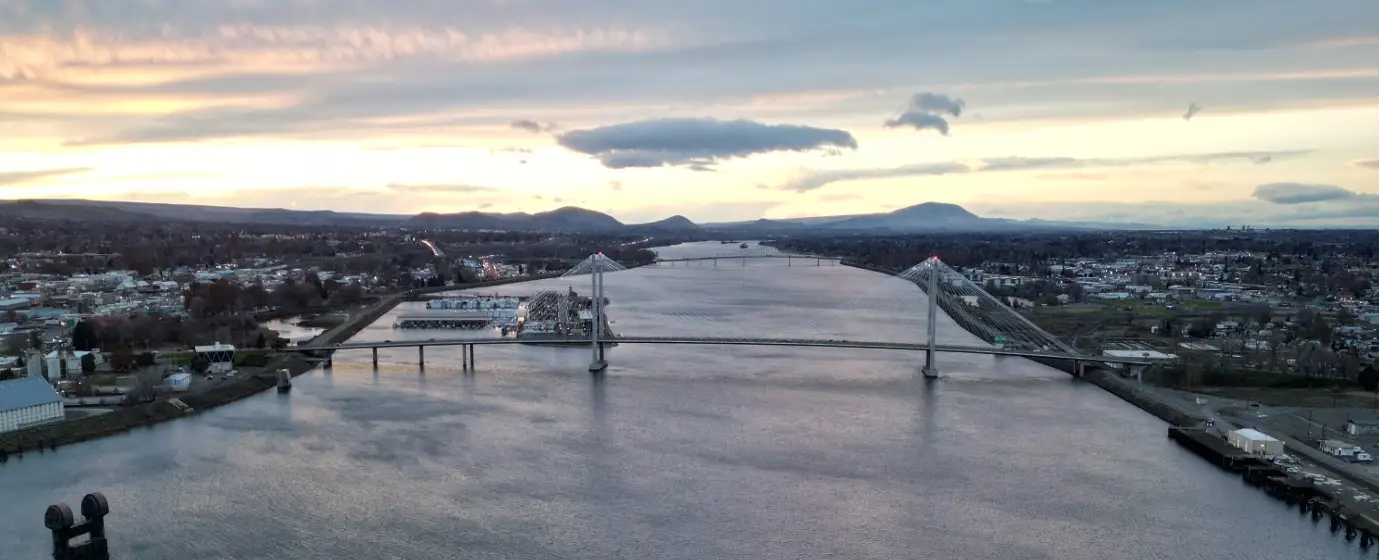
Eastern Washington · Washington
Moving to West Richland from California: The Honest Comparison (2026)
The story plays out in a recognizable pattern. A software engineer in Walnut Creek gets a permanent remote offer, does the math on their Bay Area mortgage versus a house with a yard in Eastern Washington, and realizes they could eliminate their housing debt entirely. A family in Chula Vista watches their homeowner's insurance climb for the third straight year while smoke from the Cleveland National Forest drifts inland. A Sacramento buyer selling a three-bedroom townhome discovers their equity buys a four-bedroom with a two-car garage and a view of Candy Mountain — with money left over. West Richland keeps appearing in these conversations because it offers something California increasingly cannot: financial breathing room, without asking you to give up a functioning community.
The honest version of this guide also tells you what California transplants don't expect. West Richland is not Southern California with lower property taxes. It sits at 46° north latitude in the high desert of Eastern Washington, which means summers that rival Phoenix for dry, bluebird intensity and winters that deliver genuine cold and short days rather than the gray drizzle people assume comes with "the Pacific Northwest." The dining scene is thinner than what most California metros offer. The pace is slower — sometimes comfortably so, sometimes noticeably so, depending on where you're coming from. Most transplants figure this out in month four, not month one.
This guide is built for buyers who've already done the spreadsheet and want the layer underneath it. You'll find a direct cost comparison by California region, a breakdown of what your equity buys in West Richland's actual market, the real tax picture including the income tax story, a weather comparison that doesn't pretend Eastern Washington is San Diego, and an interactive tool to compare your specific California city directly.

| West Richland, WA | Bay Area | Southern CA | Sacramento Metro | Central Valley | |
|---|---|---|---|---|---|
| Median Home Price (approx. 2026) | $486,000 | $1.3M–$1.8M | $750K–$1.1M | $525K–$650K | $340K–$480K |
| Property Tax Rate (effective) | ~1.13% | ~1.1–1.25% | ~1.1–1.25% | ~1.1–1.25% | ~1.1–1.25% |
| State Income Tax | None | 1–13.3% | 1–13.3% | 1–13.3% | 1–13.3% |
| State Sales Tax | 8.7% (Benton Co.) | 8.625–10.25% | 7.25–10.25% | 7.25–8.75% | 7.25–9% |
| Avg. Utilities (monthly est.) | $175–$220 | $250–$350 | $240–$340 | $200–$280 | $190–$270 |
| Avg. 1BR Rent | ~$1,350–$1,550 | $2,800–$3,800 | $1,900–$2,800 | $1,600–$2,000 | $1,100–$1,500 |
The number California buyers most consistently underestimate is the income tax delta. Washington has no state income tax, full stop. For a buyer earning $150,000 per year coming from California — where the marginal rate climbs to 9.3% at that income level — the net annual take-home difference runs roughly $10,000 to $13,000 per year depending on deductions. Over five years, that's $50,000 to $65,000 that stays in the buyer's household rather than going to Sacramento. Washington's sales tax at 8.7% in Benton County does offset this advantage on purchases, but the net position for most working professionals is strongly positive in Washington's favor.
Washington is one of only nine states with no state income tax. For most California transplants — especially anyone earning above $80,000 — this is the single largest financial shift the move produces, and it starts showing up in the first paycheck.
| Tax Item | California | Washington | Net Impact for Transplant |
|---|---|---|---|
| State Income Tax ($120K earner) | ~$7,200–$8,500/yr | $0 | Save $7,200–$8,500/yr |
| State Income Tax ($150K earner) | ~$10,500–$13,000/yr | $0 | Save $10,500–$13,000/yr |
| State Income Tax ($200K earner) | ~$17,000–$21,000/yr | $0 | Save $17,000–$21,000/yr |
| State Sales Tax | 7.25–10.25% | 8.7% (Benton Co.) | Near-neutral to slight WA cost |
| Capital Gains Tax (>$262K/yr) | Up to 13.3% | 7% (LT gains only) | WA advantage above threshold |
| Property Tax Rate | ~1.1–1.25% | ~1.13% (Benton Co.) | Approximately equal |
| Senior Property Tax Exemption (61+) | Income-based freeze | Income-based (61+) | Similar programs |
Property taxes in Benton County run approximately 1.13%, which lands in nearly the same range as what California buyers paid on a recently purchased California property. The difference is that 1.13% on a $486,000 home is roughly $5,492 per year — compared to the same rate applied to a $1.4 million Bay Area property at roughly $17,000 per year. The rate is similar; the base is dramatically different.
A buyer leaving Palo Alto or Orinda with $1.4 million in equity arrives in West Richland with the ability to purchase in cash at virtually any price point the market offers. The top of West Richland's market — newer construction in Sunset Ridge, Western Ridge, or The Lakes — runs $550,000 to $700,000 for finished homes with quality upgrades, three-car garages, and views across the Yakima Valley. That same Bay Area equity, deployed as a cash purchase, leaves $700,000 to $900,000 available for investment accounts, business equity, or additional real estate.
Buyers with this equity profile often split their deployment: purchase in West Richland outright, then use the remaining capital to acquire a rental property in Richland or Kennewick where cash-on-cash returns in the Tri-Cities market have consistently attracted investors from higher-cost states. The no-income-tax environment means those rental yields aren't immediately eroded by California's passive income rates. For Bay Area sellers who held investment property, a 1031 exchange into a West Richland or Tri-Cities income property is worth a dedicated conversation — our 1031 exchange guide covers this in detail.
A buyer leaving Rancho Cucamonga or Temecula with $850,000 in equity is looking at West Richland's market from a position of genuine strength. They can purchase at or above the city's median, carry a very modest mortgage if they choose to retain liquidity, and land in neighborhoods like Harvest Meadows or Belmont Heights with room to spare. These are established communities with newer construction mixed in, and $500,000 to $600,000 buys substantially more finished square footage than anything comparable in inland Southern California.
The Southern California buyer's income tax savings tend to be significant. Someone leaving San Bernardino County earning $160,000 and paying California's 9.3% marginal rate starts their first Washington year roughly $12,000–$14,000 ahead on take-home pay alone. Paired with a lower mortgage payment on the same or larger home, the monthly cash flow shift is typically $2,000–$3,500 per month — a number that surprises buyers who modeled the move purely on purchase price.
This buyer has the most direct relative comparison. Sacramento metro and Inland Empire homes have appreciated significantly, but the equity spread versus West Richland's $486,000 median is narrower. A buyer selling a Elk Grove or Fontana home for $620,000 with $520,000 in equity is looking at purchasing outright or carrying a minimal loan — meaningfully different from where they started in California.
What makes this move financially compelling isn't primarily the housing arbitrage — it's the income tax differential over time. At $120,000 in annual income, Washington's zero income tax versus California's 6–8% marginal rate represents $7,200 to $9,600 per year. Over a decade, that figure is $72,000 to $96,000 — real money that the Sacramento buyer would not have seen if they'd moved within California. In West Richland's Glenbrook and Glen Acres neighborhoods, that equity range puts buyers in move-in-ready homes on established streets with good access to Bombing Range Road commercial services.
The Central Valley buyer is working with the most modest relative advantage, but the picture in West Richland is still genuinely better. A Fresno or Bakersfield seller with $380,000 in equity can make a strong down payment — 60–70% — on a West Richland home and carry a manageable mortgage while eliminating California income tax. Neighborhoods like Casa Del Sol and Montgomery Estates represent the entry-to-mid tier of West Richland's inventory and offer far more space per dollar than Central Valley new construction at equivalent price points.
At this equity level, the no-income-tax advantage may matter most. A Central Valley buyer earning $95,000 who was paying California's 6% marginal rate saves roughly $5,700 per year in Washington — enough to cover the difference in a slightly larger mortgage payment and still come out ahead monthly.

Here is what a good friend who made this move three years ago would tell you about the weather: West Richland is not Western Washington, and this distinction matters enormously. The city sits in a high-desert basin that averages only 7.8 inches of rain per year — comparable to parts of Southern California in terms of raw precipitation. Summers run long, hot, and bone dry, with July highs regularly reaching 90°F and humidity around 35%. From late May through September, the outdoor lifestyle here genuinely rivals anything in coastal California for quantity of blue-sky days.
The catch is winter. With roughly 196 sunny days per year versus Sacramento's 280-plus, the deficit comes almost entirely from November through February — short days, cold temperatures that occasionally drop below 20°F, and enough snow (about four inches annually on average) to make roads genuinely different from anything most California drivers have navigated. It's not the relentless gray of Seattle, but it is a real seasonal shift that takes an adjustment cycle. California transplants consistently report that their first January surprises them and their third feels normal.
After a year or two, what transplants mention most often isn't the weather comparison — it's the change in daily friction. The commute from West Richland to Richland runs about ten minutes. There is no version of the 101 or the 91 or the 99 in this community. Weekends at Keene Road Trailhead or the Yakima River don't require reservations. What people genuinely miss is specific: year-round access to a beach, the restaurant density of a major metro, and for Bay Area transplants, the professional social ecosystem that came with proximity to their industry. West Richland's community events — the summer farmers markets, Candy Mountain hikes, and local sports leagues at the Bombing Range Sports Complex — fill some of that social calendar but not all of it.
If you want to see how West Richland compares directly to the city you're leaving, use the tool below — it covers the 120 largest California cities with current housing and tax data.
Home prices: Redfin median sale data, Q1–Q2 2026. Select your city to compare.
Ready to talk through what your specific California equity could do in West Richland? Todd can model your exact scenario in a single call.

Coming from California, you'll likely find West Richland's price points refreshing, but location within the city still matters for long-term value. Neighborhoods like Candy Mountain and Sunset Ridge tend to hold their appeal well — established infrastructure, views, and proximity to amenities make them consistently competitive. Harvest Meadows attracts families looking for newer construction, generally under $750,000, and well-priced homes there rarely sit long. In a market where desirable listings can go pending within days, knowing your position before you start touring isn't just helpful — it's necessary.
That's exactly why I'd encourage any California transplant to connect with a lender before falling in love with a house. Your true monthly payment includes property taxes, homeowner's insurance, any HOA dues, and your loan structure — and that full picture can feel surprisingly different from what a listing price suggests. Washington's cost profile differs from California's in ways that sometimes work in your favor and sometimes don't, depending on your situation. Getting pre-underwritten means you know your comfortable budget — not just your maximum approval — and you're ready to move decisively when the right home appears.
Assuming the Tri-Cities market moves like the Bay Area. California buyers from San Jose or Oakland are accustomed to offers going 10–15% over asking in 72 hours. West Richland's market is active but not frenetic — homes average 44 days on market. That pace difference can cause Bay Area-trained buyers to over-bid reflexively or to hesitate so long that they lose a well-priced listing. Neither instinct translates cleanly here.
Treating Western Ridge and Belmont Heights as interchangeable. These two neighborhoods are priced similarly on paper but feel different on the ground. Western Ridge sits at the city's western elevation with newer construction, larger lots, and longer drives to the Bombing Range Road commercial corridor. Belmont Heights has more established landscaping and quicker access to daily services. Buying based on square footage and price per foot without driving both on a weekday morning is a mistake buyers from California's comparable-sales culture commonly make here.
Underestimating how much the income tax reality changes monthly cash flow. California buyers do the home price math carefully and often forget to model the paycheck change. A buyer earning $175,000 who has been paying California income tax starts their first full Washington year with roughly $15,000 to $18,000 more in take-home pay. That's a $1,250 to $1,500 per month shift that most buyers hadn't fully built into their budget model.
Expecting California-style year-round outdoor access. Buyers who hiked Marin Headlands every weekend in December will find January and February in West Richland require different planning. The Yakima River trails and desert terrain accessible from Enterprise Park and Yellowstone Trail are genuinely excellent from March through October. Winter outdoor access exists but demands more gear, more tolerance for 28°F mornings, and a different rhythm than what Pacific Coast proximity provides.
Bay Area seller with large equity. A buyer clearing $1.2 million or more from a Bay Area sale often has the option to purchase all-cash in West Richland — and in a market where sellers sometimes prefer certainty over price, a cash offer can move a deal that a financed offer at a higher price cannot. For buyers who prefer to preserve liquidity, a 50–60% down payment at West Richland's price points eliminates jumbo loan territory entirely, keeping financing in conventional conforming range with better rate options. If the California property being sold was an investment property, the 1031 exchange path deserves serious consideration — see the West Richland 1031 guide for a full walkthrough.
Southern California seller. A buyer bringing $700,000 to $900,000 in equity from San Diego or the Inland Empire has strong conventional financing options across West Richland's full price range. Most purchases here fall well below the conforming loan limit, meaning standard conventional terms apply without jumbo pricing. A buyer putting 60–70% down carries a mortgage payment that, combined with the income tax savings, often results in a total monthly housing cost 30–40% below what they were paying in California.
Sacramento and Inland Empire buyer. Buyers with $400,000 to $550,000 in equity may qualify for Washington State Housing Finance Commission (WSHFC) Home Advantage programs if the purchase price and income fall within program limits — worth checking before assuming a conventional-only path. The West Richland Down Payment Assistance Guide covers current program thresholds in detail. At West Richland's median price, a 20% down payment runs approximately $97,000 — well within reach for most Sacramento-area sellers — making PMI avoidance straightforward.
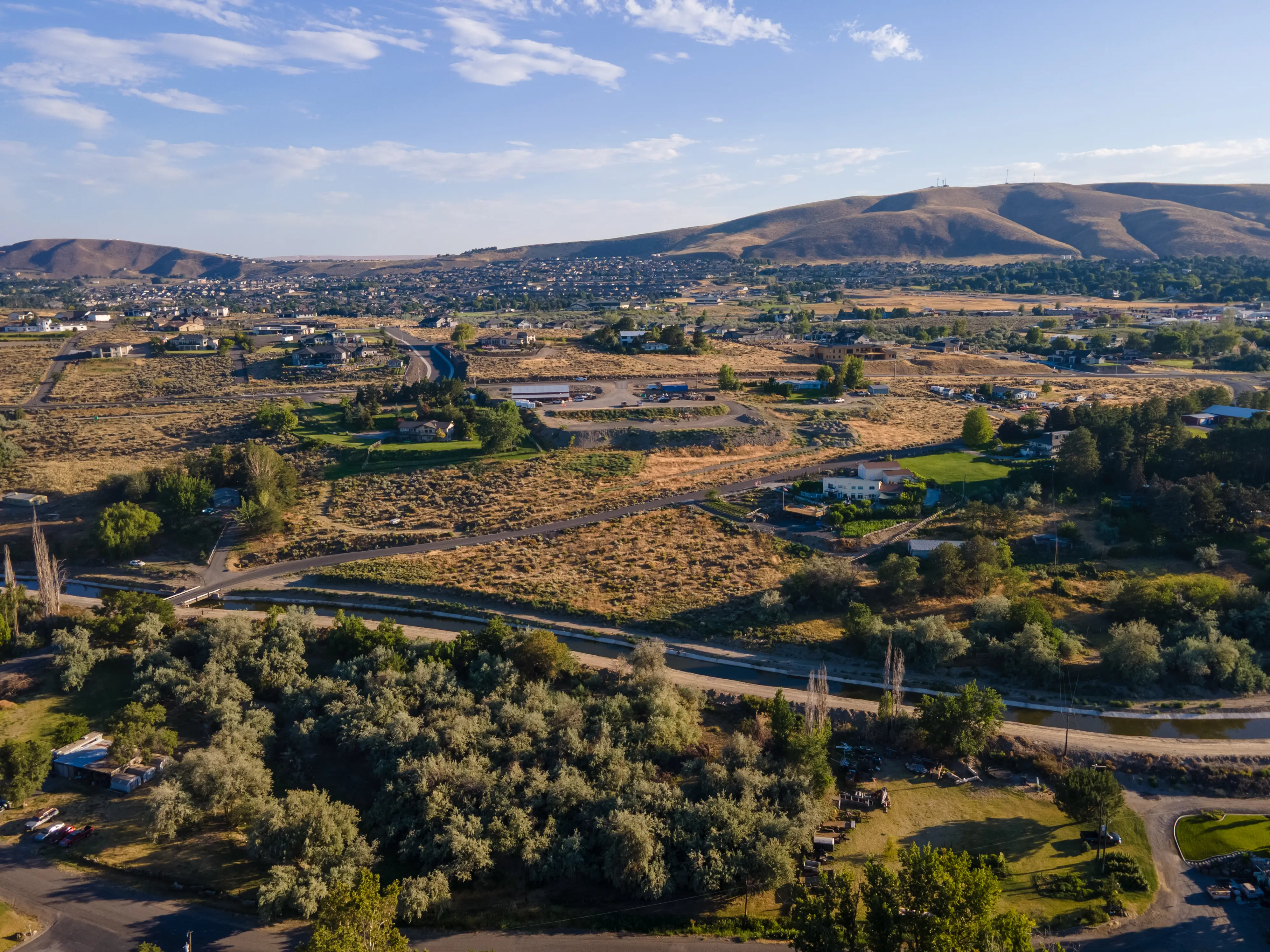
Local Expert Takeaway: The single thing California buyers most consistently underestimate is how the income tax shift reconfigures their monthly budget from the very first paycheck. A buyer earning $150,000 moving from Pleasanton or Irvine should model their post-move finances with an additional $1,000–$1,100 per month in take-home pay before comparing mortgage scenarios — because that figure changes which West Richland neighborhoods are genuinely comfortable versus technically affordable. Pair that with a $486,000 purchase price and a 40% down payment from California equity, and the monthly carrying cost picture becomes one of the more dramatic improvements a homeowner can make in a single transaction.
✅ The income tax advantage is real and immediate. California buyers earning $120,000 to $200,000 per year gain $7,000 to $21,000 in annual take-home pay simply by crossing the state line — no lifestyle change required.
⚠️ West Richland winters require recalibration. The city is not rainy-gray like Seattle, but it is genuinely cold and dark from November through February. First-year California transplants almost universally report this as the biggest adjustment.
📍 Your California equity buys very differently depending on your region of origin. Bay Area sellers can eliminate a mortgage entirely and invest the surplus. Central Valley sellers get meaningful financial improvement but a narrower arbitrage — the income tax delta matters more for this group over time.
Is moving from California to West Richland worth it?
For most California buyers earning above $100,000, the financial case is genuinely strong. The combination of lower home prices, eliminated state income tax, and lower overall housing costs typically produces $1,500 to $3,000 per month in improved cash flow depending on origin metro and income level. The lifestyle trade-offs — colder winters, a smaller dining scene, distance from the coast — are real but bounded. Most transplants who've been here two or more years report the financial relief outweighs what they gave up.
How much cheaper is housing in West Richland vs. California?
West Richland's median home price sits at $486,000, which represents roughly a 65% discount from Bay Area medians, a 40–50% discount from coastal Southern California, and a more modest 10–25% discount from Sacramento and Inland Empire markets. The gap is widest for Bay Area sellers and narrowest for Central Valley buyers, though even the latter benefit significantly from Washington's zero income tax over a 5–10 year horizon.
What do I need to know about moving from California to Washington?
Washington has no state income tax, no inheritance tax below the exemption threshold, and a property tax structure nearly identical to California's in rate — but applied to a dramatically lower purchase price in West Richland. California driver's licenses must be exchanged for Washington licenses within 30 days of establishing residency, and vehicles must be registered in Washington within the same window. Washington requires a vehicle emissions inspection in some counties, but Benton County is currently exempt. The biggest practical adjustment most California transplants report is winter driving — all-season or snow-capable tires are genuinely recommended, not optional.
Explore the full West Richland series: The Ultimate West Richland Relocation Guide · Is West Richland Safe? · Cost of Living in West Richland · Best Neighborhoods in West Richland · West Richland Schools & Family Life · West Richland Youth Sports · West Richland Parks & Recreation · Retiring in West Richland · 1031 Tax-Deferred Exchange in West Richland · West Richland First-Time Homebuyers Guide · West Richland Down Payment Assistance Guide · Moving to West Richland from California