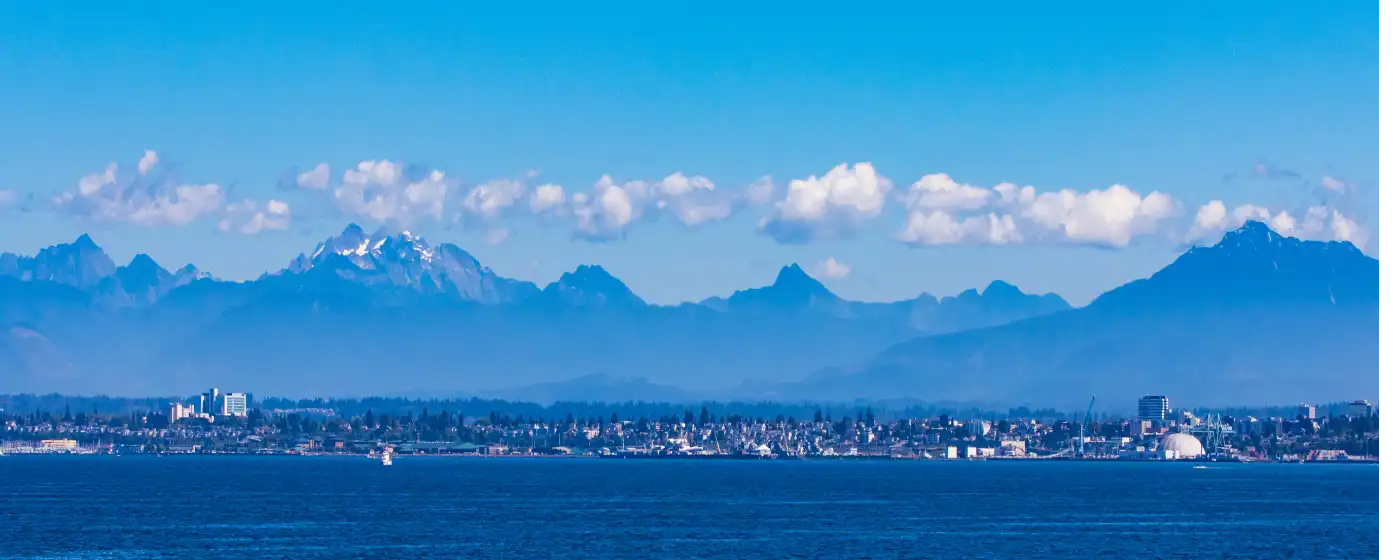
Puget Sound · Washington
Cost of Living in Everett: Housing, Taxes, Utilities & Lifestyle (2026)
Everett consistently surprises people doing their first cost-of-living research. They expect a city of 114,000 on the Puget Sound to run close to Seattle prices, and while Everett isn't cheap — overall costs run about 36% above the national average — it's genuinely more affordable than anything you'll find in Seattle proper or on the Eastside. The median sold price sits at $570,000, which buys a real house, not a compromised one, in most of the city's neighborhoods.
What shapes the cost picture here is a combination of geography, employment, and Washington's tax structure. Boeing's massive presence, the Naval Station, and a healthcare employment base anchored by Providence Regional Medical Center give Everett an economy that sustains housing demand without the speculative premium of tech-heavy markets. The absence of a Washington state income tax changes the math significantly for buyers relocating from California, Oregon, or the East Coast.
This guide walks through what you'll actually spend in Everett — from mortgage payments and property taxes to utilities, groceries, and commuting costs — and compares those numbers against the neighboring cities most buyers are cross-shopping.

The median sold price in Everett as of spring 2026 runs at $570,000, confirmed across recent MLS data. That figure buys a 3-bedroom, 2-bath single-family home in most of the city's established neighborhoods — something with a garage, a backyard, and enough square footage that you won't feel cramped after month two. The market is competitive: homes are averaging just 11 days on market and typically receiving around 2 offers, so the era of leisurely decision-making has not arrived here.
The market does have range. Downtown condos and attached homes start closer to $384,000 — a legitimate entry point for first-time buyers or investors who want to avoid the full single-family price tag. On the upper end, Boulevard Bluffs homes have been averaging $850,000 and higher, with Zillow-indexed values on some properties pushing past $1 million. The citywide median at $570,000 is an honest midpoint between those realities, not an aspirational number.
At roughly $366 per square foot, Everett prices are meaningfully below the Seattle metro average while still reflecting a highly competitive market. Buyers who've been looking in Kirkland or Bellevue often find that the same dollar amount that gets them a dated condo on the Eastside buys a well-maintained house with a view corridor in Everett's hillside neighborhoods.
| Budget Range | What to Expect |
|---|---|
| Under $450,000 | Condos, attached townhomes, or older single-family homes needing updates in Delta, Riverside, or Lowell |
| $450,000–$570,000 | Entry-level single-family homes in Cascade View, South Forest Park, Valley View; 2–3 bedrooms |
| $570,000–$750,000 | Solid 3–4 bedroom single-family homes across most of the city including Silver Lake, Pinehurst, Evergreen |
| $750,000–$1,000,000 | Premium finishes, larger lots, Puget Sound view corridors; Boulevard Bluffs, Harborview-Seahurst-Glenhaven, Northwest Everett |
| $1,000,000+ | Luxury homes and significant view properties, primarily Boulevard Bluffs and the waterfront corridor |
Snohomish County's effective property tax rate comes in at approximately 0.83% annually, which translates to roughly $4,731 per year on the $570,000 median — or about $394 per month added to your housing payment. Washington's levy limit system caps annual increases at 1% without a public vote, which gives homeowners a degree of predictability that buyers from high-tax states often find pleasantly surprising. Homeowners 61 and older who meet income thresholds qualify for a senior exemption program through the Washington State Department of Revenue, which can meaningfully reduce the assessed value subject to taxation.
The rental market reflects the same competitive pressure as buying. Vacancy rates are tight, and inventory in well-located neighborhoods tends to move quickly. Northwest Everett commands the city's highest 1-bedroom rents, averaging around $3,077 per month — a figure that reflects both the walkability premium and proximity to the waterfront and downtown employment. Harborview-Seahurst-Glenhaven runs a close second in some configurations. More affordable rentals concentrate in Delta, Riverside, and the areas around the Everett Mall South corridor, where access to Highway 99 retail compensates for less residential character.
| Unit Type | Avg. Monthly Rent |
|---|---|
| Studio | $1,300–$1,600 |
| 1-Bedroom (citywide avg.) | $1,700–$2,100 |
| 1-Bedroom (Northwest Everett) | ~$3,077 |
| 1-Bedroom (Boulevard Bluffs) | ~$1,903 |
| 1-Bedroom (Harborview-Seahurst-Glenhaven) | ~$2,429 |
| 1-Bedroom (Silver Lake) | ~$1,828 |
| 2-Bedroom (citywide avg.) | $2,000–$2,500 |
| 3-Bedroom house | $2,500–$3,200 |
Utilities in Everett run slightly below the national average — one of the few cost categories where living here is cheaper than most of the country. Puget Sound Energy serves the area for electricity and natural gas; Everett's public utility infrastructure and the Pacific Northwest's hydropower mix keep electricity costs moderate. A typical monthly utility bill for a single-family home runs in the range of $150–$210 depending on season and home size.
Transportation is the category where Everett's suburban layout becomes expensive. The city scores well below 50 on walkability metrics in most neighborhoods, meaning a car — or more commonly two — is a practical necessity for most households. Fuel, insurance, and maintenance add meaningfully to monthly budgets. The one relief valve is the Sounder commuter rail line, which runs from Everett Station to Seattle's King Street Station. For Boeing Everett employees and Naval Station commuters, the geography works in their favor: both major employers are close enough to eliminate the Seattle commute entirely for most residents.
Grocery and dining access is solid across most of the city. Fred Meyer, Safeway, and Grocery Outlet anchor the major shopping corridors, with Trader Joe's and Whole Foods accessible in nearby Lynnwood for those willing to drive south. The Hewitt Avenue and Colby Avenue corridors in downtown Everett offer restaurant and café density that surprises people who assume Everett is purely suburban. Groceries run about 9% above the national average, and dining out locally reflects that — a dinner for two at a mid-range restaurant typically runs $60–$85 before tip.
Healthcare costs index about 22% above the national average, which is worth factoring into relocation budget planning for families or individuals with regular medical needs. Providence Regional Medical Center and The Everett Clinic provide strong local access, which can reduce the out-of-pocket costs associated with traveling to specialist care in Seattle.

| City | Median Home Price | Property Tax Rate | State Income Tax | Commute to Seattle | Key Trade-Off |
|---|---|---|---|---|---|
| Everett | $570,000 | ~0.83% | None | ~38 min | Best combination of access and affordability in north Snohomish |
| Mukilteo | $750,000+ | ~0.85% | None | ~45 min | Premium waterfront/ferry access; significantly higher entry price |
| Marysville | $490,000 | ~0.80% | None | ~50 min | More affordable; longer commute; less urban amenity |
| Lake Stevens | $540,000 | ~0.82% | None | ~55 min | Family-oriented; newer construction; longer Seattle drive |
| Mill Creek | $700,000+ | ~0.84% | None | ~42 min | Highly rated schools; HOAs common; tighter inventory |
| Lynnwood | $600,000 | ~0.86% | None | ~32 min | Light rail access; growing density; smaller city feel |
| Snohomish | $640,000 | ~0.83% | None | ~52 min | Small-town character; rural feel; longer commute trade-off |

From a lending standpoint, where you buy within Everett can significantly shape your long-term financial picture. Neighborhoods like Cascade View and Boulevard Bluffs tend to attract steady buyer interest, and well-priced homes there often receive multiple offers within days of hitting the market. Evergreen has also seen growing demand, particularly among buyers who want proximity to amenities without stretching into Seattle price territory. Many buyers are finding solid options in Everett under $750,000, though that window can close quickly in the more desirable pockets of the city.
Before you start touring homes, I'd strongly encourage a conversation with a lender first — not just to know your approval number, but to understand what your full monthly payment actually looks like. Taxes, insurance, HOA dues, and loan structure all factor into what you'll pay each month, and that number can look quite different from the purchase price alone. My goal is always to help buyers find a payment that feels comfortable, not just one they technically qualify for. When the right home appears in a competitive market like Everett, being prepared makes all the difference.
This table models a household purchasing at the $570,000 median with 10% down ($57,000), financing $513,000.
| Expense Category | Monthly Cost |
|---|---|
| Mortgage P&I (6.5% 30-year fixed, $513K) | ~$3,244 |
| Property Tax (~0.83% annually) | ~$394 |
| Homeowner's Insurance | ~$120–$150 |
| Utilities (electricity, gas, water/sewer) | ~$175–$210 |
| Internet | ~$60–$80 |
| Groceries (family of 3–4) | ~$700–$900 |
| Transportation (2 vehicles: fuel, insurance, maintenance) | ~$900–$1,200 |
| Dining & Entertainment | ~$400–$600 |
| Healthcare (premiums + out-of-pocket est.) | ~$400–$700 |
| Childcare (if applicable, one child) | ~$1,200–$1,800 |
| Total (excluding childcare) | ~$6,400–$7,500/month |
Washington is one of nine states with no personal income tax, and for buyers relocating from Oregon — where the top marginal rate hits 9.9% — this is genuinely transformative. A household earning $120,000 in Oregon nets roughly $8,400 per year more by simply crossing the Columbia River. Everett's position well north of the Oregon border doesn't change that fundamental advantage.
The state does collect a sales tax; Snohomish County's combined rate runs approximately 10.6%, which applies to most retail purchases. Property tax, as noted, comes in at approximately 0.83% — below the national median of around 1.1% — and Washington's 1% annual levy increase cap limits how quickly that bill can grow. For homeowners 61 and older who qualify for the state's senior property tax deferral or exemption programs, the long-term savings can be significant over a 10–20 year horizon in the home.
Capital gains on home sales follow federal rules, with Washington's new 7% capital gains tax (effective 2023) applying only to gains above $250,000 for individuals and $500,000 for married couples — thresholds that protect most primary residence sellers entirely.
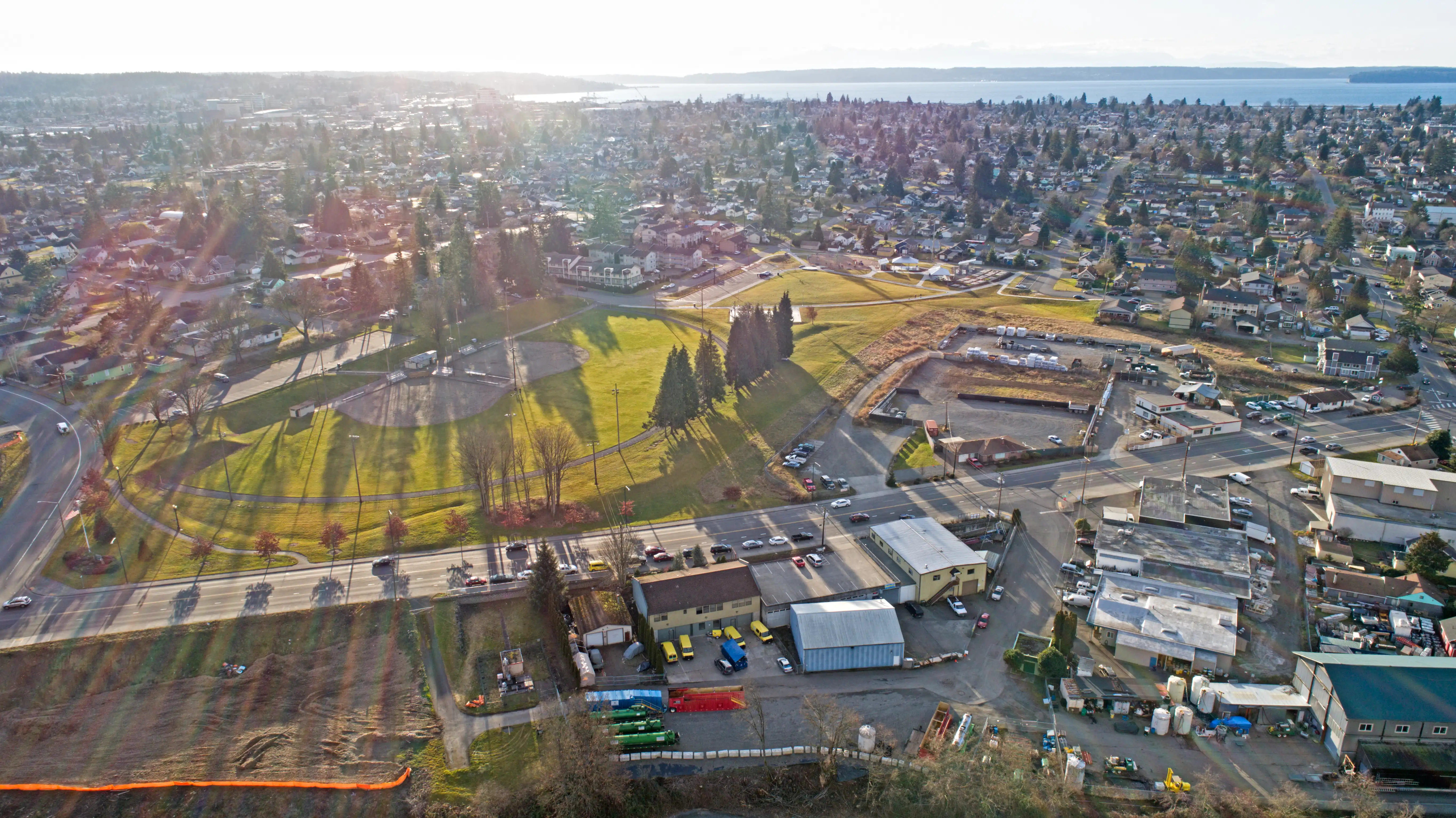
Local Expert Takeaway: The buyers who get the most out of Everett's cost structure are dual-income households who can put one of those incomes into savings rather than housing. The $570,000 median is real, but the mortgage on that purchase requires financial discipline — the sweet spot for single-income buyers is typically in the $430,000–$490,000 range, which opens up solid options in Delta, Cascade View, and parts of Riverside. If you're comparing Everett to Lynnwood, factor in that Lynnwood's new development density means HOA fees that often add $300–$500 per month — Everett's older single-family stock typically has none.
Looking to buy in Everett? Estimate your payment.
Enter your numbers to see an estimated monthly mortgage payment.
Estimate only. Excludes HOA fees and mortgage insurance.
Is Everett affordable compared to Seattle?
Yes, meaningfully so. Everett's median sold price runs at $570,000 against Seattle's median that often exceeds $800,000 for single-family homes, and the overall cost of living is substantially lower. Buyers priced out of Seattle proper frequently find that Everett offers equivalent housing quality and a 38-minute commute to the city's employment core.
What are property taxes like in Everett?
Snohomish County's effective rate sits at approximately 0.83%, which works out to roughly $4,731 per year on the median-priced home — around $394 per month. Washington's levy limit system caps annual increases at 1% without a public vote, offering predictability that buyers from high-tax states often appreciate. Homeowners 61 and older may qualify for senior exemption programs that can reduce that bill further.
How does Everett's cost of living compare to neighboring cities?
Everett is more expensive than Marysville and Lake Stevens but more affordable than Mukilteo and Mill Creek. Lynnwood is closer in price but gaining density and HOA fees as new development accelerates. For buyers who want genuine city infrastructure — employment base, cultural institutions, a working waterfront — without paying Seattle or Eastside prices, Everett consistently sits at the most functional point on the value curve in north Snohomish County.
Explore the full Everett series: Living in Everett · Is Everett Safe? · Cost of Living · Best Neighborhoods · Schools & Family Life · Youth Sports · Parks & Rec · Retiring in Everett