
Puget Sound · Washington
Is Everett Safe? Crime Rates, Safest Neighborhoods & Local Reality (2026)
Everett has a reputation that precedes it — and that reputation is only half accurate. Ask someone in Bellevue about Everett and they'll mention the crime stats. Ask someone who actually lives in Silver Lake, Boulevard Bluffs, or Valley View, and they'll tell you they haven't thought twice about safety in years. Both versions are true at once, which is exactly why this city deserves a more honest breakdown than the headline numbers provide.
The raw figures carry real weight. Property crime in particular runs well above state and national norms, driven largely by vehicle theft, retail corridors, and the kind of opportunistic offenses that cluster around commercial density rather than residential neighborhoods. Violent crime, by contrast, sits meaningfully below both Washington state and national averages — a distinction that matters enormously for families trying to gauge what daily life actually feels like.
This guide walks through what those numbers mean neighborhood by neighborhood, where the risk is concentrated, and what the quieter corners of Everett look like for buyers who do their homework before choosing a zip code.

Everett's overall crime picture is best understood as two cities occupying the same map. FBI data from 2024 puts the city's total crime rate at roughly 3,484 incidents per 100,000 people — higher than both the state average and the national benchmark. That's a real number, and buyers deserve to hear it plainly. But buried inside that aggregate figure is a violent crime rate that runs about 26% below the national average and nearly 19% below Washington state's own rate. The citywide headline is alarming; the composition of what drives it is considerably more nuanced.
What's genuinely elevated is property crime, particularly motor vehicle theft, which by FBI analysis ranks among the higher rates nationally for cities of Everett's size. The practical consequence is straightforward: Everett is a city where locking your car every time matters, where parking in well-lit areas makes a difference, and where comprehensive auto insurance isn't optional. It is not, statistically, a city where violent encounters on a typical Tuesday represent a meaningful risk for most residents. Local police data from the 2024 reporting period shows violent crime actually decreased by roughly 17% year-over-year, while property crime fell by about 21% over the same interval — the most significant single-year drop the city has seen in recent memory.
Context also helps. Washington state runs a higher-than-average property crime rate compared to the rest of the country, so Everett isn't an outlier in isolation — it sits at the upper end of a state where property offenses are broadly elevated. Cities like Tacoma, Spokane, and even parts of Seattle post comparable or higher combined crime figures. Within Snohomish County, Everett absorbs a disproportionate share of regional commercial traffic, homeless services, and transit throughput — all of which structurally inflate crime counts in the corridors that serve those functions, without much affecting daily life in residential neighborhoods that sit five miles away.
Local police and FBI estimates commonly place Everett's violent crime rate around 3.7 per 1,000 residents — a figure that translates to a roughly 1-in-378 chance of being a victim in a given year. For practical context, that's a rate that makes Everett safer on violent crime than the majority of U.S. cities its size. The city recorded nine homicides in 2024, down from eleven the year before — a number that, while never trivial, is proportionate for a city approaching 115,000 people and reflects a downward trend rather than an escalating one. Day-to-day, most Everett residents in established neighborhoods simply don't encounter the conditions that generate violent incidents.
Property crime is where Everett's numbers diverge sharply from the regional norm. The rate sits at approximately 32 per 1,000 residents — a level that is roughly 1.83 times the national average and about 1.31 times Washington state's own elevated baseline. Motor vehicle theft drives a significant portion of that figure, and it tends to concentrate around commercial corridors, transit hubs, and the central and southwestern parts of the city where retail density is highest. Neighborhoods further from those commercial nodes — particularly in the southeast and along the elevated western bluffs — see substantially lower property crime exposure than the citywide rate would imply.
Silver Lake is the largest neighborhood in Everett by population and consistently earns one of the city's strongest safety ratings — a Grade A across major crime analysis platforms, with a median household income around $104,000. The chance of being a victim of violent crime here runs roughly 1 in 646, which puts it well below the citywide rate. This is a dense suburban neighborhood where most residents own their homes, and that ownership density tends to correlate strongly with lower crime across all categories. Families with school-age children make up a significant portion of the population, and the neighborhood's distance from the commercial corridors near Evergreen Way insulates it from the property crime patterns that affect western and central Everett.
Best for: Buyers who want Everett's best safety profile in a neighborhood with genuine suburban depth and established community character.
Boulevard Bluffs earns an A- safety grade and carries a median household income of approximately $115,000 — among the highest of any named Everett neighborhood. Sitting along the elevated western edge of the city, the neighborhood's physical positioning creates a natural buffer from the commercial congestion and transit activity that pushes crime counts up in lower-elevation corridors. Residents here are predominantly homeowners, turnover is low, and the neighborhood has the kind of long-term stability that tends to keep crime self-suppressing. The waterfront proximity is a quality-of-life asset, and the safety profile reflects a community where that asset has been carefully maintained.
Best for: Buyers prioritizing a quiet, high-income residential feel with strong safety metrics and proximity to the Everett waterfront.
Valley View posts a Grade A safety rating with a median household income near $104,000, making it part of the cluster of southeastern neighborhoods that consistently outperform the rest of the city on crime metrics. The geographic reality is that the southeast portion of Everett — where Valley View sits — is broadly recognized by local residents as the city's quieter, more stable quadrant. Commercial activity is lower, through-traffic is minimal, and the residential character is well-established. Buyers who focus their search in this corner of the map encounter a meaningfully different environment than what the citywide averages suggest.
Best for: Buyers seeking a lower-profile, residential-feeling neighborhood where the safety data aligns with the lived experience.
These two neighborhoods occupy the middle tier of Everett's safety spectrum, each earning a B-range grade. Cascade View sits at B+ and South Forest Park holds a solid B, with South Forest Park carrying a median household income around $60,000 — lower than the top-tier neighborhoods but reflective of a community that remains stable and largely residential in character. Neither neighborhood generates the concentrated property crime concerns associated with the Evergreen Way corridor or the central business district. They're practical choices for buyers who want reasonable access to the city's core without paying the premium of the top-tier neighborhoods, and the safety data supports that use case.
Best for: Budget-conscious buyers who want mid-tier safety performance in established residential surroundings without headline-neighborhood pricing.
Westmont is the single neighborhood in Everett's analyzed dataset to earn a C+ safety grade — the only area that falls below the B range in a city where 95% of neighborhoods land in the A or B tier. That distinction is worth taking seriously. The central corridor, which includes commercial density along and near Evergreen Way, concentrates the kind of retail activity and foot traffic that generates opportunistic property crime — vehicle break-ins, theft from parked cars, and shoplifting-adjacent incidents that inflate overall crime counts without necessarily meaning the area is dangerous in the way buyers imagine. Still, buyers evaluating properties in or adjacent to Westmont should spend time on-site at multiple times of day and pay close attention to the specific block, not just the neighborhood name.
Best for: Buyers who've done specific on-the-ground research and understand the block-level variation — not a default recommendation for relocating families.
Port Gardner presents one of the more interesting safety dynamics in Everett. AreaVibes flags it as higher-than-average crime for the city, and it's a neighborhood in transition — waterfront-adjacent, with ongoing development pressure and a mix of older industrial uses and newer residential investment. The crime profile here is less about residential risk and more about the neighborhood's role as a through-point connecting the marina, the downtown core, and the Port of Everett's commercial operations. Buyers attracted by the waterfront access and the lower entry-level price points should understand that the safety trajectory in Port Gardner is improving but hasn't yet reached the consistency of the city's southeast neighborhoods.
Best for: Buyers comfortable with a neighborhood in active transition and willing to trade top-tier safety metrics for waterfront proximity and lower prices.

| City | Violent Crime/1K | Property Crime/1K | Overall Safety Profile |
|---|---|---|---|
| Everett | ~3.7 | ~32 | Below avg property crime; above avg violent crime nationally but below state/national violent avg |
| Marysville | ~2.9 | ~24 | Lower property crime; quieter suburban profile |
| Mukilteo | ~1.2 | ~12 | Among the safest in Snohomish County |
| Mill Creek | ~1.1 | ~11 | Consistently one of the lowest crime rates in the region |
| Lake Stevens | ~2.1 | ~18 | Growing suburb; lower crime than Everett across both categories |
| Lynnwood | ~4.1 | ~35 | Similar or slightly higher property crime; comparable violent crime |
| Snohomish | ~2.4 | ~20 | Smaller city with lower overall crime counts |

When buyers start researching Everett neighborhoods, safety perceptions quickly translate into real price differences. Areas like Cascade View and Boulevard Bluffs tend to hold value well precisely because families prioritize them — and that demand shows up in how fast homes move. Well-priced listings in these neighborhoods routinely go under contract within days, not weeks. Evergreen attracts similar attention for buyers wanting a quieter feel with solid long-term upside. If you find something you like under $750,000 in these pockets, waiting to get your finances in order after the fact usually means losing the house.
That's exactly why I encourage buyers to connect with a lender before they ever set foot in a home. Your pre-approval number and your comfortable budget are two different things, and the gap matters. Taxes, insurance, HOA dues, and loan structure all affect what you actually pay every month — and those numbers look very different depending on the specific property. Knowing your real picture ahead of time means when the right home appears, you're ready to move with confidence instead of scrambling.
The conversation Everett residents have that the crime apps don't capture is about geography more than statistics. Evergreen Way — the commercial spine that runs through the western and central parts of the city — is where a disproportionate share of Everett's property crime concentrates. Locals know to avoid leaving anything visible in a parked car along that corridor, to be deliberate about where they park near the Everett Station transit hub, and to treat the blocks immediately surrounding the downtown core differently than the residential grid further east and south. These aren't dramatic precautions — they're the same habits anyone in a mid-sized Pacific Northwest city develops without thinking about them much.
What genuinely surprises people after six months of living in Everett is how quiet the residential neighborhoods feel relative to what they expected from the headline crime numbers. A buyer who lands in Silver Lake, Glacier View, or one of the eastern neighborhoods near the Lake Stevens corridor will likely go weeks without a moment that registers as unsafe. The city's crime is not distributed evenly, and the neighborhoods with the highest owner-occupancy rates and the greatest distance from commercial density are places where families go years without incident. The mistake is treating Everett as a single environment rather than a collection of very different micro-communities stitched together under one city limit.
One practical thing locals don't mention to newcomers until it's too late: auto insurance in Everett should reflect the city's vehicle theft rate, not a regional average. Comprehensive coverage isn't a luxury here. The 1-in-126 chance of vehicle theft across the city is real, and while that risk is far lower in the quieter residential neighborhoods, it's a meaningful enough number that every buyer should factor it into their annual cost of ownership calculation from day one.
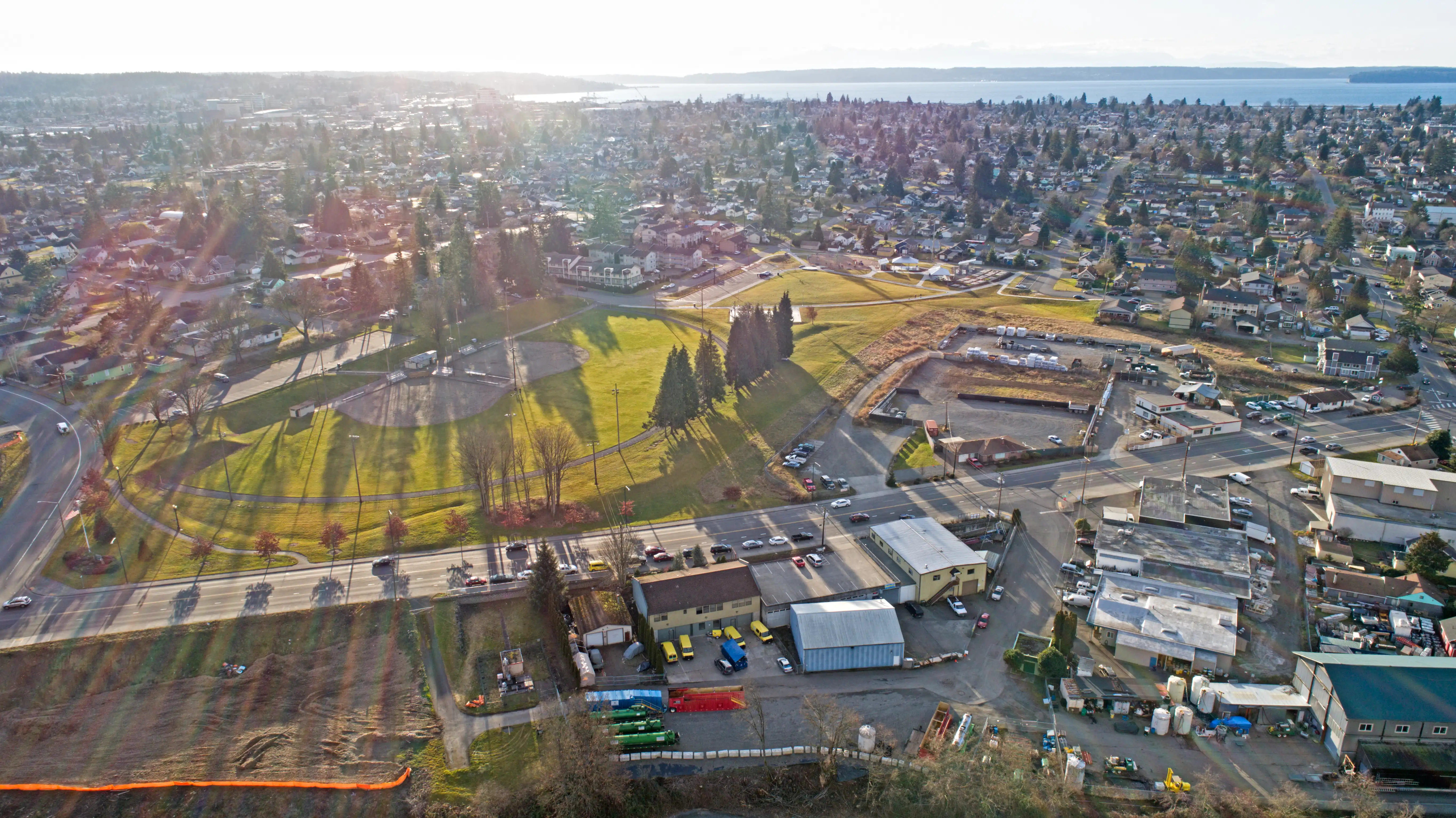
Local Expert Takeaway: If you're evaluating safety in Everett, focus your research on the southeast quadrant first — Silver Lake, Valley View, and the neighborhoods along the eastern edge of the city consistently outperform the citywide average by a significant margin. Buyers who end up disappointed with Everett's safety profile almost always chose a property near the Evergreen Way commercial corridor without doing block-level research first. The specific street matters more than the zip code in this city.
✅ Violent crime in Everett is below both the Washington state and national averages — the city's safety profile is meaningfully better on this metric than the overall headline numbers suggest.
⚠️ Property crime, especially vehicle theft, runs well above national norms — comprehensive auto insurance and consistent awareness of where you park are practical habits every Everett resident develops.
📍 Southeast Everett neighborhoods like Silver Lake and Valley View consistently earn A-grade safety ratings — buyers who focus their search there encounter a substantially different environment than the citywide statistics imply.
Is Everett a safe city to live in?
It depends heavily on where you live within Everett. Violent crime sits below state and national averages, while property crime — particularly vehicle theft — runs above them. Neighborhoods in the southeast portion of the city, including Silver Lake and Valley View, earn top safety grades and see a fraction of the property crime that affects commercial corridors in the west and central areas.
What are the safest neighborhoods in Everett?
Silver Lake, Boulevard Bluffs, Valley View, Glacier View, and the established neighborhoods along the eastern and southern edges of the city consistently post the strongest safety ratings in available crime data. These areas share high homeownership rates, median household incomes above $80,000, and meaningful distance from the commercial corridors where property crime tends to cluster.
How does Everett compare to nearby cities for crime?
Everett's overall crime rate is higher than neighboring Mill Creek, Mukilteo, Marysville, and Lake Stevens — all of which post lower property and violent crime figures. It's roughly comparable to Lynnwood on most metrics. Among mid-sized Snohomish County cities, Everett anchors the higher end of the crime spectrum, which is why neighborhood selection within Everett matters more than in its smaller neighbors.
Explore the full Everett series: Living in Everett · Is Everett Safe? · Cost of Living · Best Neighborhoods · Schools & Family Life · Youth Sports · Parks & Rec · Retiring in Everett