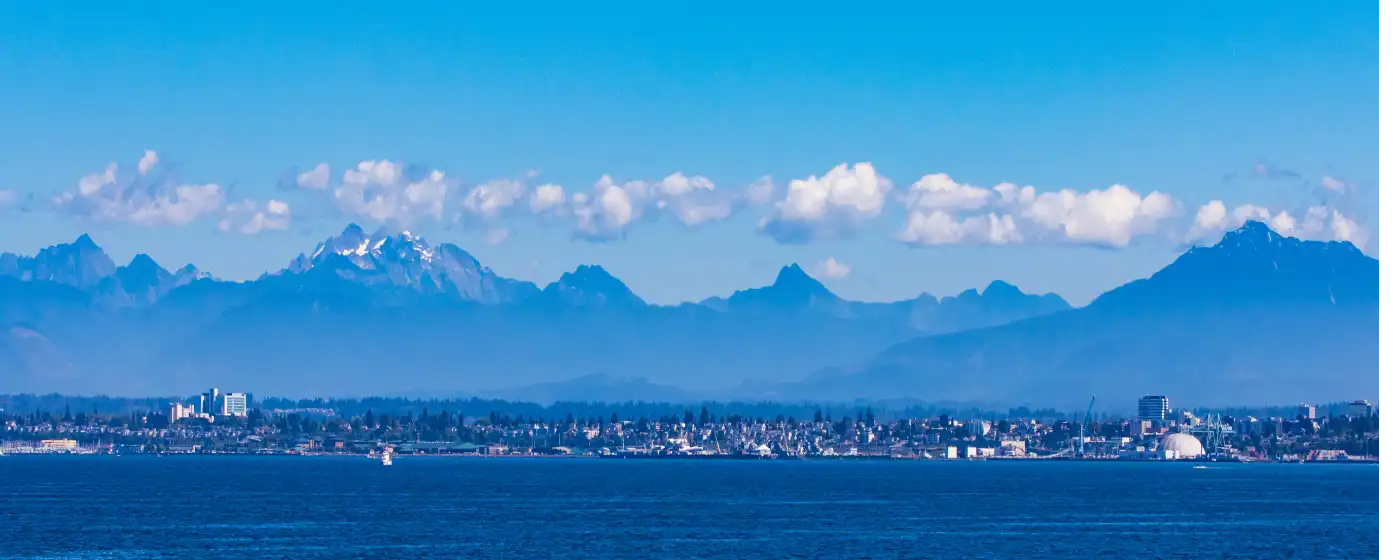
Puget Sound · Washington
Moving to Everett from California: The Honest Comparison (2026)
The California-to-Washington move has a specific human story behind it, and it's rarely just about housing costs. The Bay Area software engineer who went remote in 2021, spent three years commuting to a standing desk in a 900-square-foot San Jose apartment, and finally bought a four-bedroom house in Everett with a yard and a garage — without touching their salary. The San Diego family who did the math on summer electricity bills, wildfire evacuation insurance premiums, and the cost of private school, and realized they were one bad year away from being priced out of their own neighborhood. The Sacramento couple who sold their townhome, paid cash for a house in Silver Lake, and banked the difference. Everett keeps appearing in these stories because it offers something genuinely rare: proximity to a major metro economy, a harbor waterfront, and home prices that still allow for a financial reset.
None of that means moving here is seamless. Everett is a working port city in the Pacific Northwest — not a sunbelt suburb with perpetual blue skies and a Trader Joe's on every corner. The gray settles in around November and doesn't fully lift until late June. The restaurant scene is real but not the food culture you left behind in Oakland or Silver Lake. The city has rough patches that don't show up in the marketing photos, and the differences between neighborhoods matter more than most California buyers realize before they arrive.
This guide covers all of it honestly — the tax math by California region, what your equity actually buys here in 2026, the weather reality by season, the mistakes California buyers commonly make, and an interactive tool to compare your specific California city to Everett directly. If you're seriously considering this move, read it before you make an offer.

| Everett, Washington | Bay Area | Southern CA | Sacramento Metro | Central Valley | |
|---|---|---|---|---|---|
| Median Home Price (approx. 2026) | $570,000 | $1,400,000–$1,800,000 | $750,000–$1,100,000 | $480,000–$600,000 | $320,000–$430,000 |
| Property Tax Rate (effective) | ~0.83% | ~1.1%–1.2% | ~1.0%–1.25% | ~1.1%–1.3% | ~1.0%–1.2% |
| State Income Tax | None | Up to 13.3% | Up to 13.3% | Up to 13.3% | Up to 13.3% |
| State Sales Tax | 6.5% + local (~9.9% in Everett) | 7.25%–10.75% | 7.25%–10.5% | 7.25%–8.75% | 7.25%–8.25% |
| Avg. Utilities (monthly est.) | $140–$180 | $200–$280 | $210–$310 | $190–$270 | $175–$250 |
| Avg. 1BR Rent | $1,600–$2,000 | $2,800–$3,800 | $2,200–$3,000 | $1,500–$1,900 | $1,100–$1,500 |
The savings aren't unlimited. Everett's sales tax runs roughly 9.9%, and Washington funds much of its public infrastructure through consumption taxes rather than income taxes. Buyers accustomed to California's Prop 13 property tax caps may also be surprised that Washington's 0.83% effective rate in Snohomish County, while lower than what you'd pay on a newly purchased California home, doesn't freeze and drift downward the way legacy California assessments do. On balance, though, the net tax picture strongly favors Washington for any household earning above roughly $80,000 — and the advantage widens sharply as income rises.
Washington's most important financial fact for California transplants is one that doesn't appear in real estate listings: there is no state income tax. Washington is one of nine states with this structure, and for high-earning households leaving California, the difference is felt immediately in every paycheck.
| Tax Item | California | Washington | Net Impact for Transplant |
|---|---|---|---|
| State Income Tax ($120K income) | ~$7,500–$8,800 | $0 | Save $7,500–$8,800/yr |
| State Income Tax ($150K income) | ~$10,500–$12,000 | $0 | Save $10,500–$12,000/yr |
| State Income Tax ($200K income) | ~$16,000–$19,000 | $0 | Save $16,000–$19,000/yr |
| State Sales Tax | 7.25%–10.75% | 6.5% + local (~9.9%) | Roughly comparable |
| Capital Gains Tax | 9.3%–13.3% on all CG | 7% on gains over $262,000 | WA advantage for most earners |
| Property Tax (effective rate) | ~1.1%–1.25% on purchase | ~0.83% | WA advantage |
| Senior Property Tax Exemption | Limited income-based | Yes (61+, income-based) | WA advantage for retirees |
Washington's sales tax is higher than California in some comparisons and lower in others, depending on the specific California county. Everett's local combined rate runs approximately 9.9%, which is meaningful on large purchases. For most households, though, the consumption tax offset represents a fraction of the income tax savings — the net financial advantage of relocating remains strongly positive for virtually any California household earning above $100,000.
A buyer leaving San Jose or Fremont with $1.4 million in equity can purchase the median Everett home outright and have $830,000 left over. That's not a hypothetical — it's a transaction type that Snohomish County title companies have processed dozens of times over the past three years. At full cash, the buyer eliminates not just a mortgage payment but also the rate environment entirely, which matters when rates remain above 6%. For buyers who want more than the median, Everett's top end — waterfront properties in Port Gardner, newer construction in Silver Lake, and view homes in Boulevard Bluffs — runs $800,000 to $1.1 million, still within reach of an all-cash Bay Area exit with money to spare.
The neighborhoods that represent the best value at this equity level tend to be the ones with the most upside remaining. Silver Lake offers larger lots, newer construction, and a suburban polish that Bay Area buyers recognize immediately. Port Gardner's waterfront proximity and renovated Victorian-era homes attract buyers who want character alongside location. A buyer arriving with Bay Area equity is genuinely shopping the top 10% of the Everett market while spending a fraction of what the same quality would cost in Marin County.
A buyer leaving Pasadena or Long Beach typically arrives in Everett with enough equity to purchase at or above the median with a substantial down payment remaining — or to buy into one of Everett's more established neighborhoods without touching their savings. At the $700,000 equity level, that might mean a strong conventional loan with 40–50% down, bringing monthly housing costs well below what they paid on a Southern California mortgage. At $1 million or more in equity, the calculus starts to look similar to the Bay Area scenario — the option to buy outright or carry a very small balance becomes real.
Southern California buyers tend to find Everett's price range deeply unfamiliar in the best way. A home that would be a starter property in Torrance sells as a move-up home in Everett's Cascade View or View Ridge-Madison neighborhoods. Buyers with $900,000 in equity who want to stay invested rather than go all-cash typically find that a conventional 20–30% down on a $550,000–$700,000 home leaves them with significant liquidity — something that felt impossible in their departure market.
This equity band doesn't produce the same dramatic all-cash scenarios, but the financial case for moving is arguably more compelling on an income basis. A buyer leaving Roseville or Rancho Cucamonga with $500,000 in equity can put 30–40% down on a median Everett home, carry a modest mortgage, and immediately stop paying California state income tax. On a $130,000 household income, that's roughly $9,000–$11,000 per year in additional take-home — which covers a meaningful portion of a monthly mortgage payment by itself.
Neighborhoods like Evergreen, Lowell, and Harborview-Seahurst-Glenhaven offer solid entry points in the $450,000–$600,000 range where Sacramento and Inland Empire equity buys a comfortable primary residence with room to breathe financially. The value difference between a Stockton suburb and one of these Everett neighborhoods is real — the Pacific Northwest infrastructure, school district quality, and employment base tend to be meaningfully stronger.
The relative financial gain is more modest here, but it's real. A buyer leaving Fresno or Bakersfield with $350,000 in equity has enough for a substantial down payment on an Everett home in the $450,000–$550,000 range — properties that typically offer more space, newer infrastructure, and better school access than what that same budget buys in their departure city. The no-income-tax advantage is proportionally just as valuable regardless of equity level: a Central Valley household earning $90,000 saves approximately $5,000–$6,000 annually by moving to Washington, which directly affects what they can afford in monthly housing costs.
Delta, Riverside, and some of Everett's more affordable westside pockets offer entry points around $400,000–$500,000 — condos, townhomes, and older single-family homes that represent a genuine quality-of-life upgrade for buyers coming from California's inland heat corridors. The trade-off is the weather, which deserves an honest conversation.

Everett gets approximately 179 days of rain per year and around 2,100 sunshine hours annually. Los Angeles gets 3,257. That's not a rounding error — it's more than 1,100 hours of additional sunshine every year, which over a decade amounts to roughly 45,000 additional hours of daylight that San Diego or Sacramento enjoyed and Everett did not. The "it doesn't actually rain that much" line is technically defensible — Everett's annual precipitation is only about 30 inches, which is less than New York City — but the gray is relentless in a way that rainfall totals don't fully capture. November through February, the cloud cover hovers near 80% and the daylight shrinks to under nine hours. Buyers who moved from Sacramento frequently describe January in Everett as a specific kind of hard that they didn't anticipate.
The flip side is real and worth naming. Everett summers are genuinely exceptional — dry, warm, averaging around 75°F in July, with long evenings that stretch past 9 p.m. The Olympic Mountains to the west, the Cascades to the east, Jetty Island accessible by ferry in the summer, and Puget Sound visible from the bluffs make for an outdoor season that California transplants frequently describe as their favorite they've ever experienced anywhere. After a year here, most Californians say the same things: summers are better than they expected, winters are harder than they expected, and they stopped taking the space and quiet for granted within about six months.
What California transplants genuinely miss tends to be consistent across origin markets: year-round beach access, the specific food culture of their departure city (the Mexican food gap in the Pacific Northwest is real and widely documented), the social ease of warm weather, and the vitamin D. What they stop missing faster than expected: the traffic on the 405, the wildfire smoke advisories, the utility bills, and the anxiety of living in a market where a single bad financial year could threaten their housing. Everett is not California. For a lot of California buyers, after a year, that stops feeling like a loss.
If you want to see how Everett compares directly to the city you're leaving, use the tool below — it covers the 120 largest California cities with current housing and tax data.
Home prices: Redfin median sale data, Q1–Q2 2026. Select your city to compare.
Ready to talk through what your specific California equity could do in Everett? Todd can model your exact scenario in a single call.

Where you land in Everett genuinely shapes your long-term equity story. Cascade View and Boulevard Bluffs tend to attract strong buyer interest because of their sightlines and neighborhood stability, and well-priced homes there — often under $650,000 — regularly go under contract within days of listing. Bayside draws buyers who want walkability and proximity to the waterfront, and that demand keeps values resilient even when the broader market softens. Coming from California, you may find the price points refreshing, but that doesn't mean you have unlimited time to think things over.
That's exactly why I encourage California transplants to connect with a lender before they ever step inside a home. Your comfortable monthly budget isn't just the loan payment — it's taxes, homeowner's insurance, any HOA dues, and the loan structure itself all added together. Washington has real carrying costs that deserve a clear-eyed look upfront. More importantly, your max approval and your comfortable number are rarely the same figure. Knowing the difference before you fall in love with a home means you're ready to move with confidence when the right one appears.
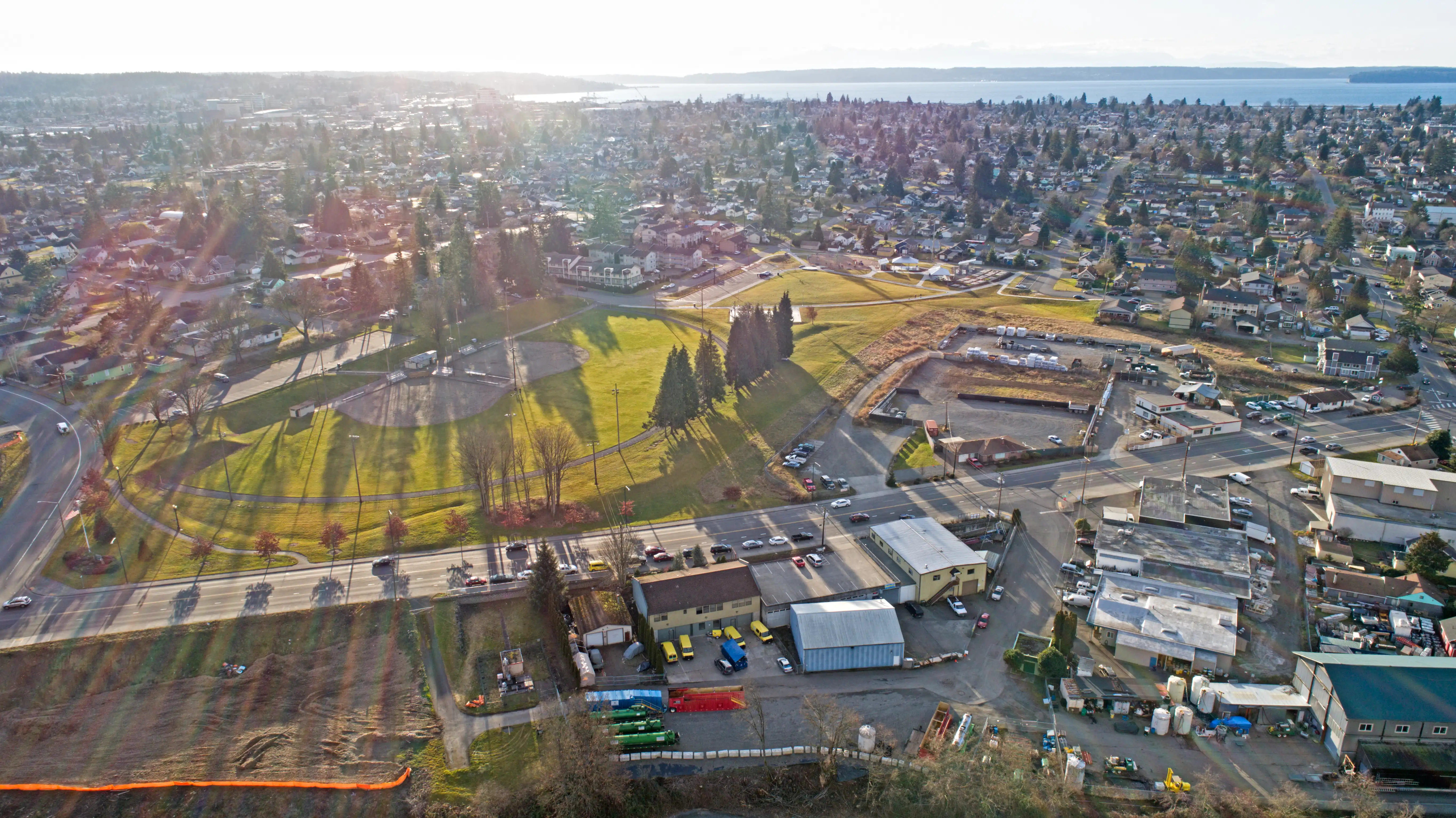
Mistake 1: Assuming the city is uniform. Everett has more internal variation than most California transplants expect after a day of touring. The neighborhoods along the Colby Avenue corridor and the bluffs above Port Gardner feel entirely different from the areas around Everett Mall South or along Casino Road. A buyer who tours Silver Lake and then makes an offer on a property near Delta without understanding the character difference between those two areas is making a decision with incomplete information. Drive the neighborhoods at different times of day before you commit.
Mistake 2: Underestimating winter commuting. California buyers who are used to mild, dry winters frequently don't factor in how I-5 and US-2 behave when the weather turns. A 38-minute commute to Seattle can become 60 or 75 minutes on days when there's frost, ice, or the kind of wet-road compression that happens when everyone in the corridor brakes simultaneously. The Mukilteo Speedway corridor and the ramps near Mariner High School are particular chokepoints between 7 and 8:30 a.m. This isn't a dealbreaker — it's a planning variable that California transplants consistently underweight.
Mistake 3: Missing the income tax math on monthly cash flow. This sounds obvious, but most California buyers calculate their Everett budget using their California take-home pay, then are pleasantly surprised when Washington paychecks arrive larger. A household earning $160,000 that moved from the Bay Area might see an extra $900–$1,100 per month in take-home pay simply because California income tax no longer exists. That figure changes the mortgage conversation substantially — buyers who thought they could afford $550,000 may comfortably carry $620,000 once the full cash flow picture is accurate.
Mistake 4: Expecting California-pace outdoor access year-round. The outdoor culture in Everett is genuine and strong — the trails at Forest Park, Jetty Island in summer, the Snohomish River corridor, and proximity to the Cascades are all real assets. But the Pacific Northwest outdoor lifestyle runs on different seasonal logic. Hiking in October in Everett means waterproof gear and low visibility at elevation. The buyers who thrive here are the ones who adapt to the rhythms rather than fighting them, who buy a good rain jacket in October and stop waiting for conditions to feel California-normal.
Bay Area sellers with large equity have the most flexibility in the Everett market, and that flexibility is worth using strategically. All-cash offers in Everett's competitive under-$750,000 price range — where homes receive multiple offers and sell in under 30 days — carry significant negotiating advantages over financed buyers. Sellers in that band frequently accept lower all-cash offers over higher financed ones simply for the certainty. Bay Area buyers who intend to carry a small mortgage rather than go all-cash should focus on minimizing contingencies and demonstrating liquidity rather than competing purely on price. If the California property being sold was an investment, a 1031 exchange into Everett income property is worth exploring before closing — the Everett 1031 Exchange Guide covers the mechanics in detail.
Southern California sellers with $700,000–$1.1 million in equity typically land comfortably in conventional loan territory for an Everett purchase, with down payments large enough to avoid jumbo thresholds. Everett's median price of $570,000 sits well below the 2026 conforming loan limit, meaning most SoCal buyers with standard equity will have access to conventional rates without needing specialized products. The focus for this group is usually getting pre-approval documentation together before listing in California — pre-approval in hand before the California close accelerates the Everett offer process significantly.
Sacramento and Inland Empire buyers moving in the $400,000–$650,000 equity range may find that their purchase price in Everett qualifies for Washington State Housing Finance Commission programs like WSHFC Home Advantage, which offers down payment assistance options for buyers within income limits. Buyers at the lower end of this equity band who are financing a meaningful portion of the purchase should run the full monthly payment scenario including Washington property tax at 0.83% — the payment is typically still meaningfully lower than what they carried in California, but working the numbers precisely prevents surprises at closing.
Local Expert Takeaway: The single thing most California buyers underestimate about Everett is the compounding effect of Washington's no-income-tax structure on their monthly cash flow. Run your actual Washington paycheck before you set your Everett budget — most buyers earning above $120,000 discover they can carry $40,000–$70,000 more in purchase price without changing their monthly payment experience, which opens up neighborhoods like Silver Lake and View Ridge-Madison that initially seem out of reach. Lock in your financing before you sell in California so you're not losing competitive deals while waiting for documentation.
✅ The no-income-tax advantage is larger than most buyers calculate — for households earning $150,000+, Washington take-home pay is $10,000–$15,000 higher annually than the identical California salary, which directly affects what you can afford to carry in monthly housing costs.
⚠️ Everett is not uniform — the character, price point, and feel of neighborhoods like Silver Lake, Port Gardner, and Delta are genuinely distinct. Touring multiple areas before making an offer is not optional for buyers relocating from out of state.
📍 California equity converts powerfully in this market — Bay Area sellers can eliminate their mortgage entirely at Everett's $570,000 median; Southern California sellers typically arrive in the top tier of the market with liquidity remaining; even Sacramento buyers see meaningful financial improvement when the full tax picture is counted.
Is moving from California to Everett worth it?
For most households earning above $100,000, the financial case is strong — the combination of lower home prices, no state income tax, and lower effective property tax rates typically translates to meaningfully lower monthly housing costs and higher take-home pay from day one. The lifestyle trade-off is real: Everett winters are gray, the food scene is not Bay Area or LA, and year-round beach access disappears. Buyers who go in with accurate expectations and a rain jacket overwhelmingly report the move as worth it within 12–18 months.
How much cheaper is housing in Everett vs. California?
At Everett's median of $570,000, the difference against the 2026 California median of approximately $905,000 is $335,000 — meaning the typical California home sells for 59% more than the typical Everett home. Bay Area buyers see even larger differentials, often $800,000 to $1.2 million in absolute price difference on comparable property types. Southern California buyers in coastal markets see gaps of $300,000–$600,000 depending on their departure neighborhood.
What do I need to know about moving from California to Washington?
Washington has no state income tax, which changes your monthly cash flow immediately — factor this into your budget before setting a price range. Washington does have a 7% capital gains tax on long-term gains above $262,000 per year, but it does not apply to primary home sale proceeds or most employment income. Property taxes in Snohomish County run approximately 0.83% — lower than most California newly-purchased-home rates. Everett's weather requires genuine adjustment, particularly the November-through-February gray period that California transplants consistently describe as harder than anticipated.
Explore the full Everett series: The Ultimate Everett Relocation Guide · Is Everett Safe? · Cost of Living in Everett · Best Neighborhoods in Everett · Everett Schools & Family Life · Everett Youth Sports · Everett Parks & Recreation · Retiring in Everett · 1031 Tax-Deferred Exchange in Everett · Everett First-Time Homebuyers Guide · Everett Down Payment Assistance Guide · Moving to Everett from California