Puget Sound · Washington
Moving to Redmond from California: The Honest Comparison (2026)
The Bay Area software engineer who finally got a yard — and kept their salary — is a real person, and there are tens of thousands of them living in Redmond right now. The remote work era didn't just make migration possible; it made it financially irrational not to consider it. A San Jose household earning $200,000 a year takes home roughly $16,000 more annually just by crossing the state line into Washington — before the housing math even enters the picture. Redmond specifically pulls California transplants because it sits at the center of the Pacific Northwest tech economy: Microsoft's global campus, Nintendo's North American headquarters, and Meta's Oculus division all have significant presence here, which means career continuity is real, not hypothetical.
The honest part comes next. Redmond is not California, and the buyers who struggle most are the ones who didn't read past the tax calculator before making an offer. The winters are gray in a way that California — even overcast San Francisco — doesn't prepare you for. The restaurant scene, the beach proximity, the year-round outdoor lifestyle, the social energy of a dense California city: some of it translates, some of it doesn't, and a few things simply don't exist here in the same form. A buyer leaving Walnut Creek or Encinitas for Redmond is trading something real, and pretending otherwise makes for a lousy guide.
This post covers the full financial comparison across four California regions — Bay Area, Southern California, Sacramento, and the Central Valley — along with what your equity actually buys in specific Redmond neighborhoods, the complete tax picture, and the lifestyle realities that most relocation guides skip. There's also an interactive tool at the bottom that lets you compare your specific California city directly against Redmond with current housing and tax data.

| Redmond, Washington | Bay Area | Southern CA | Sacramento Metro | Central Valley | |
|---|---|---|---|---|---|
| Median Home Price (approx. 2026) | $1,240,000 | $1,400,000–$1,626,000 | $895,000–$975,000 | $520,000–$600,000 | $340,000–$420,000 |
| Property Tax Rate (effective) | ~0.74% | ~1.1–1.25% | ~1.1–1.25% | ~1.1–1.25% | ~1.1–1.25% |
| State Income Tax | None | Up to 13.3% | Up to 13.3% | Up to 13.3% | Up to 13.3% |
| State Sales Tax | 10.2% (King Co.) | 9.125–10.25% | 9.5–10.25% | 8.75% | 7.25–8.75% |
| Avg. Utilities (monthly est.) | $160–$200 | $220–$280 | $240–$300 | $180–$230 | $170–$220 |
| Avg. 1BR Rent | $2,100–$2,500 | $2,800–$3,400 | $2,200–$2,800 | $1,600–$2,000 | $1,100–$1,500 |
A Bay Area buyer selling a $1.5 million home in Palo Alto or San Mateo and purchasing in Redmond at the current $1,240,000 median is either eliminating their mortgage entirely or reducing it to a low six-figure balance — a scenario that fundamentally changes monthly household math. The Washington no-income-tax advantage deserves its own line: a California household earning $150,000 pays roughly $10,000–$14,000 in state income tax annually before deductions; in Washington, that number is zero. For a dual-income tech couple earning $300,000 combined, the annual take-home difference can exceed $25,000 — real money that compounds every year they live here.
Sales tax in King County runs approximately 10.2%, which is higher than some California counties and worth acknowledging honestly. On everyday purchases it's marginal noise, but on a car purchase or a major home renovation it becomes noticeable. The net position for most transplants, however, is strongly positive — the income tax elimination alone typically outpaces the sales tax differential by a ratio of four or five to one on incomes above $120,000.
Washington has no state income tax — one of only nine states in the country — and for California buyers, this is not a minor footnote. It's the single most consequential financial change in their first year here.
| Tax Item | California | Washington | Net Impact for Transplant |
|---|---|---|---|
| State Income Tax ($120K income) | ~$8,500/yr | $0 | +$8,500/yr take-home |
| State Income Tax ($150K income) | ~$11,200/yr | $0 | +$11,200/yr take-home |
| State Income Tax ($200K income) | ~$16,000/yr | $0 | +$16,000/yr take-home |
| Capital Gains Tax (long-term, >$262K) | Up to 13.3% | 7% (WA threshold) | Lower rate, high threshold |
| Property Tax (per $1M purchase) | ~$11,000–$12,500/yr | ~$7,400/yr | ~$3,500–$5,000/yr savings |
| Sales Tax (King County) | 9.125–10.25% | 10.2% | Roughly comparable |
| Estate/Inheritance Tax | None | WA estate tax on >$2.09M | Relevant for high-net-worth |
Washington's 7% capital gains tax, enacted in 2022 and upheld by the state Supreme Court, applies only to long-term capital gains exceeding $262,000 per year — meaning it affects very high earners with substantial investment portfolios, not the typical transplant selling a California home and reinvesting equity into a Redmond property. Most buyers moving here will never trigger this tax. The property tax picture further favors the move: at Redmond's 0.74% effective rate, annual property taxes on a $1,240,000 home run approximately $9,176 — versus $13,000–$15,000 on a comparably priced California purchase.
A buyer leaving Palo Alto, Los Altos, or San Jose with $1.4–$1.8 million in equity can purchase virtually any home in Redmond outright — no mortgage, no jumbo rate exposure, no debt service. At the $1,240,000 median, that's a fully paid four-bedroom home in Education Hill or Willows/Rose Hill, two of the city's most sought-after neighborhoods for families with school-age children. Buyers at the $1.5M–$1.8M equity tier can step into Idylwood, where lake-access properties regularly trade between $1.3M and $1.8M, or into North Redmond's newer construction stock, which has recently seen medians around $1.6M.
The buyers who get the most value at this equity level are often those who stop trying to replicate California and instead lean into what Redmond offers differently — larger lots, genuine yard space, quieter neighborhoods, and a pace of life that Atherton money can buy here but genuinely cannot buy on the Peninsula. Bear Creek and Union Hill–Novelty Hill, the city's most spacious residential areas, offer properties that would be classified as rural estates in Silicon Valley context but are priced between $1.2M and $1.6M here.
A buyer selling in Pasadena, Irvine, or Carlsbad with $900,000 in equity is arriving in Redmond's market with enough for a 70%+ down payment at the citywide median — or an all-cash purchase in several neighborhoods. Southeast Redmond and Grass Lawn both offer entry points in the $625,000–$1.0M range, where $800,000 in equity buys a fully detached single-family home without a competing bidder from the tech sector blowing your offer out of the water. Overlake, which runs $900,000–$1.2M, is the corridor most Southern California tech transplants gravitate toward — walkable to Microsoft's campus, newer construction, and a neighborhood character that feels more like a planned community than a traditional suburb.
What Southern California buyers consistently underestimate is how much the income tax elimination accelerates their financial position. A couple earning $180,000 combined in Irvine, now living in Redmond, is banking an additional $12,000–$15,000 per year in take-home pay — enough to pay down a remaining mortgage aggressively or fund retirement accounts at a pace their California budget never allowed.
The Sacramento or Rancho Cucamonga buyer arriving with $500,000–$650,000 in equity is working with a more constrained profile but still gains real leverage in Redmond's market. At $595,000, Downtown Redmond's condo and townhome median represents a legitimate entry point — this is where a buyer with $550,000 in equity can purchase with minimal debt or outright, moving from a Sacramento SFH into a Redmond condo close to light rail and the city's walkable core. Grass Lawn, where prices run $625,000–$900,000, offers the first foothold into detached single-family territory for this equity tier.
The Sacramento buyer's financial gain is more incremental but still meaningful. Washington's no-income-tax advantage on a $120,000 household income saves approximately $8,500 per year — not transformative on its own, but combined with lower property tax rates and generally comparable utility costs, the monthly cash flow improvement in year one is real and repeatable every year after.
Central Valley buyers — leaving Fresno, Stockton, or Bakersfield — are making the most emotionally challenging version of this move because their equity covers the least ground in Redmond's market. With $350,000–$450,000 in equity, this buyer is looking at condos and townhomes in Downtown Redmond or Overlake with a remaining mortgage, not a no-debt scenario. That said, $400,000 toward a $600,000 Downtown Redmond condo means a $200,000 mortgage at current rates — far more manageable than the $400,000–$500,000 mortgage a comparable Fresno household would need to buy into Seattle's urban core.
What the Central Valley transplant gains is harder to quantify but no less real: Redmond's school system (Lake Washington School District earns an A+ rating), career access to the Pacific Northwest tech corridor, and the income tax savings that add several thousand dollars per year to take-home pay immediately upon establishing Washington residency.
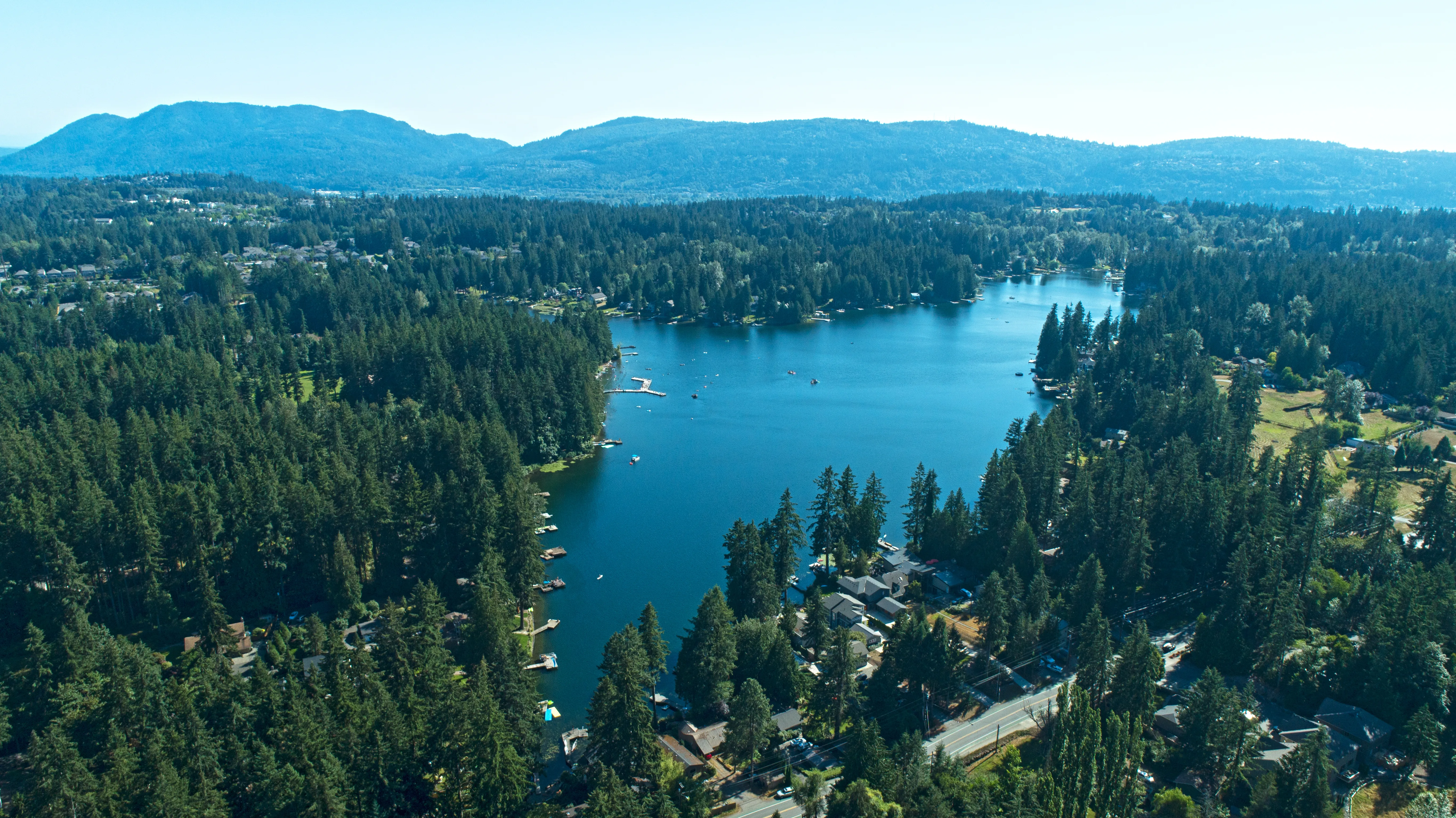
Here's what a friend who moved from San Diego three years ago actually says: the summers are legitimately better than anywhere in California. July and August in Redmond average highs in the mid-70s with almost no rain — 0.39 inches in July — low humidity, and that specific Pacific Northwest golden-hour light that Instagram has failed to fully capture. After sweating through a San Fernando Valley August at 105 degrees, or watching another Marin County summer get swallowed by coastal fog, that Redmond summer hits differently. Marymoor Park, the Sammamish River Trail, and Lake Sammamish are all packed with people who seem genuinely happy to be outside — because they've spent five months waiting for this.
The winters are a different story, and this is the part most relocation guides gloss over. Redmond receives precipitation on roughly 162 days per year — not 162 days of downpour, but 162 days of something wet or gray falling from the sky. The city logs around 155 sunny days annually against a U.S. average of 205. Sacramento gets over 270. San Diego gets 266. The Seattle metro gray doesn't come in dramatic storms the way Chicago or Boston winters do; it comes in weeks of low flat cloud, persistent drizzle, and 44-degree January days where the sun sets at 4:20 PM. Buyers from Central California who haven't spent time here in January routinely describe month six of their first winter as the thing no one adequately warned them about.
What California transplants genuinely love after a full year here, consistently and specifically: the ease of getting around compared to LA or the Bay Area, the size and quality of housing they're living in, the way Redmond's community events — Redmond Saturday Market, concerts at Marymoor Park's amphitheater, the cycling culture around the velodrome — create a social structure that doesn't require driving to. What they genuinely miss: year-round beach access more than almost anything else, the food density of the Bay Area (Redmond's restaurant scene is good but not Bay Area deep), and for Southern California transplants specifically, the particular social warmth of their home city that the Pacific Northwest's famously reserved culture doesn't immediately replace.
If you want to see how Redmond compares directly to the city you're leaving, use the tool below — it covers the 120 largest California cities with current housing and tax data.
Home prices: Redfin median sale data, Q1–Q2 2026. Select your city to compare.
Ready to talk through what your specific California equity could do in Redmond? Todd can model your exact scenario in a single call.

Coming from California, you may find Redmond's prices refreshing at first glance — but location within the city matters more than people expect. Homes in Overlake and Downtown Redmond tend to hold value exceptionally well given the proximity to major tech employers, and anything move-in ready in those areas under $750,000 typically generates multiple offers within days, not weeks. Education Hill attracts a lot of California transplants specifically because of the neighborhood feel and school access, and that demand keeps values steady even when the broader market softens. Bear Creek and North Redmond can offer more breathing room on price while still delivering strong long-term equity.
Before you start touring homes, please talk to a lender first — and I mean that genuinely, not as a sales pitch. Your approval amount and your comfortable budget are two very different numbers, and in Redmond that gap matters. Property taxes, homeowners insurance, and potential HOA dues layer onto your loan payment in ways that surprise buyers who only focused on purchase price. California buyers especially sometimes underestimate how loan structure choices affect the full monthly picture. Knowing your real number before falling in love with a home keeps the process honest
Assuming the city has one uniform market. Buyers who look up "Redmond median home price" and assume that number describes every neighborhood are setting themselves up for sticker shock or missed opportunity. Downtown Redmond's condo market has a median around $595,000. Idylwood's lake-access properties start at $1.3M and push past $1.8M. Willows/Rose Hill runs approximately $1.5M. A California buyer budgeting $1.1M and assuming they'll find a standard suburban four-bedroom anywhere in the city will get humbled quickly in North Redmond but find legitimate options in Southeast Redmond or Grass Lawn.
Underestimating winter driving. A California driver accustomed to LA or San Jose freeways has likely never navigated SR-520 in a February ice event or the hill grades in Education Hill in the first snowstorm of the season. Redmond doesn't get heavy snow routinely, but when it does, the city's topography — particularly the residential hills east of downtown — creates conditions that all-season tires and confident southern California driving habits don't adequately address. Buying a house up a steep residential grade is a reasonable decision in August; it deserves more thought before you've experienced a January here.
Not running the income tax math before setting their housing budget. The most common California mistake is back-calculating their Washington housing budget from their California take-home pay, without adjusting for what they'll now keep. A household earning $180,000 that was netting roughly $155,000 after California taxes will net approximately $168,000–$170,000 in Washington — a monthly cash flow increase of over $1,000. Running the old California net through a new mortgage calculator understates what this household can actually afford and borrow in Redmond.
Expecting California-speed outdoor access year-round. The hiker who ran trails near Marin County every weekend in February, or the cyclist who logged miles in Pasadena in January, will find Redmond's trail culture genuinely world-class — in season. The Sammamish River Trail and Bear Creek trails are spectacular. Between November and March, those same trails are frequently wet, muddy, and either unrideable or miserable for anything but hiking with the right gear. Buyers who aren't already experienced with shoulder-season PNW outdoors should factor in what their winter recreational life actually looks like here before deciding the outdoor access they're leaving behind is equivalent.
Bay Area sellers with large equity are frequently operating in territory where the conventional mortgage system is almost irrelevant to their actual decision. A buyer with $1.4M in proceeds from a Menlo Park sale and a Redmond target in the $1.2M–$1.4M range is more focused on closing speed, contingency structure, and whether an all-cash offer gives them a competitive edge over financed buyers than on interest rate optimization. If the California property was an investment or rental, a 1031 exchange allows proceeds to roll into a Redmond property without triggering federal capital gains — a strategy worth modeling before closing in California. That process is covered in detail in the Redmond 1031 Exchange guide.
Southern California sellers arriving with $700,000–$1.1M in equity are in Redmond's sweet spot: enough to avoid jumbo loan territory on many properties or to structure a conventional loan at very low LTV. A buyer putting $600,000 down on a $950,000 Overlake townhome is borrowing $350,000 — a conforming loan at 37% LTV where lender competition is strong and rate negotiation is real. At this equity level, the priority is locking pre-approval before the California closing rather than after, so that Redmond offers can move with full credibility from day one.
Sacramento and Inland Empire buyers with $400,000–$650,000 in equity may qualify for Washington State Housing Finance Commission's Home Advantage program, which offers below-market rate first mortgages and down payment assistance for qualifying borrowers. Income limits apply, and at Redmond's price points some buyers will exceed those thresholds — but buyers targeting Downtown Redmond condos or Grass Lawn entry-level product in the $600,000–$750,000 range may find WSHFC programs a meaningful supplement. The Redmond Down Payment Assistance guide covers current program details and income limits.

Local Expert Takeaway: The California transplant who wins in Redmond's market is the one who runs the income tax math before setting their housing budget — not after. A dual-income household earning $250,000 combined gains roughly $18,000–$20,000 per year in Washington take-home pay versus California. That's a meaningful increase in what they can qualify for, what they can comfortably service monthly, and what they can save toward the next property. Pair that with Bay Area or SoCal equity and you're looking at a financial reset that doesn't happen by accident — it happens because someone modeled it correctly before making the move.
✅ Washington's no-income-tax advantage is worth $8,500–$20,000+ per year for most California transplants, compounding every year they live here — this single factor changes the financial case more than most buyers initially calculate.
⚠️ Redmond's winter reality — 162 days of precipitation annually and roughly 155 sunny days — is a genuine lifestyle adjustment for buyers leaving Sacramento, San Diego, or the Inland Empire. Budget time to experience January before committing.
📍 Equity level determines the experience: Bay Area sellers can enter nearly any Redmond neighborhood debt-free; Sacramento and Central Valley buyers are entering at the condo and townhome tier and building from there. Both moves make financial sense — but they're different stories.
Is moving from California to Redmond worth it?
For most households earning over $120,000, the financial case is strong. Washington's no-income-tax environment saves between $8,500 and $20,000+ annually depending on household income, property taxes at the 0.74% effective rate are lower than what California buyers pay on new purchases, and Redmond's median home price of $1,240,000 — while not cheap — delivers significantly more house per dollar than Bay Area or coastal Southern California equivalents. The lifestyle adjustment is real, particularly around weather, but most transplants who've been here two or more years report the financial improvement as substantial enough to offset what they miss.
How much cheaper is housing in Redmond vs. California?
Compared to the Bay Area, Redmond is meaningfully less expensive — San Jose's median sits around $1.6M, which makes Redmond's $1,240,000 median a genuine discount at comparable square footage. Against Los Angeles ($975,000 median) or San Diego ($895,000), Redmond is actually more expensive by median — but California buyers in those markets are often purchasing at or below the median in neighborhoods with longer commutes and smaller lots. The quality-adjusted comparison, accounting for lot size, school district caliber, and income tax savings, typically favors Redmond for households earning over $150,000.
What do I need to know about moving from California to Washington?
Establish Washington domicile clearly and early — update your driver's license within 30 days of moving, register your vehicle, and change your voter registration. Washington has no state income tax, but California is known for auditing departing high earners to verify they've genuinely changed domicile, so maintaining clean records matters. On the housing side, Redmond's market moves quickly — homes have been selling in an average of 12–15 days — so having a lender pre-approval and a clear equity strategy before you arrive in-market is not optional, it's the baseline.
Explore the full Redmond series: The Ultimate Redmond Relocation Guide · Is Redmond Safe? · Cost of Living in Redmond · Best Neighborhoods in Redmond · Redmond Schools & Family Life · Redmond Youth Sports · Redmond Parks & Recreation · Retiring in Redmond · 1031 Tax-Deferred Exchange in Redmond · Redmond First-Time Homebuyers Guide · Redmond Down Payment Assistance Guide · Moving to Redmond from California