
Eastern Washington · Washington
Moving to Wenatchee from California: The Honest Comparison (2026)
The Bay Area software engineer who finally got a yard without leaving their salary. The San Diego family who stopped dreading August utility bills and the annual wildfire evacuation alerts. The Sacramento buyer who purchased a four-bedroom house with a garage and a view for less than they sold their townhome for. These are real moves happening right now, and Wenatchee keeps appearing on the shortlist for a specific reason: it's not a compromise city. It sits in a river valley surrounded by mountains, catches more sunshine than Los Angeles, and offers a housing market where California equity doesn't just stretch — it transforms what's financially possible.
Wenatchee is also not California, and that sentence deserves more than a bullet point. The food scene is smaller. The social density is lower. Winters arrive with snow and short January days that run barely four hours of sunlight. The cultural diversity that California transplants grew up treating as a given is less present here. And the city's pace — genuinely slower, genuinely quieter — is either exactly what you're looking for or something that will wear on you within eighteen months. The buyers who do best here are the ones who came in with clear eyes rather than a relocation fantasy.
This guide gives you the full picture: a cost-of-living comparison broken down by California region, an honest tax analysis, a look at what your California equity actually buys in Wenatchee's market, an unfiltered weather and lifestyle comparison, and a breakdown of the mortgage scenarios that make the most sense given where you're coming from. Use the comparison tool in Section 6 to look up your specific California city.
| Wenatchee, WA | Bay Area | Southern CA | Sacramento Metro | Central Valley | |
|---|---|---|---|---|---|
| Median Home Price (approx. 2026) | $528,000 | $1,350,000 | $950,000 | $575,000 | $400,000 |
| Property Tax Rate (effective) | ~0.97% | ~1.1–1.2% | ~1.1–1.2% | ~1.1–1.2% | ~1.0–1.2% |
| State Income Tax | None | Up to 13.3% | Up to 13.3% | Up to 13.3% | Up to 13.3% |
| State Sales Tax | 8.5–9.0% | 8.25–10.25% | 7.25–10.75% | 7.25–8.75% | 7.25–8.75% |
| Avg. Utilities (monthly est.) | ~$159 | ~$220–$280 | ~$200–$260 | ~$190–$240 | ~$180–$230 |
| Avg. 1BR Rent | ~$1,280 | ~$3,200–$3,800 | ~$2,200–$2,800 | ~$1,600–$1,900 | ~$1,100–$1,400 |
The Washington no-income-tax advantage is not a footnote. For a California household earning $150,000, the swing from California's progressive income tax to zero state income tax is worth roughly $10,000 to $15,000 per year in take-home pay — every year, compounding. Over a decade, that's a six-figure difference in household wealth. Sales tax in Washington is higher than in parts of California, and that's worth acknowledging honestly, but on most income levels the net advantage of Washington's tax structure is strongly and clearly positive.
Washington has no state income tax — one of only nine states in the country with that distinction, and the single most financially significant difference for California transplants at nearly every income level.
| Tax Item | California | Washington | Net Impact for Transplant |
|---|---|---|---|
| State Income Tax | 1–13.3% (progressive) | None | $7,200–$26,600/yr saved at $120K–$200K income |
| State Sales Tax | 7.25–10.75% | 8.5–9.0% (Chelan Co.) | Slight disadvantage in WA, varies by location |
| Property Tax Rate | ~1.1–1.2% (on purchase price) | ~0.97% (Chelan Co.) | Modest advantage in WA |
| Capital Gains Tax | Up to 13.3% (all CG) | 7% on gains over $262K/yr only | Major advantage in WA for most earners |
| Estate Tax | None | Yes, over $2.06M threshold | Minor consideration for high-net-worth buyers |
| Senior Property Tax Exemption | Varies by county | Yes, age 61+, income-based | Meaningful benefit for retirees |
Washington's 7% capital gains tax applies only to long-term capital gains above $262,000 per year, and it does not apply to the sale of a primary residence. For the vast majority of California transplants, this tax is essentially irrelevant to their day-to-day financial picture. The sales tax in Chelan County runs approximately 8.5 to 9.0%, which is slightly higher than parts of California — but this comparison only matters if you're spending proportional income on taxable goods, and at most income levels the income tax elimination swamps the sales tax differential by a wide margin.
Property taxes in Chelan County at approximately 0.97% are modestly below what a California buyer pays on a new purchase (California newly purchased properties are assessed at purchase price and taxed at the 1% Proposition 13 base rate, often with additional local assessments that push effective rates above 1.1%). On a $528,000 Wenatchee home, annual property taxes run roughly $5,122 — a predictable, knowable number without Mello-Roos or supplemental assessments.
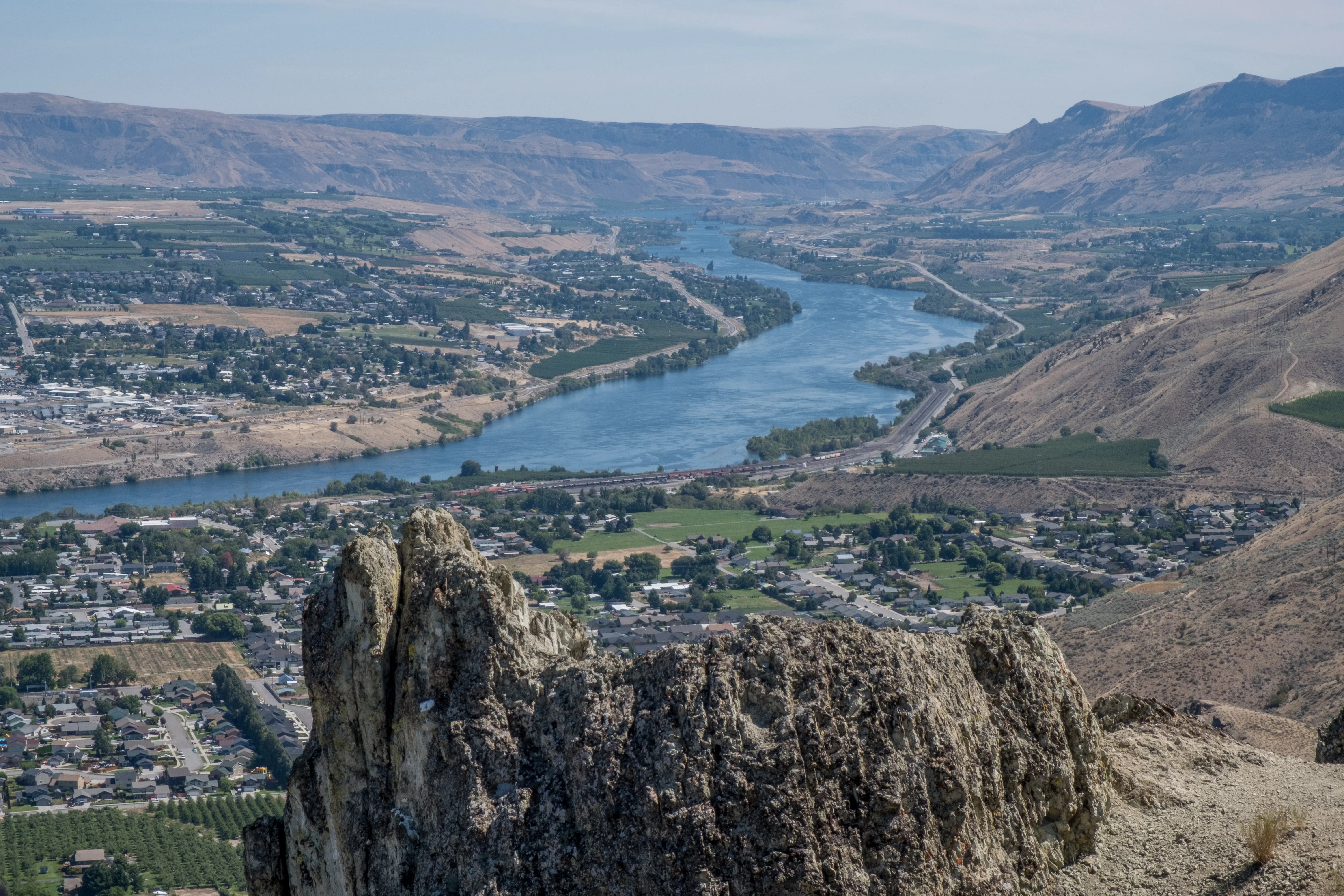
A buyer leaving San Jose, Walnut Creek, or Palo Alto with $1.4 million in equity can purchase the highest-tier home available in Wenatchee outright — in cash — and still have $700,000 to $900,000 remaining. In practical terms, this means paying off a home, funding retirement accounts, keeping a liquidity reserve, and potentially acquiring a rental property in East Wenatchee or downtown, all from a single transaction. Neighborhoods like Sunnyslope — where lots run one and a half to two and a half acres with views of the Enchantments and Mission Peak — and Wenatchee Heights, where custom-built homes sit on hillsides overlooking the Columbia River valley, represent the upper end of the local market and still come in well under $700,000 for most listings.
For Bay Area buyers, the psychological shift is significant: the question isn't "what can I afford?" — it's "what do I actually want?" That freedom is not hypothetical. It shows up in how buyers from this cohort approach the search, and it frequently produces a quality of home and a financial position they genuinely could not have engineered in California.
A buyer from Pasadena, Irvine, or coastal San Diego selling with $900,000 in equity lands in Wenatchee's market with serious options. The $528,000 median means they can buy comfortably in essentially any neighborhood — including the elevated lots in Wenatchee Heights or acreage in Sunnyslope — while retaining $300,000 to $500,000 in liquid capital. That remaining equity functions differently here than it would in California: invested conservatively, combined with the elimination of state income tax on their Washington income, it meaningfully accelerates financial independence.
Southern California buyers transitioning from condos or townhomes should expect a quality jump in what their dollar purchases physically. Single-family homes with garages, private yards, and mountain views are not aspirational purchases in Wenatchee at this equity level — they are the standard.
This cohort has a closer relative gain than Bay Area sellers, but the math still works clearly. A buyer leaving Elk Grove or Rancho Cucamonga with $500,000 in equity can purchase comfortably at Wenatchee's median price range with a manageable or eliminated mortgage, and immediately begin capturing the income tax advantage that California was extracting from their paycheck. On a $130,000 household income, that's roughly $10,000 to $12,000 per year returning to their monthly budget — every year.
In Wenatchee, this equity level comfortably accesses South Wenatchee for entry-level single-family homes, Central Wenatchee and Olds Station for mid-range established neighborhoods, and pushes into Sunnyslope and Wenatchee Heights for buyers willing to stretch slightly. The relative value improvement is real and compounding.
The Central Valley buyer — leaving Fresno, Visalia, or Bakersfield — has the most modest relative advantage, but it is still an advantage worth understanding specifically. Wenatchee's entry-level single-family housing in South Wenatchee and parts of North Wenatchee is accessible in the $320,000–$400,000 range, meaning a Central Valley seller with $350,000 in equity can purchase at the lower end of Wenatchee's market with minimal mortgage exposure. The no-income-tax benefit matters just as much here as for any other transplant cohort — and on Central Valley income levels, saving $5,000–$8,000 per year in state income tax is not trivial.
What this buyer gains most is quality of outdoor life. The Apple Capital Loop Trail, the proximity to Lake Chelan, and Wenatchee's 200 sunny days per year offer an outdoor lifestyle that the Central Valley — despite its climate — cannot match for variety or beauty.
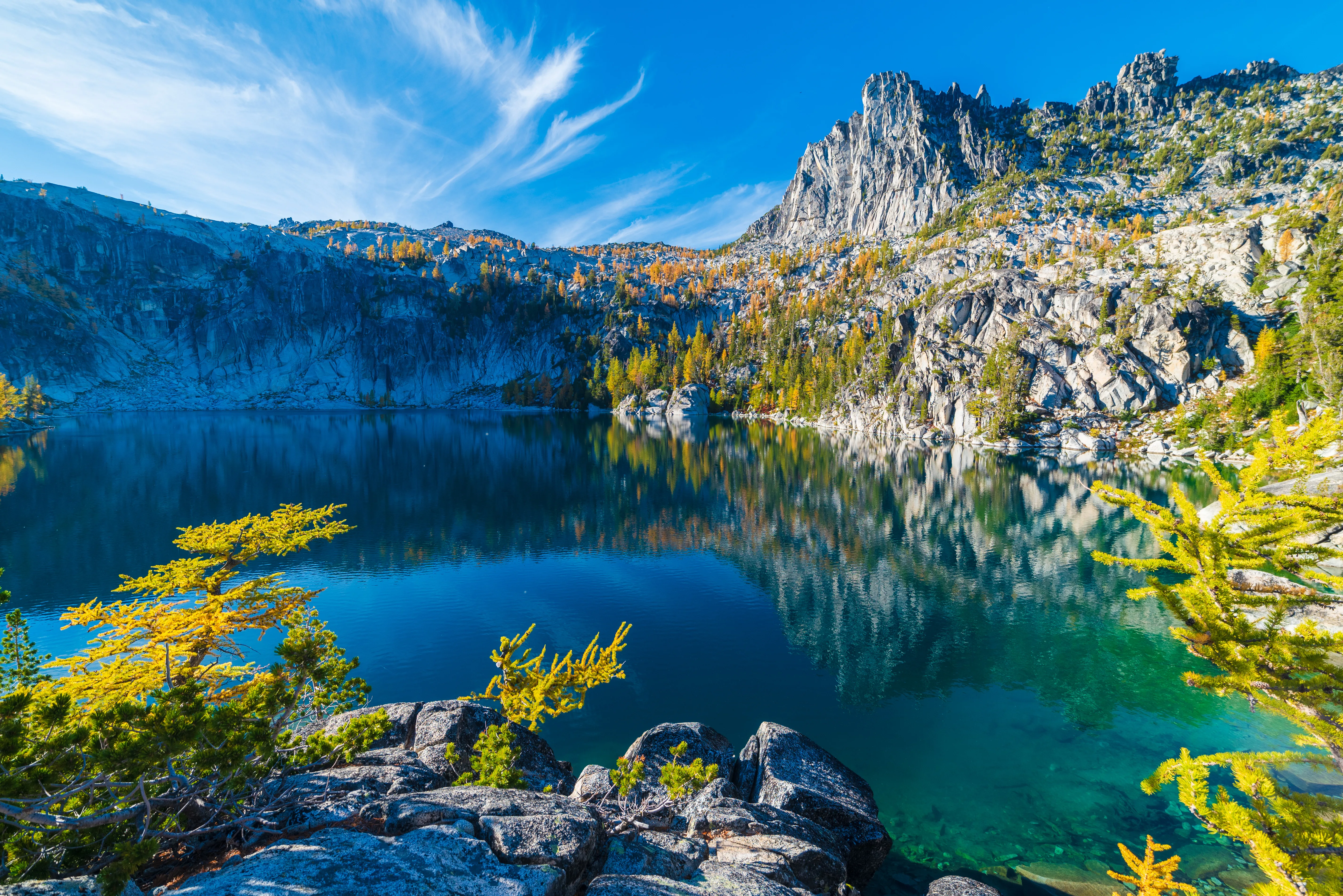
Here's the number that stops California buyers cold: Wenatchee averages approximately 3,275 annual sunshine hours — nearly identical to Los Angeles at 3,254 hours, and significantly more than San Francisco's 3,062. The city catches 200 sunny days per year. If your concern about moving to Washington was trading California sunshine for Pacific Northwest gray, Wenatchee specifically is not that trade. The Cascades block the marine layer that drenches western Washington; Wenatchee sits in a high-desert river valley that runs warm and dry from May through September, with July daytime highs regularly hitting 90°F.
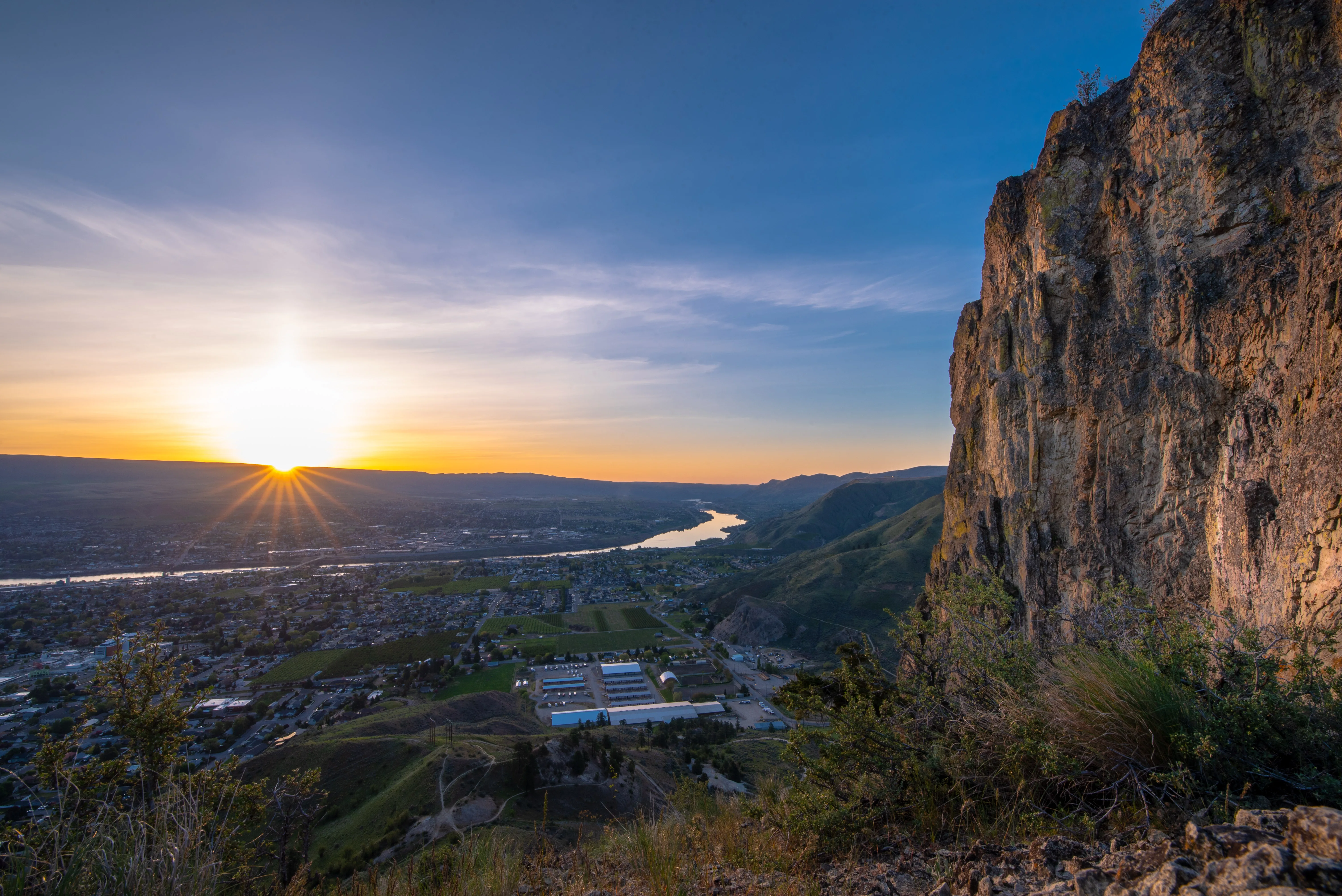
What California transplants consistently say they love after twelve months: the summers are genuinely extraordinary — clear, hot, dry, with the Columbia River and Lake Chelan an hour north serving as the social center of warm-weather life. Farmers markets, orchard picking, mountain biking on Squilchuck trails, kayaking the river, and the Sunnyslope Wine Trail become the rhythm of the season. Traffic, which in California was a daily tax on time and mood, essentially disappears. The community feel — neighbors who wave, less anonymity, a pace that doesn't demand performance — surprises people who expected to miss the city energy.
What they genuinely miss: year-round access to a beach or warm-water swimming. The restaurant and food scene depth that Bay Area and Los Angeles buyers in particular took for granted. Cultural diversity and the food traditions that come with it — Wenatchee's dining options are improving but are not comparable to any major California metro. January and February bring short days (barely four hours of peak sun in the darkest weeks), temperatures that drop into the low 30s, and 27 inches of average snowfall. This is not Pacific Northwest gloom — it's high-desert cold, which is a different experience, but it is real winter. Buyers who struggle with seasonal affective disorder should weigh this honestly before committing.
If you want to see how Wenatchee compares directly to the city you're leaving, use the tool below — it covers the 120 largest California cities with current housing and tax data.
Home prices: Redfin median sale data, Q1–Q2 2026. Select your city to compare.
Ready to talk through what your specific California equity could do in Wenatchee? Todd can model your exact scenario in a single call.

Coming from California, your dollar stretches noticeably further in Wenatchee, but location still matters for long-term value. Homes in Downtown Wenatchee and Wenatchee Heights tend to hold strong appeal for buyers relocating from the Bay Area or Southern California — walkability, views, and lifestyle check a lot of boxes. Sunnyslope has also attracted consistent interest from California transplants looking for more space without sacrificing convenience. What surprises most out-of-state buyers is how quickly well-priced homes move here, often within days. Finding something solid under $750,000 is realistic, but hesitation is costly in this market.
Before you fall in love with a house on a Saturday tour, sit down with a lender first. Your comfortable budget and your maximum approval are two different numbers, and the gap matters more than most buyers expect once you factor in the full monthly payment — property taxes, homeowner's insurance, any HOA dues, and the loan structure itself. Californians sometimes underestimate how different those carrying costs feel month to month in a new state. Getting pre-approved early means you can move decisively when the right home appears,
Assuming the whole city feels the same. Wenatchee has real neighborhood character differences that don't show up on a map. South Wenatchee reads and feels distinctly different from Sunnyslope — different price points, different density, different social context. Buyers who do a single drive-through on a sunny day and decide they've understood the city often end up in a neighborhood that doesn't fit their lifestyle. Specifically: buyers who want walkable proximity to Pybus Public Market, the Apple Capital Loop Trail entrance on Worthen Street, and downtown dining should be focused on Downtown Wenatchee and Central Wenatchee. Buyers who want acreage, views, and privacy should be looking at Sunnyslope and Wenatchee Heights — which are geographically and experientially different cities within the city.
Underestimating winter driving. California buyers arrive in July, fall in love with the summer, and close on a home without ever experiencing a January morning on the Squilchuck Road or the Wenatchee Heights access roads after overnight snowfall. Snow tires are not optional here — they're a practical necessity. Wenatchee's 27 inches of average annual snowfall lands unevenly, and higher-elevation neighborhoods see meaningfully more than the valley floor. This is not a deterrent; it's a logistics consideration that should be priced into your lifestyle plan before you're standing in the driveway with California all-season radials.
Missing the income tax math on monthly cash flow. The no-income-tax advantage reads as an annual figure — $10,000 to $15,000 saved per year at moderate incomes — but its real effect is monthly. A household earning $120,000 going from California's withholding to zero state income tax sees their monthly take-home increase by roughly $600 to $900. That's $600 to $900 that immediately changes what a mortgage payment feels like, what saving for retirement looks like, and what financial stress feels like day to day. Most California transplants say they intellectually understood this before moving and still underestimated the felt impact once they saw it in practice.
Expecting California-speed internet and services everywhere. Wenatchee's urban core has solid connectivity and improving infrastructure. But the Sunnyslope and Wenatchee Heights neighborhoods — where many California buyers end up drawn for views and acreage — have variable internet service quality. For a remote worker whose entire professional life runs on Zoom and VPN connections, checking actual service availability at a specific address before making an offer is not optional. Ask the listing agent to show you a speed test, not just confirm that service is "available."
Bay Area sellers with large equity often arrive at Wenatchee's market in a position where conventional mortgage financing is almost beside the point. A buyer coming in with $1.2 million or more in equity can purchase all-cash and then evaluate whether to place a mortgage strategically for liquidity reasons rather than necessity. For sellers who owned investment property in California and are considering moving those gains into Wenatchee real estate, a 1031 exchange deserves serious attention — the Wenatchee 1031 Exchange guide covers the mechanics and timelines involved. Speed and terms matter more than rate at this equity level; an all-cash offer in Wenatchee's competitive market can shorten timelines and eliminate appraisal contingencies that slow conventional transactions.
Southern California sellers typically arrive with enough equity to make a substantial conventional down payment — often 40 to 60 percent — on a Wenatchee home. Wenatchee's median price of $528,000 sits well below the conforming loan limit, meaning most SoCal transplants will finance through conventional channels without touching jumbo product. A buyer leaving Irvine or San Diego with $750,000 in equity and a $180,000 household income is essentially in the strongest negotiating position in this market.
Sacramento and Inland Empire buyers with $400,000 to $650,000 in equity occupy an interesting middle zone. If the target purchase falls in the eligible price range, Washington State Housing Finance Commission's Home Advantage program offers down payment assistance that may be relevant even at this equity level, depending on how the buyer structures the transaction. The WSHFC ONE+ program is worth a preliminary conversation with a local lender before ruling it out. Buyers in this cohort should also model the income tax savings carefully — on Sacramento-level household incomes of $110,000 to $140,000, the annual Washington tax advantage compounds meaningfully over a five-year hold.
Local Expert Takeaway: The biggest thing California buyers underestimate about Wenatchee is not the housing discount — it's the combination of the no-income-tax swing and the housing payment reduction happening simultaneously. A household going from a $4,200 California mortgage on a property they're outgrowing to a $2,100 Wenatchee payment with $800/month more in take-home pay has effectively created $2,900/month in new financial capacity. That's not a lifestyle upgrade — that's a structural change in what your financial future looks like. If you're serious about the move, run that math against your specific income and California housing cost before making any other decision.
Is moving from California to Wenatchee worth it?
For most California buyers, the financial case is clear — and the lifestyle case depends almost entirely on how honestly you've evaluated the winter and the smaller cultural scene. Buyers who prioritize outdoor access, community scale, and financial flexibility overwhelmingly report that the move was the right decision. Buyers who expected to replicate urban California life in a smaller package tend to struggle by year two.
How much cheaper is housing in Wenatchee vs. California?
Wenatchee's median sold price of $528,000 represents roughly a 60% discount from the Bay Area, a 44% discount from Southern California, and sits within $50,000 of Sacramento's median — but without California's state income tax. The per-square-foot comparison is equally significant: Wenatchee buyers typically get twice the square footage for the same dollar spent compared to coastal California markets.
What do I need to know about moving from California to Washington?
Establish Washington residency clearly and quickly — update your driver's license within 30 days of arrival, register your vehicle in Washington, and register to vote at your Washington address. California has been known to pursue residency audits on high-income earners who relocate, so a clean paper trail from day one matters. On the practical side: get snow tires before November, verify internet service speed at your specific address before closing, and don't make your neighborhood decision on a summer visit alone.
Explore the full Wenatchee series: The Ultimate Wenatchee Relocation Guide · Is Wenatchee Safe? · Cost of Living in Wenatchee · Best Neighborhoods in Wenatchee · Wenatchee Schools & Family Life · Wenatchee Youth Sports · Wenatchee Parks & Recreation · Retiring in Wenatchee · 1031 Tax-Deferred Exchange in Wenatchee · Wenatchee First-Time Homebuyers Guide · Wenatchee Down Payment Assistance Guide · Moving to Wenatchee from California