
Eastern Washington · Washington
First-Time Home Buyer Guide for Wenatchee (2026)
There's a moment every first-time buyer remembers. You've been casually browsing Zillow for months, you've told yourself you're "just looking," and then something shifts — maybe a rent increase notice, maybe a conversation with a coworker who just closed on a place, maybe just the slow accumulation of feeling like you're paying someone else's mortgage. Suddenly it's real. And the first thing you feel is not excitement — it's a kind of productive panic. That's the moment this guide is written for. Wenatchee is worth the effort of getting it right: a mid-sized eastern Washington city with genuine community roots, real employers, and a housing market that — while not cheap — still sits well below what buyers face on the west side of the Cascades.
The median sold price in Wenatchee currently sits at $528,000, which buys you a realistic 1,800–2,000 square feet in a mid-tier neighborhood, or something smaller and older if you're pushing below $400,000. That gap between renting and owning feels significant at first — but so does the math when you realize rent on a two-bedroom apartment here typically runs $1,400–$1,800 per month, while a mortgage on a modest first home at today's rates can land in a similar range depending on your down payment. The distance between renting and owning is shorter than most first-timers expect once you actually run the numbers.
This guide walks you through the entire process: what your budget realistically gets you, what credit score and income you actually need, which neighborhoods make sense for first-time buyers, what the local market does that surprises newcomers, and what down payment help is genuinely available right now. If you've been reading general Washington real estate content and finding it doesn't quite match what you're seeing in Wenatchee, that's because eastern Washington operates differently — and this guide treats it that way.
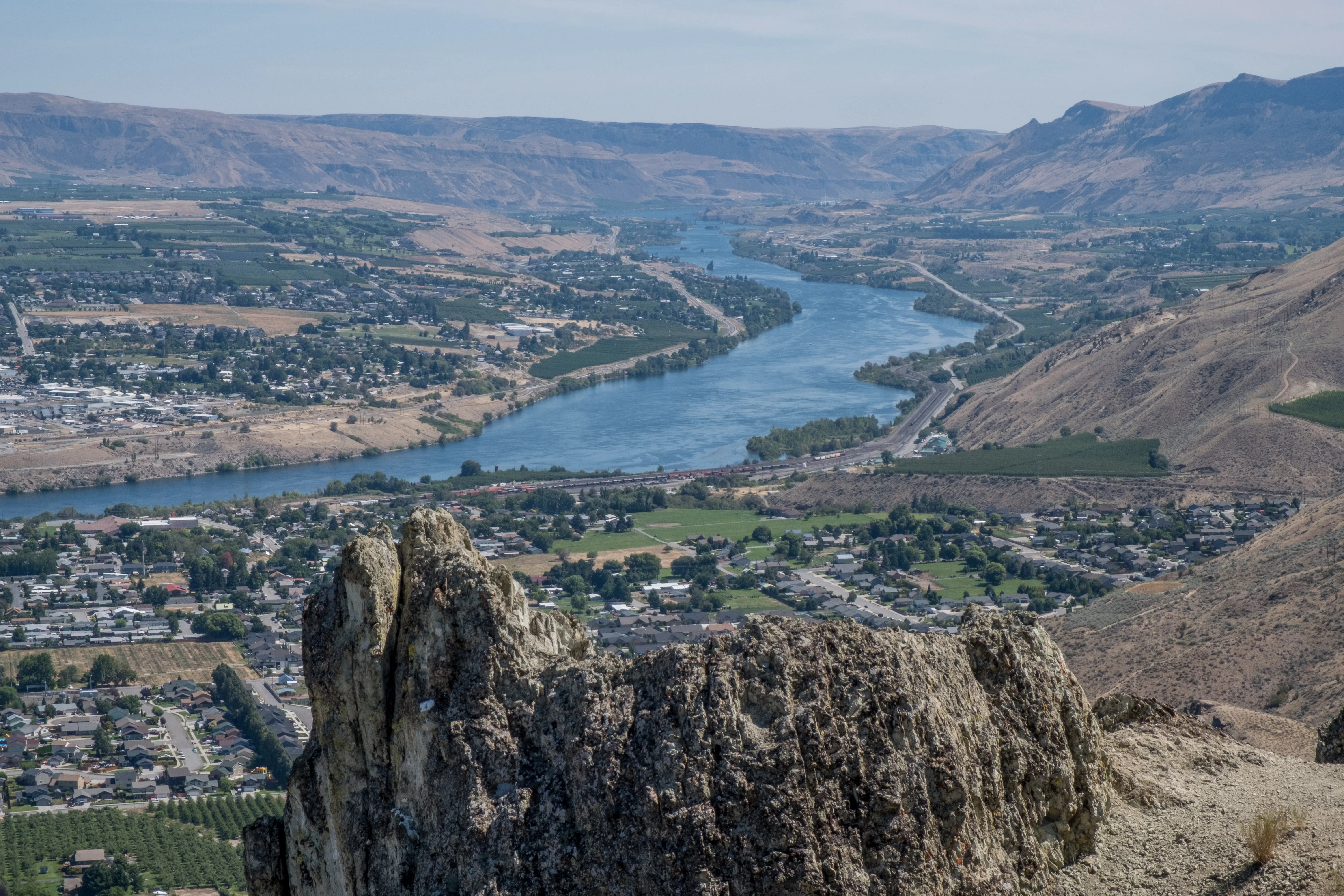
Wenatchee makes a compelling case for first-time buyers who can't stomach Seattle or Spokane prices and aren't ready to sacrifice urban amenities for rural isolation. At $528,000 median, prices here aren't entry-level by any stretch — but compared to the Puget Sound region, where a starter home in a decent school district often clears $700,000, Wenatchee offers meaningful relative value. Major employers like Confluence Health, Chelan County PUD, and Stemilt Growers provide stable employment anchors, and the Wenatchee School District carries a solid B rating. The Apple Capital Loop Trail, Pybus Public Market, and a genuinely walkable downtown give the city a livability quotient that surprises people who picture eastern Washington as purely agricultural.
The honest challenge for first-time buyers is that the entry-level tier — homes priced under $400,000 — is genuinely thin. South Wenatchee and parts of Downtown Wenatchee represent the clearest realistic footholds at that price point, but inventory is tight and condition varies. The city's overall supply sits at roughly 2.8 months, which means this is still a seller's market and buyers cannot afford to be passive. Neighborhoods like Sunnyslope and Wenatchee Heights have stronger resale fundamentals but price out most first-timers quickly. The buyers who succeed here are the ones who understand which neighborhood tiers match their budget — and who move decisively when the right property appears.
| Price Range | What You Typically Find | Neighborhood Examples | Competition Level |
|---|---|---|---|
| Under $350K | Older single-family homes 1,000–1,200 sq ft, manufactured homes on owned land, fixer-uppers needing significant work | South Wenatchee, parts of Downtown Wenatchee | Moderate — thin inventory |
| $350K–$450K | Solid 1,200–1,600 sq ft homes, some updated kitchens/baths, entry townhomes | South Wenatchee, Central Wenatchee, North Wenatchee | Competitive — multiple offers common |
| $450K–$550K | 1,600–2,000 sq ft, 3-bed/2-bath, reasonable condition, established neighborhoods | Olds Station, Central Wenatchee, Westside | Very competitive — near median |
| $550K–$650K | Move-in ready 2,000+ sq ft, updated finishes, good school access, mature landscaping | Sunnyslope, Wenatchee Heights, North Wenatchee | Competitive with motivated buyers |
| $650K+ | Larger lots, custom builds, views, premium finishes | Wenatchee Heights, upper Sunnyslope, Westside | Competitive at the right price |
For buyers who can stretch to the $450,000–$530,000 tier, the Olds Station and Central Wenatchee neighborhoods offer the best combination of condition, lot size, and long-term resale stability. Homes in this range typically sell within 30–60 days of listing, and serious buyers should plan to act within a week of a property hitting the market.
| Step | What Happens | Typical Timeline | What First-Timers Get Wrong |
|---|---|---|---|
| Get finances in order | Pull credit, pay down revolving debt, gather tax returns, bank statements | 1–3 months before search | Waiting until they find a home — too late |
| Pre-approval | Lender reviews income, assets, credit; issues pre-approval letter | 1–5 business days | Getting pre-qualified (weaker) instead of pre-approved |
| Find an agent | Interview local buyer's agents with Chelan County experience | Before active search | Using a friend who works in a different market |
| Active search | Weekly MLS alerts, showings, neighborhood research | 4–12 weeks typically | Waiting for the "perfect" listing to appear |
| Making offers | Submit purchase and sale agreement with earnest money | Same day or next day after showing | Writing lowball offers in a competitive market |
| Under contract | Seller accepts; timelines and contingencies begin | Day 1 of 30–45 day close | Stopping their housing search completely |
| Inspection | Licensed inspector examines property; report delivered | Days 5–10 | Skipping it to be competitive — risky in Wenatchee's older housing stock |
| Appraisal | Lender orders appraisal to confirm value | Days 10–20 | Not having a plan if appraisal comes in low |
| Final walkthrough | Confirm property condition matches contract terms | 24–48 hours before close | Skipping it — always do it |
| Closing | Sign documents, funds transfer, keys handed over | Day 30–45 | Being surprised by cash-to-close totals |
Inspection waivers are occasionally used in Wenatchee's most competitive situations, but they carry real risk in a city where substantial portions of the housing stock were built in the 1950s through 1980s. Deferred maintenance, older electrical panels, and foundation issues appear more frequently than buyers used to newer construction expect. The smarter play is to write a tight, competitive offer with a short inspection window (5–7 days) rather than waiving it entirely.

For a conventional loan, the minimum credit score is 620 — but the rate you get at 620 versus 740 can translate to a meaningful payment difference. On a $450,000 loan, the spread between a 650 credit score (roughly 7.5% rate) and a 740 score (closer to 6.5%) often works out to $250–$300 per month. Over five years, that's real money. If your score is in the 620–660 range and you have time before buying, six months of focused credit work can genuinely change your financial picture.
FHA loans allow a 580 minimum credit score with 3.5% down, making them the most accessible option for buyers who haven't had time to build a strong credit profile. The catch is mortgage insurance — you pay it for the life of the loan unless you refinance into a conventional once you have 20% equity. For many first-time buyers in Wenatchee, FHA is the right starting point and refinancing later is the plan.
On the income side, lenders typically apply a 28% front-end debt-to-income ratio, meaning your housing payment shouldn't exceed 28% of your gross monthly income. To qualify for a $400,000 home, you need roughly $80,000 in annual household income. For a $500,000 purchase, that threshold rises to around $95,000–$100,000. For a $600,000 home, you're looking at $115,000 or more. DTI — your total debt-to-income ratio including car payments, student loans, and minimum credit card payments — is the number most buyers underestimate. A $400/month car payment can shift your qualifying power by $50,000 or more. One more factor worth naming: Washington has no state income tax. For buyers relocating from California, Oregon, or another income-tax state, the effective take-home increase meaningfully expands qualifying power without any lifestyle change.

As someone who works with buyers across the region, I can tell you that where you buy within Wenatchee matters more than most first-timers realize. Neighborhoods like Sunnyslope and Wenatchee Heights tend to hold their value well due to views, established infrastructure, and consistent buyer demand. Downtown Wenatchee has also seen renewed interest from younger buyers who want walkability. Well-priced homes in these areas — generally under $500,000 — can move within days, sometimes receiving multiple offers before the weekend is over. Understanding that dynamic early helps you approach the search with the right mindset.
Before you fall in love with a house, sit down with a lender first. Your actual monthly obligation includes principal, interest, property taxes, homeowner's insurance, and potentially HOA dues depending on the property — and that full picture looks very different from the number a listing site shows you. My advice is always to find the payment that fits your life comfortably, not simply the maximum a lender will approve. When a great home appears in a competitive market like Wenatchee, being fully prepared means you can move with confidence rather than scrambling to catch up.
Mistake 1: Confusing list price with sale price. Active listings in Wenatchee are currently asking a median of over $640,000, but closed sales are coming in around $512,000–$528,000. That gap is not negotiation room — it's partially explained by which properties actually close (motivated sellers, realistic pricing) versus which ones sit. Buyers who anchor to list prices and assume they can negotiate down 15% are often either disappointed or end up overpaying for overpriced inventory.
Mistake 2: Skipping inspection on older Wenatchee housing stock. Downtown Wenatchee and South Wenatchee have a meaningful concentration of homes built before 1980. These homes can be excellent values — but only if you know what you're buying. Older wiring, galvanized plumbing, and settling foundations are common enough in this housing stock that walking in without an inspection is a financial gamble, not a competitive strategy.
Mistake 3: Shopping at the top of their qualification. Lenders will approve you for more than you should spend. A buyer qualified for $550,000 who maxes their budget has zero cushion for a job change, a medical bill, or a roof replacement. Wenatchee buyers who target the $400,000–$480,000 range when qualified for $520,000+ tend to be the ones who are still happy with their decision two years later.
Mistake 4: Underestimating how school district boundaries affect resale. The Wenatchee School District boundary lines matter — not just for families with kids, but for every buyer who plans to sell eventually. Homes clearly within the district and near higher-performing schools consistently attract more buyer interest at resale. Before falling in love with a property on the edges of the city, verify exactly which school zone it falls in.
Mistake 5: Waiting for prices to drop. Wenatchee's supply is thin — under three months of inventory — and the city's employment base, relative affordability versus western Washington, and in-migration from the coast are structural forces, not temporary blips. Buyers who waited in 2023 for a correction watched prices climb through 2024 and 2025. This market rewards prepared buyers who move when the right home appears, not those waiting for a signal that may not come.
South Wenatchee is the most accessible entry point in the city, with median sold prices that have come in around $320,000 — making it the only neighborhood where a first-time buyer with a modest down payment can find a detached single-family home without stretching into financially uncomfortable territory. The housing stock is older and the neighborhood lacks the polish of Sunnyslope or Wenatchee Heights, but it's real inventory at real prices, and buyers who purchase well here have a clear path to building equity.
Downtown Wenatchee offers a different value proposition — walkable access to Pybus Public Market, the Apple Capital Loop Trail, and local employers, with average closed prices in the $350,000–$400,000 range for smaller, older homes. Competition here is moderate rather than frantic, partly because the downtown housing stock requires more tolerance for noise and density than suburban buyers expect. For a single buyer or couple without school-age children who wants to be genuinely close to the city's best amenities, Downtown is a legitimate first-time purchase.
Central Wenatchee and Olds Station represent the mid-tier sweet spot for first-timers who can reach the $450,000–$530,000 range. These neighborhoods offer 3-bedroom homes in reasonable condition, established street character, and better access to the full range of Wenatchee amenities. Homes here move faster and see more competing offers than the entry-level tiers, so buyers need to be pre-approved and decisive.
North Wenatchee is worth watching for first-timers who are slightly more flexible on price. The neighborhood offers more recent construction, more consistent lot sizes, and proximity to shopping and services — but pricing typically starts closer to $480,000 and climbs from there. Buyers who stretch to this tier are usually rewarded with lower maintenance costs and stronger near-term resale appeal.
If the down payment is the obstacle standing between you and a first home in Wenatchee, ONE+ by Rocket Mortgage is the only grant program available through this office — and it's worth understanding clearly before you assume you need to wait years to save. Here's how it works: you bring 1% of the purchase price to closing, Rocket Mortgage contributes a 2% grant — up to $7,000 — that never needs to be repaid. The total down payment becomes 3%, but you only had to come up with one-third of it. The loan maximum is $350,000, your income must be at or below the ONE+ limit for Chelan County (which aligns with the area's income guidelines for this MSA), and you need a minimum 620 credit score. There is no second lien. No repayment trigger at sale or refinance. It is a grant, full stop, and it's available to both first-time and repeat buyers who meet the income requirement.
To see if ONE+ might work for your income and purchase price, check out the full program details and eligibility guide →
Local Expert Takeaway: The most common mistake first-time buyers make in Wenatchee is treating South Wenatchee and Downtown Wenatchee as fallback options rather than strategic entry points. Buyers who purchase at $340,000–$400,000 in these neighborhoods, build equity over three to five years, and move up into Sunnyslope or North Wenatchee are following a proven local path — one that's significantly harder to execute if you overextend on the first purchase. Buy in your actual budget, not your maximum qualification, and you'll have options. Do the opposite and you'll feel it every month.
✅ Wenatchee's median sold price sits at $528,000, but realistic first-time buyer opportunities start around $320,000–$400,000 in South Wenatchee and Downtown — with thin but real inventory if you're prepared to move fast.
⚠️ Wenatchee's active listing prices run significantly above closed sale prices — anchor your expectations to what homes actually close at, not what sellers are asking.
📍 Washington's lack of state income tax is a genuine financial advantage for buyers relocating from income-tax states — it meaningfully increases qualifying power and take-home pay from day one.
Can I buy a home in Wenatchee as a first-time buyer?
Yes — Wenatchee is one of the more accessible markets in Washington for first-time buyers compared to the Seattle metro, though it's not inexpensive by eastern Washington standards. With a median sold price around $528,000, buyers typically need to target South Wenatchee or Downtown Wenatchee for entry-level inventory, have financing in order before they start searching, and be ready to act within days of a property hitting the market.
How much do I need to buy my first home in Wenatchee?
The minimum out-of-pocket depends on your loan type. FHA requires 3.5% down plus closing costs — on a $420,000 purchase, that's roughly $14,700 down plus $8,000–$12,000 in closing costs. Conventional with 5% down runs higher. The ONE+ program reduces your down payment to 1% (with Rocket's 2% grant covering the rest) on loans up to $350,000, which is worth evaluating if your income qualifies. Most buyers should plan for $15,000–$30,000 total cash to close depending on purchase price and loan type.
What credit score do I need to buy a house in Washington state?
The minimum for FHA is 580 for the 3.5% down option; conventional loans start at 620. In practice, the buyers who get the best rates and terms typically have scores of 680 or above. The difference between a 650 and a 740 score on a $450,000 loan can translate to $250–$300 per month — which over the life of a loan is a significant number. If your score needs work, six months of focused effort before applying makes a real difference.
Explore the full Wenatchee series: The Ultimate Wenatchee Relocation Guide · Is Wenatchee Safe? · Cost of Living in Wenatchee · Best Neighborhoods in Wenatchee · Wenatchee Schools & Family Life · Wenatchee Youth Sports · Wenatchee Parks & Recreation · Retiring in Wenatchee · 1031 Tax-Deferred Exchange in Wenatchee · Wenatchee First-Time Homebuyers Guide · Wenatchee Down Payment Assistance Guide · Moving to Wenatchee from California