
Puget Sound · Washington
Everett Schools & Family Life: Top Districts, Academics & Community (2026)
You're relocating to Everett with kids starting school in a few months, and the stakes feel real. Everett Public Schools earns an A- on Niche and places in the top 20% of Washington's 306 school districts for combined math and reading proficiency — a legitimately strong performance for a city this size. Math proficiency runs approximately 55% district-wide against a state average closer to 42%, and reading lands around 65% compared to about 53% statewide. Those numbers don't happen by accident.
What shapes school quality here is a combination of factors you won't find in a single ranking. Everett is one of Washington's most racially and economically diverse school districts — about 60% minority enrollment and roughly a third of students qualifying as economically disadvantaged — which creates both a rich learning environment and real variability across individual schools. The district also serves Mill Creek and portions of unincorporated Snohomish County, which matters because some of the highest-ranked schools in the district aren't actually inside Everett city limits.
This guide helps families figure out three practical things: which schools are worth knowing by name, where the district genuinely delivers for your kid, and where honest gaps exist that might push you toward a private option or a neighboring district.

Everett Public Schools — officially Everett School District No. 2 — enrolls approximately 20,700 students across 27 schools under the leadership of Superintendent Dr. Ian B. Saltzman. The district's main office sits at 3900 Broadway in central Everett, and its reach extends into Mill Creek and nearby unincorporated Snohomish County.
| Metric | Everett School District |
|---|---|
| Total enrollment | ~20,700 students (2025–26) |
| School levels | 18 elementary, 5 middle, 3 comprehensive HS, 1 alternative HS |
| Student-teacher ratio | 19:1 (classroom teachers, NCES standard) |
| Average teacher experience | 14.5 years |
| Per-pupil spending | $20,521 (2024–25, OSPI) |
| Math proficiency | ~55% vs. ~42% WA state average |
| Reading/ELA proficiency | ~65% vs. ~53% WA state average |
| Graduation rate | 81.5% (2023–24, OSPI 4-year cohort) |
| Student diversity | Top 1% of WA districts; 60% minority enrollment |
| Economically disadvantaged | ~33.8% of students |
The district runs 18 elementary schools, but several of its highest performers are in Mill Creek rather than within Everett's city limits. Families targeting Everett proper should know these six schools.
Forest View Elementary consistently ranks among the top 35 to 90 elementary schools in Washington statewide — the strongest performance of any elementary school physically inside Everett's city limits. It suits families prioritizing tested academic outcomes, though its location on the city's eastern edge places it outside the attendance zones for most central and west-side Everett neighborhoods.
Whittier Elementary has ranked in the top 100 elementary schools statewide and is frequently cited as evidence that strong academics are possible across diverse urban demographics. Older facilities and a mid-city student-teacher ratio are the honest trade-offs families should weigh.
Jefferson Elementary operates the district's Lighthouse Elementary Cooperative — a K–5 choice program blending district curriculum with required weekly parent volunteering and enrichment support. It's the district's most distinctive elementary model, but enrollment is lottery-based, so neighborhood proximity doesn't guarantee placement.
View Ridge Elementary feeds into one of the district's stronger middle-to-high-school pathways via Heatherwood Middle and Jackson High School, making it a natural anchor for families buying in the View Ridge-Madison neighborhood. Publicly available ranking data is thinner than for Forest View or Whittier, so families should visit and ask specifically about class-level academic programming.
Emerson Elementary houses one of the district's Two-Way Dual Language programs — Spanish and English instruction integrated throughout the school day — which draws families from outside the immediate attendance zone through a lottery process. It's one of the more sought-after program placements in the district, and the dual-language experience has a measurable effect on secondary language skills by middle school.
Silver Lake Elementary serves one of Everett's larger established residential areas and draws families from the Silver Lake neighborhood who want a school close to home without navigating the choice program lottery. Academic performance is consistent with the district middle, and proximity to Silver Lake's parks and trails makes the surrounding neighborhood particularly family-friendly.
The district runs five middle schools, with Heatherwood Middle and North Middle School drawing the most attention from relocating families.
Heatherwood Middle School feeds the Jackson High pathway and sits in northeast Everett, serving the View Ridge-Madison and surrounding neighborhoods. Families who thrive here tend to be involved and proactive — the school has strong elective programming and extracurriculars, but students who need significant academic intervention may find the support resources stretched.
North Middle School serves north and northwest Everett and tends to reflect the district's broader diversity more fully than Heatherwood. Students who do well here are typically adaptable and benefit from the multicultural classroom experience; families seeking a highly tracked or gifted-focused environment may find the programming less differentiated than they'd like.
At the high school level, the three comprehensive campuses — Cascade High School, Everett High School, and Henry M. Jackson High School — each carry different reputations and serve distinct parts of the city.
Henry M. Jackson High School is consistently the district's highest-performing comprehensive high school and competes in the 4A WIAA classification. The four-year graduation rate district-wide runs 81.5% (2023–24 OSPI cohort data), slightly below the state average of approximately 83%, but Jackson typically outperforms that district figure. Students who come in with strong academic preparation and extracurricular goals tend to thrive here; those who struggle with self-directed learning in large-school settings may need additional support structures.
Everett High School sits near the city's urban core and carries a more diverse student body than Jackson. It competes in the 4A WIAA classification and has meaningful arts and CTE programming that often gets overlooked in rankings-focused comparisons. The honest caveat is that its tested proficiency scores run lower than Jackson's, so families prioritizing AP course depth should ask specific questions during a school visit.

Parents who moved to Everett for the schools and have been here a year tend to say the same thing: the district is better than its reputation, but where you land in it matters enormously. The A- district grade reflects a genuinely capable system — strong teacher experience, solid per-pupil investment, and curriculum that produces above-average state test results. What surprises most people after six months is how much individual school quality varies even within a two-mile radius.
The top schools are accessible to all neighborhoods on paper — the choice program lottery is open district-wide — but in practice, the attendance-zone schools in established neighborhoods like View Ridge-Madison and Silver Lake tend to outperform those in denser, lower-income corridors near downtown. Families who buy specifically in the View Ridge-Madison zone often find the school quality feels closer to a top suburban district than to the broader urban average.
What I would not do if moving here: I would not buy on the assumption that all 18 elementary schools deliver equivalent results, because they don't. The difference between Forest View and some of the downtown-adjacent elementaries is measurable and significant. Your real estate decision and your school decision are the same decision in Everett — make them together.
Families with identified gifted students will find the district's advanced learning options thinner than in some neighboring systems. Everett Public Schools offers Highly Capable Program services, but the depth of programming — particularly at the middle school level — doesn't match what families find in districts like Edmonds or Northshore. If your child has qualified for highly capable services in a previous state and you're expecting a dedicated full-day gifted classroom, ask the district directly before committing to a neighborhood.
The district does not currently offer an International Baccalaureate program at any of its three comprehensive high schools. Families prioritizing IB for college admissions purposes typically look toward Lynnwood High School in the Edmonds School District or private options in the broader Puget Sound area.
On the special education and learning support side, the district provides services, but families with complex IEP needs have reported variable experiences depending on the school. Parents in this situation consistently recommend making direct contact with a school's special education coordinator — not just the district office — before finalizing an address.
For competitive club and travel athletics, Everett's youth sports infrastructure is solid, but families coming from strong athletic-focused suburban districts sometimes find the high school programs less deep in certain sports. The 4A classification means larger rosters and more competition for varsity spots.

Families relocating to Everett specifically for school quality tend to concentrate their search in neighborhoods like Cascade View, Evergreen, and Boulevard Bluffs, where proximity to well-regarded schools consistently supports long-term home values. That demand is real — well-priced homes in these areas routinely go under contract within days, not weeks. If your budget is under $750,000, you'll find options, but competition means hesitation is costly. School district boundaries genuinely influence resale value over time, so buying with that in mind is a sound long-term decision, not just a lifestyle one.
Before you tour a single home, sit down with a lender and work through your full monthly payment picture — that means principal, interest, property taxes, homeowner's insurance, and any HOA dues, all together. Your approval amount and your comfortable budget are two different numbers, and the gap between them matters enormously for daily life. Families who've done this homework ahead of time move confidently when the right home appears. In a market where good homes near strong schools disappear fast, being financially prepared isn't just smart — it's necessary.
Private school options within and near Everett give families meaningful alternatives, particularly for religious education and early childhood.
| School | Type | Grades | Location |
|---|---|---|---|
| Sacred Heart School | Catholic, private | K–8 | Central Everett |
| Cascade Christian Academy | Christian, private | K–12 | South Everett area |
| Everett Christian School | Christian, private | K–12 | North Everett |
| Montessori School of Everett | Montessori, private | PK–6 | Everett |
| Providence Classical Christian | Classical Christian | K–12 | Snohomish County area |
Waitlists at Montessori and cooperative preschool programs in Everett tend to run 6 to 12 months, so families relocating with children under four should begin outreach immediately after making an offer.
Everett's family life is anchored by a surprisingly robust public infrastructure for a city this size. The Everett Public Library system includes a main downtown branch and a north branch that hosts regular children's programming — story times, STEM workshops, and summer reading challenges that genuinely draw consistent attendance. The library's card unlocks digital resources that families moving from larger metro areas sometimes assume they'll have to pay for elsewhere.
Forest Park on the city's south side is one of Snohomish County's most beloved family destinations, with an animal farm, swimming pool, spray park, and trails that keep it busy from April through September. American Legion Memorial Park and the Everett waterfront offer different flavors of outdoor family time — one quiet and neighborhood-scaled, the other with views of the Port of Everett Marina and Possession Sound.
Jetty Island, accessible by ferry from the marina during summer months, functions as something close to a local tradition for Everett families. The free ferry, the sandbar beach, and the shallow warm water on the island's leeward side make it a consistent summer gathering point — the kind of place where you'll see kids from half a dozen different elementary schools running the same tide flats.
Community programming through Everett Parks & Community Services includes youth art classes, sports leagues, and after-school enrichment at several community centers. The Everett Boys & Girls Club and YMCA both run before-and-after school care that integrates with the district calendar, which solves a logistics problem that trips up many relocating families in their first year.
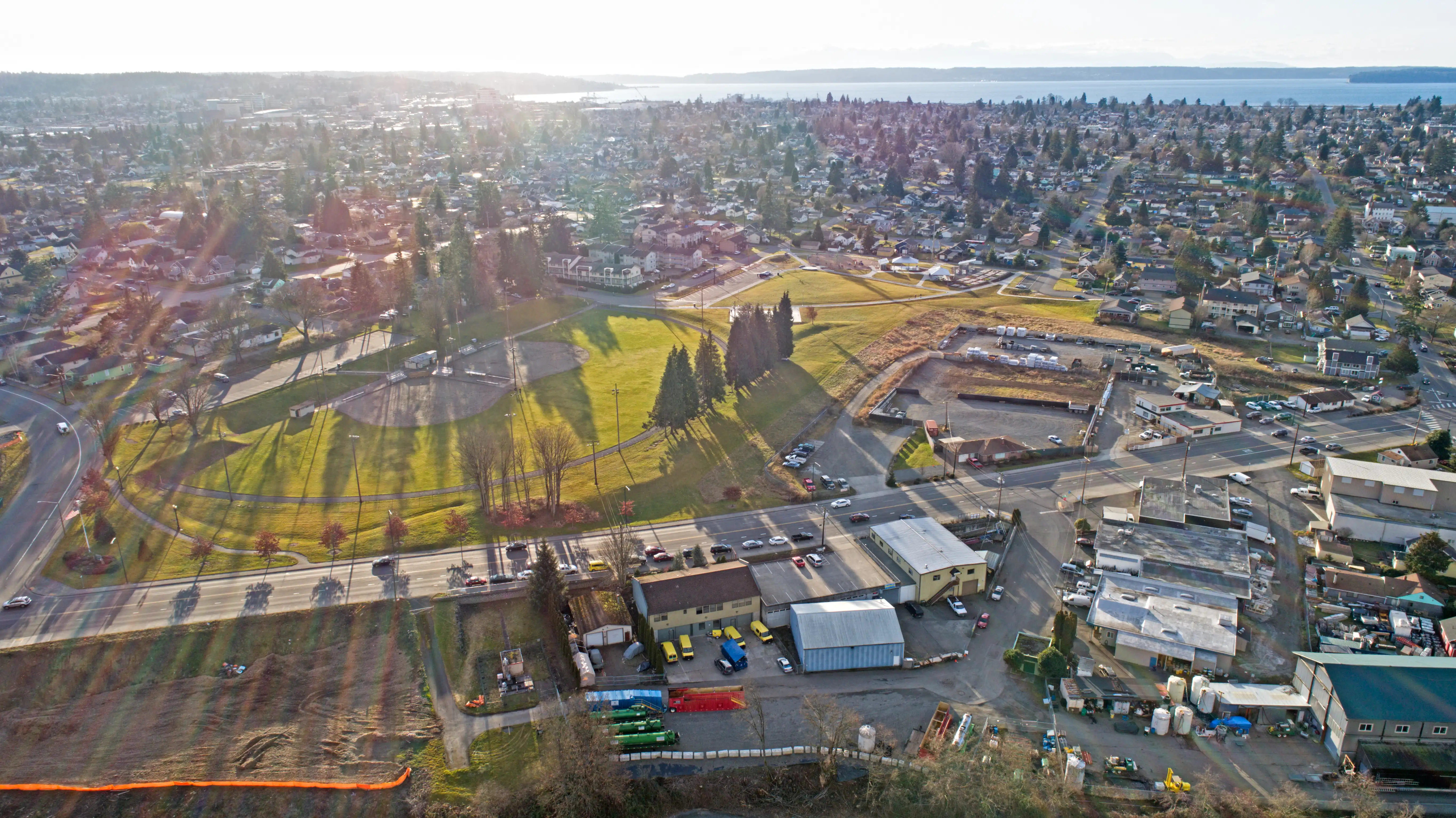
Local Expert Takeaway: Buy your address like you're buying a school. In Everett, the View Ridge-Madison and Silver Lake corridors give you Forest View and View Ridge Elementary attendance zones with median home prices at or below $570,000 — that combination is genuinely hard to find in the Puget Sound market. If you have a child who needs a gifted or IB pathway, factor in a 20-minute drive to Edmonds SD schools before you finalize a neighborhood, because the district's advanced learning options have real limits at the middle school level.
Are Everett schools good for families relocating from out of state?
For most families, yes — the district delivers above-average academics, meaningful diversity, and solid per-pupil investment. Families coming from highly tracked suburban districts may notice more variability between individual schools than they're used to, but buying into the right attendance zone largely addresses that concern.
Does the school you're zoned for depend on your home address in Everett?
It does, and the variation is real. Homes in the View Ridge-Madison neighborhood feed Forest View and View Ridge Elementary and the Jackson High pathway, which are among the district's strongest. Buying in central or west-side Everett puts you in different attendance zones with notably different performance profiles — something to verify on the district's boundary map before making an offer.
How does Everett School District compare to neighboring districts like Edmonds or Northshore?
Northshore and Edmonds consistently rank slightly higher on state-level metrics and offer deeper gifted and IB programming. Everett's edge is value — you're getting a legitimately A- rated district in a city where the median home price sits at $570,000, compared to meaningfully higher prices in Northshore's Bothell and Kenmore zones. For families whose kids don't have specialized advanced learning needs, Everett often delivers 85% of the outcome at a significantly lower cost of entry.
Explore the full Everett series: Living in Everett · Is Everett Safe? · Cost of Living · Best Neighborhoods · Schools & Family Life · Youth Sports · Parks & Rec · Retiring in Everett