
Eastern Washington · Washington
Best Neighborhoods in Cheney: Where to Buy or Rent (2026)
Cheney is a small city with a big identity split, and where you land within its 4 square miles matters more than most buyers expect. The difference between a quiet street near Sutton Park and a block flanked by student rentals can mean everything — different noise levels, different resale dynamics, different day-to-day rhythms. At a citywide median around $438,000, you're not spending throwaway money, and a misread on location can cost you years of frustration.
The city divides roughly into three character zones: the university-adjacent core surrounding Eastern Washington University, the historic downtown district a few blocks southeast of campus, and the newer residential west side where families tend to cluster in subdivisions built since 2000. Each zone attracts a fundamentally different buyer, and understanding which one fits your life before you make an offer is the single most valuable thing this guide can do for you.
Whether you're a first-time buyer trying to avoid the student rental corridor, a family researching school boundaries, a renter figuring out which complex gives you the most for your money, or a remote worker who needs a clean commute path to Spokane — this guide covers the real tradeoffs in each Cheney neighborhood.
| Neighborhood | Best For | Price Range | Vibe |
|---|---|---|---|
| University District | Renters, investors | $310,000–$430,000 | Dense, walkable, student-heavy |
| Downtown Cheney | Young professionals, walkers | $295,000–$420,000 | Historic, walkable, mixed-use |
| West Side / Westside | Families, first-time buyers | $390,000–$520,000 | Quiet, suburban, newer builds |
| Cheney West | Budget buyers, renters | $330,000–$400,000 | Affordable, established |
| Golden Hills / Sunrise View | Move-up buyers | $430,000–$580,000 | Newer, hillside, spacious |
| South Cheney | Large-lot seekers | $380,000–$520,000 | Rural-edge, low density |
| Needham Hill (D.R. Horton) | New construction buyers | $403,000–$550,000 | Brand-new, suburban |
| Country View Meadows | Military families, commuters | $375,000–$500,000 | West Plains, near Fairchild |
| North Cheney / Near EWU North | Investors, student housing | $300,000–$410,000 | Rental-heavy, close to campus |
| Lakeside Junction Area | Buyers wanting space | $400,000–$560,000 | Semi-rural, lake access |
| Buyer Type | Best Neighborhood | Why |
|---|---|---|
| First-time buyer | Cheney West | Below citywide median, established streets, manageable entry point |
| Luxury / move-up buyer | Golden Hills / Sunrise View | Larger lots, newer construction, best views in the city |
| Walkability seeker | Downtown Cheney | Closest walkable dining, coffee, and transit access |
| Families with kids | West Side / Westside | Quieter streets, newer builds, closer to family-oriented parks |
| Commuters to Spokane | Country View Meadows | Direct West Plains corridor access, 25-minute drive |
| Large lot buyers | South Cheney / Lakeside Junction | Rural-edge lots, lower density, room to expand |
| Renters | University District / Downtown | Most inventory, best pricing competition, transit access |
The streets immediately surrounding EWU's 300-acre campus contain some of the most affordable home prices in Cheney, with properties running from roughly $310,000 to $430,000, but the tradeoff is a transient rental landscape that makes resale less predictable. Turn-of-the-century Craftsman bungalows and midcentury ranch-style homes give the area genuine architectural character, and walkability to campus, the STA bus hub on West First Street, and the downtown core is unmatched anywhere else in the city. The honest downside: weekend noise on the blocks closest to campus is real, parking is tight, and roughly 65% of the neighborhood's units are occupied by renters, meaning owner-occupant neighbors can be scarce.
Best for: Investors seeking student rental income, buyers who want walkable character and can tolerate the college-town energy.
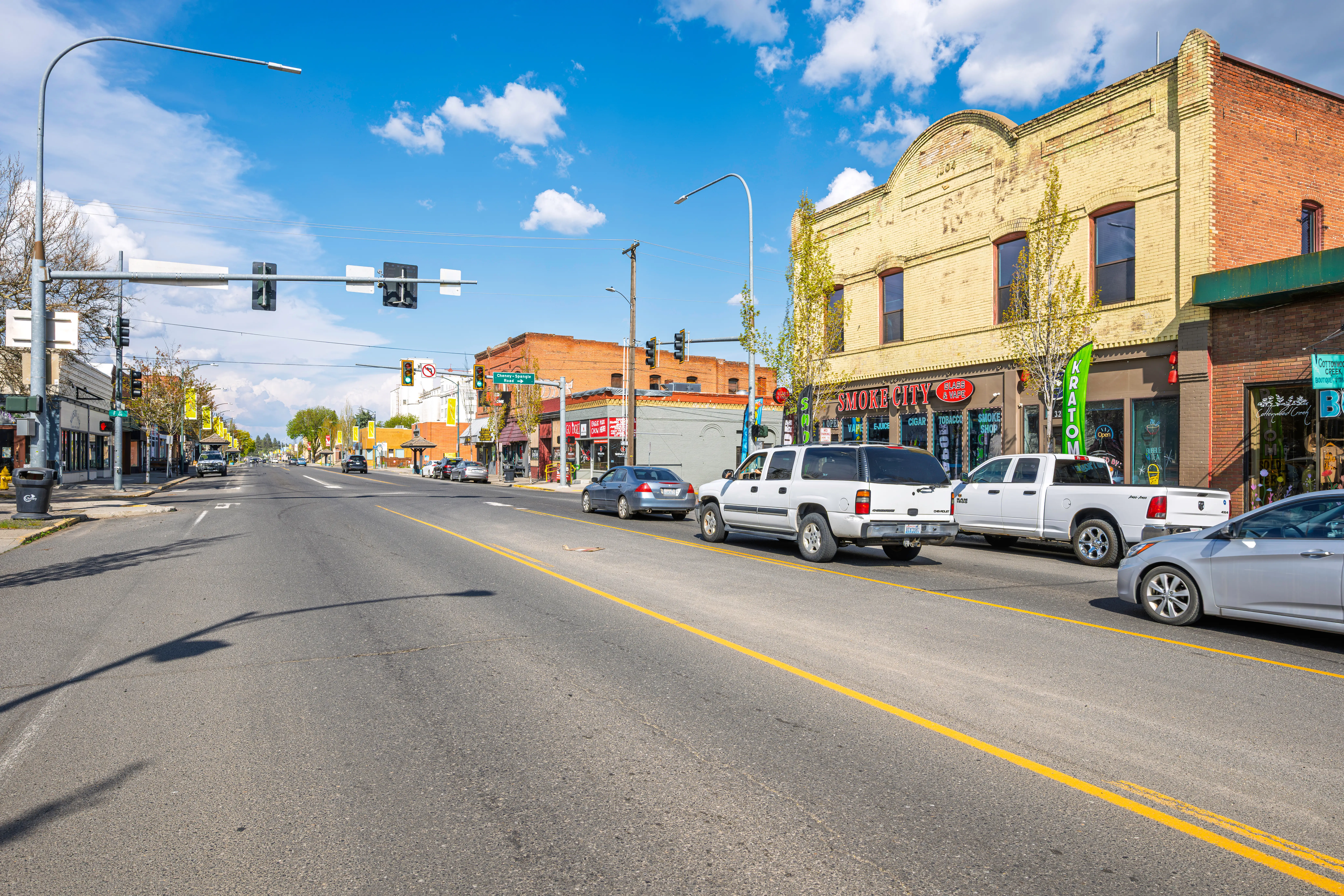
Downtown sits just a few blocks southeast of the EWU campus and functions as the city's commercial and civic center, with the Cheney Historical Museum, local dining staples like Barrelhouse and Wild Bill's, and the STA transit connections all within easy reach. Home prices here run from approximately $295,000 to $420,000, making this one of the more affordable entry points in the city for buyers who want on-foot access to everyday errands and dining. The catch is that the commercial activity, foot traffic, and student presence that make downtown lively can also make it loud — buyers seeking quiet evenings should look west before committing.
Best for: Young professionals, walkability-focused buyers, and budget-conscious first-timers who want downtown character.
The residential west side is where Cheney shifts from college town to genuine family suburb, with newer subdivisions built predominantly since 2000, quieter streets, and a population that skews toward owner-occupants with school-age children. Prices here typically run $390,000 to $520,000, reflecting the newer construction, larger floor plans, and the relative quiet that buyers willing to drive a few minutes to downtown are paying for. The one frustration many west side residents mention after settling in is the lack of walkable retail — you're driving for groceries, coffee, and most errands, which catches some buyers off guard after touring the more walkable downtown neighborhoods.
Best for: Families with kids, buyers prioritizing quiet streets and newer construction over walkability.
Cheney West is an established sub-area on the western edge of the city proper, consistently priced below the citywide median — typically $330,000 to $400,000 — making it the most accessible entry point for buyers working with conventional financing. The housing stock is a mix of older single-family homes and smaller ranch-style builds, with larger lot sizes than you'll find in the newer subdivisions closer to the core. The tradeoff is age: many homes here were built in the 1970s and 1980s, and buyers should budget for mechanical updates and deferred maintenance that newer construction communities don't carry.
Best for: First-time buyers, budget-conscious buyers, and investors looking for below-median entry points.
Golden Hills and its Sunrise View addition sit on the higher elevation sections of Cheney, offering the city's best combination of newer construction, larger parcels, and open-sky views toward the Palouse. Prices run from roughly $430,000 to $580,000, putting this squarely in move-up buyer territory, and the homes reflect it — larger floor plans, newer finishes, and more garage space than you'll find at the city's lower price points. The honest limitation here is location: Golden Hills is far enough from both the EWU corridor and downtown that it functions as a drive-everywhere zone, and buyers who imagined a walkable small-town lifestyle tend to feel that absence after a few months.
Best for: Move-up buyers, buyers wanting newer builds and hillside settings, households where both adults drive.
Needham Hill is one of the most active new construction communities in Cheney right now, with D.R. Horton offering floor plans starting around $403,000 for three-bedroom, two-bath homes in the 1,466-square-foot range. The appeal is straightforward: new-build warranties, modern energy efficiency, and a clean suburban environment without the maintenance questions that come with the city's older housing stock. What buyers discover after move-in is that new construction communities at this scale take time to feel established — landscaping is minimal, neighbor density is high, and the character that makes older Cheney streets appealing simply isn't there yet.
Best for: Buyers who want new construction predictability and modern floor plans at an accessible price point.
Country View Meadows is situated in the West Plains corridor west of Cheney proper, positioned specifically for buyers whose daily commute runs toward Fairchild Air Force Base or who use SR-904 west as their primary route. Prices here typically fall in the $375,000 to $500,000 range, with the development's proximity to parks and hiking trails adding genuine outdoor recreation value that purely residential subdivisions don't offer. The practical limitation is that this location adds distance from Cheney's downtown core and EWU, which matters less for military families and Air Force Base workers but should give buyers whose jobs are downtown Spokane-bound a reason to map their actual commute before committing.
Best for: Military families, Fairchild Air Force Base workers, outdoor-focused buyers who prioritize trail access over proximity to city services.
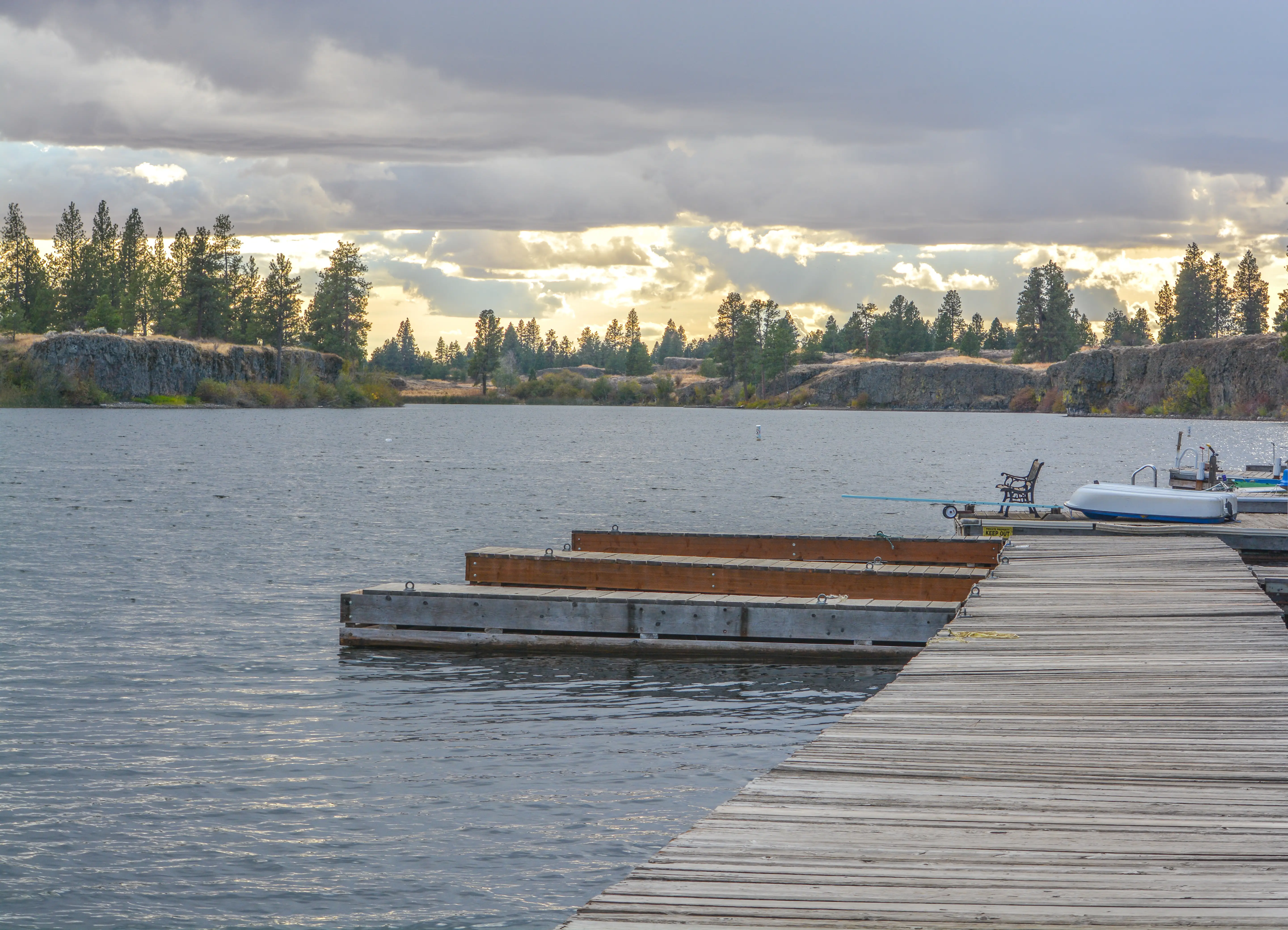
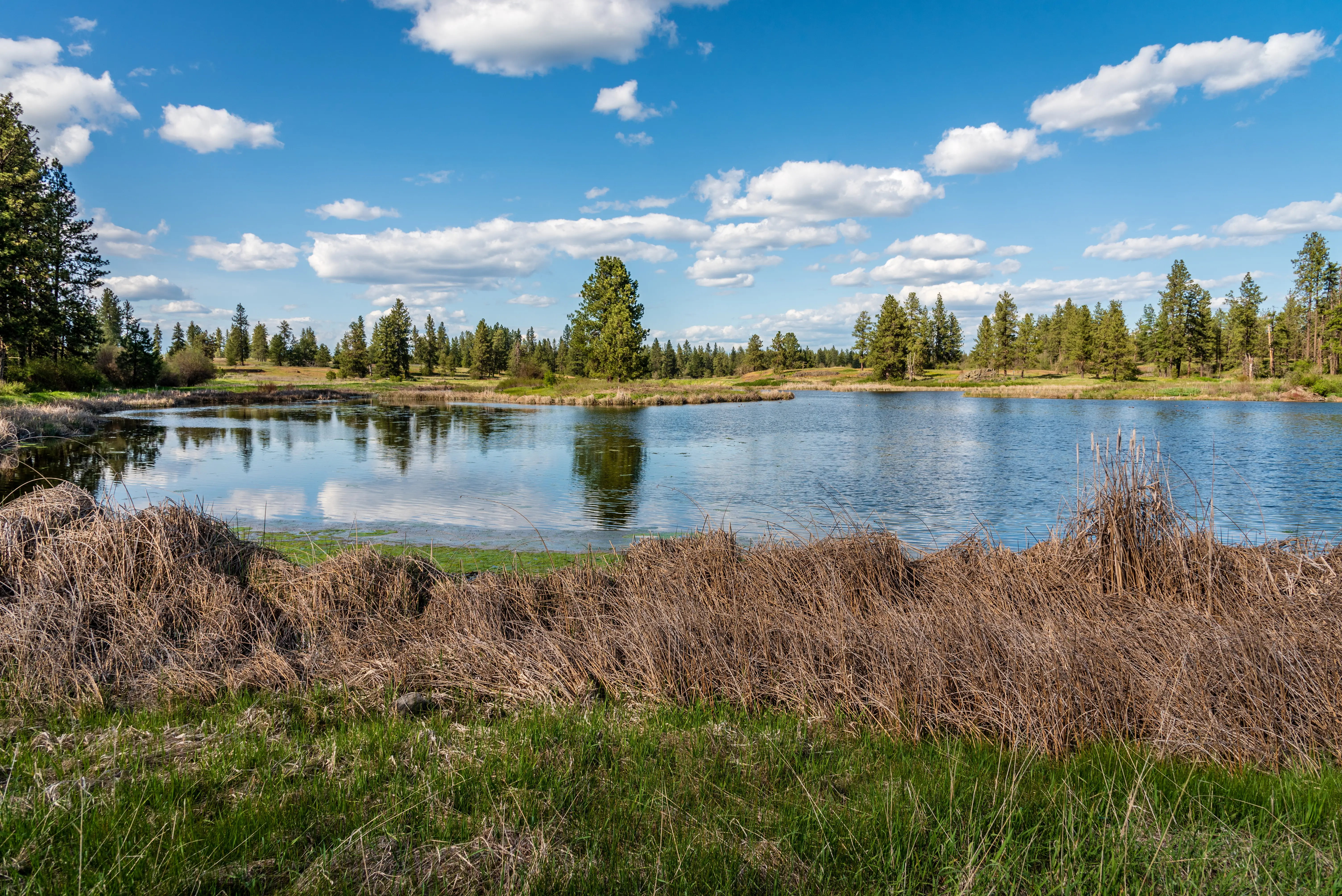
South Cheney and the Lakeside Junction corridor represent Cheney's rural-edge market — lower density, larger lots, and the closest thing to lake-adjacent living that this part of Spokane County offers near the city limits. Prices generally run $400,000 to $560,000, reflecting the land and the quiet, with the spread depending heavily on lot size and home age. The honest tradeoff here is convenience: buyers consistently report that the distance from downtown Cheney and from the main Spokane commute routes adds time and friction to daily life in ways that don't show up on a map at first glance.
Best for: Buyers prioritizing space and quiet over proximity, large-lot seekers, households comfortable with a more rural-edge lifestyle.
Assuming all of Cheney looks the same. The city covers only 4 square miles, which leads some buyers to treat it as a single undifferentiated market. The blocks immediately north and east of EWU's campus are functionally rental corridors — high turnover, variable maintenance, and limited owner-occupant presence — while the west side subdivisions off Cheney-Spangle Road and around Golden Hills feel like an entirely different city. Buyers who tour a home on West First Street near the STA hub and then one in Needham Hill without understanding what separates them often make comparison decisions that don't hold up after move-in.
Underestimating the SR-904 bottleneck during peak hours. The 25-minute Cheney-to-Spokane commute that gets quoted everywhere assumes off-peak travel. SR-904 funnels all westbound and eastbound traffic through a two-lane corridor, and the segment near Four Lakes during morning and late afternoon hours can add 10 to 15 minutes on the worst days. Buyers purchasing in South Cheney or the Lakeside Junction area should test the actual commute at 7:30 a.m. before they close — the difference from Country View Meadows versus South Cheney on a Tuesday morning is real.
Buying in the student rental belt without running the numbers as an investment. Some buyers fall in love with the older Craftsman character of the University District blocks without honestly assessing whether they want to live in a rental-majority neighborhood or whether they're actually buying an investment property. If it's the latter, the math can work well — EWU's enrollment drives consistent demand, and the apartment inventory comparison gives investors a meaningful rent-to-price ratio. But buyers who intend to owner-occupy and were drawn in by the price point often find themselves frustrated by the transient energy within the first year.
Ignoring age of housing stock in Cheney West. The below-median prices in Cheney West are real, but they come attached to homes built in the 1970s and 1980s that frequently need HVAC, roof, and plumbing updates that newer construction doesn't. Several buyers have used the lower purchase price to justify stretching their budget, then encountered immediate repair costs that erased the perceived savings. A thorough pre-inspection and a realistic renovation budget line item are non-negotiable before making an offer in this sub-area.

Cheney's real estate market rewards buyers who understand how location shapes long-term value. Homes near Eastern Washington University tend to hold their value well due to consistent rental demand and proximity to campus amenities, while properties closer to Centennial Park and Sutton Park attract families looking for walkable, established neighborhoods. In my experience, well-priced homes in these pockets move quickly — sometimes within days of listing — so being financially prepared isn't just helpful, it's essential. Most single-family homes in Cheney remain accessible compared to larger Spokane-area markets, with many quality options available under $400,000.
Before you start touring homes, please talk to a lender first. A pre-approval conversation isn't just about the loan amount you qualify for — it's about understanding what your full monthly payment actually looks like, including property taxes, homeowner's insurance, any HOA dues, and how your loan structure affects that number long-term. I always encourage buyers to think about a comfortable payment, not just the maximum approval. When the right home near Sutton Park or EWU hits the market, you want to move with confidence, not scramble.
| Area | Ideal For | Typical Rent Range | Trade-off |
|---|---|---|---|
| University District / Near EWU | Students, budget renters | $610–$1,100/mo | Noise, parking, high turnover |
| Downtown Cheney | Young professionals, walkers | $1,050–$1,500/mo | Limited larger units, street activity |
| West Betz Road Corridor | Families, working adults | $1,175–$1,940/mo | Further from downtown walkability |
| Simpson Parkway / Downtown Adjacent | Mixed renters, professionals | $1,260–$1,680/mo | Older buildings, limited parking |
| South Cheney / Cheney-Spangle Corridor | Quiet-seekers, larger households | $686–$1,807/mo | Distance from services, car-dependent |
Local Expert Takeaway: The single most important geographic distinction for buyers in Cheney is the dividing line between the student rental corridor (roughly the blocks within a half-mile of EWU's campus core on 5th Street) and the owner-occupant neighborhoods on the west side. Buyers who cross that line intentionally — either as investors or as families choosing quiet over proximity — make the decision that works. Buyers who cross it accidentally, drawn by a lower price on a Craftsman that looked great in photos, are the ones calling their agent six months later. If you're buying to live in the home, spend five minutes on a Tuesday evening at the intersection of Second and Elm before you make your offer.
Looking to buy in Cheney? Estimate your payment.
Enter your numbers to see an estimated monthly mortgage payment.
Estimate only. Excludes HOA fees and mortgage insurance.
What are the best neighborhoods in Cheney for families?
The west side residential neighborhoods — including the subdivisions off Cheney-Spangle Road and the Golden Hills area — tend to draw families with school-age children because of their quieter streets, newer construction, and owner-occupant density. These areas typically run $390,000 to $580,000 depending on home size and age, and they're where you'll find the most stable, established residential character in the city.
Is it better to rent or buy in Cheney, WA?
Cheney's rental market is unusually deep due to the EWU student population, and renters willing to live slightly outside the immediate campus corridor can find well-maintained two- and three-bedroom units in the $1,175–$1,680 range. Buying makes stronger financial sense for buyers planning to stay five or more years, especially on the west side where owner-occupant resale values have held steadily — but buyers who need flexibility or aren't ready to navigate the maintenance reality of the city's older housing stock often find renting the smarter short-term move.
How far is Cheney from Spokane, and does neighborhood location affect the commute?
The standard Cheney-to-Spokane commute runs about 25 minutes via SR-904, but neighborhood location within Cheney matters. Buyers in Country View Meadows and the West Plains corridor have direct access to SR-904 west toward Fairchild, while those in South Cheney or the Lakeside Junction area add distance and potentially 10 additional minutes during peak hours. The University District and downtown neighborhoods sit closest to the SR-904 on-ramp toward Spokane, making them the most commute-efficient locations for eastbound workers.
Explore the full Cheney series: The Ultimate Cheney Relocation Guide · Is Cheney Safe? · Cost of Living in Cheney · Best Neighborhoods in Cheney · Cheney Schools & Family Life · Cheney Youth Sports · Cheney Parks & Recreation · Retiring in Cheney · 1031 Tax-Deferred Exchange in Cheney · Cheney First-Time Homebuyers Guide · Cheney Down Payment Assistance Guide · Moving to Cheney from California