
Eastern Washington · Washington
Cost of Living in Cheney: Housing, Taxes, Utilities & Lifestyle (2026)
Most people researching Cheney start with the home prices and stop there. At a median sold price around $438,000, the numbers look compelling compared to Spokane proper — and they are. But the full cost picture here is shaped by something most relocation calculators don't account for: a city where nearly 70% of households rent, Eastern Washington University anchors the local economy, and your daily expenses depend heavily on whether you own or whether you're a permanent resident navigating a student-heavy rental market.
What shapes cost of living in Cheney isn't just square footage per dollar. It's the municipal electric utility, a property tax rate that undercuts the Spokane County average, and a cost of living index that sits just below 100 — meaning everyday expenses run slightly cheaper than the national benchmark, even if a few categories like transportation buck that trend. The city's overall affordability is real, but it's layered.
This guide breaks down what you'll actually spend in Cheney in 2026: what the housing market delivers at different price points, what renters pay, how the tax structure works, what utilities and groceries cost, and how the total monthly picture compares to neighboring cities. Whether you're weighing a purchase or trying to figure out what income you need to live comfortably here, the numbers below give you a realistic floor.
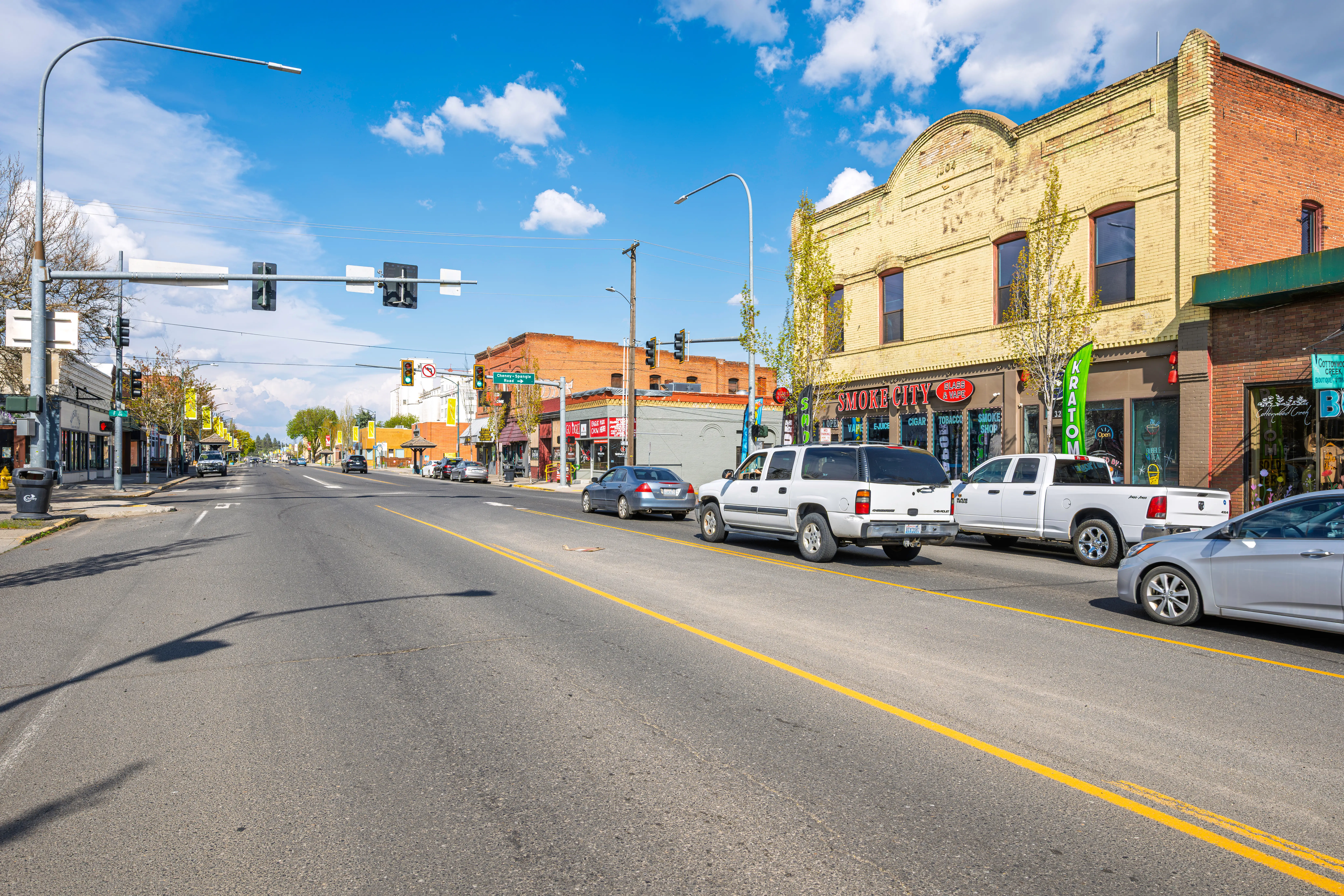
The median sold price in Cheney currently sits at $438,000, a figure that represents real momentum — Redfin tracked an 11% year-over-year increase in late 2025, and homes are selling at roughly $170 per square foot. For context, that per-square-foot rate gives you a three-bedroom, two-bath home in the 1,800–2,000 square foot range at or near median — the kind of house that would cost $100,000–$150,000 more in Spokane's South Hill or in Spokane Valley's newer developments.
The market moves faster than you'd expect in a city this size. Homes are going pending in roughly 32 days on average, with well-priced listings in the 14-day range. Cheney carries a Redfin Compete Score of 79 out of 100, which puts it in "Very Competitive" territory — modest by Puget Sound standards, but meaningful for Eastern Washington. The homeownership rate is just 31%, partly because the EWU student population skews toward renting, which means the pool of move-in-ready owner-occupant homes is smaller than you'd see in a comparably sized city without a university.
Entry-level buyers can find older single-family homes and mobile homes well below median — mobile home values average around $207,000 — while the upper end of the detached single-family market averages closer to $520,000. Condos and attached units run lower, averaging around $340,000, which creates a legitimate path for first-time buyers who don't need a yard. The table below shows what different budgets realistically deliver.
| Budget Range | What It Buys in Cheney |
|---|---|
| Under $280,000 | Mobile/manufactured homes, entry-level condos, fixer-uppers needing significant work |
| $280,000–$380,000 | Older single-family homes (1970s–1990s construction), smaller lots, near EWU campus |
| $380,000–$480,000 | Updated 3BR/2BA homes, near-median purchases, newer construction in developing areas |
| $480,000–$600,000+ | Larger single-family homes, newer builds, more finished interiors, larger lots |
At Cheney's rate of 1.04% — below the Spokane County average of 1.11% — the annual tax bill on the median $438,000 home runs approximately $4,555, or roughly $380 per month when folded into a mortgage payment. Washington's levy limit system caps annual property tax increases at 1% per year on existing levies, which provides some predictability for long-term owners. Spokane County commissioners approved a 1% increase for 2025, which translated to roughly $3 per year for the average homeowner. Residents 61 and older may qualify for Washington's Senior Citizen/Disabled Persons exemption program, which can reduce both the taxable value and the levy depending on income thresholds.
The rental market in Cheney is dominated by students, and that reality shapes both inventory and pricing in ways that permanent residents need to understand. With roughly 65% of housing units renter-occupied, the city has no shortage of rental stock — but the majority of that inventory is configured around 1- and 2-bedroom units designed for college students, often clustered near EWU's campus. Families and professionals looking for 3- and 4-bedroom rentals will find the options narrower and the pricing closer to what you'd pay in Spokane.
| Unit Type | Average Monthly Rent |
|---|---|
| Studio | $920–$1,016 |
| 1-Bedroom | $959–$1,136 |
| 2-Bedroom | $1,283–$1,416 |
| 3-Bedroom | $1,479–$1,773 |
| 4+ Bedroom | $1,919+ |
Cheney Municipal Electric serves residents directly as a city-owned utility, with rates approved by City Council. The 2026 rate schedule, set in November 2025, covers electric, water, solid waste, and sewer — the bundled municipal service structure means most residents deal with a single provider for core utilities rather than juggling multiple accounts. Municipal utilities in Eastern Washington have historically run below national averages for electricity, and Cheney's ownership structure keeps rate increases subject to public process rather than investor-return pressure.
Car dependency is a given. Cheney is not a walkable city beyond the EWU campus corridor. The Spokane Transit Authority does operate service between Cheney and Spokane — Route 66 connects the two cities and is used primarily by EWU students — but for most permanent residents working in Spokane, driving is the practical reality. The 25-minute commute to downtown Spokane along US-395 is straightforward outside of peak hours; the interchange at Cheney-Spokane Road and I-90 can add 10–15 minutes during heavy freight and commuter overlap in the early morning. Residents heading to Airway Heights for the growing commercial corridor near Spokane International Airport are looking at roughly 15 minutes.
Grocery access is functional rather than abundant. Cheney has a Safeway and a handful of smaller grocery and convenience options, but residents making larger grocery runs or seeking specialty items typically drive to Spokane's South Hill or the Sprague Avenue corridor in Spokane Valley. Gas prices in the Cheney area tend to track about $0.10–$0.20 below the state average, consistent with Eastern Washington's lower regional fuel prices. Dining locally is centered on a modest selection of restaurants and campus-adjacent eateries; Marketplace Bakery is a genuine local institution worth knowing about, but for the range of dining options most relocating buyers expect, Spokane is where most residents go.
Healthcare costs in Cheney run close to the national average. Providence Holy Family and MultiCare Deaconess in Spokane are the primary hospital systems serving the area. For routine care, there are limited options in Cheney proper; most specialized and non-emergency healthcare happens in Spokane.

| City | Median Home Price | Property Tax Rate | Commute to Spokane | Walkability | Rental Market |
|---|---|---|---|---|---|
| Cheney | $438,000 | 1.04% | 25 min | Low (car-dependent) | Strong (student-driven) |
| Spokane | $340,000–$380,000 | ~1.11% | 0–15 min | Moderate–High | Broad inventory |
| Spokane Valley | $390,000–$430,000 | ~1.11% | 10–20 min | Moderate | Moderate inventory |
| Airway Heights | $320,000–$370,000 | ~1.11% | 15 min | Low | Limited |
| Medical Lake | $350,000–$400,000 | ~1.05% | 30 min | Low | Very limited |
| Four Lakes | $380,000–$420,000 | ~1.05% | 35 min | Very low | Near-zero inventory |

Homes near Eastern Washington University and around Sutton Park tend to hold their value well and attract steady buyer interest — partly because of the university's stabilizing effect on the local economy, and partly because these areas offer genuine walkability and community feel. Properties in Cheney priced under $350,000 move quickly, often within days of listing, so buyers who aren't prepared can easily miss out. Proximity to Fish Lake Regional Park and Centennial Park also adds long-term appeal for buyers thinking about lifestyle alongside investment.
Getting pre-approved before you tour a single home isn't just a formality — it's how you understand what your full monthly payment actually looks like, because principal and interest are only part of the picture. Property taxes, homeowner's insurance, and any HOA dues all factor in, and the loan structure itself can shift your payment meaningfully. I always encourage buyers to aim for a comfortable payment, not just the maximum they qualify for. When the right home appears in a competitive market like Cheney, being ready to move is everything.
The table below reflects a homeowner who purchased at the $438,000 median with 10% down ($43,800), financed at a 30-year fixed rate around 6.75%–7.0%.
| Expense Category | Estimated Monthly Cost |
|---|---|
| Mortgage Principal & Interest | $2,580–$2,640 |
| Property Taxes (1.04% / 12) | $380 |
| Homeowner's Insurance | $110–$140 |
| Municipal Utilities (electric, water, sewer, trash) | $200–$280 |
| Internet | $60–$80 |
| Groceries (household of 2) | $500–$650 |
| Transportation (2 vehicles, gas + insurance) | $700–$900 |
| Dining Out / Entertainment | $300–$450 |
| Healthcare (out-of-pocket average) | $200–$350 |
| Estimated Monthly Total | $5,030–$5,990 |
Washington's most significant tax advantage for residents is the complete absence of a state income tax. For a household earning $75,000–$100,000, that translates to $4,000–$8,000 in annual savings compared to states like Oregon or California. The state funds services primarily through a 6.5% state sales tax, with Spokane County adding 2.4% on top for a total rate of 8.9% on most retail purchases in Cheney. That's not negligible — residents who do large retail purchases in Cheney will feel that combined rate — but for most budgets, the income tax elimination more than offsets it.
Washington also offers a Property Tax Deferral program for seniors and disabled persons with limited income. Qualifying residents 60 and older can defer property taxes on their primary residence, with the deferred amount becoming a lien paid upon sale or transfer. For fixed-income retirees, this is one of the more practical tax tools available in the state and worth discussing with a CPA or the Spokane County Assessor's office. There is no Washington estate tax exemption for smaller estates — the state estate tax kicks in on estates over $2.193 million — but for most Cheney homeowners, that threshold isn't relevant.
Capital gains on real estate follow federal rules for primary residences: the $250,000 single / $500,000 married exclusion applies, and Washington's 7% capital gains tax (effective 2023) does not apply to real estate sales, only to long-term capital gains on financial assets above $262,000.

Local Expert Takeaway: The buyers who come to Cheney purely for price and don't account for the EWU rental market dynamic tend to be surprised by how the city actually functions day to day. If you're buying a home to live in, focus your search west of the campus core — neighborhoods along Salnave Road and out toward the Cheney-Spangle corridor give you space, quieter streets, and less of the student-housing churn. The property tax rate under 1.1% and Washington's no-income-tax structure together add up to real money over time; a household moving from Oregon saves thousands annually on that side of the ledger alone. The monthly budget math is tight at median income, but more workable for dual-income households than the raw median figure suggests.
Looking to buy in Cheney? Estimate your payment.
Enter your numbers to see an estimated monthly mortgage payment.
Estimate only. Excludes HOA fees and mortgage insurance.
Is Cheney, WA an affordable place to live?
Cheney's cost of living index sits at approximately 95 — slightly below the national average. Housing costs are below the U.S. average for a city of its size, and Washington's lack of a state income tax meaningfully improves take-home pay. The monthly ownership cost at the median price is a stretch for single-income households at the city's median income, but dual-income buyers and those bringing equity from out of state will find the overall picture genuinely affordable relative to comparable cities.
What are property taxes like in Cheney?
Cheney's property tax rate of 1.04% runs below the Spokane County average of 1.11%. On the median $438,000 home, that works out to roughly $4,555 per year — about $380 per month. Washington's levy limit system caps annual increases at 1% on existing levies, which prevents the kind of rapid tax escalation seen in states without similar protections. Residents 61 and older may qualify for state-administered exemptions that can reduce the taxable value further.
How does the cost of living in Cheney compare to Spokane?
Cheney's overall costs run slightly lower than Spokane's on most indexes, though median home prices in Cheney have climbed above Spokane's entry-level single-family market in many neighborhoods. The practical differences come down to access: Spokane has more grocery competition, more dining, better healthcare proximity, and more walkable neighborhoods. Cheney delivers lower property tax rates, newer housing stock at mid-range price points, and a quieter residential pace — the 25-minute drive to Spokane covers most of what the city itself lacks.
Explore the full Cheney series: The Ultimate Cheney Relocation Guide · Is Cheney Safe? · Cost of Living in Cheney · Best Neighborhoods in Cheney · Cheney Schools & Family Life · Cheney Youth Sports · Cheney Parks & Recreation · Retiring in Cheney · 1031 Tax-Deferred Exchange in Cheney · Cheney First-Time Homebuyers Guide · Cheney Down Payment Assistance Guide · Moving to Cheney from California