
Eastern Washington · Washington
First-Time Home Buyer Guide for Cheney (2026)
There's a moment every first-time buyer hits — usually somewhere between the pre-approval call and the third weekend of open houses — where the process stops feeling exciting and starts feeling impossible. The numbers are bigger than expected. The competition feels unfair. The paperwork is endless. And then you walk into a 4-bedroom house on Gregory Drive for $385,000 and something shifts. You start doing the math differently. You start thinking: this might actually work. That's the Cheney moment. It's a small city with a real college-town identity, a genuine sense of community, and home prices that still allow a household earning close to the median income to become a homeowner without a trust fund or a gift letter from parents.
The median home price in Cheney sits at approximately $438,000 — but active listings span from $285,000 to well above $500,000, and recent sold prices have clustered in the $370,000–$425,000 range depending on the season and inventory. At the $385,000 mark, you're typically looking at a 3–4 bedroom home with 1,900–2,100 square feet, likely built in the late 1960s or 1970s, with recent updates ranging from cosmetic refreshes to full kitchen renovations. That's a meaningful step up from renting a 2-bedroom apartment in the Spokane metro, where monthly rents for comparable space often run higher than an equivalent mortgage payment once you factor in Washington's lack of a state income tax.
This guide walks you through the full first-time buyer process in Cheney — from getting your credit in order to closing day. It covers what your budget realistically gets you at different price tiers, what the market actually feels like when you're writing offers, and the specific mistakes buyers make in this market that nobody warns them about ahead of time. Cheney is not what most people picture when they think of Washington real estate, and that's exactly why it deserves a closer look.
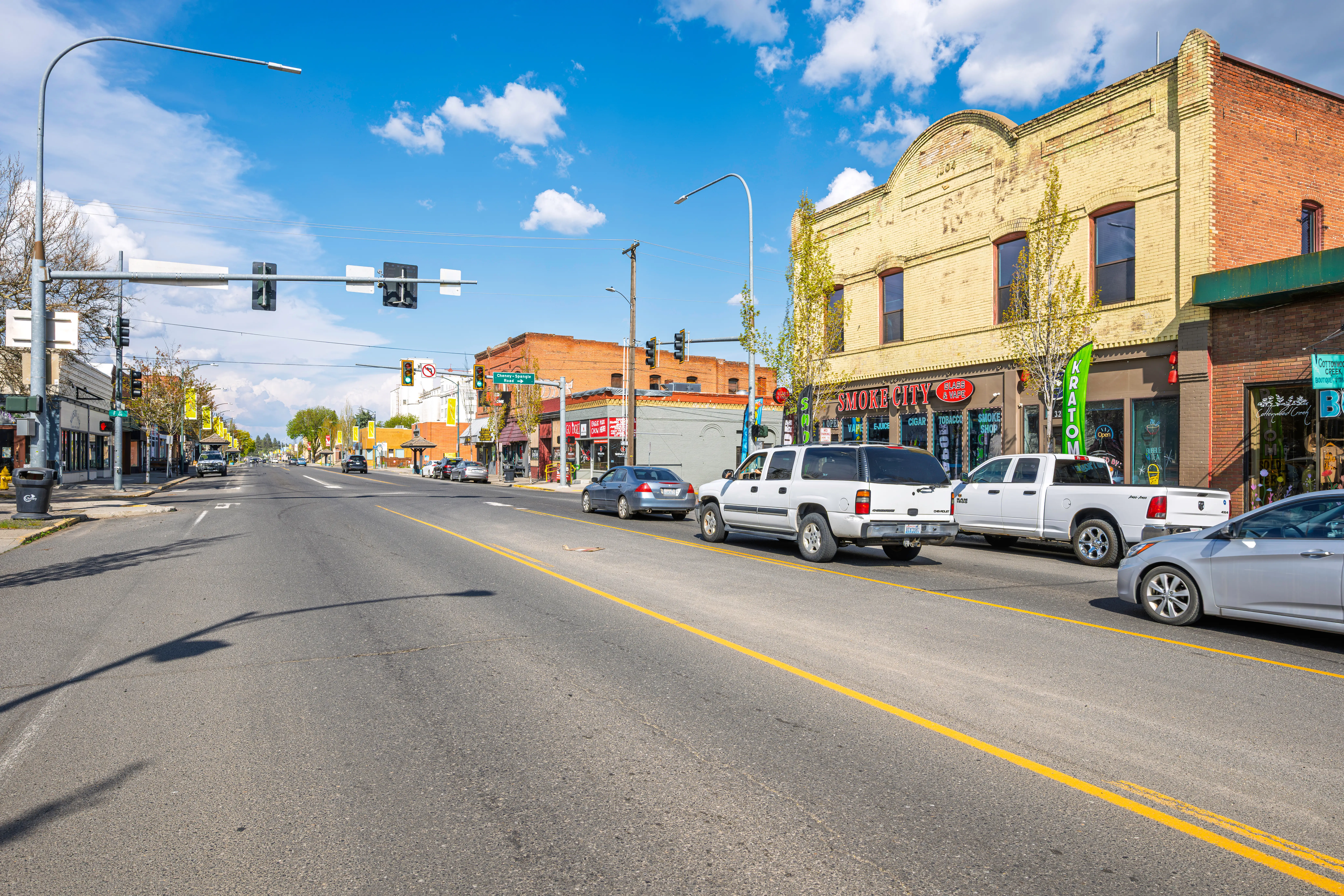
Cheney's case for first-time buyers is built on three things: price point, community scale, and proximity to Spokane. The Spokane metro has been one of the more competitive housing markets in the inland Northwest, and first-time buyers in Spokane proper often find themselves priced out of neighborhoods with strong school ratings, short commutes, and decent square footage all at once. Cheney sits about 25 minutes southwest of downtown Spokane and offers a meaningfully lower entry price — not because it's a lesser option, but because it's smaller, less dense, and has a housing stock that hasn't been as aggressively bid up. For a household earning around $54,000 to $75,000, the numbers in Cheney pencil out in ways that Spokane Valley or the South Hill often don't.
What works against first-time buyers here is the same thing that works for them: Cheney is a college town anchored by Eastern Washington University, which means the rental market is active and the owner-occupied inventory turns over steadily but not in huge volume. The Redfin Compete Score for Cheney runs around 79 out of 100 — categorized as "very competitive" — with many homes drawing multiple offers and some selling in under two weeks. You're not walking into a soft buyer's market. The entry-level inventory below $350,000 is thin, and when something shows up in that range, it tends to move fast. Buyers who assume Cheney is a sleepy backup market where they can take their time tend to get surprised quickly.
For realistic entry points, the areas near the university's edges and along the south side of town offer a mix of older single-family homes in the $320,000–$400,000 range. The streets around Nolan Brown Place and Gregory Drive represent the kind of established neighborhoods where first-time buyers have found solid 4-bedroom homes without pushing past $390,000. These are not starter home ghettoes — they're working neighborhoods with mature trees, garages, and actual square footage.
| Price Range | What You Typically Find | Neighborhood Examples | Competition Level |
|---|---|---|---|
| Under $350K | 3-bed / 1-bath fixer-uppers, manufactured homes, or smaller older construction needing work | South Cheney, older streets near EWU edge | Very high — sells fast |
| $350K–$450K | 3–4 bed / 2 bath, 1,400–2,100 sq ft, 1960s–1980s construction, many move-in ready | Nolan Brown area, Gregory Dr corridor, established residential streets | High — multiple offers common |
| $450K–$550K | Updated 3–4 bed homes, some new construction, better finishes, more outdoor space | Newer subdivisions on Cheney's south and west sides | Moderate — competitive but fewer bidding wars |
| $550K–$650K | Larger homes with newer builds, quality updates, acreage edge cases beginning to appear | West Cheney residential, larger lot properties | Lower — more time to decide |
| $650K+ | Acreage properties, custom builds, rural residential outside city core | Outlying Cheney area, rural Spokane County edge | Low — longer days on market |
The honest advice for first-time buyers is to target their search at $400,000–$420,000 while qualifying for slightly more, so they have room to compete without going over their comfort zone. Cheney's average sold price runs about 1% below list on typical homes and roughly 1% over list on the fast-moving ones — which means well-priced homes near the median don't leave a lot of room for lowball strategy.
| Step | What Happens | Typical Timeline | What First-Timers Get Wrong |
|---|---|---|---|
| Get finances in order | Pull credit reports, pay down revolving debt, gather 2 years tax returns and pay stubs | 1–3 months before searching | Waiting until they find a home — then scrambling |
| Pre-approval | Lender reviews income, assets, credit; issues pre-approval letter with purchase limit | 1–5 days with responsive lender | Confusing pre-qualification (soft pull) with pre-approval (verified) |
| Find an agent | Interview local buyers' agents familiar with Cheney and Spokane County inventory | 1–2 weeks | Calling the listing agent directly — creates dual agency conflict |
| Active search | Tour homes, track market, set up MLS alerts | 2–8 weeks typically | Setting alerts too narrow; missing homes just outside their target neighborhood |
| Making offers | Submit offer with price, terms, earnest money, contingencies | 1–3 days after touring | Offering list price on a hot home and losing; not understanding escalation clauses |
| Under contract | Seller accepts; buyer deposits earnest money, timelines start | Day of acceptance | Thinking the deal is done — it's not until closing |
| Inspection | Licensed inspector evaluates home condition; buyer reviews report | 7–10 days after acceptance | Waiving inspection entirely to win — risky on Cheney's older housing stock |
| Appraisal | Lender orders appraisal to verify home value matches loan amount | 1–2 weeks after contract | Not having a plan if appraisal comes in low |
| Final walkthrough | Verify home condition matches contract; check agreed repairs | 1–3 days before closing | Skipping it because they're excited to close |
| Closing | Sign documents, wire funds, receive keys | 30–45 days from contract | Changing jobs or opening new credit — kills the loan |
On the inspection question: Cheney has meaningful inventory of homes built in the 1960s and 1970s, and older construction means older systems — furnaces, electrical panels, plumbing that may still have galvanized pipes. Waiving inspection to win a bidding war is a strategy some buyers use in extremely tight markets, but on a 1968 ranch home in South Cheney, that's a meaningful gamble. The competitive buyers who win in Cheney without waiving inspection typically do it by shortening the inspection window to 5 days and being pre-positioned with a trusted local inspector who can move fast.

The minimum credit score for a conventional loan is 620, but 620 and 680 are not the same experience at the closing table. On a $450,000 loan, the difference between a 650 credit score and a 740 credit score can translate to a rate that's 0.5%–0.75% higher — which on a 30-year fixed loan adds up to $150–$200 extra per month and tens of thousands of dollars over the life of the loan. If your score is sitting in the low-to-mid 600s, spending 3–6 months paying down credit card balances and disputing errors before applying is not overthinking it — it's real money.
FHA loans allow down to 580 with a 3.5% down payment, and they're genuinely useful for buyers who have steady income but haven't built up a large savings cushion. The catch is mortgage insurance: FHA requires both an upfront premium (1.75% of the loan amount) and an annual premium that persists for the life of the loan if your down payment is under 10%. On a $400,000 FHA loan, that upfront cost is $7,000 rolled into the loan balance. It's not a dealbreaker, but it's real cost that buyers sometimes learn about at closing rather than at application.
On income qualification, lenders generally apply the 28% front-end rule — your total housing payment (principal, interest, taxes, insurance) shouldn't exceed 28% of gross monthly income. To buy a $400,000 home at current rates with a conventional 5% down, you'd typically need gross monthly income in the range of $7,000–$7,500 ($84,000–$90,000 annually) to qualify comfortably. A $500,000 purchase pushes that to around $8,500–$9,000 per month ($102,000–$108,000 annually). One thing buyers relocating from California, Oregon, or other income-tax states overlook: Washington has no state income tax. That's not a minor footnote — for a household earning $80,000, eliminating a 5%–9% state income tax burden meaningfully increases take-home pay and qualifying power compared to where they came from.

Cheney is a surprisingly competitive market for first-time buyers, and where you buy within the city genuinely matters for long-term value. Homes near Eastern Washington University tend to hold value well because of consistent rental demand and community investment in that corridor. Properties close to Centennial Park and Sutton Park also attract strong buyer interest — families and outdoor enthusiasts both gravitate toward those areas — and well-priced homes there can move within days of hitting the market. For most first-time buyers in Cheney, you're generally looking at options well under $400,000, though inventory shifts fast enough that hesitation often means missing out.
Before you fall in love with a house, sit down with a lender first. Your full monthly payment includes more than principal and interest — property taxes, homeowner's insurance, and any HOA dues all factor in, and that number can look quite different from what a basic online calculator shows. More importantly, just because a lender approves you for a certain amount doesn't mean that amount is comfortable for your actual life. Getting pre-approved early means when the right home appears near Fish Lake Regional Park or anywhere else in Cheney, you're
Mistake 1: Shopping at the top of their qualification number. Your lender will tell you what you qualify for — that number is not your budget. A household qualifying for $500,000 based on income and credit may find that the monthly payment at that purchase price is uncomfortable once they actually run their real monthly expenses. The Cheney market has enough inventory in the $370,000–$430,000 range that buyers don't need to push to their ceiling. The families who come out of the process happiest are almost always the ones who bought $30,000–$50,000 below their maximum.
Mistake 2: Assuming list price reflects sold price reality. Some buyers arrive in Cheney after reading metro Spokane headlines about bidding wars and assume they'll need to come in 10%–15% over list. That's not the Cheney norm. Average homes sell for roughly 1% below list, and even competitive properties rarely go more than 1%–2% above asking. Coming in significantly over asking on a home that's been sitting for 40+ days is one of the most common ways first-timers overpay in this market.
Mistake 3: Skipping inspection on older homes. Cheney has a real stock of homes built in the 1960s and 1970s, and those homes can carry deferred maintenance on systems that are expensive to replace — HVAC, plumbing, electrical. Skipping the inspection to speed up the offer is understandable competitive logic, but on a home that's 50+ years old on a street like Gregory Drive or Nolan Brown Place, it's a gamble that can cost $10,000–$25,000 in surprises within the first year. Shorten the inspection window instead — don't waive it entirely.
Mistake 4: Not understanding how EWU proximity affects resale. Eastern Washington University gives Cheney much of its economic vitality, but it also means certain streets near campus carry higher rental density. Homes in those zones can be harder to resell to owner-occupant buyers later, which affects your exit options. First-time buyers planning to use the home as a stepping stone should prioritize established owner-occupied neighborhoods over anything within a few blocks of campus.
Mistake 5: Waiting for prices to fall. Cheney's housing supply is constrained by its geographic footprint and limited new development pipeline. Buyers who waited through 2023 and 2024 expecting a meaningful correction watched prices remain stubbornly stable. With inventory sitting around 100 active listings for the entire city and competition still rated "very competitive" by major market trackers, the scenario where prices drop significantly enough to justify a 6–12 month wait is not supported by current supply dynamics.
South Cheney residential streets — including the pockets around Gregory Drive and the streets running south toward Fish Lake Road — offer some of the most consistent value for first-time buyers. Homes here are typically 1960s–1970s ranch-style construction on decent lots, selling in the $360,000–$400,000 range. The neighborhood is quiet, has no HOA complexity, and is close enough to Highway 904 for a straightforward Spokane commute. The honest con is that some of these homes need work — not crisis-level work, but the kind of cosmetic and mechanical updating that a buyer with cash reserves can handle over 2–3 years.
The area near Nolan Brown Place and the western residential grid has produced some of the better entry-level deals in recent years, with 4-bedroom homes in the upper $300,000s appearing periodically. This part of Cheney feels more established and residential than the streets immediately adjacent to EWU, and the lot sizes tend to be more generous. Buyers willing to act quickly when something pops up in this pocket tend to find good bones at reasonable prices.
Cheney's newer subdivision edges — particularly on the south and west sides of town where some infill and new construction has occurred — offer a different proposition. Expect prices in the $430,000–$500,000 range for newer builds with better finishes, warranties, and energy efficiency. For buyers who want to minimize immediate maintenance costs and can stretch to that price tier, the catch is that these neighborhoods are less established and may lack the mature landscaping and community feel of the older residential areas.
The north side near EWU is the one pocket first-time buyers should approach with eyes open. Proximity to campus creates rental density, which is fine if you plan to stay long-term, but complicates resale to families with school-age children who typically want more neighborhood stability. If your 5-year plan involves selling to move up, start your search elsewhere in town.
If coming up with the full down payment is what's standing between you and an offer, there's one program worth understanding clearly. Todd's office offers ONE+ by Rocket Mortgage, and it's structured differently from most assistance programs. The buyer puts down 1% of the purchase price, and Rocket Mortgage contributes a 2% grant — up to $7,000 — that never needs to be repaid. That brings the total down payment to 3% without requiring the buyer to come up with all of it out of pocket. The program has a maximum loan amount of $350,000, and income must be at or below the ONE+ income limit for Spokane County, which is $80,000. The credit score minimum is 620, it's available to both first-time and repeat buyers, and there is no second lien and no repayment trigger at sale. It is a grant.
To see if ONE+ might work for your income and purchase price, check out the full program details and eligibility guide →

Local Expert Takeaway: The most common mistake first-time buyers make in Cheney is treating the $438,000 median as a floor and assuming they need to budget up from there. Recent sold data consistently shows 3–4 bedroom homes closing in the $370,000–$400,000 range on the south side and western residential grid — buyers who know those neighborhoods and move quickly on well-priced listings are finding real value. Set your search alerts to notify you within 2 hours of a new listing under $420,000, get pre-approved before you start touring, and have your inspection contact's number ready before you write your first offer.
✅ Cheney offers first-time buyers a realistic path to a 3–4 bedroom home in the $370,000–$420,000 range — meaningfully more affordable than Spokane Valley or South Hill at comparable school quality and commute distance.
⚠️ The market is competitive (Redfin Compete Score 79/100), and entry-level homes under $350,000 move in days. Come pre-approved, have a clear decision process, and don't assume there will be a second chance on a well-priced listing.
📍 The south Cheney residential corridor and the streets around Nolan Brown Place consistently represent the best value entry points for first-time buyers — established neighborhoods, reasonable prices, and commutable distance to Spokane without EWU rental density complications.
Can I buy a home in Cheney as a first-time buyer?
Yes — Cheney is one of the more accessible markets in the Spokane area for first-time buyers. Recent sold prices have clustered in the $370,000–$425,000 range, and there is genuine inventory of 3–4 bedroom homes in that range. Households earning $75,000–$90,000 annually can qualify for conventional financing at or near the median price with a standard down payment.
How much do I need to buy my first home in Cheney?
On a $400,000 home with a conventional 5% down payment, you'd bring roughly $20,000 to closing for the down payment plus another $8,000–$10,000 in closing costs — so plan for $28,000–$30,000 total cash to close. With ONE+ by Rocket Mortgage, qualified buyers can reduce the out-of-pocket down payment to 1% on loan amounts up to $350,000, significantly lowering the cash-to-close requirement.
What credit score do I need to buy a house in Washington state?
The minimum is 580 for FHA financing and 620 for most conventional loans, but scores of 680 and above unlock meaningfully better interest rates. On a $400,000+ purchase, the difference between a 640 and 720 credit score can translate to $100–$200 per month in interest costs — which adds up to a significant sum over the life of a 30-year loan.
Explore the full Cheney series: The Ultimate Cheney Relocation Guide · Is Cheney Safe? · Cost of Living in Cheney · Best Neighborhoods in Cheney · Cheney Schools & Family Life · Cheney Youth Sports · Cheney Parks & Recreation · Retiring in Cheney · 1031 Tax-Deferred Exchange in Cheney · Cheney First-Time Homebuyers Guide · Cheney Down Payment Assistance Guide · Moving to Cheney from California