Eastern Washington · Washington
Living in Cheney: The Ultimate Relocation Guide (2026)
Maybe you've been priced out of Spokane's South Hill and someone mentioned Cheney as the move that makes the numbers work. Maybe your company is shifting operations toward the Inland Northwest and you're trying to figure out whether a 25-minute commute is actually livable. Or maybe you drove through once on your way to the Turnbull National Wildlife Refuge, saw the tree-lined streets and the red-brick university buildings, and thought: this doesn't look like what I expected from a town this size. Cheney's central tension is straightforward — it's a real, functioning city that also happens to be a college town, and those two identities don't always coexist quietly. Understanding which version of Cheney you're buying into is the single most important thing a relocating buyer can do before making an offer here.
Cheney sits about 16 miles southwest of downtown Spokane in the rolling Channeled Scablands of Eastern Washington, tucked between the Turnbull National Wildlife Refuge to the south and Interstate 90 to the north. Eastern Washington University anchors nearly everything here — the economy, the demographics, the rental market, and the seasonal rhythm of the city. When EWU is in session, the population swells from roughly 12,360 permanent residents to something closer to 17,600. That dynamic shapes housing prices, neighborhood character, and even which restaurants stay open year-round. Practically speaking, Cheney functions as an affordable satellite community for Spokane workers, a college town for EWU's 10,000-plus students, and a genuine small city with its own history, parks, and deeply rooted families.
This guide will help you figure out whether Cheney is actually the right fit for your specific situation — not just whether it pencils out on a spreadsheet. We'll cover what daily life here genuinely feels like, which neighborhoods suit which buyers, how the schools and employers stack up, and what the honest tradeoffs look like before you sign anything.
Not every city works for every buyer, and Cheney has a sharper buyer profile than most communities its size. The table below cuts straight to who tends to thrive here and why.
| Best For | Why |
|---|---|
| Spokane commuters | 25-minute drive to downtown Spokane; home prices roughly 30–40% below South Hill equivalents |
| First-time buyers | Median sold prices in the $415,000–$425,000 range make ownership achievable for households that can't compete in Spokane proper |
| Families with kids | Quiet residential neighborhoods, good parks access, and proximity to both Turnbull NWR and Fish Lake for outdoor-oriented households |
| EWU faculty and staff | Walkable or bikeable to campus; avoid I-90 commute entirely |
| Remote workers | Affordable housing, genuinely slower pace of life, easy Spokane access when needed |
| Retirees on fixed incomes | No state income tax, lower property taxes than most western Washington cities, established community infrastructure |
The geographic reality of Cheney is that EWU bisects the experience of living here. The neighborhoods immediately south and west of campus pulse with student energy — foot traffic, rental signs, late-night noise during the academic year, and a noticeably different character from September to May than from June to August. Move a dozen blocks in any direction, and you're in quiet, tree-lined residential streets where longtime Cheney families have lived for decades. Most buyers who fall in love with Cheney are responding to the latter, but they're purchasing in a town where the former is always a short walk away.
The commute to Spokane is genuinely comfortable by regional standards. Twenty-five minutes on I-90 gets you to downtown Spokane on a normal morning, and the drive home is typically clean in the opposite direction from rush-hour congestion. Where buyers run into trouble is the eastbound I-90 merge near Airway Heights during peak hours — if your job sits on the north side of Spokane rather than downtown, budget an extra 10 to 15 minutes. The flip side is that EWU faculty and staff can walk or bike to work entirely, and that zero-commute reality is a significant quality-of-life advantage the spreadsheet doesn't capture.
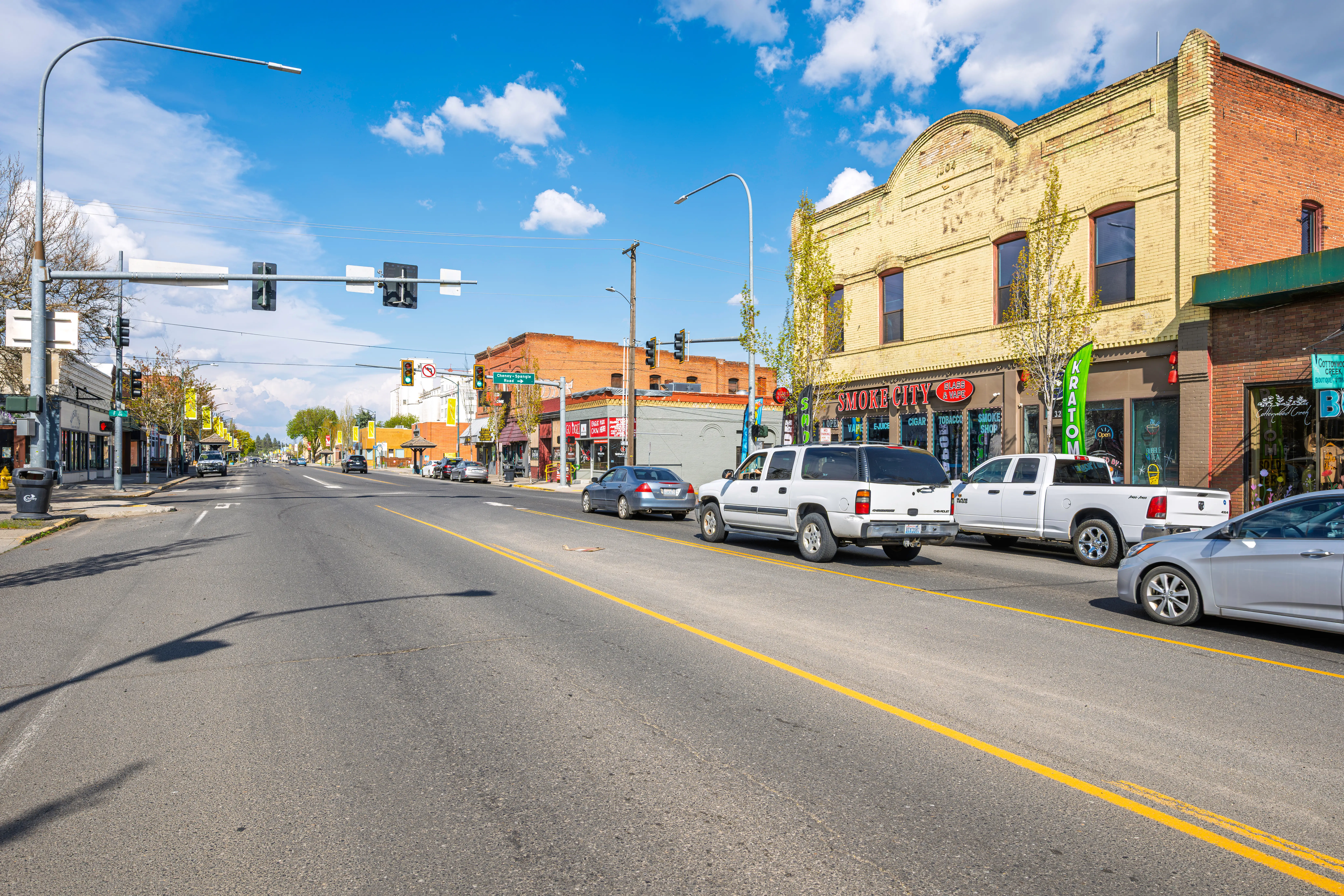
Downtown Cheney is compact and honest about what it is — not a bustling commercial district, but a functional small-town center with genuine character. Marketplace Bakery is a legitimate local institution. Capstone Coffee draws both students and residents. Cheney Lanes has been a gathering spot for years. What you won't find is a Trader Joe's, a major hospital, or a walkable variety of dining options. For full-service groceries, medical specialists, and larger retail, you're heading to Spokane — a fact that surprises some buyers who didn't fully internalize how small 12,360 people actually is.
The human friction moment most Cheney residents cite after six months: the semester-to-semester population swing is more disorienting than expected. In late August, traffic picks up, parking downtown gets competitive, and the general energy of the city shifts noticeably. By mid-December it quiets almost completely. For some buyers, this seasonal rhythm becomes a beloved feature of the town. For others — particularly those used to consistent urban energy — it reads as instability. Know which type you are before you buy.
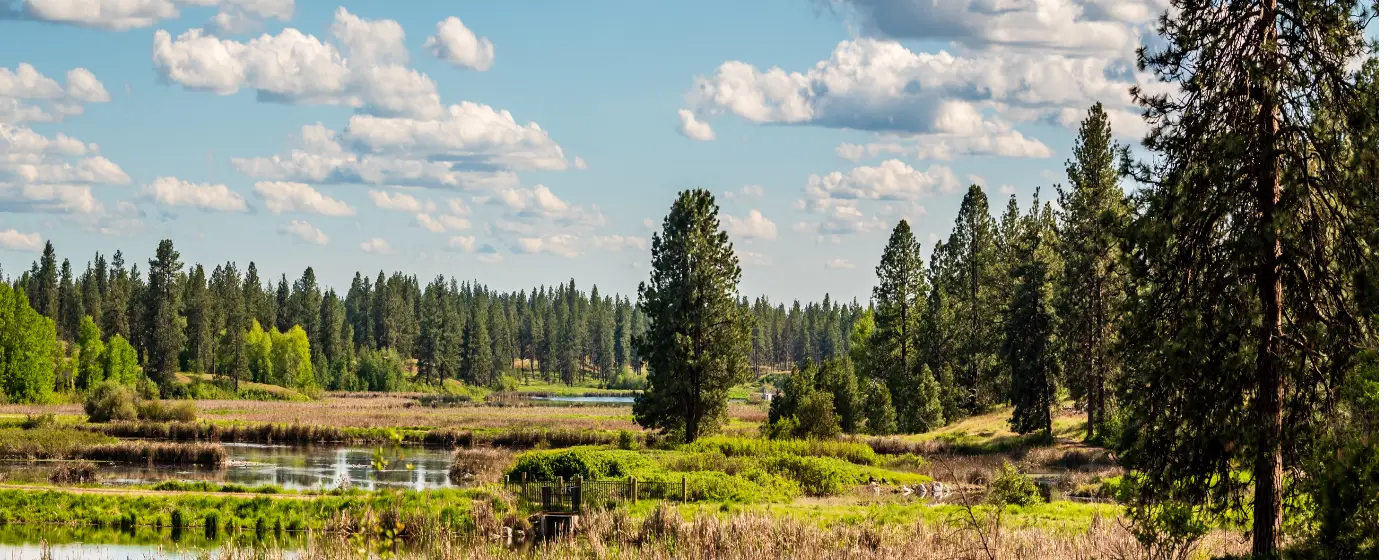
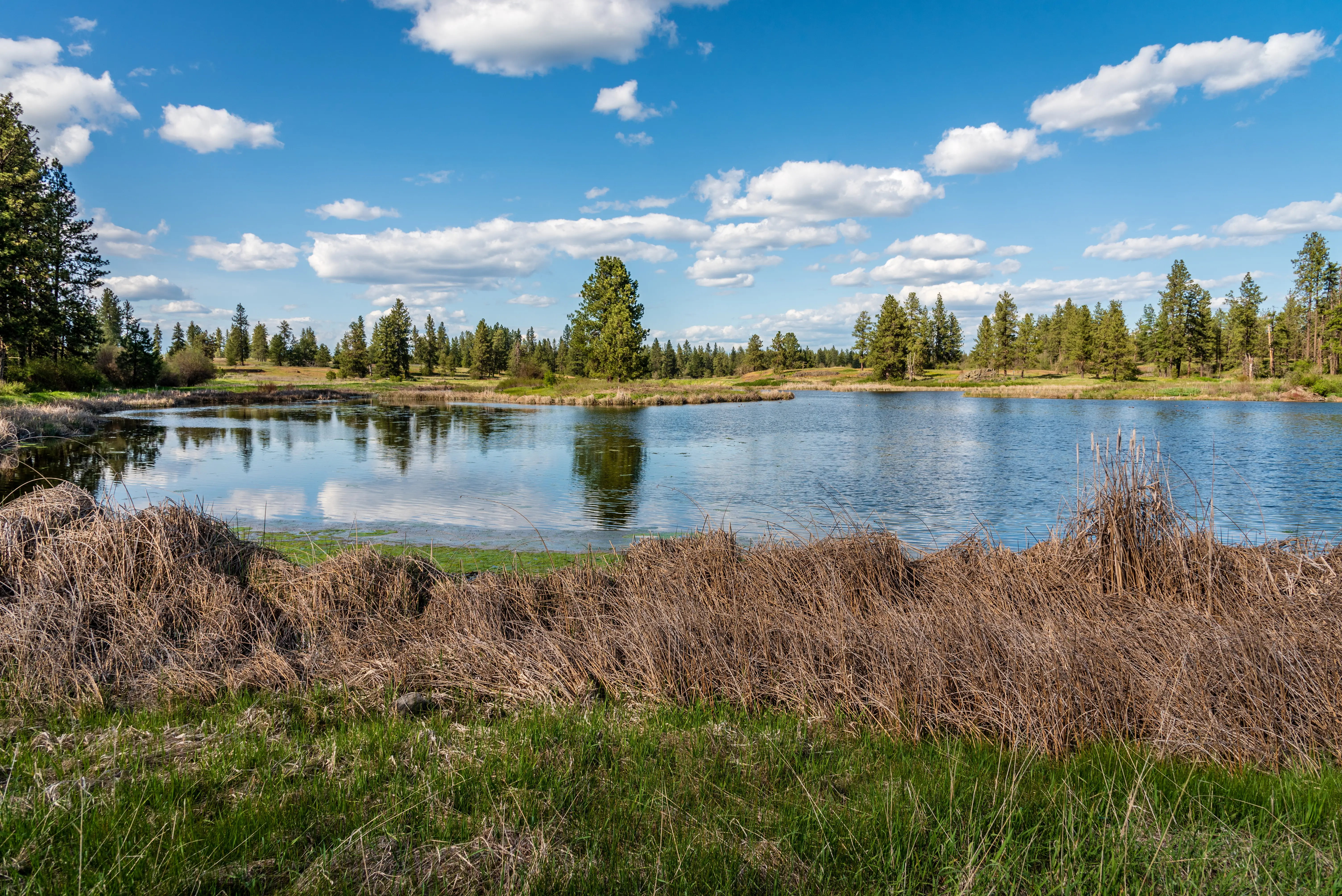
Turnbull National Wildlife Refuge is the most underrated amenity in the entire Spokane metro. Four and a half miles south of downtown Cheney, 23,000 acres of Channeled Scablands habitat open up — basalt outcrops, ponderosa pine stands, 130-plus marshes, and over 10 miles of hiking trails. Entrance is free. The Columbia Plateau Trail's Cheney Trailhead gives cyclists direct access into the refuge. Most Spokane residents have heard of Turnbull; Cheney residents can be there in 10 minutes on a Tuesday morning. That proximity is a genuine, daily-life advantage that buyers rarely price into their decision.
The affordability story holds up when you examine it closely. At a median sold price in the $415,000–$425,000 range and a property tax rate of approximately 1.04%, monthly ownership costs in Cheney sit meaningfully below comparable Spokane properties. Washington's lack of a state income tax amplifies that advantage further for buyers relocating from Idaho, California, or Oregon. The cost of living index runs roughly 8% below the Washington state average — a meaningful gap in a state where western Washington cities routinely run 20–40% above national averages.
The university's presence creates cultural dividends that a town this size would never otherwise support. EWU's Roos Field hosts NCAA Division I FCS football — the Eagles compete in the Big Sky Conference — and Reese Court basketball games draw genuine community energy. Running Start allows Cheney High School students to take college courses at EWU tuition-free, a benefit families with high-school-age kids consistently mention as a deciding factor. The combination of a 300-acre campus, NCAA athletics, and a functioning arts and theater scene (Stagewest Community Theatre has maintained consistent programming) makes Cheney's cultural calendar richer than the population number would suggest.
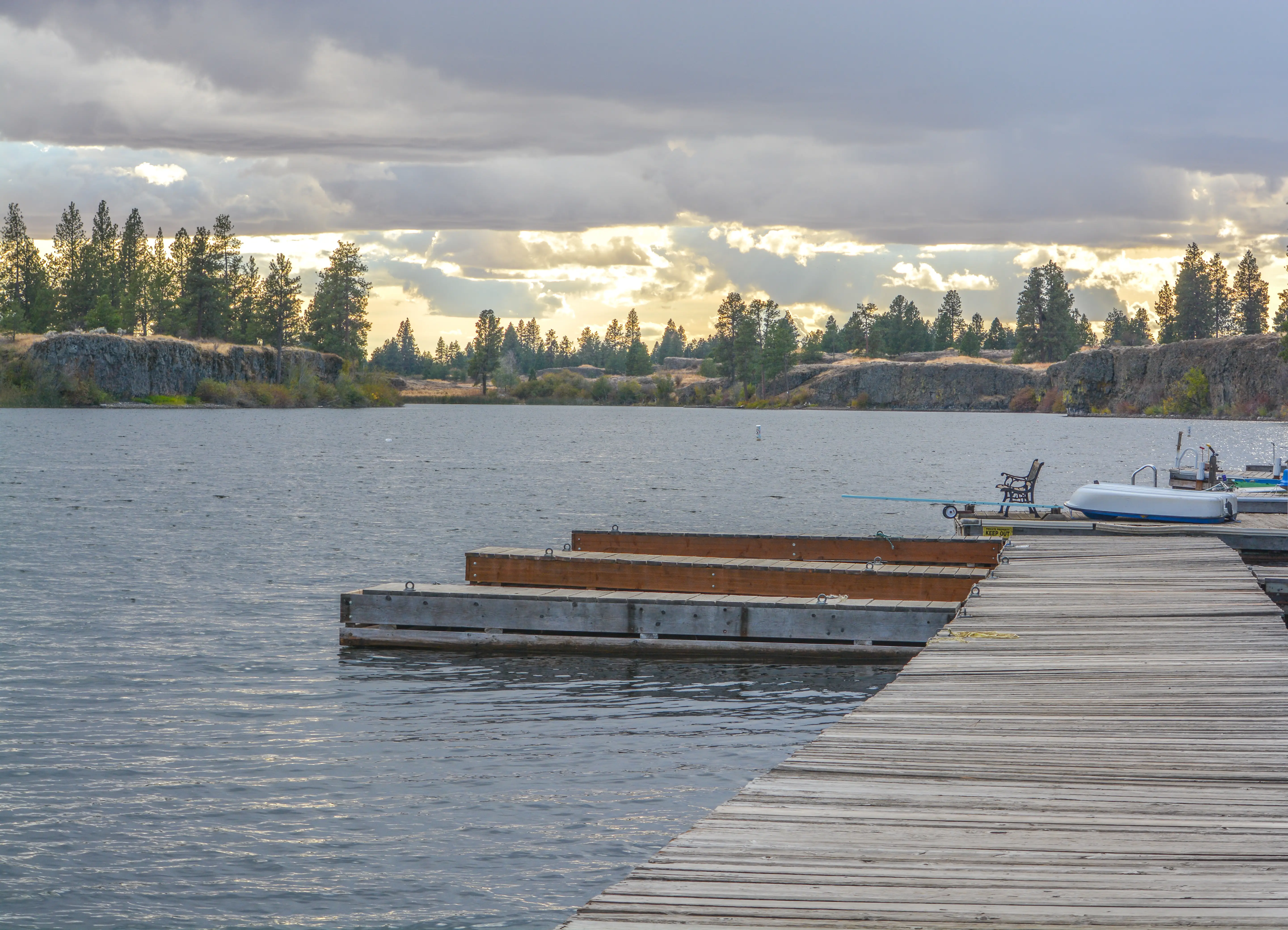
Cheney also attracts buyers who specifically want a smaller-city pace without giving up Spokane access. Fairways Golf Course is a local constant. Fish Lake Regional Park provides year-round biking and outdoor recreation infrastructure. The Cheney Historical Museum maintains the city's genuine sense of its own story — Cheney was established well before EWU arrived, and that older civic identity still runs through the community in ways that feel distinct from pure college-town culture. Longtime residents, EWU families, and new arrivals tend to coexist here with less friction than you'd expect.
The homeownership rate in Cheney sits at approximately 34.7% — one of the lowest ratios you'll find in any Washington city of comparable size. That number is almost entirely explained by the student rental market, but it has real implications for buyers. In the blocks immediately adjacent to campus, the majority of your neighbors will be renters cycling through on annual leases. Property maintenance standards vary. The street-level experience in those zones reflects a landlord-tenant market, not an owner-occupant community. This isn't a disqualifying fact, but buyers who don't map the rental concentration before making an offer commonly end up disappointed.
The poverty rate, commonly cited around 31%, is another figure that requires context before it scares anyone off. The overwhelming driver is the student population — full-time college students typically report minimal income regardless of their actual financial circumstances. The underlying permanent-resident income picture is more accurately reflected in the $54,503 median household income, which aligns roughly with regional averages when student households are set aside. Still, the service economy that emerges from a high-student, modest-income city means fewer upscale restaurants, less retail variety, and a commercial district calibrated to student spending rather than family-household spending.
Medical access is a real gap. Cheney has basic healthcare infrastructure — Community Integrated Services serves the area, and there are local clinics — but for anything beyond primary care, residents are driving to Spokane. The nearest major hospital systems are in Spokane proper, and that 25-minute drive becomes more consequential when you're the parent of a kid who just broke an arm, or when you're a retiree managing a chronic condition that requires specialist appointments. It's manageable; it's not nothing.
Why do people leave? The answer is almost always one of two things: the college-town energy that felt like a feature becomes a frustration (particularly for families who didn't anticipate how much the semester calendar would shape daily life), or career growth requires proximity to Spokane's full employment market in ways that make the commute feel like a tax they stop wanting to pay. The buyers who leave Cheney within three to five years often describe a gradual drift — the town felt perfect at first, then the limitations accumulated. The buyers who stay 10-plus years tend to be deeply tied to EWU, deeply invested in the outdoor recreation access, or deeply committed to the financial advantages of the market.
The blocks immediately surrounding EWU's campus offer the most walkable experience in Cheney — coffee shops, restaurants, and campus facilities within a short walk. Housing here skews toward older single-family homes and duplexes, many converted to rentals, with prices generally running $50,000–$75,000 below the city-wide median for comparable square footage. The honest tradeoff is noise, transience, and parking pressure during the academic year.
Best for: EWU staff, graduate students, or buyers who want maximum walkability and can tolerate college-town rhythms year-round.
The established residential blocks within a half-mile of downtown Cheney proper carry the city's most genuine small-town character — owner-occupants, established trees, and a neighborhood identity that predates the university's growth. City-wide median pricing applies here, in the $415,000–$425,000 range for typical single-family homes. The catch is that housing stock is older, and buyers should budget for deferred maintenance on properties that have been in families for generations.
Best for: Buyers who want to walk to Marketplace Bakery and Capstone Coffee and have neighbors who've lived on the block for 15 years.
South of the EWU campus toward the Turnbull Refuge access road, this corridor has seen new construction and infill over the past decade. Properties here offer more modern floor plans, slightly larger lots, and the most direct access to outdoor recreation assets. Pricing trends toward the upper end of the city-wide range. The tradeoff is that "walkable to downtown" is a stretch — you'll need a car for most errands.
Best for: Families with kids who prioritize newer construction, outdoor access, and quieter streets over proximity to downtown.
The neighborhoods west of downtown along the I-90 approach carry the most practical commuter orientation — easy freeway access, proximity to the Cheney interchange, and a mix of older ranch-style homes and newer construction. Pricing here often runs slightly below the city-wide median due to freeway proximity and less established streetscape. Buyers who are purely optimizing the Spokane commute tend to concentrate here.
Best for: Dual-income households maximizing commute efficiency who don't prioritize walkability to downtown Cheney.
East of downtown, quieter and more removed from the university's immediate influence, this area attracts longtime Cheney families and buyers who want the city's small-town character with less student foot traffic. Homes here are predominantly single-family, owner-occupied, and range from modest 1960s ranch-style to well-maintained mid-century two-stories. City-wide median pricing generally applies.
Best for: Buyers who want the most stable, owner-occupant-dominated neighborhood environment Cheney offers.

Cheney's location within the Inland Northwest gives it a surprisingly resilient real estate market, and where you land within the city genuinely shapes long-term value. Homes near Eastern Washington University tend to attract consistent buyer demand from faculty, staff, and families who want walkability and community energy. Properties close to Centennial Park and the Sutton Park area also move quickly — I've seen well-priced listings go under contract within days in those pockets. For most buyers relocating to Cheney, you're generally looking at options well under $400,000, though desirable homes at any price point don't sit long once they hit the market.
Before you fall in love with a house near Fish Lake Regional Park or anywhere else in Cheney, please talk to a lender first — not because it's a formality, but because your true monthly payment includes property taxes, homeowner's insurance, and any HOA dues on top of principal and interest. That full picture can look meaningfully different from what an online calculator shows. My honest advice is to build your search around a payment that feels comfortable, not the maximum you're approved for, so when the right home appears you're
| City | Best For | Home Price (approx.) | Commute to Spokane | Vibe |
|---|---|---|---|---|
| Cheney | Affordability + outdoor access + EWU proximity | $415,000–$425,000 | 25 min | College town with small-city roots |
| Airway Heights | Budget buyers, casino/retail employment | $350,000–$380,000 | 20 min | Developing exurb, less established feel |
| Medical Lake | Rural quiet, lower prices, small-town simplicity | $330,000–$370,000 | 30 min | Genuinely rural, limited services |
| Spokane Valley | Full suburban amenities, retail access | $390,000–$450,000 | 15–20 min | Suburban sprawl, strong retail corridor |
| South Hill (Spokane) | Top schools, established neighborhoods, full services | $480,000–$580,000 | 15 min | Spokane's premium residential tier |
| Four Lakes | Maximum rural quiet, very low prices | $280,000–$340,000 | 35 min | Rural hamlet, minimal services |
| Metric | Detail |
|---|---|
| Population | Approximately 12,360 (permanent residents); ~17,600 when EWU is in session |
| Median Home Price | $438,000 (CSV baseline); median sold range $415,000–$425,000 |
| Property Tax Rate | Approximately 1.04% |
| Median Household Income | $54,503 |
| Commute to Spokane | 25 minutes via I-90 |
| Violent Crime Rate | 3.7 per 1,000 residents |
| Property Crime Rate | 18 per 1,000 residents |
| School District | Cheney School District (B- rating) |
| Major Employers | Eastern Washington University, Cheney School District, Amazon, ADM, Community Integrated Services |
| State Income Tax | None |
EWU Eagle football at Roos Field is a Cheney tradition that transcends the university. On fall Saturdays when the Eagles host a Big Sky Conference opponent, downtown Cheney takes on a different energy entirely — parking fills early, local restaurants run specials, and the community-to-campus relationship becomes visibly tangible. It's not tailgate culture on the scale of a Pac-12 program, but it's genuinely fun and distinctly local. Residents who never attended EWU often become regular attendees simply because the games are accessible, affordable, and three minutes from their front door.
The Cheney Blackhawk Booster Club's annual craft show is one of those community events that tells you more about a town than any demographic report. Organized around Cheney High School athletics, it draws the kind of multigenerational, locally rooted participation that signals a genuinely intact civic culture — not just an event, but evidence that the permanent-resident community maintains its own identity independent of the university population. It's the kind of thing that gets quietly mentioned during neighbor introductions in October.
Turnbull's free access is a lifestyle asset locals actively use, not just a landmark they reference. On weekday mornings in spring and fall, you'll share the hiking trails with Cheney residents who make the 10-minute drive part of their regular routine — birding in the marshes, walking the accessible loops, cycling in from the Columbia Plateau Trail's Cheney Trailhead. The refuge's 130-plus wetlands draw migratory waterfowl in numbers that consistently surprise first-time visitors. Free entrance means there's no activation barrier — it's simply where people go.
What I would not do if moving to Cheney: I would not buy in the blocks immediately west and south of the EWU residence halls without walking those streets on a Thursday evening in October. The rental concentration in that zone is real, and the difference in streetscape character between those blocks and the established residential neighborhoods a half-mile away is significant. The price discount doesn't compensate for living in a corridor that functions primarily as student housing. Spend one evening mapping where the rental signage concentrates before you decide which neighborhood to target.
Local Expert Takeaway: If you're choosing between Cheney and Spokane's South Hill, the decision almost always comes down to whether the $60,000–$100,000 price gap is worth more to you than the South Hill's school infrastructure and retail access. For first-time buyers and Spokane commuters prioritizing outdoor recreation, Cheney makes a compelling case — but target the established residential blocks east of downtown and south toward Anderson Road, where owner-occupant concentration is highest. Avoid the campus-edge rental corridors unless you're specifically oriented toward the university community.
✅ Cheney's affordability is real — median sold prices in the $415,000–$425,000 range, no state income tax, and a 25-minute Spokane commute make this one of the most financially accessible entry points in the metro for buyers who don't need to be in Spokane proper.
⚠️ The college-town dynamic requires honest self-assessment — the EWU population shapes rental concentration, seasonal energy, and service-sector orientation in ways that suit some buyers perfectly and frustrate others within two years.
📍 Location within Cheney matters enormously — the difference between a campus-edge rental corridor and an established residential neighborhood two blocks away is larger than most out-of-town buyers expect. Tour specific blocks, not just the city in general.
Is Cheney a good place for families?
Cheney works well for families who are drawn to outdoor recreation, value affordability, and don't require the full suburban retail and medical infrastructure of a larger city. Turnbull National Wildlife Refuge, Fish Lake Regional Park, and EWU's athletic and cultural calendar give families with school-age children a genuinely rich activity ecosystem. The Cheney School District carries a B- rating, and EWU's Running Start program is a notable benefit for families with high-school-age students.
What is the crime rate in Cheney?
Cheney's violent crime rate runs approximately 3.7 per 1,000 residents, and property crime comes in around 18 per 1,000 — figures that are meaningfully influenced by the high-density student population in campus-adjacent zones. Established residential neighborhoods away from the university corridor tend to reflect a quieter safety profile, and many longtime Cheney residents describe the city as feeling genuinely safe in their day-to-day experience.
How does Cheney compare to Airway Heights and Medical Lake?
Airway Heights tends to attract buyers who prioritize price above all else and are oriented toward casino and retail employment along the US-2 corridor — it's less established as a community and carries a more transient residential character. Medical Lake offers even lower prices and more rural quiet, but with a 30-plus-minute Spokane commute and minimal services. Cheney sits above both in terms of community infrastructure, cultural amenities, and outdoor recreation access, while remaining below South Hill pricing — which is why it draws buyers who've specifically done the comparison work.
Explore the full Cheney series: The Ultimate Cheney Relocation Guide · Is Cheney Safe? · Cost of Living in Cheney · Best Neighborhoods in Cheney · Cheney Schools & Family Life · Cheney Youth Sports · Cheney Parks & Recreation · Retiring in Cheney · 1031 Tax-Deferred Exchange in Cheney · Cheney First-Time Homebuyers Guide · Cheney Down Payment Assistance Guide · Moving to Cheney from California