
Eastern Washington · Washington
Is Cheney Safe? Crime Rates, Safest Neighborhoods & Local Reality (2026)
Cheney doesn't have a crime problem so much as it has a perception problem. The headline numbers — a violent crime rate slightly above the national average, a property crime rate that ranks above most U.S. cities — look worse on paper than they feel on the ground. The reason is straightforward: Eastern Washington University enrolls roughly 12,000 students, nearly matching the city's permanent population. That concentration of transient young residents near the campus core distorts per-capita crime statistics in ways that don't reflect the experience of homeowners in the quieter residential corridors west and north of downtown.
What the numbers mean in daily life is more nuanced than any crime index will tell you. Property crime — auto break-ins, bike theft, opportunistic theft from unlocked cars — concentrates near the university district and the commercial stretch along First Street. Violent crime, while technically elevated relative to state averages, is more connected to the social dynamics of a college town than to the kind of street-level danger that might give a family pause. Residents in the northwest neighborhoods near Sutton Park and Fish Lake Road report a daily reality that feels thoroughly suburban and largely unremarkable.
This guide breaks down Cheney's crime statistics with the context they require, maps the city's safety landscape by neighborhood, and gives you the practical street-level knowledge that data aggregators miss. Whether you're choosing between Cheney and Airway Heights or deciding which side of the railroad tracks to buy on, you'll leave with a clear picture of what living here actually looks like.
FBI estimates for Cheney place the violent crime rate at approximately 3.7 per 1,000 residents and the property crime rate at roughly 18 per 1,000 — figures that land the city slightly above the national average on both measures but below Washington state's total crime rate by a meaningful margin. The state comparison matters here: Washington consistently ranks among the top three states nationally for property crime, meaning a city that clears the state average isn't exactly clearing a low bar. Still, Cheney's overall crime trajectory over the past 15 years has moved downward, and 2024 data suggests a roughly 10% drop in total incidents compared to the prior year.
The structural driver behind these numbers is EWU's campus presence. High-traffic corridors near the university — particularly around Patterson Street, the downtown First Street area, and the edges of campus where student housing meets commercial retail — account for a disproportionate share of reported incidents. Local police data suggests these areas see the heaviest concentration of property crime calls, while the residential quadrants further from campus operate at significantly lower risk levels. A family buying in the northwest part of the city is effectively living in a different safety environment than the one the citywide statistics describe.
Different data sources reach notably different conclusions about Cheney's relative safety, and the discrepancy comes down to methodology. Sites that calculate safety percentiles based on total crime counts against city population tend to score Cheney lower — partially because EWU's transient enrollment inflates the effective daytime population without being reflected in the official resident count used as the denominator. Sites that compare total crime rate against state and national rates show Cheney performing more favorably. Neither framing is dishonest; they're just measuring different things.
Local police data suggests Cheney recorded approximately 46 violent crimes in the most recent full reporting year, translating to a rate that runs roughly 3% above the national average and about 14% above Washington state's violent crime rate. For context, that's less than one violent incident per week across the entire city. The practical daily implication for most residents is minimal — violent incidents tend to cluster around dispute-driven situations near high-density student areas rather than random street crime, and the residential neighborhoods surrounding campus experience very little spillover.
Property crime at roughly 18 per 1,000 is the more relevant number for most buyers evaluating Cheney. Auto burglary and theft from vehicles dominate the property crime category here, and the pattern follows predictable geography: parking areas near campus, the strip along First Street, and spaces adjacent to larger commercial zones see the most activity. Leaving anything visible in a parked car near the university is the kind of habit that invites a broken window — a lesson most long-term residents learned quickly and adjusted to without much friction.
Residents and local data consistently identify the northwest section of the city as Cheney's safest corridor. Odds of property victimization in this quadrant run roughly 1 in 44, compared to 1 in 19 in the central neighborhoods closer to campus. The streets near Sutton Park and the residential grid west of Cheney-Spangle Road are owner-occupied, low-density, and far enough from the university's foot traffic that the college-town crime dynamic simply doesn't reach here. Families who prioritize a quiet evening walk without much incident risk tend to land in this part of the city.
Best for: Families and retirees who want the lowest practical exposure to Cheney's elevated headline crime rates.
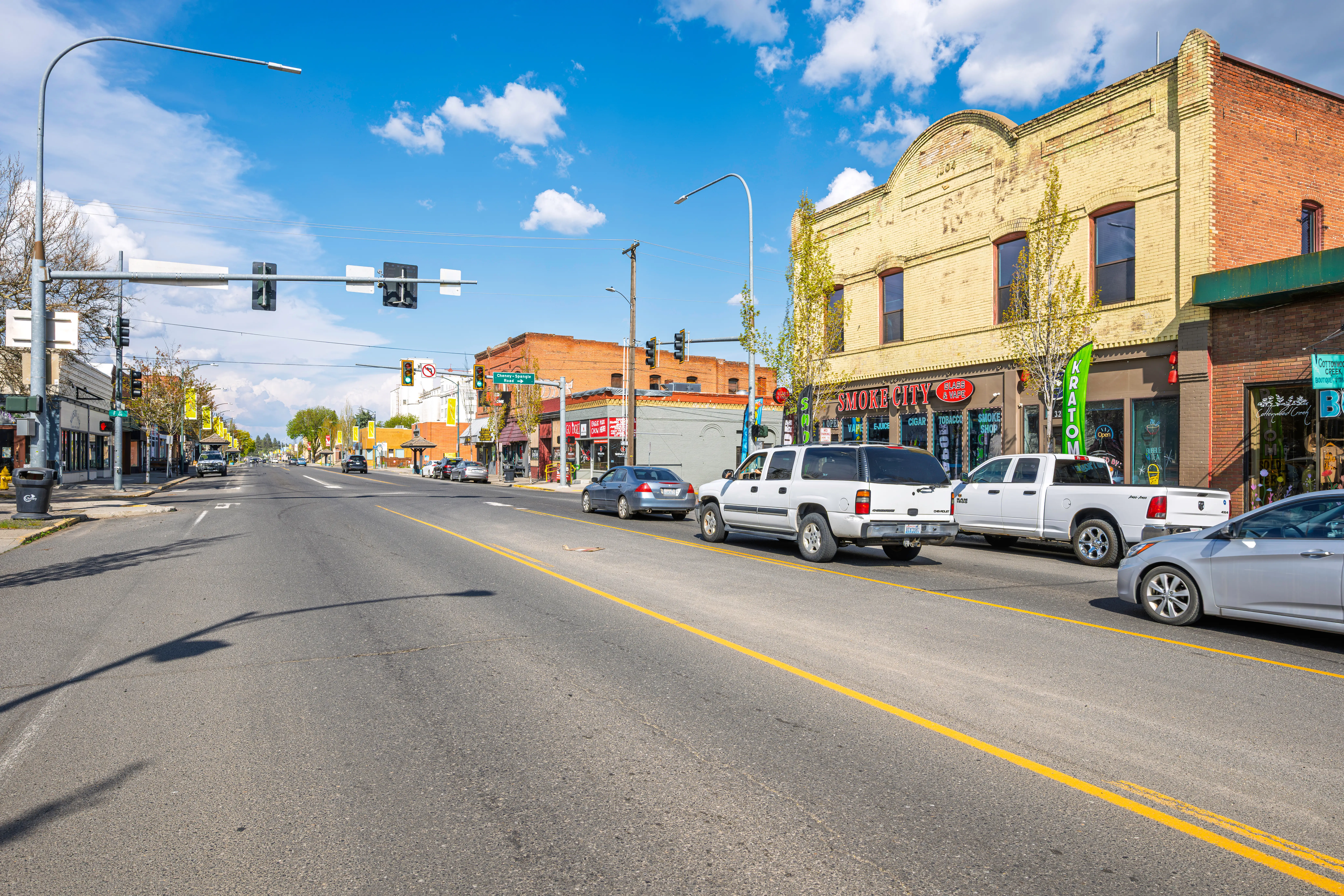
This is the part of Cheney where the crime numbers actually live. The commercial stretch along First Street — coffee shops, bars, and the retail mix that serves the student population — generates a higher call volume for both property incidents and disturbance-related responses than anywhere else in the city. It's not a place residents avoid, but it is a place where leaving valuables in a car or walking alone late at night carries more risk than it would in the residential outskirts. The concentration of activity here is what drives the citywide statistics upward.
Best for: Renters and EWU-adjacent residents comfortable with a more urban, college-town dynamic — not the first choice for buyers prioritizing low incident exposure.
The streets immediately surrounding Eastern Washington University — particularly the denser rental blocks along Patterson Street and the areas east of campus — share much of the incident profile of the downtown corridor. High renter turnover, low homeownership rates, and proximity to late-night student activity create conditions where petty property crime occurs more frequently than in other parts of the city. Long-term homeowners in these pockets often report relatively little personal impact, but the pattern in the data is consistent.
Best for: Buyers who want proximity to EWU and understand the trade-off in incident frequency.
The southeast portion of the city records the fewest total crime incidents in Cheney — roughly 11 annually based on available data, a number that reflects both lower density and greater distance from the campus core. The area is quieter and more rural in character than the northwest residential neighborhoods, with larger lot sizes and fewer commercial uses generating foot traffic. It's not as well-developed as the northwest in terms of neighborhood infrastructure, but the safety picture is about as clean as it gets within city limits.
Best for: Buyers prioritizing low-incident environments and comfortable with a more rural residential feel.
The neighborhoods surrounding Centennial Park sit in a middle-ground safety zone — more settled than the campus corridor but with some of the commercial adjacency that generates periodic property crime calls. The park itself is a heavily used community asset, which brings consistent foot traffic across daylight hours and contributes to natural surveillance in the surrounding blocks. Residents here report a generally comfortable environment, though auto break-ins in parking areas near the park surface occasionally in neighborhood forums.
Best for: Buyers who want walkable access to Cheney's main park and a community-feel neighborhood without paying a premium.
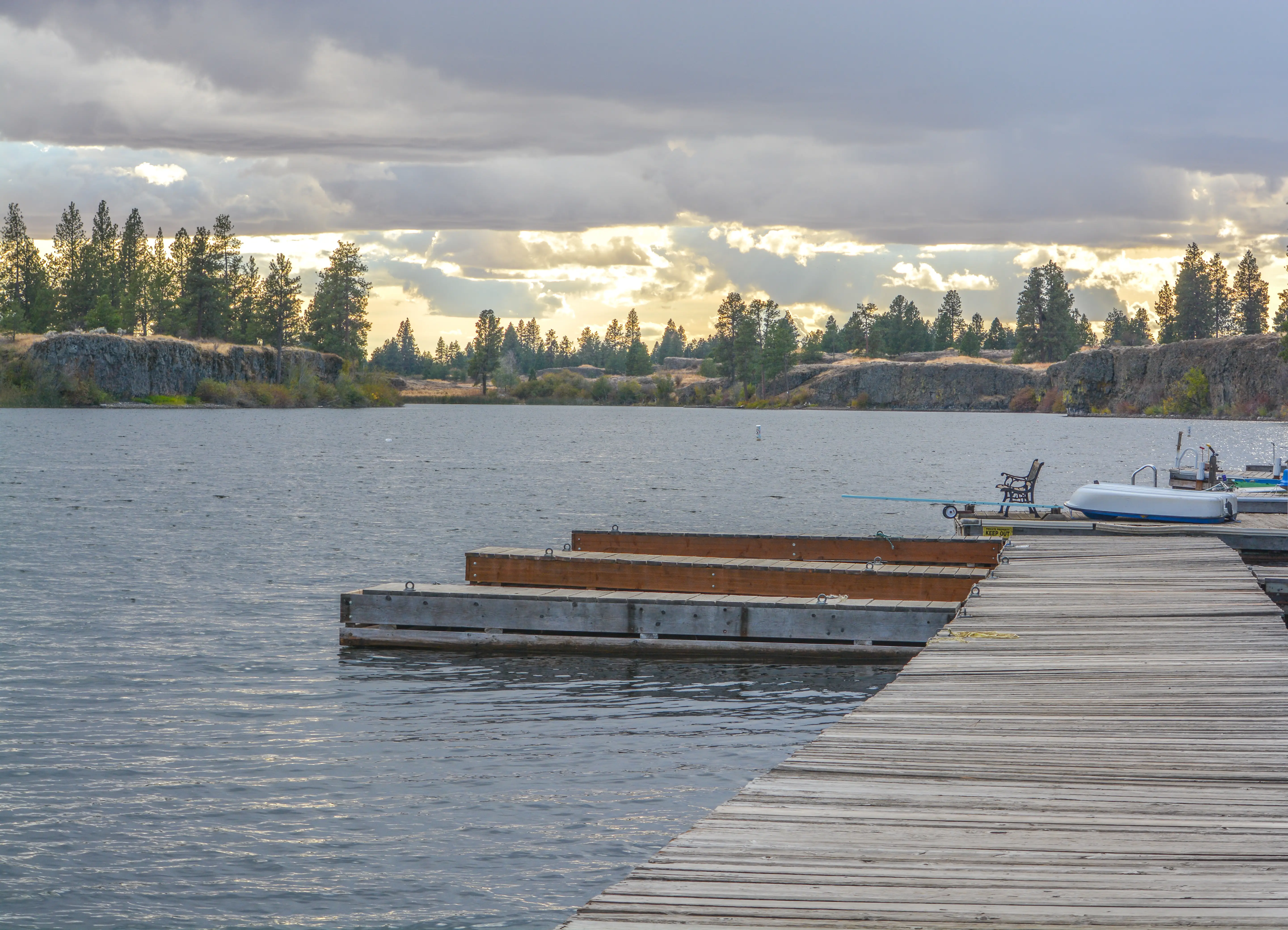
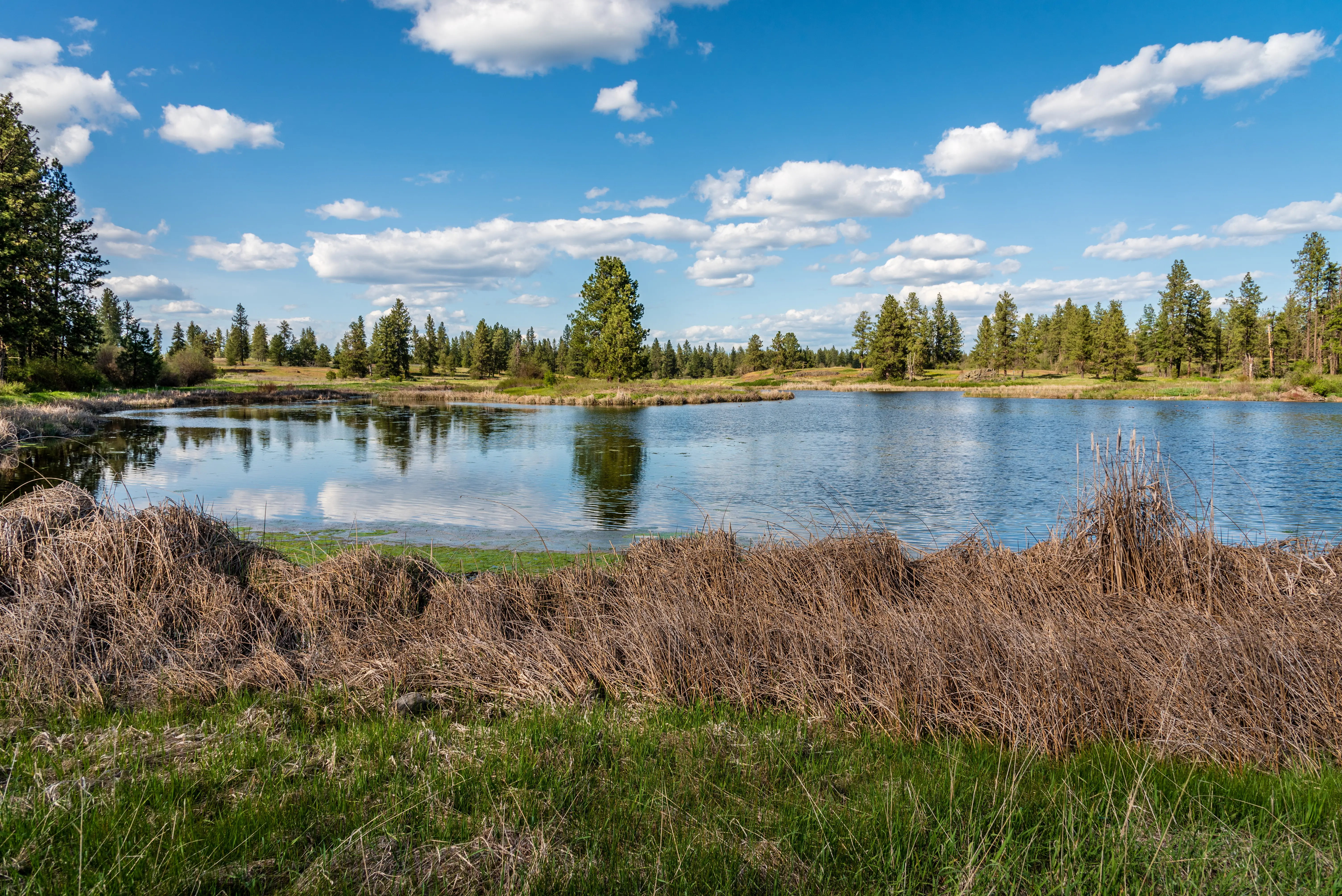
The western reaches of Cheney, stretching toward Fish Lake Regional Park, carry a low incident profile driven by distance from commercial density and a predominantly owner-occupied housing stock. This corridor connects to one of the area's signature outdoor amenities while remaining within the city's service boundary. It lacks the walkability of the downtown core, but residents consistently describe it as one of the more genuinely peaceful parts of the city — the kind of area where a safety concern rarely registers in daily life.
Best for: Outdoor-oriented buyers who want proximity to Fish Lake and Turnbull National Wildlife Refuge with minimal crime exposure.
| City | Violent Crime/1K | Property Crime/1K | Overall Safety Profile |
|---|---|---|---|
| Cheney | ~3.7 | ~18 | Moderate; college-town concentration effect |
| Spokane | ~9.0 | ~52 | Higher on both measures; larger urban risk profile |
| Airway Heights | ~5.2 | ~28 | Elevated; commercial corridor influences |
| Medical Lake | ~2.1 | ~12 | Lower overall; smaller, quieter community |
| Spokane Valley | ~4.1 | ~29 | Moderate; suburban with commercial corridors |
| Four Lakes | ~1.8 | ~8 | Very low; rural character, minimal commercial activity |

Proximity to Eastern Washington University and quieter residential pockets near Sutton Park and Centennial Park tends to support more stable long-term home values in Cheney — buyers focused on safety and livability naturally gravitate toward these areas, and that consistent demand keeps inventory tight. Well-maintained homes in these spots often move within days of listing, so hesitation can genuinely cost you the opportunity. Most single-family homes in Cheney remain accessible compared to larger Washington markets, with plenty of options available under $400,000 depending on size and condition.
What surprises a lot of buyers is how different their comfortable budget feels once you factor in the full monthly picture — property taxes, homeowner's insurance, any HOA dues, and the loan structure itself all stack on top of the principal and interest. Maximum approval and comfortable approval are two very different numbers, and understanding that distinction before you start touring homes saves a lot of frustration. If a place near Sutton Park or EWU catches your eye and fits your safety priorities, you want to be ready to move — not still sorting out your financing.
What apps like Citizen and NeighborhoodScout miss about Cheney is the temporal and geographic concentration of incident activity. The risk isn't evenly distributed — it's heavily weighted toward specific corridors during specific hours. The First Street commercial zone on a Thursday or Friday night, the parking lots adjacent to EWU's main campus buildings during high-enrollment periods, and the areas around Patterson Street after midnight collectively account for a disproportionate share of what gets counted in Cheney's annual crime totals. Residents who live outside these zones, or who simply keep reasonable hours and don't leave valuables visible in their cars, report an experience that feels much safer than the aggregate stats suggest.
What locals actually do isn't dramatically different from common sense anywhere in the Pacific Northwest. They lock cars fully, including in their own driveways — a habit born from the occasional opportunistic theft that moves through residential neighborhoods during overnight hours. They're aware that the blocks east of campus become more active after 10 PM on weekends, and they plan their late-night movements accordingly. None of this rises to the level of genuine daily anxiety for established residents; it's the kind of low-grade situational awareness that comes with living in any mid-sized college town.
The honest summary is that Cheney's crime statistics look worse than the lived experience of permanent residents because EWU's campus dynamics are embedded in the numbers. The northwest neighborhoods, the southeast quadrant, and the Fish Lake corridor operate at a safety level that many suburban buyers would find unremarkable — which is, in context, a genuine endorsement.
Local Expert Takeaway: If you're buying in Cheney, prioritize the northwest quadrant between Sutton Park and Cheney-Spangle Road for the lowest practical crime exposure. Avoid using citywide crime grade scores as your primary evaluation tool — they compress a meaningful geographic spread into a single letter. The blocks within a half-mile of EWU's core campus deserve more scrutiny than the residential outskirts, and the southeast and western edges of the city deserve more credit than the headline numbers give them.
✅ Cheney's safest areas are genuinely quiet. The northwest neighborhoods and Fish Lake corridor operate at incident rates well below the city average — buying in these zones means the headline crime statistics largely don't apply to your daily life.
⚠️ The college-town effect is real but localized. Property crime concentrates near EWU and the First Street corridor. This isn't a problem that moves freely through the city — it stays close to the campus and commercial core.
📍 Cheney is meaningfully safer than Spokane. On both violent and property crime measures, Cheney's rates are substantially lower than its larger neighbor to the east. For buyers weighing suburban Spokane against Cheney, the safety calculus often favors Cheney.
Is Cheney safe to raise a family?
Yes, particularly in the residential neighborhoods west and north of the EWU campus. Families in the northwest quadrant near Sutton Park and Centennial Park report a daily environment that feels consistent with a quiet Pacific Northwest suburb. The key is choosing a neighborhood with some distance from the university corridor, where the college-town crime concentration doesn't affect residential blocks.
What is the main crime concern in Cheney?
Property crime — specifically auto burglary and theft from vehicles — is the most common incident type reported in Cheney. It concentrates near the EWU campus, the First Street commercial corridor, and public parking areas. Residents who lock vehicles consistently and avoid leaving valuables visible find that this concern rarely materializes in practice.
How does Cheney compare to Spokane for safety?
Cheney runs notably lower than Spokane on both violent and property crime per capita. Spokane's violent crime rate is estimated at roughly 2.4 times Cheney's, and property crime in Spokane runs nearly three times higher. For buyers choosing between the two, Cheney offers a measurably lower risk environment — with the caveat that its internal geography matters and buying near campus changes the calculus.
Explore the full Cheney series: The Ultimate Cheney Relocation Guide · Is Cheney Safe? · Cost of Living in Cheney · Best Neighborhoods in Cheney · Cheney Schools & Family Life · Cheney Youth Sports · Cheney Parks & Recreation · Retiring in Cheney · 1031 Tax-Deferred Exchange in Cheney · Cheney First-Time Homebuyers Guide · Cheney Down Payment Assistance Guide · Moving to Cheney from California