
Eastern Washington · Washington
1031 Exchange & Investment Real Estate in Cheney (2026)
Not everyone reading this is a full-time real estate investor. A significant share of the people researching 1031 exchanges into Cheney, Washington right now are California homeowners who finally sold — a Bay Area bungalow, an Inland Empire rental, a Sacramento duplex they held for fifteen years — and are sitting on a capital gain large enough to demand a serious tax strategy. Cheney is worth a serious look as a replacement property market because it checks the boxes that matter most for a durable rental hold: a captive renter population anchored by a 10,000-student university, prices that allow meaningful cash-on-cash returns without requiring leverage, and a state tax structure that meaningfully improves net yield compared to California.
The Cheney rental market is structurally different from most small cities its size. With roughly 69% of households renter-occupied — one of the highest renter-to-owner ratios you'll find in Eastern Washington — demand isn't seasonal or speculative. Eastern Washington University enrolls over 10,000 students annually, the majority full-time, and that population needs off-campus housing year-round, including graduate students whose enrollment has been growing over the past decade. The property types that trade most often as investment vehicles here are duplexes, triplexes, fourplexes, and single-family homes within a few blocks of campus — precisely the asset class that fits most 1031 exchange scenarios.
This guide walks through the mechanics of a 1031 exchange, the specific property types and cap rates available in Cheney's 2026 market, how Washington's tax advantages compare to California, what out-of-state landlords consistently underestimate about managing property here, and a due diligence checklist designed for investors working under a 45-day identification clock.
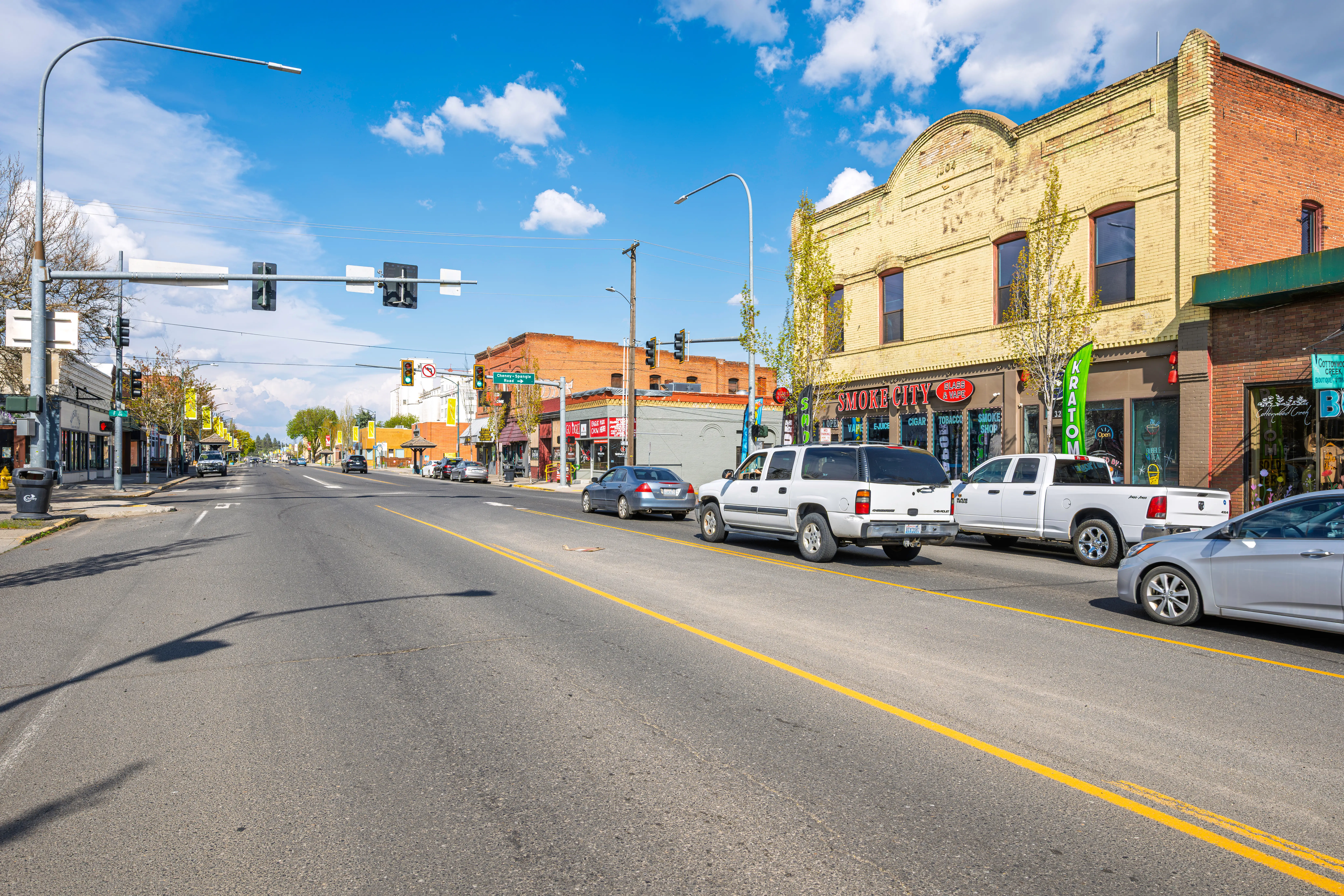
The core of a 1031 exchange is straightforward: sell investment property, defer the capital gains tax, and reinvest the proceeds into a like-kind replacement property. "Like-kind" is broader than most people realize — any real property held for investment qualifies, which means you can sell a commercial building in Oakland and buy a duplex in Cheney without any issue. The IRS cares about intent, not property type.
The timelines are the non-negotiable part. From the day you close on your relinquished property, you have 45 days to formally identify your replacement property and 180 days to close on it. The 45-day identification window is where most deals fall apart — not because investors can't find properties, but because they haven't pre-positioned themselves before the clock starts. Identification must be submitted in writing to your qualified intermediary, who holds the exchange funds and cannot release them to you directly at any point during the transaction.
The boot trap catches investors who don't fully reinvest. If your net sale proceeds were $800,000 and you only reinvest $720,000, the $80,000 difference — the "boot" — is taxable in the year of the exchange. The same applies if you take cash out at closing or fail to assume debt equal to or greater than what you're leaving behind. Work with a qualified intermediary before you list your relinquished property, not after.
Sold prices in Cheney ranged from approximately $373,000 to $425,000 across 2025 transactions, depending on the quarter. The median listing price has climbed toward $470,000 in early 2026, but the gap between list and sold price is real — expect negotiation room, particularly on properties that have been sitting longer than 50 days. The market absorbed 296 residential sales over the past 12 months, with homes averaging around 54 to 57 days on market, which is notably longer than the frantic pace of 2022–2023.
For 1031 buyers, the small multifamily segment is the most active investment-grade category. As of late 2025, roughly seven multifamily properties were actively listed in Cheney, priced between $349,900 and $710,000, with an average of 36 days on market before selling — significantly faster than single-family inventory. A fully occupied fourplex near EWU and a 2022-built duplex with two three-bedroom units both represent the kind of turnkey, occupied assets that work well for an investor on a 45-day clock.
| Property Type | Typical Price Range | Est. Cap Rate | Avg Days to Close |
|---|---|---|---|
| Single-Family Rental (SFR) | $350,000–$450,000 | 4.2%–5.2% | 50–60 days |
| Duplex | $400,000–$560,000 | 5.5%–6.5% | 35–45 days |
| Triplex / Fourplex | $500,000–$710,000 | 6.0%–7.5% | 30–40 days |
| Small Commercial / Mixed-Use | $600,000–$1,200,000 | 5.5%–7.0% | 45–65 days |

The math is simple once you run it. A California investor selling a property with $900,000 in equity faces a federal capital gains bill that can exceed $180,000 — before California's 13.3% top bracket takes its share. Rolling those proceeds into Cheney real estate doesn't just defer the tax; it repositions the capital into a market where that same $900,000 can acquire multiple income-producing properties outright.
A Bay Area investor who sold a rental that's appreciated to $1.4 million can likely acquire a duplex near EWU and a standalone single-family rental in Cheney without carrying a mortgage — a scenario that's nearly impossible within the Bay Area itself. The price delta is stark: what buys a one-bedroom condo in San Jose buys a fully occupied fourplex in Cheney. Gross rental yields in the Bay Area commonly run 2–3%; Cheney multifamily typically underwrites at twice that.
Los Angeles and Orange County investors are increasingly familiar with the landlord-tenant dynamics of dense urban markets — rent control, extended eviction timelines, and complex local ordinances. Washington's rental regulations are notably more balanced than California's, though the state did introduce a rent increase cap in 2025 (more on that in the management section). The cost-of-entry comparison is similar: a mid-tier LA rental might sell for $800,000–$1.1 million, enough to buy a portfolio of two or three Cheney properties.
Sacramento and Inland Empire investors tend to be more sensitive to gross rent multipliers and cash-on-cash returns than Bay Area sellers, who are often prioritizing capital preservation over yield. Cheney's price points — median sold prices in the $370,000–$425,000 range — feel accessible to this investor profile, and the Eastern Washington market dynamic (college town, not tech-driven) is a recognizable model for anyone who's owned near UC Davis or Cal Poly Pomona.
Washington's most significant advantage for rental investors is one that doesn't appear on a cap rate spreadsheet until you actually model net income: no state income tax. California's top bracket sits at 13.3%, meaning a California landlord netting $40,000 annually in rental income sends more than $5,000 of it to Sacramento. A Washington-based landlord keeps the entire amount.
| Tax Item | California | Washington |
|---|---|---|
| State income tax on rental income | Up to 13.3% | None |
| Property tax rate on new purchase | ~1.1–1.2% (Prop 13 erodes over time) | ~1.04% (Spokane County) |
| State sales tax | 7.25–10.75% | 6.5% + local (Cheney ~8.9%) |
| Long-term capital gains | Up to 13.3% state rate | 7% state tax on gains over $262,000/year |
| Annual rent increase cap | No statewide cap (local varies) | 7% + CPI, or 10%, whichever is lower |
One structural tax consideration that doesn't reset in a 1031: your depreciation basis carries over from the relinquished property, not the full purchase price of the replacement. This is worth a specific conversation with your CPA before closing, because it affects your year-one depreciation deduction. Investors who want the income without the active management burden should also ask their exchange intermediary about Delaware Statutory Trusts as a passive 1031-qualifying vehicle — relevant if the replacement property deadline is tight and you haven't identified a direct purchase.

When you're executing a 1031 exchange in Cheney, location within the city genuinely shapes how well your replacement property performs over time. Rentals near Eastern Washington University stay in high demand, with student and faculty tenants creating consistent turnover cycles that keep vacancy low. Properties close to Fish Lake Regional Park and Sutton Park attract longer-term tenants who value the outdoor access and quieter neighborhood feel. Desirable investment properties here — many priced under $400,000 — move faster than most investors expect, and hesitating even a few days can mean losing a solid candidate to another buyer during your exchange window.
That 45-day identification deadline in a 1031 exchange makes lender preparation even more critical than in a typical purchase. Before you tour anything, you need a clear picture of your full monthly carrying cost — loan payment, property taxes, insurance, and any HOA dues — not just the purchase price. I always encourage investors to build around a comfortable budget rather than maximum approval, because cash flow is what makes an investment property actually work. Being fully pre-approved before your exchange clock starts running gives you real negotiating power when the right property appears.
Washington's landlord-tenant law shifted meaningfully in 2025. House Bill 1217, effective May 7, 2025, introduced a statewide rent increase cap: landlords may not raise rent during the first 12 months of a tenancy, and annual increases thereafter are capped at 7% plus inflation or 10%, whichever is lower. For 2026, the Washington Department of Commerce set the maximum allowable increase at 9.683%. Required notice before any rent increase is now 90 days. This is not rent control in the California sense, but it is a material change from Washington's previously uncapped environment, and out-of-state investors who underwrote Cheney deals before 2025 should update their models.
For an out-of-state owner, professional property management is less optional than most investors want to admit. Local management companies serving the Spokane/Cheney corridor — including firms like T&L Rentals and others operating in the EWU student housing market — typically charge 8–10% of gross monthly rent, with leasing fees on top. For a fully occupied fourplex generating $6,000/month, that's $480–$600/month off the top, before maintenance reserves. The math still works; it just needs to be in the underwriting from day one.
What out-of-state owners most commonly underestimate is the EWU lease cycle. Student-heavy units turn over in May and June, not year-round. Properties that aren't re-leased by April risk sitting vacant through the summer — a 2–3 month gap that destroys annual yield on a tight-margin asset. A local property manager who actively markets spring leases starting in January is worth the fee.
| Item | What to Verify | Local Resource |
|---|---|---|
| Title search | Clean title, no liens, judgment issues | Spokane County Auditor; local title company |
| Sewer / septic status | City sewer connection vs. septic (older rural parcels) | City of Cheney Public Works |
| Flood zone status | FEMA flood map check — Cheney has low flood risk generally | FEMA Flood Map Service Center |
| Rental permit requirements | City of Cheney business license for rental activity | City of Cheney Community Development |
| HOA restrictions on rentals | Some newer subdivisions restrict STR or annual rental terms | HOA governing documents |
| Zoning / ADU potential | Washington has strong ADU-permitting laws — verify parcel zoning | City of Cheney Planning Department |
| Current lease status | Month-to-month vs. fixed term; EWU academic calendar alignment | Request from seller at offer |
| Tenant screening / payment history | Current rent rolls, payment ledger, deposit amounts held | Request 12 months of ledger |
| Deferred maintenance inspection | Roof, HVAC, foundation — older homes near campus can carry significant deferred cost | Hire a local inspector pre-offer |
| School district confirmation | Cheney School District serves the city — relevant to non-student tenant pool | Cheney School District |
| Short-term rental ordinances | Cheney has not implemented STR licensing but verify current status | City of Cheney Municipal Code |
| Property management referral | Verify a local PM is willing to take the property before closing | Interview 2–3 firms before offer acceptance |
| Title company recommendation | Use a Spokane County-based title company familiar with EWU-area transactions | Request referral from your QI |
| Environmental / soil issues | Cheney sits near former agricultural land — verify no environmental flags | Washington Dept. of Ecology CLARC database |
| Insurance quote | Student-occupied properties may require non-standard landlord policy | Get quote before removing contingency |

Local Expert Takeaway: The single most common mistake California investors make entering the Cheney market is underwriting a single-family rental at a $1,700–$1,800/month rent figure and declaring it cash-flow positive — without accounting for the EWU lease cycle, which can leave that property vacant for two to three months if the property manager misses the spring leasing window. Stick to duplexes and fourplexes within a 10-minute walk of campus, budget a 90-day vacancy reserve into your initial capitalization, and hire a local property manager before you close — not after.
✅ Cheney's 69% renter-occupied rate and EWU's 10,000+ student enrollment create structurally durable rental demand — one of the strongest fundamentals any 1031 replacement market can offer at this price point.
⚠️ Washington's 2025 rent increase cap (HB 1217) limits annual increases to 7% + CPI or 10%, whichever is lower — underwrite with the current 9.683% ceiling, not unlimited upside.
📍 Small multifamily near EWU moves in 30–40 days — pre-position your financing and due diligence team before the 45-day identification window opens, not after.
Does a 1031 exchange work for out-of-state property?
Yes, a 1031 exchange has no geographic restriction on either the relinquished or replacement property — you can sell in California and buy in Washington with full 1031 treatment. The requirement is that both properties be held for investment or productive use in a trade or business, which a Cheney rental property satisfies. Your qualified intermediary can be based anywhere as long as they hold the funds according to IRS requirements.
What is the cap rate on rental property in Cheney?
Cap rates in Cheney vary by property type. Single-family rentals typically underwrite in the 4.2%–5.2% range at current market rents and prices. Duplexes and small multifamily near EWU generally pencil at 5.5%–7.5%, depending on condition, occupancy, and proximity to campus. No Cheney-specific published cap rate data exists from major commercial data providers — these ranges are estimated from regional class benchmarks applied to local rents and prices.
Do I need a local property manager for a 1031 investment in Washington?
For out-of-state owners, professional management is strongly advisable rather than optional. The EWU lease cycle creates a concentrated turnover period in May and June that requires active local marketing starting in January to avoid summer vacancies. Management fees in the Cheney market run 8–10% of gross monthly rent, which should be baked into your underwriting from the start — not treated as an optional add-on after closing.
Explore the full Cheney series: The Ultimate Cheney Relocation Guide · Is Cheney Safe? · Cost of Living in Cheney · Best Neighborhoods in Cheney · Cheney Schools & Family Life · Cheney Youth Sports · Cheney Parks & Recreation · Retiring in Cheney · 1031 Tax-Deferred Exchange in Cheney · Cheney First-Time Homebuyers Guide · Cheney Down Payment Assistance Guide · Moving to Cheney from California