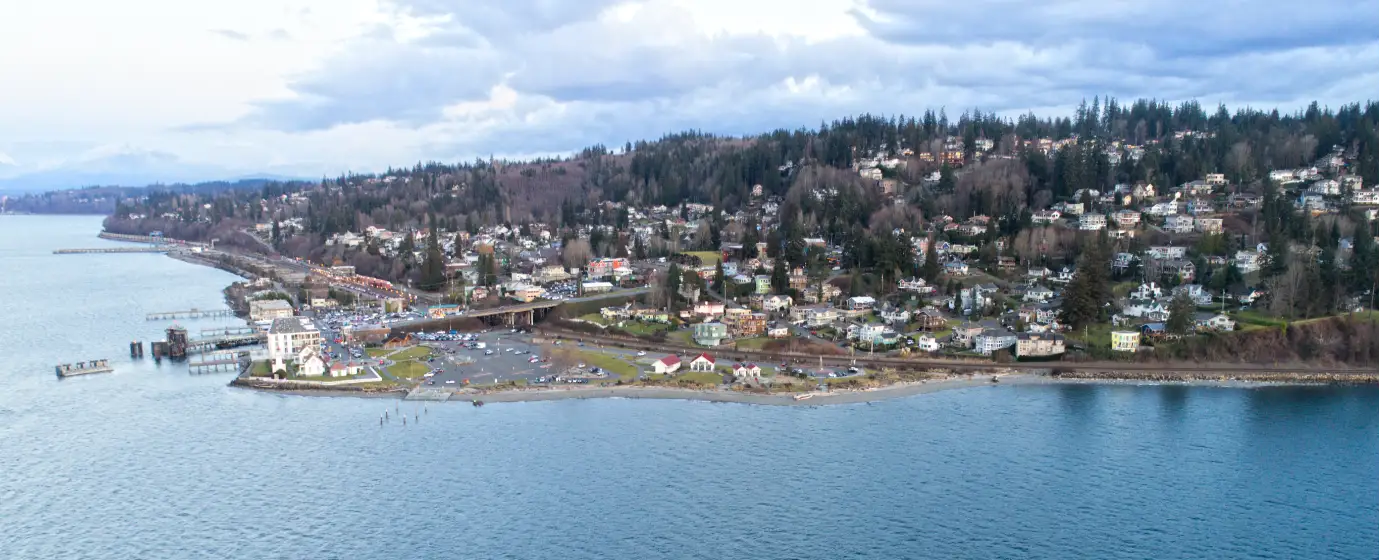
Puget Sound · Washington
Cost of Living in Mukilteo: Housing, Taxes, Utilities & Lifestyle (2026)
Mukilteo has a way of surprising people who haven't looked closely at the numbers. The city sits on a bluff above Puget Sound, draws Boeing engineers and Amazon commuters in equal measure, and consistently attracts buyers who assume that living north of Seattle means living cheaper. It doesn't — not here. With a cost of living index running roughly 70% above the national average, Mukilteo prices more like an affluent Seattle neighborhood than a Snohomish County suburb.
What shapes that cost picture is mostly housing. The median sold price has been running between $910,000 and $967,000 depending on the measurement window, and the entry point for a detached single-family home with any meaningful square footage starts well above $700,000. The location premium is real: water views, walkable access to the ferry terminal, and one of the stronger school districts in Snohomish County all push prices upward. But the rest of the budget — utilities, groceries, healthcare — lands in a more manageable range than many buyers expect.
This guide breaks down what it actually costs to live in Mukilteo in 2026: what the housing market looks like across price tiers, what renting costs in different parts of town, how property taxes work, and what a realistic monthly budget looks like for a household buying at the median. If you're weighing Mukilteo against Edmonds, Mill Creek, or Lynnwood, the comparison table in section seven will help you see where the real dollar differences land.

Mukilteo's nominal property tax rate is 0.93% of assessed value — below the Snohomish County average of 1.09%, which is one of the quiet financial advantages of buying here versus in unincorporated county areas. On a home assessed at the median, that translates to a property tax bill in the range of $5,300 to $5,800 annually. Washington State's 1% annual levy limit caps how fast that bill can grow year over year, which provides meaningful budget predictability compared to states without such constraints. Homeowners aged 61 and older may qualify for Washington's senior property tax exemption program, which can freeze assessed values or reduce tax liability depending on household income — worth a conversation with the Snohomish County Assessor's office if you're approaching or in retirement.
Mukilteo's rental market skews toward single-family home leases rather than large apartment complexes, which is one reason the inventory is consistently thin. The city's ownership rate runs around 68%, leaving roughly 32% of households as renters — a smaller renter pool than you'd find in Everett or Lynnwood, and one that competes for limited turnover stock.
| Unit Type | Average Monthly Rent |
|---|---|
| Studio | $1,799 |
| 1-Bedroom Apartment | $2,859 |
| 2-Bedroom (apartment/condo) | $2,600–$3,100 |
| Single-Family Home Lease | $3,200–$3,900+ |
| Paine Field-Lake Stickney (1–2 BR) | $1,831 |
| Harbour Pointe (2 BR condo/apt) | $2,600 |
One of the genuine budget bright spots in Mukilteo is utilities. While housing costs run nearly three times the national index, the utilities index sits around 94 — meaning the typical household actually spends slightly less than the national average on electricity, gas, and water combined. Monthly energy bills average around $220, which is reasonable for a Pacific Northwest home with standard heating and cooling demands. Puget Sound Energy handles electricity and natural gas for most of the city, and the mild marine climate keeps air conditioning costs minimal for the majority of the year.
Transportation is a different story. Mukilteo is comfortably car-dependent, and daily expenses reflect that. Gas prices in the area typically run around $4.11 per gallon — higher than the national average — and transportation costs broadly run about 34% above the U.S. norm. The commute to Seattle averages 35 minutes on SR-99 or I-5, though peak-hour backups on I-5 through Lynnwood can extend that meaningfully on bad days. Community Transit's Swift Blue Line and local routes serve some of the corridor, and the Mukilteo ferry terminal provides a scenic alternative crossing to Whidbey Island — though it's not a practical daily Seattle commute option for most workers.
Grocery access is reasonable rather than exceptional. Mukilteo itself has limited in-city grocery infrastructure, so most residents shop in neighboring Everett or Lynnwood — both a short drive up or down I-5. Everyday grocery prices in the area run about 4% below the national average, which is a modest offset against the higher housing and transportation costs. A gallon of milk runs around $5.27, a dozen eggs around $5.21, and ground beef closer to $6.44 per pound. Healthcare costs run approximately 20% above the national average — doctor visits around $184, dental visits around $148 — which is worth factoring into any budget built around out-of-pocket medical expenses.

| City | Median Home Price | Property Tax Rate | Commute to Seattle | School Rating | Walkability |
|---|---|---|---|---|---|
| Mukilteo | ~$910,000–$967,000 | 0.93% | ~35 min | B+ | Low |
| Edmonds | ~$875,000–$950,000 | ~1.05% | ~35–40 min | B+ | Moderate |
| Everett | ~$550,000–$625,000 | ~1.05% | ~40–45 min | B- | Moderate |
| Lynnwood | ~$650,000–$725,000 | ~1.00% | ~30–35 min | B | Low-Moderate |
| Mill Creek | ~$800,000–$875,000 | ~1.00% | ~40 min | A- | Low |
| Bothell | ~$875,000–$975,000 | ~1.00% | ~35–40 min | A | Low-Moderate |

Mukilteo's neighborhoods don't all behave the same way in the market, and that matters when you're thinking about long-term value. Waterfront-adjacent areas like Possession Bay and Boulevard Bluffs tend to hold their appeal strongly over time, while established communities like Harbour Pointe offer a more accessible entry point — often with homes priced under $750,000 — though inventory moves quickly there too. In desirable pockets of Old Town Mukilteo, well-priced homes routinely see multiple offers within days, so understanding where you want to be before you start shopping gives you a real advantage.
Before you tour a single home, it's worth sitting down with a lender to understand what your full monthly payment actually looks like — not just principal and interest, but property taxes, homeowner's insurance, any HOA dues, and how your loan structure affects all of it. Your comfortable number and your maximum approval are rarely the same figure, and knowing the difference ahead of time keeps you from falling in love with a home that quietly stretches your budget. Being pre-approved and payment-aware means you can move with confidence when the right place shows up.
This table reflects a household purchasing at approximately $950,000 with 10% down, financed over 30 years at a current rate near 6.75%.
| Expense Category | Estimated Monthly Cost |
|---|---|
| Mortgage Principal & Interest | $5,550–$5,800 |
| Property Taxes (0.93%) | $735–$740 |
| Homeowner's Insurance | $150–$200 |
| HOA (if applicable) | $0–$350 |
| Utilities (electricity, gas, water) | $220–$280 |
| Groceries (family of 4) | $1,100–$1,300 |
| Transportation (2 cars, gas, maintenance) | $800–$1,100 |
| Healthcare (out-of-pocket avg) | $400–$600 |
| Childcare / School Activities | $500–$1,200 |
| Dining Out & Entertainment | $400–$700 |
| Estimated Monthly Total | $9,855–$12,270 |
Washington State's tax structure is one of the more buyer-friendly in the country for high-income households — there is no state income tax. That distinction matters enormously if you're relocating from California, Oregon, or another income-tax state. A household earning $180,000 moving from California to Mukilteo is effectively receiving a raise of $10,000 to $15,000 annually in state tax savings alone, which meaningfully improves the true affordability picture even at these home prices.
The trade-off is a higher sales tax. Mukilteo sits in Snohomish County with a combined state and local sales tax rate of approximately 10.6%, which applies to most retail purchases, vehicles, and services. Washington also levies a Real Estate Excise Tax (REET) on home sales — paid by the seller — which is graduated and can run 1.1% to 3.0% depending on sale price. For buyers, the most relevant tax at purchase is the mortgage recording and associated transaction costs, not the REET itself.
For residents 60 and older, Washington offers a property tax deferral program that allows qualified homeowners to defer property taxes until the property is sold, providing meaningful cash-flow relief during retirement years. The senior exemption program — available at 61 and above — can also reduce assessed value for income-qualifying households. These programs are administered through the Snohomish County Treasurer and are underutilized by residents who don't realize they qualify.

Local Expert Takeaway: The buyers who come out ahead in Mukilteo are the ones who understand the tax math before they make an offer. Washington's no-income-tax advantage is real and often underweighted in relocating households' budgets — especially for Boeing engineers and remote tech workers earning $150,000 or more. On the housing side, don't let the Zillow index anchor your expectations. MLS sold data shows the market trading closer to $950,000–$967,000 right now, and Old Town waterfront is a completely separate pricing category that can double that figure. If your budget is closer to $700,000, focus on the Harbour Pointe condo inventory and Paine Field corridor — that's where Mukilteo's real entry point lives.
Looking to buy in Mukilteo? Estimate your payment.
Enter your numbers to see an estimated monthly mortgage payment.
Estimate only. Excludes HOA fees and mortgage insurance.
Is Mukilteo affordable for a household earning $130,000?
At the current median sold price, a $130,000 income puts you below the conventional 28% guideline for comfortable mortgage payments on a median-priced home in Mukilteo. Condos in the Harbour Pointe corridor — starting in the $264,000 to $450,000 range — are a viable ownership path at that income level, and the Paine Field–Lake Stickney area offers some of the most accessible rental rates in the city for households building savings toward a future purchase.
How do Mukilteo property taxes compare to neighboring cities?
Mukilteo's 0.93% nominal rate is actually lower than the Snohomish County average of 1.09%, making it one of the more tax-efficient addresses in the county. Cities like Everett and Lynnwood sit closer to that county average, so buyers moving from those areas sometimes find their property tax bill doesn't increase as much as expected despite the higher purchase price. The annual dollar amount on a median purchase still runs $5,300 to $5,800, but the effective rate is genuinely below county norms.
Does Mukilteo make financial sense compared to Edmonds or Mill Creek?
The honest answer is that it depends on what you're buying for. Edmonds and Mukilteo compete closely on price, but Edmonds offers a more walkable downtown and slightly longer commute. Mill Creek trades the water orientation for better school ratings and a more suburban layout at a similar price. Mukilteo's financial case rests heavily on the Washington income tax advantage (meaningful for high earners), the waterfront lifestyle premium, and proximity to Boeing's Everett campus — if those factors align with your life, the numbers tend to work. If they don't, Mill Creek or Bothell often deliver more home per dollar with school districts rated similarly or higher.
Explore the full Mukilteo series: The Ultimate Mukilteo Relocation Guide · Is Mukilteo Safe? · Cost of Living in Mukilteo · Best Neighborhoods in Mukilteo · Mukilteo Schools & Family Life · Mukilteo Youth Sports · Mukilteo Parks & Recreation · Retiring in Mukilteo · 1031 Tax-Deferred Exchange in Mukilteo · Mukilteo First-Time Homebuyers Guide · Mukilteo Down Payment Assistance Guide · Moving to Mukilteo from California