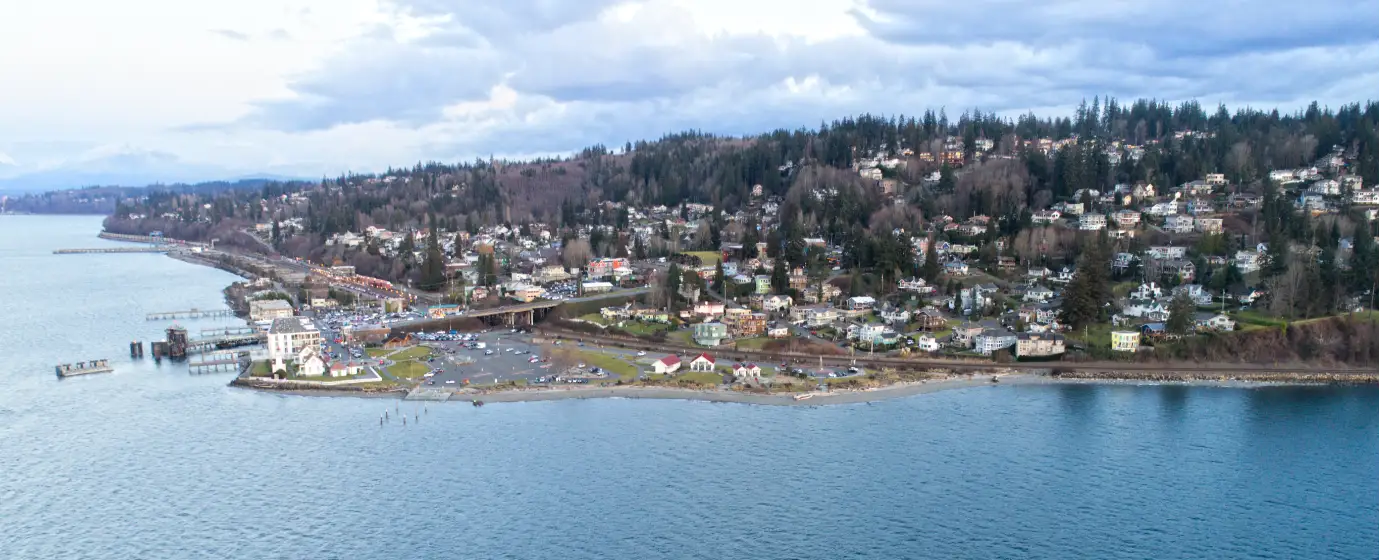
Puget Sound · Washington
Living in Mukilteo: The Ultimate Relocation Guide (2026)
Maybe your company just announced you're transferring to Boeing's Everett facility, and someone in the HR relocation packet mentioned Mukilteo as a place worth considering. Maybe you've been priced out of Edmonds or Kirkland and a coworker said Mukilteo has the same Puget Sound views for less money. Or maybe you simply drove through on your way to the ferry and thought: why doesn't anyone talk about this place? The central tension of Mukilteo is that it's genuinely beautiful — waterfront access, lighthouse park, ferry crossings, mountain views on a clear day — but it carries a price tag and a geography that catches buyers off guard. This is not a casual starter-home market, and the layout of the city means the difference between a frustrating daily commute and a smooth one often comes down to which neighborhood you choose.
Mukilteo sits on the western edge of Snohomish County, tucked between Everett to the north and Edmonds to the south, with Puget Sound forming its western boundary and Paine Field-adjacent neighborhoods pushing east toward Lynnwood and Mill Creek. The city covers just over six square miles of land, which sounds small until you realize how dramatically the terrain changes within that footprint — from bluffside waterfront homes with ferry views to dense inland corridors near the airport that feel nothing like the town's postcard image. Boeing's Everett campus is minutes away, which explains why roughly a quarter of the workforce here ties back to aerospace in some form. The Mukilteo–Clinton ferry to Whidbey Island is one of the busiest in the state system, and on summer weekends the backup at the terminal shapes traffic patterns across the entire south end of town.
This guide will help you answer the questions that matter most before you make an offer: Which neighborhoods suit your lifestyle and budget? What does the commute to Seattle actually look like on a Tuesday morning? Where do families land in terms of schools? And what do people wish they'd known before moving here that nobody bothered to tell them?
Not every buyer fits Mukilteo equally. The city rewards people who value natural beauty, proximity to aerospace employers, and access to good schools — but it asks something in return on price, commute complexity, and suburban density. Here's the honest breakdown.
| Best For | Why |
|---|---|
| Boeing & aerospace commuters | Minutes from the Everett campus; multiple neighborhoods within 10–15 minutes of Paine Field |
| Families with school-age children | Mukilteo School District earns a B+ overall; Kamiak High School ranks among the top 60 high schools in Washington |
| Seattle commuters who want space | 35-minute drive on a good day; Sounder train at Mukilteo Station offers a no-stress alternative |
| Outdoor-oriented buyers | Lighthouse Park, Japanese Gulch, Big Gulch Trail System, and direct Puget Sound access within city limits |
| Move-up buyers from Lynnwood or Edmonds | More land, better views, and established neighborhoods without jumping to the Seattle price tier |
| Retirees wanting water proximity | Waterfront and bluffside neighborhoods offer walkable beach access and a slower pace than Seattle or Bellevue |
The first thing that surprises most people after they've lived here six months isn't the scenery — they knew about that. It's how small the town core actually is, and how quickly that smallness becomes something they didn't know they wanted. Old Town Mukilteo, anchored around the lighthouse and the ferry terminal, functions as a genuine neighborhood gathering point in a way that most Seattle suburbs don't. On a Friday evening in summer, the waterfront is genuinely alive without being overwhelming.
Commuting from Mukilteo is more variable than the 35-minute average suggests. Drive north on I-5 toward Boeing Everett and you're at the plant in 15 minutes from most neighborhoods. Head south toward Seattle on a Monday morning and you're in a different conversation — the I-5 corridor through Lynnwood and Mountlake Terrace backs up consistently, and the SR-525 to I-5 merge at Lynnwood is a reliable chokepoint between 7:30 and 9:00 a.m. The Sounder commuter train from Mukilteo Station at 920 First Street is the genuine workaround for Seattle-bound commuters; it's underused relative to how effective it is, and parking at the station is manageable outside of summer ferry season.
The community skews older and more established than you might expect for a city of roughly 21,000. The median age sits around 43, the majority of households are families, and nearly two-thirds of residents 15 and older are married. This is not a transient renter community. People buy here and stay. The flip side is that it moves a little slowly — the restaurant scene is limited relative to what the income demographics would support, and residents regularly drive to Edmonds or Lynnwood for dining variety.
The ferry to Whidbey Island is both one of Mukilteo's biggest assets and its most persistent friction point. Summer weekends back traffic up well past the terminal on Mukilteo Speedway, affecting neighborhoods that have nothing to do with ferry travel. If you're looking at homes in south Mukilteo, drive the route on a Saturday afternoon in July before you commit.
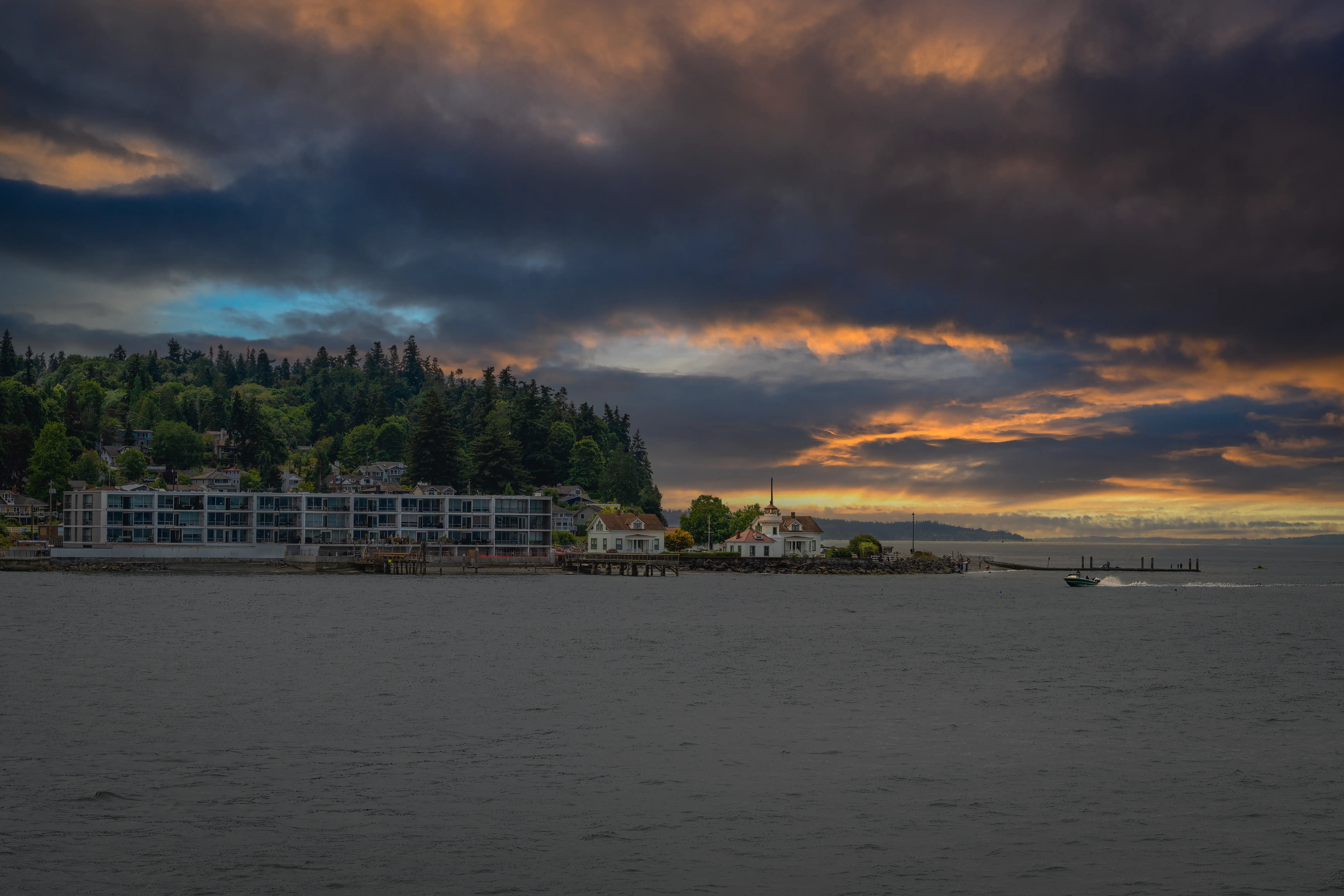
The waterfront access is not marketing copy. Mukilteo Beach, Lighthouse Park, and the associated trail connections give residents genuine daily access to Puget Sound in a way that most Snohomish County cities simply don't. Watching a Washington State Ferry cross against an Olympic Mountains backdrop from Lighthouse Park is the kind of thing that makes Seattle's tech workers pay a premium — and in Mukilteo, it's part of the daily backdrop rather than an occasional treat.
The trail system is extensive and genuinely varied. Japanese Gulch Trail and the Big Gulch Trail System offer wooded canyon hiking within city limits — not groomed rail trails, but actual terrain with elevation change and tree cover. Residents who run or mountain bike routinely head to these corridors on weekday evenings, which speaks to how accessible they are. The combination of bluffside views, beach access, and forest trails in a six-square-mile city is difficult to replicate in the region at this price tier.
Boeing's presence means employment stability that softens the economic volatility other Seattle-adjacent communities feel during tech downturns. When layoffs ripple through Amazon or Microsoft, Mukilteo's housing market tends to be more insulated than Redmond or Bellevue. The aerospace and defense workforce here has a different demand cycle, and that matters when you're thinking about a home as a long-term asset as much as a place to live. Washington's lack of state income tax compounds the advantage for households earning well above the national median.
The schools earn their reputation. Kamiak High School, located at 10801 Harbour Pointe Boulevard, consistently ranks among the top 60 high schools in Washington — out of more than 500 — and its feeder elementaries in the Harbour Pointe corridor are among the better-regarded schools in Snohomish County. For families prioritizing educational outcomes, that combination of a competitive high school within the district and a well-resourced neighborhood feeder pathway is a meaningful differentiator from nearby Everett or Lynnwood.

The price point is the starting reality check. With median sold prices running between $910,000 and $967,000, Mukilteo requires a household income of roughly $200,000 or more to comfortably carry the median home — and that's before accounting for HOA fees in planned communities or the cost of maintaining older waterfront construction. Entry-level buyers do have options in the $500,000–$700,000 range, primarily condos and townhomes, but single-family homes in desirable neighborhoods are firmly in seven-figure territory.
The restaurant and retail scene is thin for a city at this income level. Residents who move here from Bellevue or the Seattle eastside often spend the first year recalibrating expectations around where they eat dinner. Mukilteo has the lighthouse-area waterfront dining and solid neighborhood spots, but nothing approaching the density of options available in Edmonds or Lynnwood. Grocery access is reasonable — the SR-525 corridor connects quickly to Lynnwood's retail — but it requires a drive for most residents.
Noise is a genuine consideration in eastern neighborhoods. Paine Field, home to Boeing's flight line and an expanding commercial terminal, generates flight patterns that affect homes east of I-5 and near the industrial corridors. This is not a dealbreaker for most buyers, but it's the kind of thing that surprises people who toured on a quiet Tuesday and then moved in during active flight testing. If noise sensitivity matters to you, pay attention to where exactly a home sits relative to the flight paths before you write an offer.
Why do people leave? The most common reasons are predictable and honest: buyers who came for the Boeing commute retire or change employers and find the price premium harder to justify without that specific proximity advantage. Some families outgrow what the local dining and entertainment scene offers and migrate toward Edmonds or Kirkland for more activity density. And some simply find the ferry traffic on summer weekends more intrusive than they anticipated when they toured in October.
Old Town is the city's original core — the lighthouse, the ferry terminal, the waterfront restaurants, and a walkable street grid that most of Mukilteo's newer developments don't replicate. Homes here range from craftsman bungalows to newer infill construction, with prices typically starting above $900,000 for single-family properties given the water proximity and location. The walkability to the beach and the genuine neighborhood character make this one of the most sought-after pockets in the city, though inventory is scarce and competition is consistent when homes do come available.
Best for: Buyers who want the full Mukilteo waterfront experience and walk-to-ferry convenience, and who aren't bothered by summer terminal traffic.
Harbour Pointe is Mukilteo's largest planned community, built out primarily in the 1990s and early 2000s on the eastern plateau above the bluffs. It anchors around Harbour Pointe Golf Club and feeds directly into Kamiak High School, which is the district's top-ranked campus. The neighborhood median sits around $773,000 for the broader Harbour Pointe area, though individual streets vary depending on proximity to the golf course and lot size. HOA fees and CC&Rs apply in most of the development, which keeps the streetscape consistent but adds to monthly carrying costs.
Best for: Families prioritizing the Kamiak High School feeder pathway and a well-maintained planned community environment.
Harbour Heights sits adjacent to Harbour Pointe and shares much of its character — established single-family homes, strong school access, and relatively consistent streetscapes — but generally comes in at a slightly lower price point without the golf course premium. It's a practical alternative for buyers who want the school district benefits of the Harbour Pointe corridor without paying for the address itself. Homes here tend to have larger lots than many newer-construction alternatives in the city.
Best for: Buyers who want Harbour Pointe's school access and community feel at a modestly lower entry price.
Possession Bay sits on Mukilteo's western edge with views across the Sound toward Whidbey Island, offering the most dramatic water orientation of any residential area in the city. Homes here command a significant premium for the view and lot position, with many properties oriented to maximize Olympic Mountain and Sound sightlines. The tradeoff is that the road access can be challenging, and the bluff location means some homes have significant slope management considerations. Inventory is thin and rarely discounted.
Best for: Buyers for whom the Puget Sound view is the primary priority and who are comfortable with a more rural, private setting.
Boulevard Bluffs is a mid-city neighborhood that offers some of Mukilteo's most consistent single-family housing at prices that feel slightly more accessible than the waterfront corridors. The neighborhood sits above SR-525 and provides relatively easy access to both I-5 and the Sounder station, making it a practical choice for commuters who need flexibility. The views aren't waterfront-level, but the neighborhood has a settled, residential feel with mature trees and established lots.
Best for: Commuters who want a quiet residential base with solid freeway and transit access.
This is Mukilteo's most affordable and most practical quadrant — closer to Paine Field's industrial and commercial corridor, with a mix of older single-family homes, apartment complexes, and light industrial adjacency that doesn't suit everyone. Boeing employees appreciate the commute; the plant is genuinely close. Home prices in this area reflect the airport proximity and the mixed land use, with more options in the $600,000s than elsewhere in the city. Noise from Paine Field is a real factor here.
Best for: Boeing employees who prioritize commute time above all else and want the most affordable entry point into Mukilteo.
Chennault Beach is a small, quiet waterfront enclave on Mukilteo's southern edge, tucked below the bluffs with direct beach access and a neighborhood character that feels more private than anything else in the city. Homes are typically older construction on larger lots, and prices reflect the exclusivity of the beach access. It's genuinely off the beaten path — neighbors here know each other, and turnover is low by design.
Best for: Buyers seeking maximum privacy and direct waterfront access in a low-turnover, community-oriented setting.
Olympic View is a mid-city neighborhood named for the sightlines available from its higher-elevation streets — on clear days, the Olympic Mountains frame the horizon in a way that makes the premium feel reasonable. It offers a mix of established single-family homes and is convenient to both the SR-525 retail corridor and the school district's Olympic View Elementary feeder. The neighborhood feels solidly residential without the HOA overlay of Harbour Pointe's planned sections.
Best for: Families who want mountain view potential, solid school access, and a no-HOA neighborhood character.

Mukilteo's location along the waterfront and proximity to both Boeing's Paine Field campus and the Mukilteo ferry terminal creates genuine long-term demand that holds value well. Neighbourhoods like Harbour Pointe and Boulevard Bluffs tend to attract buyers who plan to stay, and well-maintained homes there — particularly those priced under $900,000 — often receive serious interest within days of hitting the market. Old Town Mukilteo carries its own appeal for buyers drawn to walkability and character, and that desirability shows up consistently in how quickly listings move. Understanding where you want to be before you start touring helps you act with confidence rather than scrambling to get financing in order after you've already fallen in love with a home.
That's exactly why I encourage anyone relocating to Mukilteo to connect with a lender before the search begins in earnest. Getting pre-approved tells you your comfortable budget — not just the maximum a lender will approve — and forces an honest conversation about the full monthly payment, including property taxes, homeowner's insurance, any HOA dues, and how your loan structure affects what you're actually committing to each month
| City | Best For | Median Home Price | Seattle Commute | Vibe |
|---|---|---|---|---|
| Mukilteo | Boeing commuters, waterfront access, top schools | ~$910K–$967K | 35 min | Established, waterfront suburban |
| Edmonds | Walkable downtown, ferry access, arts community | ~$850K–$950K | 40 min | Charming waterfront, slightly more urban feel |
| Everett | Affordability, Boeing proximity, urban amenities | ~$520K–$600K | 45 min | Larger city, more mixed, urban core |
| Lynnwood | Retail access, Light Rail, affordability | ~$650K–$750K | 35 min (Light Rail) | Dense suburban, growing transit hub |
| Mill Creek | Top-rated schools, family neighborhoods, trails | ~$800K–$900K | 40 min | Master-planned, family-focused |
| Bothell | Tech commuters, Canyon Park employers, restaurants | ~$850K–$950K | 35–45 min | Polished suburban, strong dining scene |
| Metric | Detail |
|---|---|
| Population | Approximately 21,300–21,650 |
| Median home price (mid-2026) | $863,937 (Zillow index); median sold price $910K–$967K |
| Property tax rate | Approximately 0.93% (city baseline) |
| Median household income | $132,861 |
| School district | Mukilteo School District (B+ rating) |
| Top high school | Kamiak High School — top 60 in Washington |
| Violent crime per 1,000 residents | 2.76 |
| Property crime per 1,000 residents | 17 |
| Seattle commute | ~35 minutes by car; Sounder train available |
| No Washington state income tax | Yes — applies to all residents |
| Ferry access | Mukilteo–Clinton route (Whidbey Island), 2nd busiest in state |
| Major employers nearby | Boeing, Amazon, Mukilteo School District, Snohomish County, Providence Regional Medical |
The Lighthouse is not just a photo backdrop. Mukilteo Lightstation is one of the few actively maintained historic lighthouses in Washington with regular public access. The annual Lighthouse Festival draws the community together every August around the historic structure, with guided tours, local vendors, and a genuinely low-key Pacific Northwest celebration that feels nothing like the manufactured festival circuit. If you move here in the fall and miss it, locals will tell you to put it in the calendar immediately for the following summer.
The ferry creates two kinds of summers. Residents who live close to the terminal experience Mukilteo's July and August as a fundamentally different place than what they signed up for in November. The Mukilteo–Clinton route to Whidbey Island is the second busiest in the state system, and weekend ferry queues back traffic up Mukilteo Speedway well past the immediate waterfront area. Longtime residents structure their weekend errands around the ferry schedule the way other suburbs structure around rail closures. Learning that rhythm in your first summer is part of becoming a local.
Japanese Gulch has a dedicated following. The trail network through Japanese Gulch — a forested ravine running through the city's interior — is an open secret among mountain bikers and trail runners in the south Snohomish County area. The Friends of Japanese Gulch, a community group, has maintained and expanded the trail system for years. New residents who discover it typically become regulars within weeks. It's the kind of local asset that doesn't show up on any relocation checklist but consistently makes people say they're glad they chose Mukilteo.
What I would not do if moving here: I would not buy east of I-5 near the Paine Field corridor without spending a weekday morning in that neighborhood between 7:00 and 8:30 a.m. — both to experience the flight noise from Boeing's flight line during active periods and to feel what SR-526 and the local feeder roads look like during shift change. It's manageable for the right buyer, but it's a legitimate lifestyle factor that open house visits rarely reveal.

Local Expert Takeaway: If you're relocating to Mukilteo for Boeing or for the schools, your neighborhood decision should drive your entire search — not the city as a whole. Harbour Pointe puts you in the Kamiak feeder with a clean suburban environment; Old Town puts you closest to the water and the ferry but asks a premium and a tolerance for summer crowds; the Boulevard Bluffs corridor threads the needle on commute access without the full waterfront markup. Don't fall in love with Mukilteo generally and then let a listing in the wrong pocket feel like a win. Get specific about which neighborhood serves your actual daily life, then work backward to the price.
✅ Mukilteo delivers genuine Pacific Northwest waterfront living — lighthouse park, beach access, ferry views, and trail systems — at a price that's high by Snohomish County standards but justified by employment proximity, school quality, and the physical setting.
⚠️ The median sold price in the $910,000–$967,000 range requires serious income to carry comfortably. Entry-level buyers have options in the $500K–$700K range via condos and townhomes, but single-family homes in desirable pockets are firmly seven figures.
📍 Neighborhood selection matters more here than in most cities of this size. The difference between a home near Paine Field and a home above the Sound bluffs is not a minor aesthetic preference — it's a fundamentally different daily experience, noise environment, and commute reality.
Is Mukilteo a good place for families?
Yes — Mukilteo School District earns a B+ rating overall, and Kamiak High School ranks among the top 60 high schools in Washington state out of more than 500. The city's trail systems, beach access, and lower-density residential neighborhoods give families room to spread out, and the Boeing-anchored employment base means the community tends to be financially stable and long-term oriented. The main consideration is budget: family-appropriate single-family homes typically start above $800,000.
What is the crime rate in Mukilteo?
Mukilteo reports a violent crime rate of approximately 2.76 per 1,000 residents and a property crime rate of around 17 per 1,000 — both of which compare favorably to Washington state averages and place the city among the safer communities in Snohomish County. Like most Puget Sound suburbs of similar size, the most common issues involve property crime rather than violent incidents, and the city's established homeowner-dominated neighborhoods tend to have lower reported rates than higher-turnover corridors.
How does Mukilteo compare to nearby Edmonds?
The two cities share a waterfront orientation, ferry access, and similar income demographics, but they feel meaningfully different on the ground. Edmonds has a more walkable downtown with a stronger restaurant and arts presence; Mukilteo has better Boeing proximity, a higher-ranked high school, and trail access through corridors like Japanese Gulch that Edmonds doesn't replicate. Home prices are comparable across the two markets, so the choice typically comes down to whether you prioritize the Kamiak school feeder and aerospace employment access (Mukilteo) or a more activated town center and slightly easier highway access south toward Seattle (Edmonds).
Explore the full Mukilteo series: The Ultimate Mukilteo Relocation Guide · Is Mukilteo Safe? · Cost of Living in Mukilteo · Best Neighborhoods in Mukilteo · Mukilteo Schools & Family Life · Mukilteo Youth Sports · Mukilteo Parks & Recreation · Retiring in Mukilteo · 1031 Tax-Deferred Exchange in Mukilteo · Mukilteo First-Time Homebuyers Guide · Mukilteo Down Payment Assistance Guide · Moving to Mukilteo from California